100 pieces, cut-and-sew, per colour
Not printing on blanks, not a per-order figure that multiplies across colourways. Ask any factory quoting lower which of those they mean.
A low-minimum clothing manufacturer for brands that want to start small and scale — 100 pieces per style, cut and sewn properly.
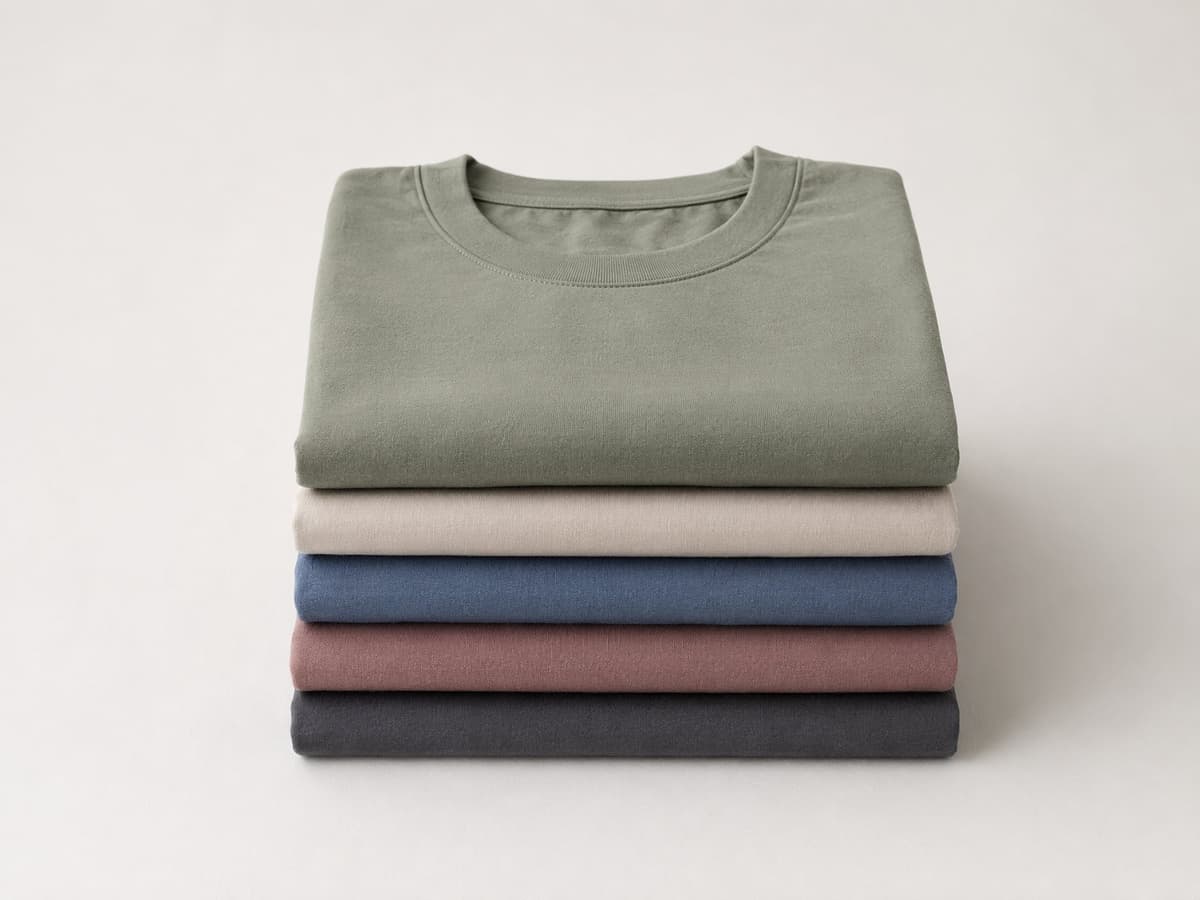
Let’s deal with the number frankly, because you are almost certainly comparing minimums right now and you will have seen lower ones than ours. Suppliers advertise 20, 25, 30 and 50 pieces. Ours is 100 per style and colour. Before you rule us out on that, it is worth being aware of that MOQs are rarely comparable like for like, and there are three questions that explain nearly every very low number you will find.
One: are they cutting and sewing, or printing on blanks? This is the big one. Most very low minimums are decoration services — they buy wholesale blank garments and apply your artwork. Legitimate, useful, the right answer for some brands, but it means you do not choose the fabric weight, the fit, the shoulder line, the neck rib or the construction, because someone else decided those before your logo existed. Two: is the minimum per order or per colourway? A “50-piece minimum” quoted per order becomes 150 across three colours, which is not far off ours. Three: what is the unit price? Setup costs do not vanish at low volume; they get absorbed into a per-piece price that is often two to three times higher.
So here is the straight version: if you need 30 hoodies next month, a blank-printing service will serve you better and faster than we will, and we'd rather send you there than take an order we already know isn't the right fit. What our 100-piece floor buys is genuine cut-and-sew manufacturing: your pattern, your chosen fabric and weight, your fit, your trims, your labels. The reason it is 100 rather than 30 is arithmetic, not policy — pattern making, size grading, the mill’s own minimum fabric quantity per dye lot, and a production line changeover all cost roughly the same at 30 units as at 300. Below about 100, those fixed costs stop spreading sensibly.
A low minimum does not mean a lesser service here. You get what large accounts get: help turning a sketch into a proper tech pack, a physical sample before any bulk, GOTS-certified organic cotton options (certificate RSC 9687, verifiable at global-standard.org), photos at every production stage, and worldwide DDP delivery as one landed cost. And when a design sells, we scale it in the same building — from your first 100 to full bulk, matched to a sealed sample so the ten-thousandth piece matches the first. Outgrowing your first manufacturer and having to rebuild quality somewhere else is a really painful stage; not having to is the quiet advantage of starting here.
One piece of practical advice that has nothing to do with us: at low volume, test breadth rather than depth. Three styles at 100 each usually teaches you more than 300 of one design, because you learn which product your audience wants rather than only whether they liked the one you guessed. And keep a reserve for a reorder — running out of your bestseller three weeks after launch with no cash to restock is a more common way to stall than failing to sell. Our free MOQ calculator and low MOQ vs high MOQ guide work through the maths.
Not printing on blanks, not a per-order figure that multiplies across colourways. Ask any factory quoting lower which of those they mean.
If you need 30 pieces next month, a blank-printing service suits you better — we'll point you there instead of quoting you anyway.
Tech pack help, a physical sample before bulk, GOTS organic options, staged photos, QC — the same process large accounts get.
Prove a design at 100, then grow to full bulk in the same building against a sealed sample. No painful re-qualification later.
The number on the page is the easiest thing to compare and the least useful. Here is what a low minimum actually buys you against the two alternatives most brands are really choosing between.
| Cut-and-sew at 100 | Print-on-blanks at 25 | Full bulk at 1,000+ | |
|---|---|---|---|
| What you get | Your pattern, fabric weight, fit, trims and labels | Someone else's blank garment with your artwork on it | Your pattern, at the lowest unit price |
| Minimum | 100 per style and colour | 25–50, often per order not per colour | 500–1,000+ per style and colour |
| Unit price | Moderate — fixed costs spread over 100 | Looks low, often 2–3x higher per piece | Lowest |
| Cash at risk | Lowest real risk — small commitment, real product | Very low | Highest — budget tied up before demand is proven |
| Reorder path | Same floor, same sealed sample, straight to bulk | No pattern to scale — you start over | Already at bulk |
| Wrong choice when | You need 30 pieces next month | You want to own the garment, not just the print | You have not proven the design sells yet |
All three are legitimate. The question is whether you are buying a garment or buying decoration on someone else's garment.
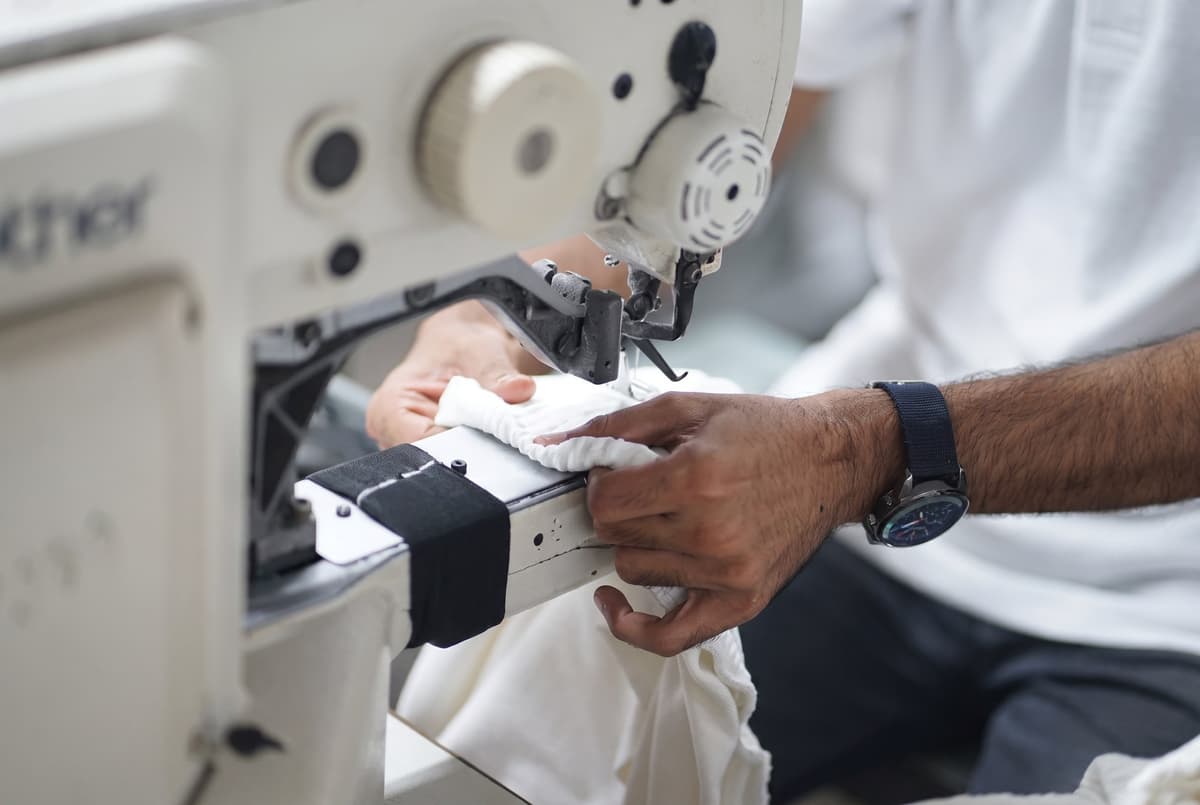
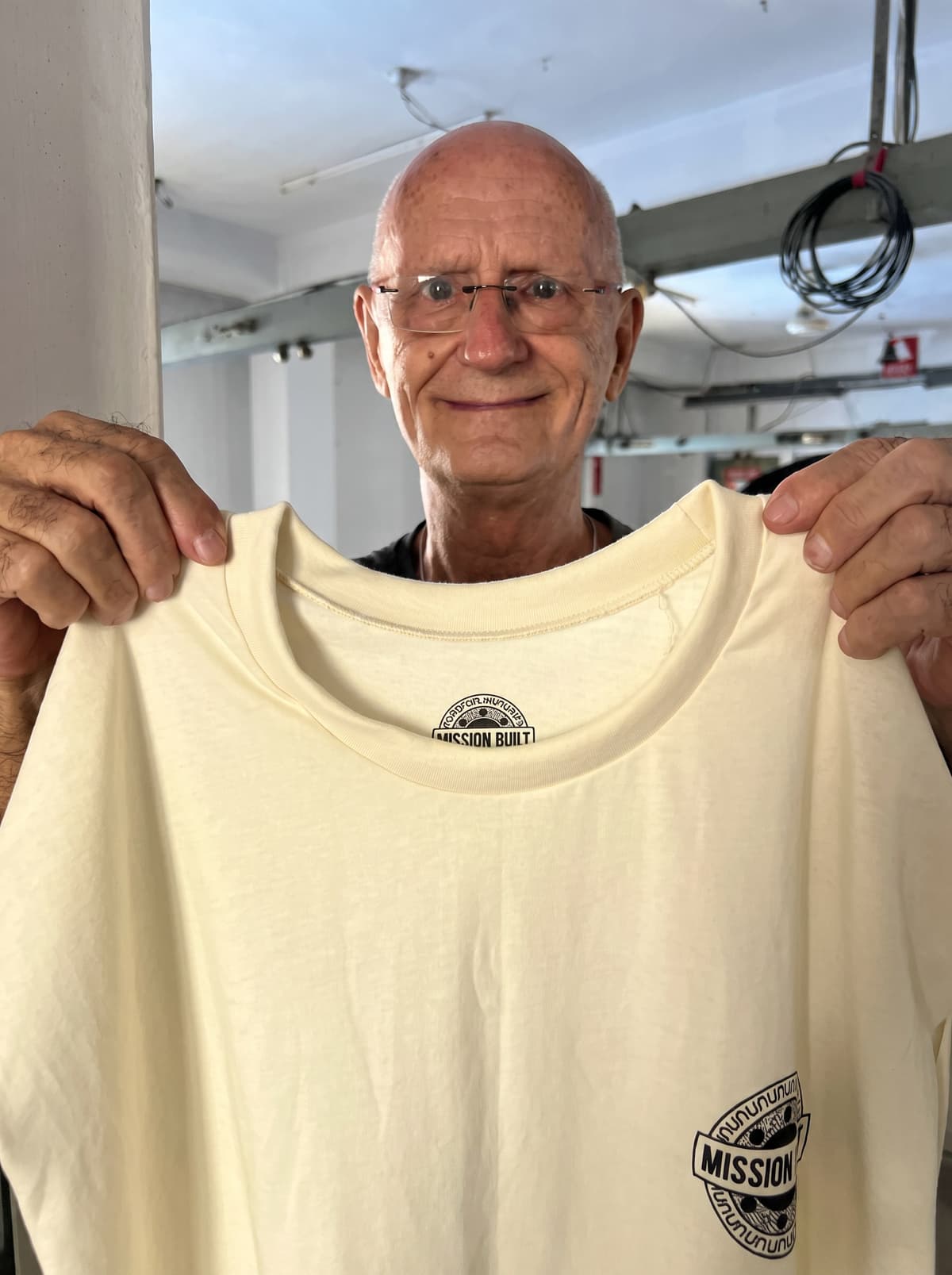
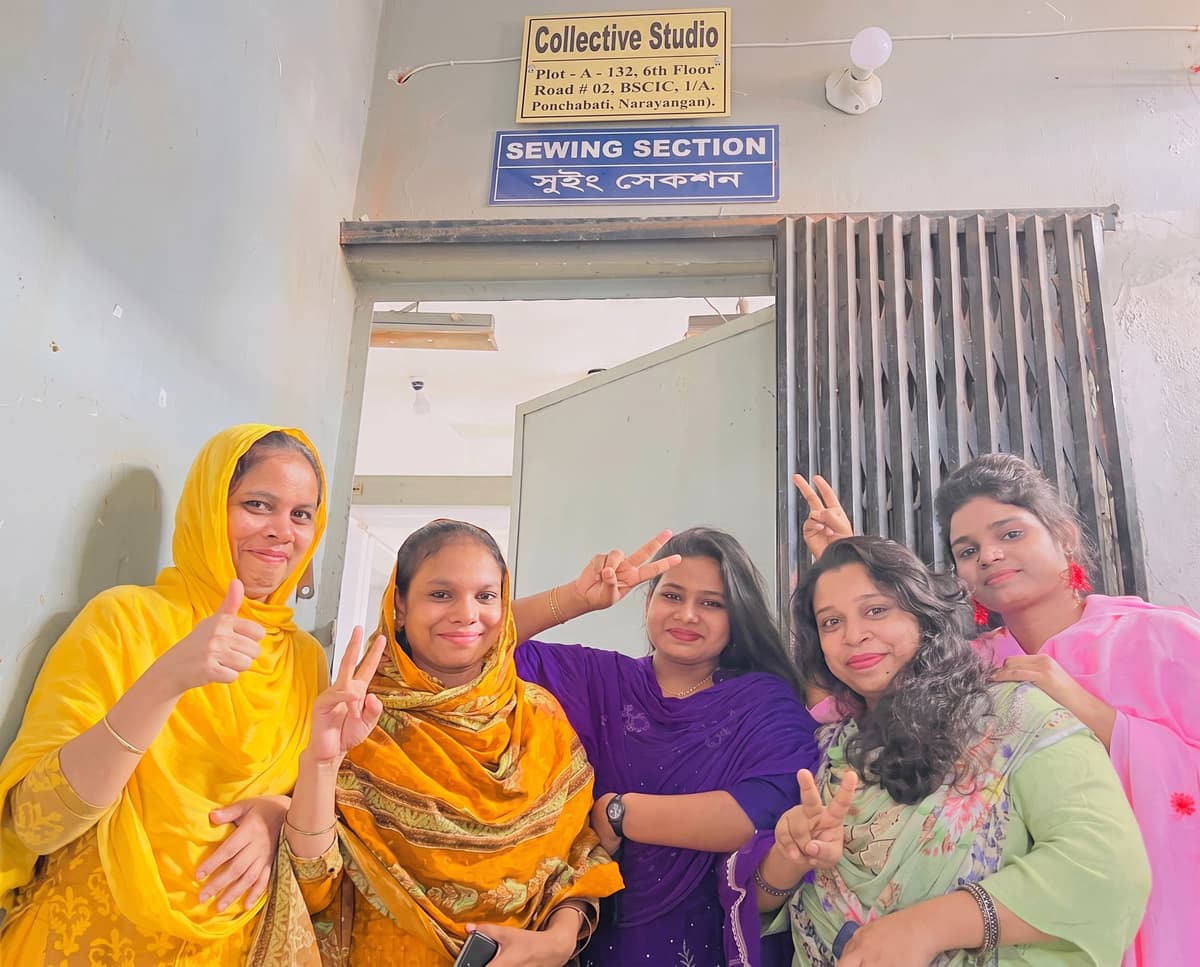
A 100-piece order runs on the same schedule as a 10,000-piece one — it is not fast-tracked and it is not deprioritised. Roughly 40 to 50 days from approved sample to delivery.
A sketch, a photo of a garment whose fit you like, or a paragraph. You do not need a tech pack to start.
We build the technical spec with you and quote before you spend anything on sampling.
One physical garment, made on the production line, shipped to you.
Expect at least one revision — that is normal. This is the stage most first orders lose time on, because feedback sits in an inbox. Turn it around quickly and you land at the fast end of the range.
Where delay usually hidesYour 100 pieces are cut and sewn by the same team, on the same line, as a bulk run.
Checked against your sealed sample, then shipped duty paid as one landed cost.
The sealed sample and your lab dip stay on file, so a repeat run matches the first without re-qualifying anything.
The hard part of a small order is not sewing it. It is fabric. Mills quote in tonnes, and 100 garments will never fill a dye lot on their own, so the two halves of the job work differently.
This is why our minimum is per style and colour rather than per order: the real constraint sits upstream at the dye lot, not at our sewing line. If your shade can ride along with a lot already booked, small quantities stop being the obstacle everyone assumes they are.
I have had a very good experience with this company. They are very friendly, professional, and provide fast service. They speak fluent English, which makes communication very easy. The quality of their manufacturing is excellent. I have no doubt in recommending this company to anyone looking for a reliable manufacturing partner in Bangladesh.
Collective Studio is up and coming. Very hard working people who want to please their customers and grow partnerships together. Homaira is very knowledgeable in the knit industry and always willing to learn more. We are looking to grow our business with them.
Ours is 100 pieces per style and colour, cut and sewn from your pattern. When comparing anywhere, always get the minimum stated as "per style AND per colour", because a headline figure quoted per order behaves completely differently: a 50-piece per-order minimum across three colourways is 150 pieces, while a 100-piece per-colour minimum across three colourways is 300. Some factories advertise "low MOQ" and turn out to start at 500 to 1,000 per colour once you ask precisely. Sizes are normally flexible within the minimum, since splitting 100 units across a size curve does not change the setup cost — so ask about styles and colours, not sizes. If a supplier quotes a lower floor than a hundred, ask what they are actually doing — usually it is printing on blanks rather than manufacturing, which is a different product with someone else's fabric, fit and neck label in it.
Usually because they are selling something different, and three questions will tell you which. First, are they cutting and sewing from your pattern, or printing your artwork onto ready-made blank garments? Most very low minimums are the latter — a legitimate service, but you inherit someone else's fabric weight, fit, shoulder line and neck rib. Second, is the minimum per order or per colourway? Third, what is the unit price, since setup cost does not disappear at low volume and is often absorbed into a per-piece rate two to three times higher. Below roughly 100 units of genuine cut-and-sew, pattern making, grading, the mill's minimum dye-lot quantity and a line changeover no longer divide sensibly. That is arithmetic rather than policy.
Depends entirely on what you are trying to learn. Print-on-demand and blank-printing services ship immediately, carry no inventory risk, and are the right choice if you do not yet know whether anyone will buy your product — we will say so rather than take an order you are not ready for. What you give up is the product itself: you cannot choose fabric weight, fit or construction, so your brand is attached to a garment someone else specified. Once you know it sells, cut-and-sew wins on unit cost, on margin, and on whether people actually wear the thing rather than drawer it. The trade-off is a 100-piece commitment and a 40 to 50 day lead time instead of same-day.
Yes, moderately — here is the actual mechanism behind it, so you can judge whether the trade-off works for you. Fixed costs — pattern making, size grading, sampling, machine setup, line changeover — are much the same whether you make 100 units or 1,000, so on a small run each garment absorbs a larger share. Fabric behaves the same way, since mills price better per kilo at volume. In practice per-unit prices step down noticeably around 500, 1,000, 5,000 and 10,000 pieces before flattening near the underlying fabric-and-labour floor. But the comparison that matters is not price per piece, it is cash at risk: paying more per unit on 100 pieces risks far less than tying your budget up in 1,000 units of a design nobody has bought yet.
Sizes yes, colours no, and the distinction is useful to understand because it drives your budget. Within one style and one colour, you can split the 100 pieces across sizes however you like — a typical split weights the middle sizes and tapers at the extremes, and our free MOQ calculator suggests a starting curve you can adjust. Colours are separate minimums because each colourway is a distinct fabric batch with its own dye lot and setup; that is a real cost, not a policy choice. So a first order of one style in one colour is 100 pieces, while one style in three colours is 300. If your budget is tight, launching in a single strong colour and adding colourways on reorder is usually the smarter sequence.
Effectively our whole range, because the minimum is not product-dependent: t-shirts, polos, hoodies, sweatshirts, joggers, leggings, activewear, loungewear, underwear, kidswear and accessories such as caps and totes. Decoration is included in that — screen printing, embroidery, sublimation and custom dyeing all run at the same minimum. Two honest limits. Flat-knit sweaters and cardigans, knitted from yarn rather than cut from knitted fabric, go through vetted partner units rather than our own floor, so ask first. And structured woven items like tailored outerwear or denim are outside what we do well; we'll flag that in the first email rather than let it turn into an order neither of us is happy with.
Yes. This is also where brands most often get hurt when choosing a low-MOQ supplier, so give it real thought before you commit. Start at 100 to test, then reorder winners and scale to full bulk in the same building. Consistency comes from the sealed sample: the physical garment you approved is retained as the reference every subsequent run is checked against, and for colour we keep your approved lab dip on file so repeat batches are matched to it rather than re-matched to a Pantone code. The alternative — outgrowing a supplier who only handles small runs, then re-qualifying quality and colour somewhere new mid-growth — is a painful stage that costs far more than the unit-price difference.
Yes, at the same 100-piece minimum, so going certified-organic does not require a bigger commitment than conventional. We hold GOTS certification under certificate RSC 9687, verifiable yourself on the public database at global-standard.org. Two things to plan around. GOTS defines more than one label wording depending on your fabric's fibre composition, and we confirm in writing which one yours qualifies for before labels are printed. And synthetic content is limited, though not banned — the allowance is higher for stretch categories like leggings and sportswear, so a cotton-rich legging can qualify while a polyester-based performance knit with no organic fibre cannot. Ask us for a Transaction Certificate if a retailer or marketplace wants documented proof covering your specific shipment rather than proof that the factory is certified — the two are different documents and it is far easier to arrange while the order is live.
Test breadth rather than depth, and hold a reserve. Three styles at 100 pieces each generally teaches you more than 300 of a single design, because you learn which product your audience actually wants instead of only whether they liked the one you guessed. Favour a style that sells year-round over a strongly seasonal piece for a first run, since slow-moving seasonal stock locks up cash exactly when you need it to restock. And keep money back for a reorder: running out of your bestseller three weeks after launch with nothing available to restock is a more common way for a new brand to stall than failing to sell at all. Almost nobody budgets for the reorder, and almost everybody needs it.
The terms get used interchangeably and they are not quite the same thing. Low MOQ describes a threshold — the smallest number a factory will accept, which for us is 100 pieces per style and colour. Small batch describes a way of working: short runs made repeatedly, with the expectation that you reorder and adjust rather than commit to one large order. Most genuine small batch clothing manufacturers are also low MOQ, but plenty of low-MOQ suppliers are not set up for small batch, because they treat your hundred pieces as a one-off rather than the first of many. The practical test is what happens on your second order. Ask whether the sealed sample and lab dips are retained, whether the same line runs your repeat, and whether the price holds. We keep all three, which is what makes repeat short runs work rather than just possible.
Roughly 40 to 50 days from approved sample to delivery, the same as a larger run — a small order is not fast-tracked and is not deprioritised. That is about 10 to 15 days sampling, 20 to 25 days production, then quality control and DDP shipping, plus a few days at the front for speccing and quoting. Expect at least one sample revision; that is normal. The most common cause of delay is waiting on decisions from your side rather than production on ours, usually sample feedback, fabric colour approval or label artwork — so if you can turn those around quickly you will land at the fast end of the range. If you have a fixed launch date, tell us at the start and we will say plainly whether it is achievable.
Trade and regulatory details on this page last verified 30 July 2026. Tariff and compliance terms change — ask us to confirm the current position for your order.
Whether it’s a large bulk or wholesale run or your first batch of 100, send a sketch, a reference, or a sentence. We’ll reply within one business day with fabric options and an indicative price.