All-over print + manufacturing
Cut-and-sew sublimation means print runs seam to seam — no print boundaries, because we print the panels before sewing them.
Custom all-over-print garments made to your design — vivid, full-coverage sublimation on activewear, jerseys and more, with worldwide delivery.
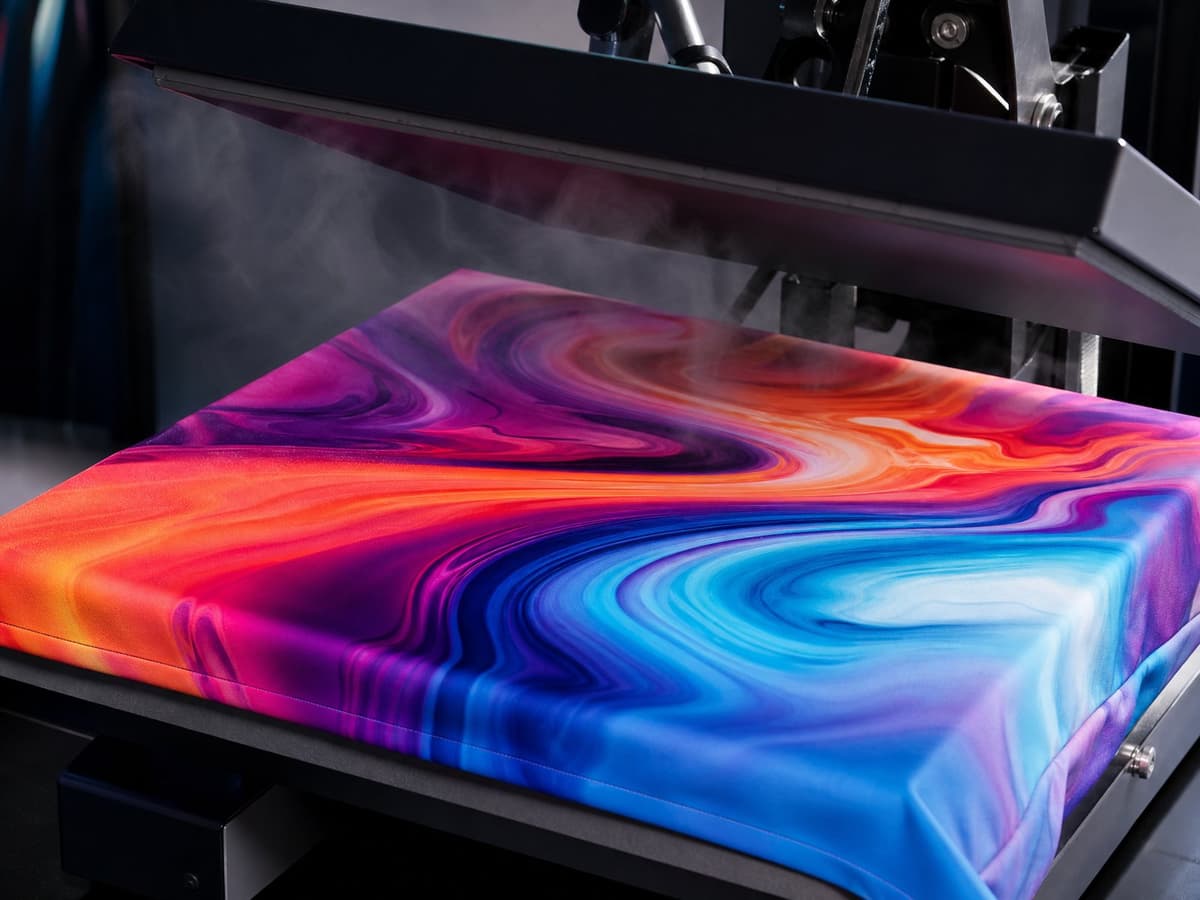
Sublimation only works on polyester, or fabric with a high polyester content — and it's worth grasping why before you specify it. Heat turns the dye into a gas that bonds directly into synthetic fibre; on cotton, there's no synthetic fibre for it to bond with, so the ink just sits on the surface and washes out. That's also why sublimation can't print white: it's a dye process, not an ink laid on top, so the garment has to start light or white and the dye adds colour into it. If your design needs cotton or a lot of solid white space, sublimation is the wrong tool and we'll say so.
What it's actually excellent at: seamless, edge-to-edge colour with no print boundary, on garments where the design has to wrap fully around the body — activewear, jerseys, leggings, bold all-over patterns. We cut and sew the panels after printing them, so the artwork runs continuously across seams instead of stopping at a print area, and because the dye bonds into the fibre rather than sitting on it, it won't crack, peel, or fade the way a surface print eventually does.
We run this from 100 pieces per style, the same floor as the rest of our manufacturing, made to your spec and shipped DDP.
Cut-and-sew sublimation means print runs seam to seam — no print boundaries, because we print the panels before sewing them.
Custom sublimated pieces from 100 per style, same floor as the rest of our manufacturing.
Sublimation bonds the dye into the fibre — it won't crack or peel like a surface print.
Sublimation needs polyester (or a high-poly blend) and a light base garment — it doesn't work on cotton or where the design needs solid white. we'll let you know if it's the wrong technique for your design.
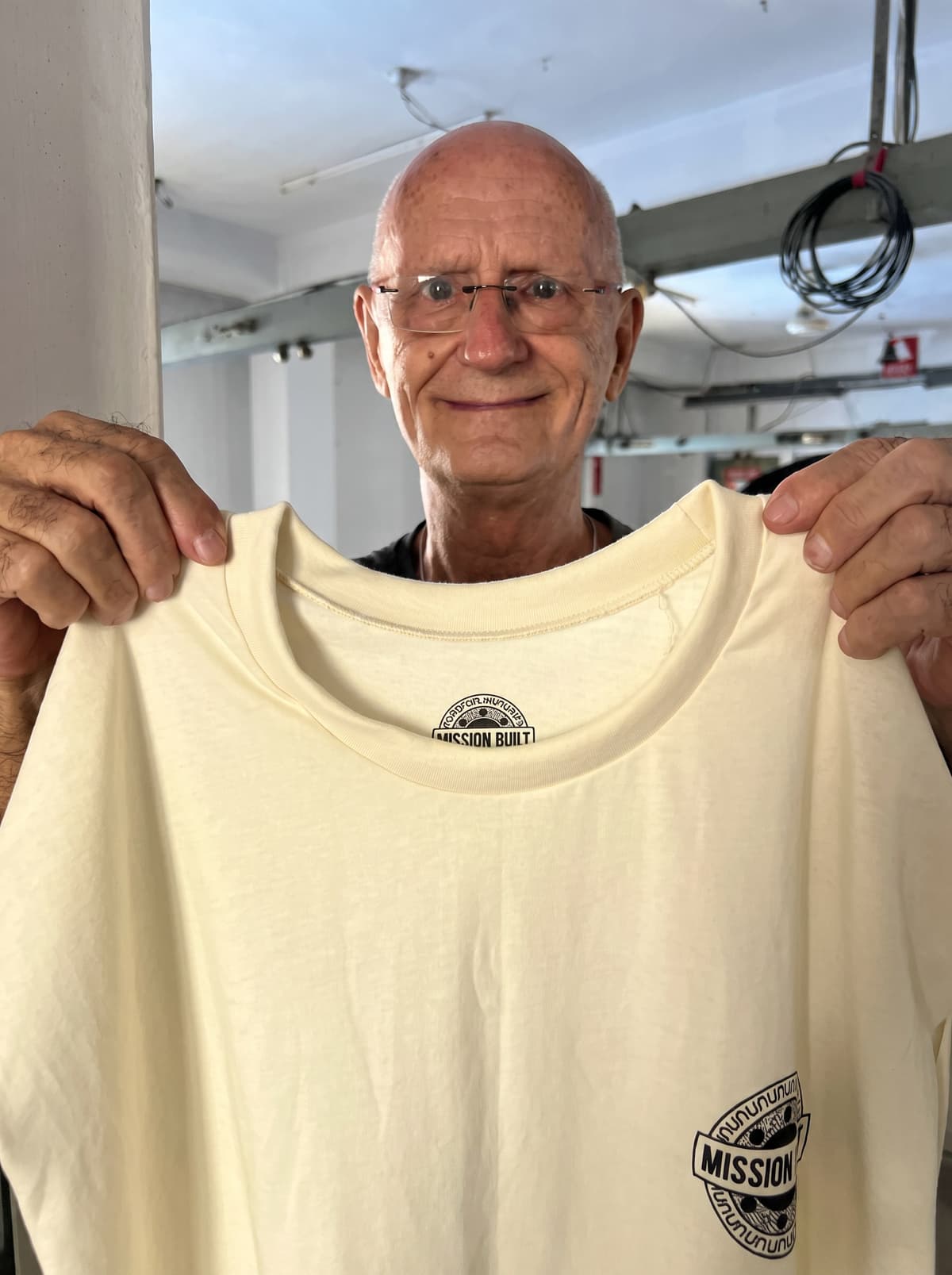
Nice supplier that is looking to develop new buyers and products.
Talk to the factory directly: +880 1980 055021 · hello@collectivestudioltd.com
All-over prints, edge-to-edge graphics, photographic imagery, gradients and anything with more colours than screen printing can economically handle. Because the dye becomes part of the fibre rather than sitting on top of it, there is no hand feel at all — no plastic panel, no cracking, no weight. That makes it the right choice for activewear, cycling and running kit, team wear, swim and rash guards, and any garment where a print crossing seams or wrapping the whole body is the point. It is the wrong choice for cotton, for white or pale designs on dark garments, and for a single-colour logo on a heavyweight tee, where screen printing will look better and cost less. We will tell you which one your design actually wants.
Because the process is chemistry, not deposition. Sublimation turns solid dye directly into gas under heat and pressure, and that gas has to bond with something. Polyester is a polymer whose molecular structure opens under heat and accepts the dye, then closes around it as it cools — the colour ends up inside the fibre permanently. Cotton is cellulose. It has no polymer for the dye to enter, so the gas simply settles on the surface and washes out within a few cycles. Blends work in proportion to their polyester content: a 65/35 poly-cotton takes a visibly muted print compared with 100 per cent polyester, and that softness is inherent rather than a defect. There is no treatment that makes cotton behave like polyester for this. If the garment must be cotton, screen print instead.
No, and this is the hard limit people most often run into. Sublimation dye is transparent — it can only darken what is already there. On white or very pale polyester it produces vivid, saturated colour. On a navy or black garment it does essentially nothing, because there is no lighter base for the dye to alter. There is no such thing as white sublimation ink, and any supplier telling you otherwise is describing a different process. Where a design needs white areas, those areas are simply the garment showing through, so the base fabric colour is your white. If you need light artwork on a dark garment, the options are screen printing with an underbase, embroidery, or cut-and-sew using panels of different coloured fabric.
Longer than the garment, in practice. Sublimation converts dye to gas under heat and pressure so it bonds inside the polyester fibre rather than forming a layer on the surface. There is nothing sitting on top to crack, peel, fade at the edges or wash away, which is the usual failure mode for plastisol prints on heavily-worn activewear. Colour will shift slightly over years of UV exposure, as any dyed textile does, but it will not flake or lift. The realistic limits are different: sublimated polyester is vulnerable to high-heat ironing directly on the print, and to oil-based stains that bond to polyester. Wash cool, avoid fabric softener, and the print will outlast the seams and the elastic.
One hundred pieces per style, per colourway. Sublimation's economics differ from screen printing in a way worth understanding: there are no screens to make, so a hundred-colour photographic design costs the same to print as a two-colour one. The setup cost is in the artwork, laying out your design across the pattern pieces so that graphics align across seams once the garment is assembled. That layout is done once and reused, so reorders are cheaper. What drives the minimum is fabric — sublimation needs polyester knitted and finished for the purpose, and that fabric is produced in lot sizes. If your design is complex, sublimation is often the cheapest route at a hundred pieces, not the most expensive.
That is the version worth doing. Printing flat fabric panels before the garment is assembled means the design can run edge to edge and across seams without breaking, which is impossible if you print onto a finished garment. It is how proper cycling kit, team wear and rash guards are made. The trade-off is planning: the artwork has to be laid out against the pattern pieces so that graphics line up once sewn, and that layout is done before cutting rather than adjusted afterwards. It also means a change to the fit changes the artwork layout. Done once, it is reused on every reorder at no extra cost. If your design is a chest logo rather than an all-over graphic, this is overkill and screen printing will serve you better.
Trade and regulatory details on this page last verified 30 July 2026. Tariff and compliance terms change — ask us to confirm the current position for your order.
Whether it’s a large bulk or wholesale run or your first batch of 100, send a sketch, a reference, or a sentence. We’ll reply within one business day with fabric options and an indicative price.