Screen Printing vs Embroidery vs DTG vs DTF: Which to Choose?
Once your garment is made, how do you put your logo or artwork on it? The three main methods — screen printing, embroidery, and DTG — each suit different designs and quantities. Here's how to choose.
Screen printing
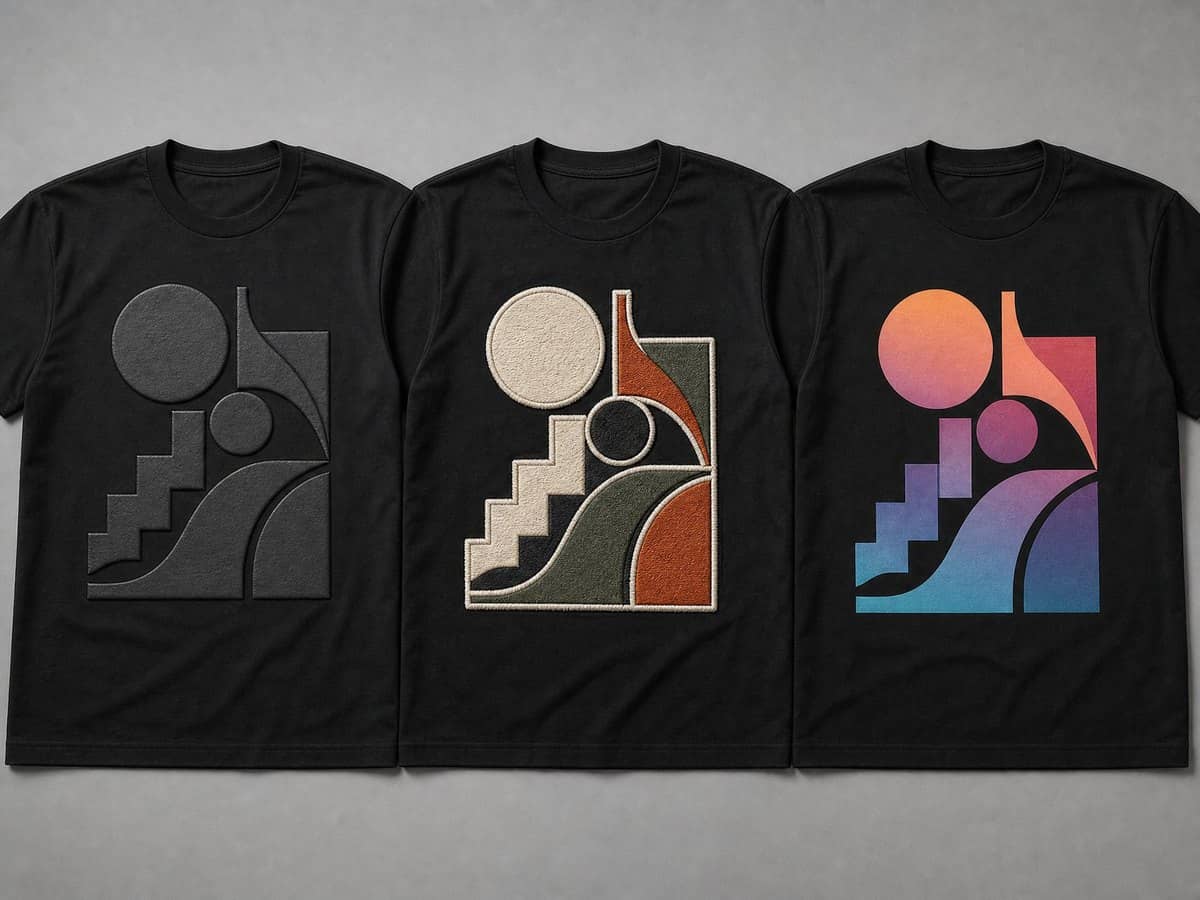
Ink pushed through a stencil, one colour at a time. The most durable and vivid method for volume runs, and cost-effective once you're making quantity. Best for bold logos and graphics with a few colours. Less suited to tiny detail or photographic, many-colour designs.
Embroidery
Your design stitched in thread. It looks and feels premium and durable, and is ideal for logos, lettering, and a considered, high-end finish on polos, caps, and hoodies. Not the choice for large or highly detailed artwork.
DTG (direct-to-garment)
A printer sprays ink directly onto the fabric, like an inkjet. Great for detailed, full-colour, photographic designs and small quantities, but generally less durable than screen printing and best on cotton.
- Bold logo, volume run → screen printing
- Premium, logo or lettering → embroidery
- Detailed/photographic, small run → DTG
DTF (direct-to-film)
The newest of these and the one that has changed small-run decoration most. The design is printed onto a film, dusted with adhesive powder, cured, and then heat-pressed onto the garment. Unlike DTG it does not spray ink into the fibres, so it is not restricted to cotton — DTF sits on polyester, blends and nylon just as happily, which is exactly where DTG struggles.
The trade-off is feel. A DTF transfer sits on the fabric as a thin flexible layer rather than in it, so a large solid design is something you notice against the skin in a way a good screen print is not. It is excellent for full-colour art in small runs, on mixed fabric types, or where you cannot justify screens. For a simple one or two colour logo in bulk, screen printing still wins on both feel and unit cost. We run DTF and DTG printing in house on garments we cut and sewed ourselves, so the print and the blank are one supplier's responsibility rather than two.
Heat transfer vinyl and the heat press
Vinyl is cut from a coloured sheet and applied with a heat press. It is genuinely useful for names and numbers, one-off garments, and small numbers of team pieces, and it is why a local shop can turn a single shirt around in an hour.
For a clothing brand ordering production, it is almost never the right answer, and it is worth saying plainly rather than leaving you to find out. Vinyl is applied piece by piece, so the cost does not fall with quantity the way screen printing does. It is limited to flat solid shapes. And it is the least durable of everything here — edges lift and crack with wear and washing sooner than any print. If a supplier quotes vinyl for a bulk order, ask why, because the usual reason is that they do not have screen or DTF capability in house.
What decides the method for you
Most brands start from what they like the look of. It is quicker to start from three properties of your artwork, because those rule methods in or out before taste enters the discussion.
- Colour count. Screen printing charges per colour, because each is a separate screen. Two colours is economical; a photographic image is not. DTG and sublimation are indifferent to colour count.
- Detail and text size. Embroidery cannot hold detail below roughly five millimetres — small text turns to a blob of thread. Print holds fine detail comfortably.
- Garment colour. DTG on dark fabric needs a white underbase, which adds cost and a heavier hand-feel. Sublimation on dark does nothing at all.
| Screen printing | DTF | Heat transfer vinyl | |
|---|---|---|---|
| Where the ink sits | Pushed into the fabric | A thin layer bonded on top | A cut sheet pressed on top |
| Colour range | One screen per colour | Full colour, photographic | Solid colours only, no gradients |
| Fabric range | Most fabrics | Cotton, polyester, blends, nylon | Most fabrics |
| Feel on a large design | Soft, especially water-based ink | Noticeable as a layer | Noticeable, and stiffer |
| Cost at 500 pieces | Lowest — screens are a one-off | Higher, priced per piece | Highest, applied piece by piece |
| Cost at 10 pieces | Highest — setup dominates | Low | Low |
| Durability | Best | Good | Weakest — edges lift and crack |
Durability, honestly ranked
If longevity is the priority, the order is fairly consistent. Sublimation lasts longest because the dye is inside the fibre rather than on it, so there is nothing to crack or peel — but it is polyester-only. Embroidery is next: thread outlives the garment in most cases. A well-cured screen print sits third and will comfortably survive dozens of washes. DTG is last, which is the trade for its flexibility on short runs and complex artwork.
One qualifier worth stating: a badly cured screen print will crack after a handful of washes, while a well-cured one will not. The gap between a good and a bad print of the same type is wider than the gap between print methods, which is why who does the decoration matters as much as which method you pick.
Side by side
| Screen printing | Embroidery | DTG (direct-to-garment) | |
|---|---|---|---|
| How it works | Ink pushed through a stencil, one colour at a time | Your design stitched in thread | Ink sprayed straight onto the fabric, like an inkjet |
| Best for | Bold logos & graphics, few colours | Logos, lettering, a premium finish | Detailed, full-colour or photographic art |
| Colours | A screen per colour — best with a few | Thread colours; not photographic | Unlimited, including gradients |
| Durability | Excellent — the most hard-wearing | Excellent — stitched, not printed | Good; softer feel, fades sooner than screen |
| Run size | Higher setup, so cheaper in volume | Low–medium; digitised once | Low — ideal for small runs & samples |
| Best fabric | Most fabrics | Structured items — polos, caps, hoodies | Best on 100% cotton |
Match the method to the design and the quantity — not the other way around.
We offer screen printing, embroidery, DTF and DTG printing, sublimation and custom dyeing as part of full garment manufacturing, so your decoration is done on pieces we make to your spec. Tell us your design and we'll recommend the best method.
Frequently asked questions
DTF vs screen printing: which is better?
Quantity decides it, not quality. Screen printing pushes ink into the fabric and puts nearly all its cost into making the screens, so the price per garment falls steeply with volume and the print stays soft even across a large design. DTF prints onto a film that is applied with a heat press, so it costs roughly the same per garment whether you order ten or a thousand, handles full-colour photographic artwork that screens cannot, and works on polyester and blends where DTG struggles. For a one or two colour logo in bulk, screen printing wins on both feel and unit cost. For full-colour art, mixed fabrics, or runs too small to justify screens, DTF is the better answer.
Is screen printing better than heat press vinyl?
For a clothing brand ordering production, yes, and by a wide margin. Heat press vinyl is cut from a coloured sheet and applied one garment at a time, so the cost never falls with quantity, it is limited to flat solid shapes with no gradients, and it is the least durable option here because the edges lift and crack with wear and washing. Vinyl earns its place for names and numbers, single garments and small team orders, which is why a local shop can turn one shirt around in an hour. If a supplier quotes vinyl for a bulk order, ask why, because the usual reason is that screen and DTF capability is not in house.
What is the difference between screen printing, embroidery and DTG?
Screen printing pushes ink through a mesh stencil, one screen per colour — cheapest per piece at volume, most durable on cotton, and impractical for photographic artwork because every colour adds a screen. Embroidery stitches the design in thread, which outlasts every print and reads as the most premium, but it cannot do fine detail below roughly five millimetres or cover large areas without becoming heavy and stiff. DTG sprays ink directly onto the garment like an inkjet printer — it handles unlimited colours and photographs with no setup, which makes it excellent for samples and one-offs, but the cost per piece barely falls with volume and it is the least durable of the three. Rough guide: logo, use embroidery; simple design at volume, screen print; complex artwork in small numbers, DTG.
Which is best for printing t-shirts?
For most brands, screen printing. It gives the best cost per piece at production volumes, the widest ink choice, and the most durable result on cotton — a properly cured water-based print sits into the fabric rather than on it and ages well. The reason to choose otherwise is usually colour count or artwork type. A photographic design with gradients is impractical to screen print because each colour needs its own screen; that is where DTG or, on polyester, sublimation makes sense. Embroidery beats both for durability and reads as more premium on a chest mark, though it cannot do fine detail or large areas. Our advice is normally: simple design, higher quantity, cotton — screen print. Complex artwork or polyester — sublimation. Small logo, premium feel — embroidery.
Which printing method lasts longest?
Sublimation, by a wide margin, because there is nothing sitting on the surface to fail. The dye is inside the fibre, so it cannot crack, peel or lift — it will outlast the seams. The catch is that it only works on polyester and only darkens, so it is not an option for most cotton garments. Among methods that do work on cotton, a well-cured screen print is the durable choice; water-based and discharge inks sit into the fabric rather than on it and age better than plastisol, which is thicker and eventually cracks on high-flex areas. Embroidery outlasts every print, though it is not suited to fine detail or large areas. DTG is the least durable of the common options and is best treated as a low-volume or sampling method rather than a production one.
Where this applies
The manufacturing pages this guide relates to, if you are costing a real run.
Free tools & guides for this
Sources & further reading
Have an idea? Let’s make it.
We manufacture from 100 pieces per style, with GOTS-certified organic options and photos at every stage. Send a sketch or a sentence — we’ll reply within a day.