A published address you can visit
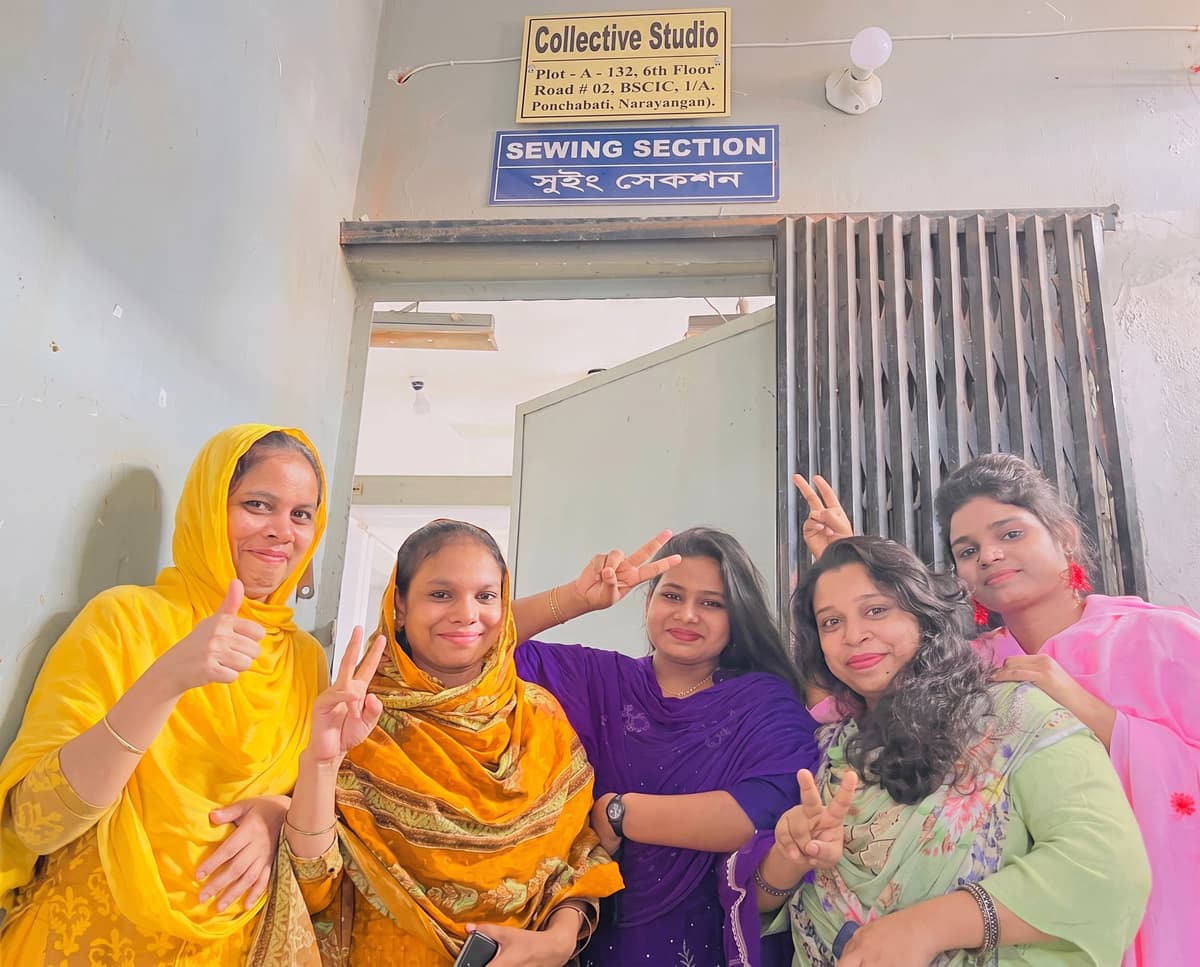
Plot-A-132, BISCIC Industrial Area, Narayanganj. On the map, open to pre-arranged visits, or a live video walkthrough if you can't travel.
A family-run garment factory in Narayanganj making custom clothing for brands worldwide — from 100 pieces to full bulk. You talk to the people who make your order.
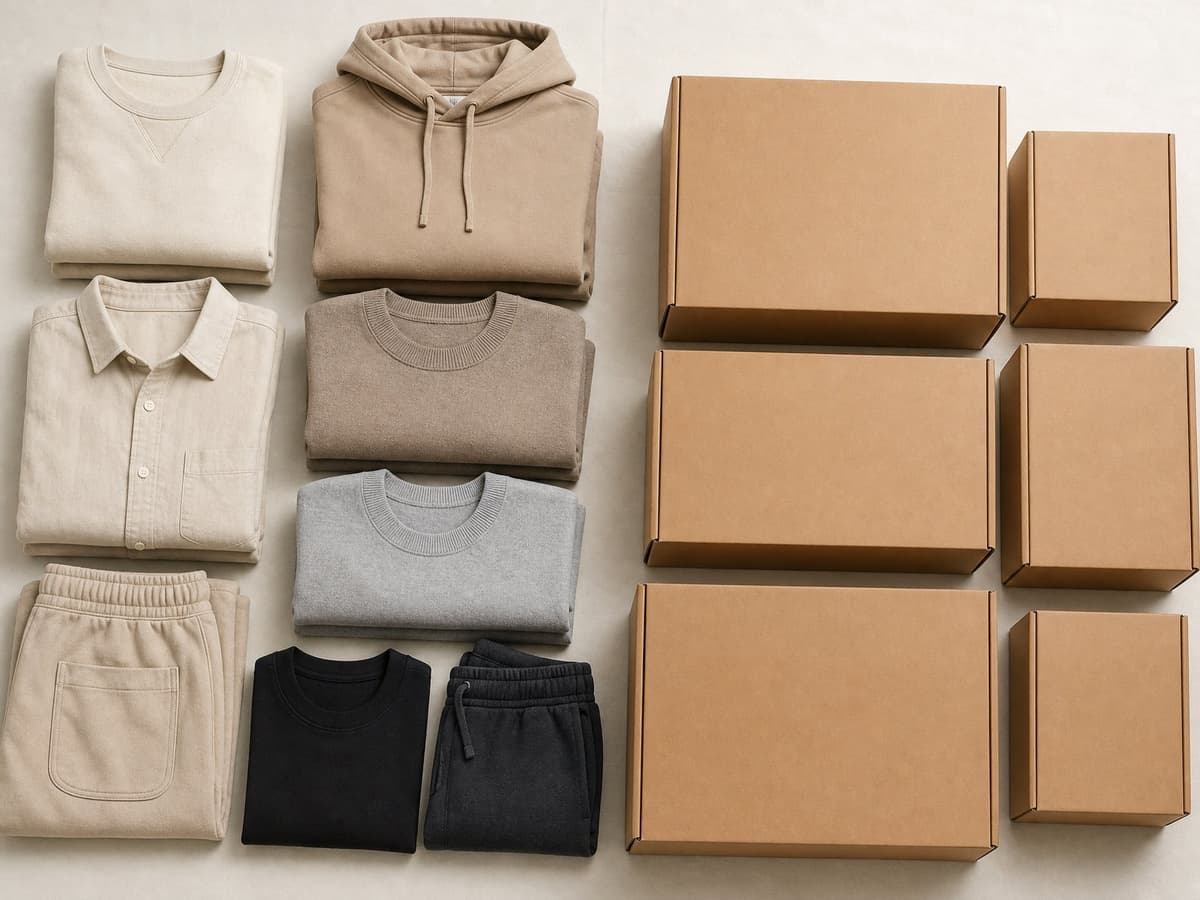
Looking for a clothing manufacturer in Bangladesh you can actually talk to? Collective Studio is a family-run garment factory at Plot-A-132, BISCIC Industrial Area, Narayanganj — the heart of the country’s knitwear industry. We publish the address because you should be able to check it, visit it, and see it on a map before you send anyone a design. You deal directly with the factory rather than an agent, which matters more than it sounds: an agent adds a margin layer and a communication layer, and when something needs fixing on the floor you are two phone calls away from the person who can fix it.
Two things about sourcing from Bangladesh are useful to know before you compare quotes from anywhere. First, the specialism is real and specific: Bangladesh is the world’s second-largest apparel exporter, and knit garments are its largest export category — so the depth is in jersey, French terry, fleece, pique and rib rather than tailoring or woven outerwear. Much of the industry is vertically integrated, with knitting, dyeing and sewing under common ownership, which shortens lead times and materially improves colour consistency between production runs. If you are making tees, hoodies, joggers or activewear, that integration is the actual advantage.
Second, and more urgent this year: Bangladesh is scheduled to graduate from Least Developed Country status on 24 November 2026, which changes the duty picture depending on where you sell. The UK has confirmed in writing that Bangladesh keeps existing access for three years post-graduation before moving to the DCTS Enhanced Preferences tier, where apparel specifically is unchanged; Canada renewed its preference programmes to 2034 in the Budget Implementation Act 2023; Australia’s stated policy continues duty-free access for graduating countries, following the precedent it set for the Maldives, Samoa and Equatorial Guinea; the EU applies a transition period but its arrangements are less settled; Switzerland and Norway zero-rate apparel through their own schemes independent of graduation; and Japan has already replaced its GSP exposure with a signed bilateral trade treaty. Even the graduation date itself is now a live question: the UN Committee for Development Policy has recommended deferring it to 24 November 2029, unanimously forwarded to the General Assembly in July 2026, with a final vote expected before the original date. We ship DDP, so whatever the duty is, it is inside the landed cost you are quoted rather than a surprise at the border — and we confirm the live position for your market rather than asking you to rely on this page.
What most large Bangladeshi factories will not offer a newer brand is a low minimum, because their economics are built around long runs. We make from 100 pieces per style and colour and scale the same styles to full bulk in the same building, matched to a sealed sample so the ten-thousandth piece matches the first. Everything is made to your design under your own label, with GOTS-certified organic cotton available (certificate RSC 9687, verifiable at global-standard.org), photos at every production stage, and worldwide DDP delivery.
On compliance, verify rather than trust — and that advice applies to any factory here. We are members of BKMEA (the Bangladesh Knitwear Manufacturers and Exporters Association) and the Narayanganj Chamber of Commerce, we hold GOTS certification you can look up, and we welcome pre-arranged factory visits or a live video walkthrough of the floor if you cannot travel. A factory that becomes evasive when you ask to see the floor, or that cannot give you a certificate number you can check independently, is answering your question. New to sourcing? Start with how to find a clothing manufacturer and our guide to choosing a factory in Bangladesh.
Plot-A-132, BISCIC Industrial Area, Narayanganj. On the map, open to pre-arranged visits, or a live video walkthrough if you can't travel.
An agent adds a margin and a communication layer. When something needs fixing on the floor, you're talking to the people who can fix it.
Launch small, then scale the same style to thousands in the same building, matched to a sealed sample so quality holds.
GOTS certificate RSC 9687 verifiable on the public database, plus BKMEA and Narayanganj Chamber of Commerce membership.
Most pages like this one only argue for themselves. Here is the honest version, including the two situations where we are the wrong call.
| Collective Studio | A large export factory | A sourcing agent | |
|---|---|---|---|
| Typical minimum | 100 pcs per style and colour | 500–1,000+ per style | Varies — they place your order elsewhere |
| Who you talk to | The people who make it | An account manager, rarely the floor | The agent, never the factory |
| Best when | You are launching, testing, or reordering in short runs | You need tens of thousands of units at the lowest unit price | You want one contact managing several factories at once |
| Wrong choice when | You need 30 pieces next month, or tailored suiting and denim | You are ordering your first 100 pieces | You want to know exactly who sews your garment |
| Certification | GOTS RSC 9687 — checkable on the public database | Usually held, ask for the number | Held by the factory, not the agent |
| Price transparency | We show where the cost sits | Quoted per programme | A margin layer sits on top |
All three are legitimate businesses. The question is which one fits the order you are actually placing.
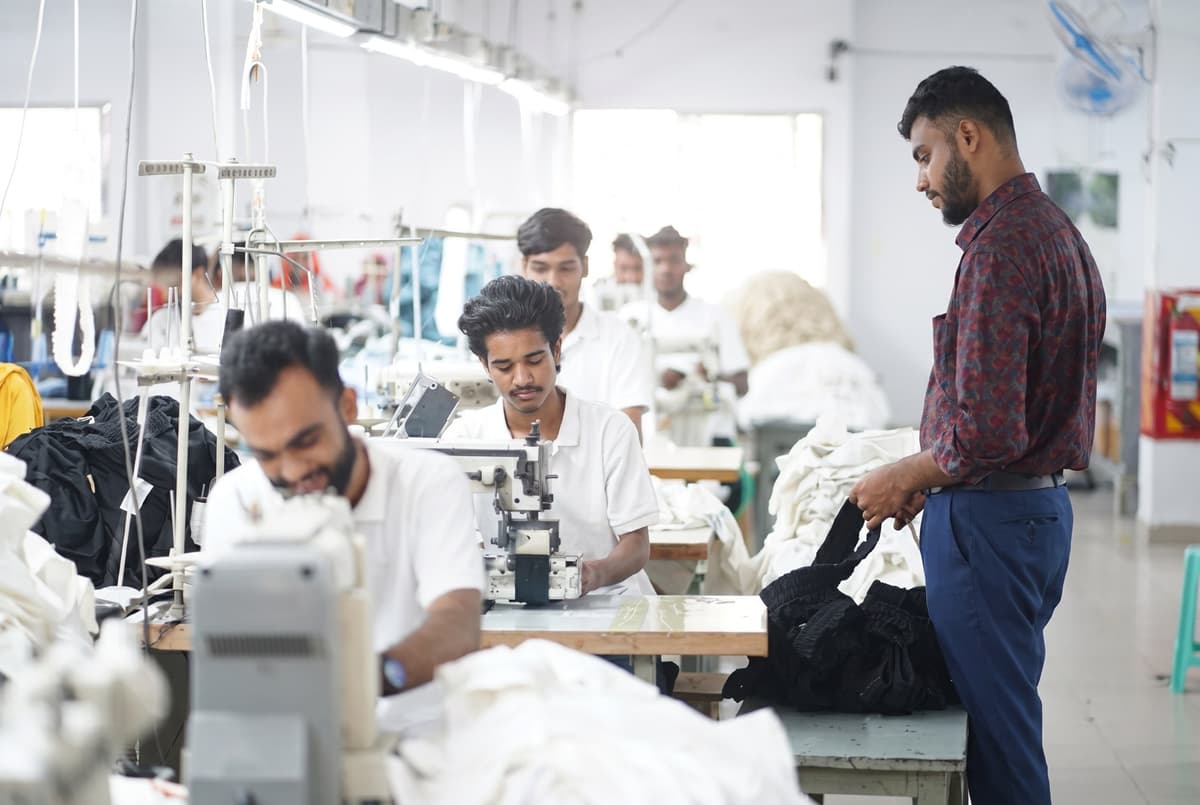
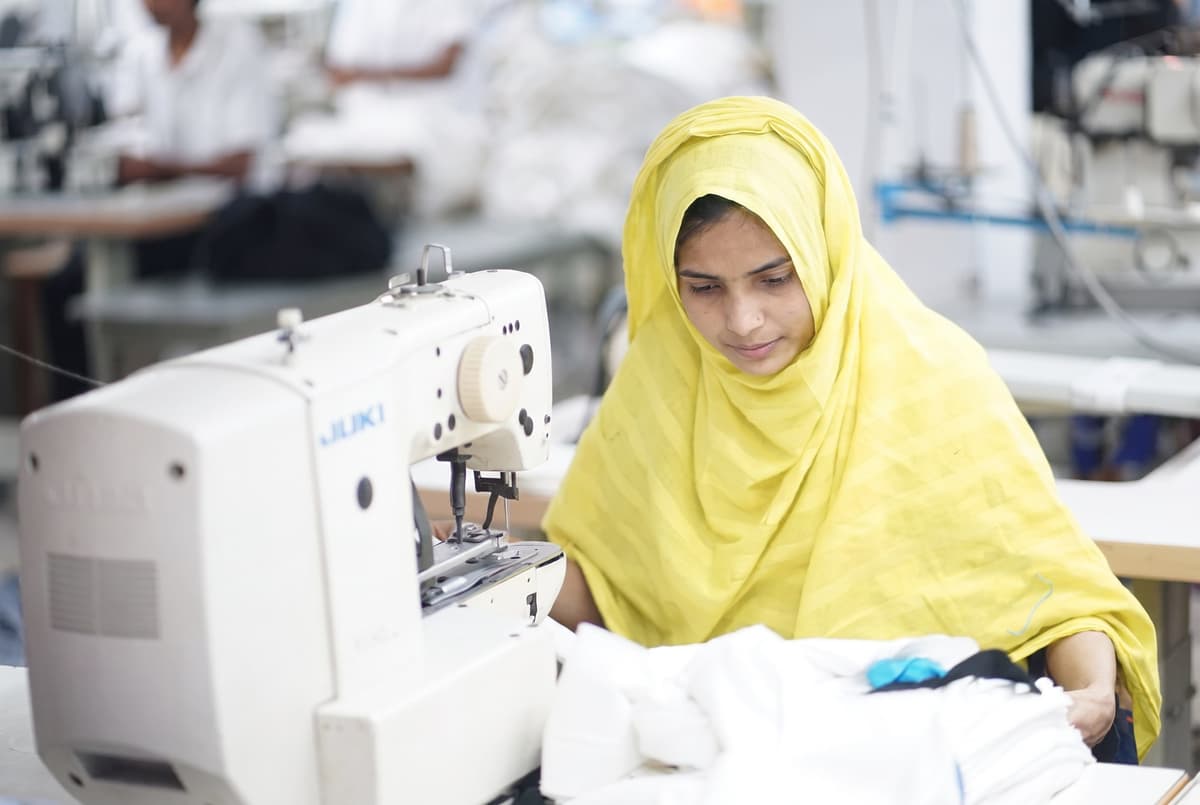
Roughly 40 to 50 days from approved sample to delivery. Plan backwards from your launch date, not forwards from today — and budget for one sample revision, because that is normal rather than a sign anything went wrong.
Send a sketch, a reference garment or a paragraph. We build the technical spec with you and quote before you spend anything on sampling.
This is where hidden delay lives. A developed colour or an unusual knit can add two weeks before a single stitch is sewn. Raise unusual fabric early.
Where delay usually hidesOne physical garment, made on the same line as production, sent to you.
Wear it, wash it, check the fit after washing. Once approved it becomes the sealed sample every production piece is checked against.
Fabric is knitted and dyed to your approved lab dip, then relaxed and inspected before cutting so it does not shrink or torque later.
Bulk production on our own floor in Narayanganj, with photos sent at each stage.
Final inspection against AQL levels, checked against your sealed sample rather than against a description.
Export documentation and duty handled by us. You receive one landed cost, not a customs invoice weeks later.
Bangladesh's garment industry is a network of specialists rather than a country of giant self-contained factories, and nearly every exporter here works the way we do. It is worth being exact about which link in that network you are hiring.
So when you ask whether we can make something in a fabric we do not knit, the answer is usually yes: we specify it, book the mill, go and inspect the run, and answer for what arrives. What we will not do is tell you we own a dye house that belongs to someone else.
Collective Studios under the direction of Mr Jamish and his daughter Homaira represent the future of RTW production in Bangladesh. A thorough approach to detail governed by a genuine standard of quality. Masters of and partners in the process!
I have had a very good experience with this company. They are very friendly, professional, and provide fast service. They speak fluent English, which makes communication very easy. The quality of their manufacturing is excellent. I have no doubt in recommending this company to anyone looking for a reliable manufacturing partner in Bangladesh.
Collective Studio is up and coming. Very hard working people who want to please their customers and grow partnerships together. Homaira is very knowledgeable in the knit industry and always willing to learn more. We are looking to grow our business with them.
Wonderful people to work with — very professional and knowledgeable, also accommodating to the needs of their customers.
Qualify candidates on things you can verify independently, then verify them. Ask for a certification number you can look up yourself — ours is GOTS RSC 9687, searchable at global-standard.org — plus social-compliance audit references such as BSCI, Sedex/SMETA or WRAP, and membership of an industry body like BKMEA. Ask for the minimum stated per style AND per colour, since a headline figure quoted per order multiplies across colourways. Ask which incoterm they quote, because FOB and DDP are not comparable numbers. Then ask to see the floor, in person or on live video. The warning signs are the mirror image: vagueness about certificate numbers, reluctance to show the factory, and pressure for full payment upfront on a first order.
It varies enormously and the advertised number matters less than what sits behind it. Many large export factories start at 500 to 1,000 pieces per style and colour, because their economics are built around long runs and a line changeover is expensive. Factories set up for emerging brands go lower; ours is 100 pieces per style and colour for genuine cut-and-sew production, which is low for a full-service Bangladeshi factory. If you are quoted 20 or 50, ask whether they are printing onto ready-made blanks rather than manufacturing from your pattern, whether the minimum is per order rather than per colourway, or whether the unit price carries the setup. All are legitimate businesses; only some are manufacturing your design. To size your own first run against a genuine per-style, per-colour minimum, use our free MOQ calculator.
Each of the three has a genuine specialism, not a fixed ranking, so the right answer tracks the product. Bangladesh leads on knitwear — tees, hoodies, joggers, loungewear — and on value at volume, supported by deep vertical integration in knitting and dyeing that improves both lead time and colour consistency. China offers the widest range of capabilities and the fastest turnaround for complex or highly technical items, with an unmatched trims and components supply chain, at a higher price point than it once held. Vietnam sits between them with a strong reputation for mid-to-high quality construction. Beyond product fit, duty into your specific market is usually the deciding factor, since it can move landed cost more than the unit-price gap between countries.
There's no single number — the effect is market by market, and worth checking now rather than after you've quoted a landed cost. Bangladesh is currently scheduled to graduate from Least Developed Country status on 24 November 2026, though a live UN process may push that to 24 November 2029 — the UN Committee for Development Policy has recommended the deferral and it was unanimously forwarded to the General Assembly in July 2026, with a final vote expected before the original date. Whichever date lands, here's how each market is positioned: the UK has confirmed in writing, via its High Commission in Dhaka, that Bangladesh retains existing market access for three years after graduation before moving into the DCTS Enhanced Preferences tier — where 92% of goods stay duty-free and apparel under HS chapters 61 and 62 is specifically unchanged; Canada renewed its GPT and LDCT programmes through 31 December 2034 in the Budget Implementation Act 2023, and separately dropped the value-added rules-of-origin test for apparel in January 2025; Australia's stated policy continues duty-free access for graduating countries, matching how it treated the Maldives, Samoa and Equatorial Guinea; the EU applies a transition period but its arrangements are less settled than the other three; Switzerland and Norway zero-rate apparel through their own schemes regardless of graduation; and Japan has replaced its GSP exposure with a signed bilateral treaty rather than relying on a preference at all. Because these positions are forward-looking and can change, we confirm the live position for your specific market and order rather than asking you to rely on a web page.
Yes — we'd encourage it, since visiting is the single most reliable way to confirm any manufacturer is what it claims to be. Our address is Plot-A-132, Road No. 02, BISCIC Industrial Area, Ponchabati, Narayanganj 1400, and it is on Google Maps. Pre-arranged visits are welcome; just tell us when. If you cannot travel to Bangladesh, there are two alternatives: a live video walkthrough of the production floor, which shows you the same things a visit would, or a meeting at our Amsterdam brand and design office if you are Europe-based. We publish the address specifically so this is checkable rather than a claim. If you cannot travel, we will do a live video call from the production floor during a working shift rather than sending an edited film — ask for it, and treat any supplier who will not do it as having told you something.
Standards differ from factory to factory here, same as anywhere else, so verify the specific supplier rather than judging the country as a whole. The industry has a large base of factories carrying recognised third-party social-compliance audits — BSCI, Sedex/SMETA, WRAP — and safety standards improved substantially following sector-wide reform after 2013. The practical approach is to ask any factory for current audit documentation and a certificate number you can check, and to look at whether they will let you see the floor and meet the people on it. Our GOTS certification is relevant here beyond fibre content: GOTS social criteria are built on core ILO conventions covering child and forced labour, freedom of association, living wages and safe conditions, and they are audited across the supply chain.
Yes, and we are structured for it — the 100-piece minimum exists precisely so a brand without manufacturing experience can start. You do not need a tech pack, industry contacts, or a large budget. A sketch, a photo of a garment whose fit you like, or a clear paragraph is enough to get an indicative price; we build the technical spec with you before you spend anything on sampling. What actually helps is knowing roughly what you want to make, who it is for, and what you intend to sell it at, because those three things determine fabric and construction. If you are still testing whether there is demand at all, we will say so — print-on-demand is often the smarter first step.
We ship worldwide DDP — delivered duty paid — which means import duty, customs clearance and freight are all included in the price we quote and handled by us. You receive one landed cost rather than separate invoices arriving after the goods land. This is worth checking against any other quote you hold, because many suppliers quote FOB, which covers the goods only as far as the port of origin and leaves duty, brokerage and inland delivery to reach you separately weeks later. An FOB number almost always looks cheaper on paper and frequently is not once everything is added. Ask every supplier which incoterm they are quoting before you compare.
Roughly 40 to 50 days from approved sample to delivery at your door: about 10 to 15 days for sampling, 20 to 25 days for bulk production, then final quality control and DDP shipping. Add a few days at the front for speccing and quoting. Plan from your launch date backwards rather than forwards from today, and include every stage plus a buffer, because one sample revision round is normal rather than exceptional. Sea freight is the standard route and is what those figures assume; air freight is faster and considerably more expensive, and we will price both if you have a genuine deadline. The most common cause of delay is waiting on decisions from the brand side rather than production on ours.
These four words describe who does what, and quoting them loosely is how buyers end up comparing numbers that were never comparable. CMT — cut, make, trim — means you supply the fabric and trims and the factory only cuts and sews; the price looks lowest because it excludes materials you have already bought. OEM, sometimes called full-package or FOB, means the factory sources fabric and trims and manufactures to your design and specification, which is what we do and what most brands actually want. ODM means you buy the factory's existing design and put your label on it, so development is faster but the product is not exclusively yours. Private label describes the branding, not the production method, so it can sit on top of any of the three. Ask any supplier which of these their number covers before you compare quotes.
Production clusters in four areas and they are genuinely different. Narayanganj, where we are, is the historic knitwear and dyeing district — knitting mills, dye houses and sewing floors sit within a few kilometres of each other, which is why lead times and colour consistency are strong here for jersey, fleece and terry. Gazipur and Savar, north of Dhaka, hold many of the largest woven and denim groups. Chattogram, near the main port, suits high-volume export programmes where sea-freight proximity matters. Dhaka itself is mostly offices, buying houses and agents rather than production, so an address inside the city often belongs to an intermediary rather than a factory. That distinction matters when you are vetting: ask for the production address, not the correspondence address, and check whether they match.
Fabric is usually 50 to 65 percent of your unit cost, so the fastest way to move a price is to change fabric weight, fibre blend or colour count rather than to push on the making charge. The rest is cutting and sewing labour, trims, decoration, quality control and freight. Genuine levers exist: consolidating colourways into one dye lot, simplifying construction, choosing a mill-stock fabric over a developed one, or increasing quantity to reach the next price break around 500, 1,000, 5,000 and 10,000 pieces. What is not a lever is asking a factory to go below its real cost. A supplier who agrees to an implausible number is usually planning to substitute a lighter fabric or cut a finishing step, and you find out at delivery. We would rather show you where the cost sits and let you decide what to change.
Eight stages, and knowing them makes delays easier to spot early. First we spec the garment and quote, usually three to seven days. Second, fabric and trims are booked, and this is where hidden delay lives, because a developed colour or an unusual knit can add two weeks before anything is sewn. Third, we make a sample and send it to you. Fourth, you wear and wash it and request changes, and once approved it becomes the sealed sample every production piece is checked against. Fifth, fabric is knitted and dyed, then relaxed and inspected. Sixth, cutting and sewing, roughly 20 to 25 days. Seventh, final quality control against AQL levels, with photos sent to you. Eighth, packing, export documentation and DDP shipping. Ask any factory to name these stages back to you; vagueness here is a real warning sign.
Our own floor is cut-and-sew knitwear — garments made from knitted fabric, which covers tees, polos, hoodies, sweatshirts, joggers, leggings, loungewear, underwear and kidswear. That is where Bangladesh's depth is and where ours is. Flat-knit sweaters and cardigans sit just outside it: they're knitted from yarn on knitting machines rather than cut from fabric, so we route those through vetted partner units instead of running them on our own line. Structured woven pieces — tailored outerwear, denim — are a different manufacturing discipline entirely and not something we do well. Say so in your first email and we'll tell you plainly whether we're the right factory for it, before either of us spends time on a quote that won't lead anywhere.
Trade and regulatory details on this page last verified 22 August 2026. Tariff and compliance terms change — ask us to confirm the current position for your order.
Whether it’s a large bulk or wholesale run or your first batch of 100, send a sketch, a reference, or a sentence. We’ll reply within one business day with fabric options and an indicative price.