How to Avoid Clothing Manufacturer Scams: 9 Red Flags
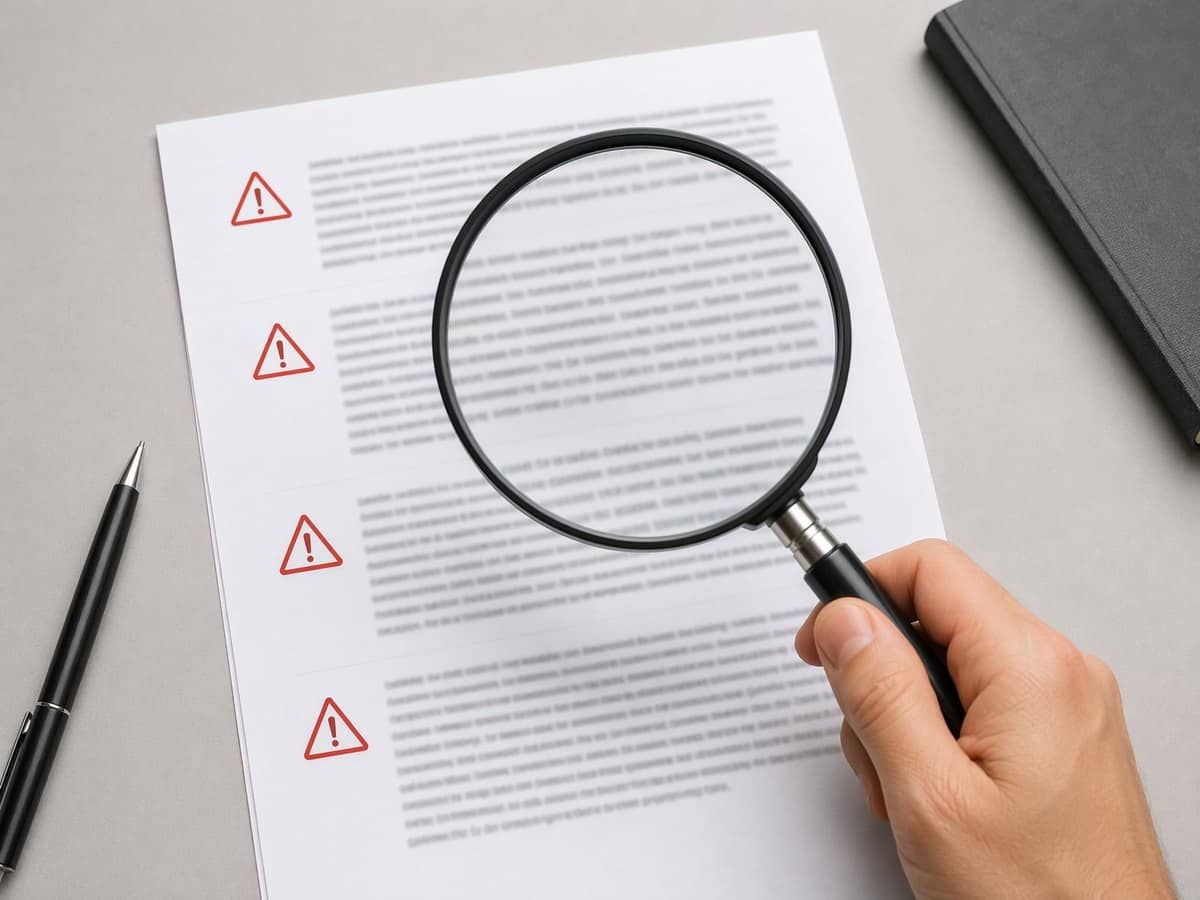
Manufacturer scams are real — especially when you're sourcing blind through anonymous online marketplaces, which is why our guide on how to find a manufacturer for your clothing line covers channels you can verify. New founders lose deposits to 'factories' that were never real. The good news: the warning signs are consistent, and once you know them, they're easy to spot. Here are the nine biggest red flags and how to protect yourself.
The short answer: before any deposit, run three checks. Can you see the company: a registered name, a street address, a live video call from its floor? Can you confirm its documents with the body that issued them? Will your money go, in stages, to an account in that company's name? A real factory passes all three without fuss. Then keep checking through sampling, shipment and the balance.
The 9 red flags
- No verifiable company — no real address, business registration, or named people you can check.
- Chat-only, camera-never — they'll message endlessly but won't do a live video tour of the floor.
- 100% upfront, wire-only — demands full payment in advance, often to a personal account.
- Prices too good to be true — far below every other quote; that gap is the scam's bait.
- No sample before bulk — a real factory will make you a sample before bulk; a scam wants bulk money first.
- Unverifiable certificates — logos pasted on a page, with no certificate number and no document behind them.
- No references or reviews — nobody real to vouch for them.
- Pressure tactics — 'this price is only for today', rushing you past due diligence.
- Refuses a written PO or contract — won't put terms, quantities and dates in writing.
How to verify a real factory
- Ask for a live video tour of the actual production floor.
- Ask for every certificate as a document with its number, then confirm it with the body named on it: the certification body for GOTS, Label Check for OEKO-TEX.
- Ask for references and actually contact one or two.
- Confirm business registration and address.
- Start with a sample before committing to bulk.
- Deal directly with the factory, not an anonymous agent who hides it.
How to pay safely
Never pay 100% upfront. The normal structure is a deposit (around 30–50%) with the balance due before shipment, so both sides have skin in the game. For large orders, a letter of credit or escrow protects you further. Pay to a registered company account, not a personal one, and keep everything — quantities, price, Incoterms, dates — in a written purchase order.
A real factory will happily prove it exists. Pressure, secrecy, and 'pay everything now' are the three loudest alarm bells.
Two checks before every transfer
Confirm bank details by voice, not by email. In what the FBI calls business email compromise, criminals compromise a legitimate business email account and use it to bring about an unauthorised transfer of funds. The invoice looks right because it may come from your supplier's own mailbox. The FBI's advice is to use a second channel to verify any request to change account information. Before you pay an account you have not paid before, call or video-call a person you already know there, on a number you already hold.
Check the shipment before the balance. If your balance is due against shipping documents, look the bill of lading or air waybill number up on the shipping line's or airline's own website, typed into your browser rather than reached through a link the supplier sends, and check that the vessel or flight, the port and the dates match what you were told. Better still, tie the balance to a final inspection report, as our guide to payment terms for bulk clothing orders explains.
The patterns that come up again and again
Outright fraud is less common than the internet suggests, but a handful of patterns recur often enough to be worth recognising on sight.
- Payment to a personal account. A legitimate factory invoices from a company and is paid to an account in that company’s name. A mismatch is the clearest single warning sign in this trade.
- A price well below everyone else. Fabric and labour cost what they cost. A quote far under the market is describing a lighter fabric, a skipped step, or an order that will not be made.
- Certificates as images, never documents. An image can be edited; a certificate document names the body that issued it, and that body can confirm it.
- Pressure for full payment upfront on a first order, particularly framed as a limited-time discount.
- Evasiveness about the factory itself — no address that resolves, no live video, no clear answer about who owns the floor.
Behind those warning signs sit a handful of scams that recur. Each one has a simple check that catches it, and the checks work whether the supplier is in Bangladesh or anywhere else.
| Pattern | How it usually runs | The check that catches it | When to run it |
|---|---|---|---|
| The phantom factory | A website and a chat account, but no floor. It takes a deposit, or full payment, and then goes quiet. | A live video call from the floor during a working shift, with you directing the camera, and a street address that shows an industrial building on a map. | Before the sample |
| The hidden middleman | An agent or trading house presents itself as the factory and places your order on a floor you never checked. | Ask whose floor will sew the bulk, then match the company name on the certificate, the trade licence, the invoice and the bank account. | Before the sample |
| The borrowed sample | The sample is sewn, or bought, somewhere other than the floor that makes the bulk. | A sealed, signed pre-production sample, photos during cutting and sewing, and a final inspection of bulk against that sample. | During sampling and before the balance |
| The switched bank account | An email from your supplier's real mailbox, taken over by a criminal, says the bank details have changed. The FBI calls this business email compromise. | Confirm any new or changed account by phone or video with a contact you already know, on a number you already hold, never one given in the email. | Before every payment |
| The paper shipment | Shipping documents or a tracking number arrive to release the balance, for goods that were never loaded. | Look the bill of lading or air waybill number up on the carrier's own website, typed in yourself, and tie the balance to a final inspection you arranged. | Before the balance |
The commoner risk: not fraud, just the wrong supplier
Most bad outcomes are not scams. They are mismatches — an agent presented as a factory, a decorator presented as a manufacturer, or a factory that genuinely wanted your order but was not equipped for your product. Nobody set out to deceive anyone, and the result is still a run you cannot sell.
The protections are the same either way and they are procedural rather than legal: verify the entity, ask for certificates as documents with numbers and confirm them with the issuing body, ask for a live look at the floor, keep the terms in writing, and start with a small first order. A hundred and fifty pieces is a far cheaper way to discover a supplier is wrong for you than a legal remedy is to enforce one across borders.
The honest version
We're a named, family-run factory in Narayanganj — video tours welcome, a GOTS scope certificate (RSC 9687) we send on request, samples before bulk, and staged payments. That's what 'real' looks like. Before you order anywhere, read how to vet a factory and the questions to ask first.
If you think you have been scammed
Move quickly, and call your bank before anything else. For business email compromise, the FBI's guidance is to contact the bank that sent the payment as soon as the fraud is recognised and ask for a recall or reversal. Then stop all further payments, keep every email, invoice, chat log and transfer receipt, and report it where you are based.
- United States: the FBI's Internet Crime Complaint Center at ic3.gov, which also accepts complaints about a subject in another country.
- England, Wales and Northern Ireland: Report Fraud, the service that replaced Action Fraud. In Scotland, report to Police Scotland on 101.
- Canada: your local police first, then the Canadian Anti-Fraud Centre at antifraudcentre-centreantifraude.ca.
- Elsewhere: your national police or fraud reporting service.
A report feeds the police investigation; the bank recall is the step that can stop the money, which is why speed matters. Be wary of anyone who then contacts you offering to get the money back. The IC3 itself says it does not work with any non-law enforcement entity, such as law firms or crypto services, to recover lost funds.
What clients say
I have had a very good experience with this company. They are very friendly, professional, and provide fast service. They speak fluent English, which makes communication very easy. The quality of their manufacturing is excellent. I have no doubt in recommending this company to anyone looking for a reliable manufacturing partner in Bangladesh.
Collective Studios under the direction of Mr Jamish and his daughter Homaira represent the future of RTW production in Bangladesh. A thorough approach to detail governed by a genuine standard of quality. Masters of and partners in the process!
Frequently asked questions
What are the red flags of a fake clothing factory?
The clearest red flags are a company you cannot verify, no live video of the floor, a demand for 100% upfront payment and a price far below every other quote; a supplier showing three or more of the nine signs is well outside the normal range. The full list: no verifiable company, meaning no real address, business registration or named people to check. Chat-only, camera-never, with endless messages but no live floor tour. Full payment upfront, wire-only, often to a personal account. A quote so far under the rest that the gap itself is the bait. No sample before bulk. Certificates shown as logos pasted on a page, with no number and no document behind them. No references or reviews from anyone real. Pressure tactics such as 'this price is only for today'. And a refusal to put terms, quantities and dates in a written purchase order. No single sign is conclusive, but walking away costs less than going ahead.
How do I avoid getting scammed sourcing clothing online?
Prove who is making your clothes before any money moves, then pay in a way that keeps your leverage. The risk is sharpest when you source blind through anonymous online marketplaces, where a 'factory' can be nothing more than a chat window. Ask for the registered company name, a street address and named people you can speak to. Request a live video tour of the production floor during a working shift, not a pre-recorded film. Ask for each certificate as a document with its number, not a badge on a website, and contact one or two references. Then order a sample before bulk, agree quantities, price, Incoterms and dates in a written purchase order, and pay a deposit, with the balance before shipment, into an account in the company's name. Deal with the factory directly, not an agent who hides it. A quote far below the rest usually means a lighter fabric, a skipped step, or an order that will not be made.
Should I pay a clothing manufacturer 100% upfront?
No: paying 100% upfront on a first order removes every lever you hold over quality, timing and delivery, and a demand for it is one of the loudest alarm bells in sourcing fraud. The normal structure is a deposit, commonly around 30 per cent, with the balance due before shipment, so both sides have something at stake. The deposit has a real job: it funds the fabric a factory has to buy before cutting. Better still, release the balance only once a final inspection has passed, so a supplier who never makes the order never sees the rest of your money. For large orders, a letter of credit or escrow protects you further. Pay only to a registered company account, never a personal one, and keep every term in a written purchase order. A 'pay everything today for this price' offer is pressure, not a discount. We work on staged payments and quote the terms for your order.
Is it a scam if a manufacturer asks me to pay into a personal account?
Not always, but it is the clearest single warning sign in this trade, so do not pay until it is resolved. A legitimate factory invoices from a registered company and is paid into an account in that company's name. When the name on the bank details differs from the name on the invoice, you no longer know who is holding your money or which company is bound by your purchase order. Check that three names match: the company on the invoice, the account holder on the bank details, and the supplier named in your written purchase order. Ask for company bank details in writing, and confirm them with a named person you can check, on a live video call. If the supplier refuses, pushes for full payment anyway or frames it as a limited-time discount, walk away. If you are weighing us up, ask for our registered company details before you pay anything.
Are clothing manufacturer scams common?
They happen, especially when sourcing blind through anonymous online marketplaces, but the more frequent risk is the wrong supplier rather than a fake one. Founders do lose deposits to 'factories' that were never real. But most bad outcomes are honest mismatches: an agent presented as a factory, a decorator presented as a manufacturer, or a genuine factory that wanted your order but was not equipped for your product, leaving a run you cannot sell. The protections are the same either way, and they are procedural rather than legal: verify the company, ask for certificates as documents with numbers, see the floor on a live video, keep the terms in writing, and start with a small first order. A hundred and fifty pieces is a far cheaper way to discover a supplier is wrong for you than a legal remedy is to enforce across borders. With us, a first run starts at 150 pieces for each style in each colour.
How do I know the sample was made by the factory that will make my bulk order?
You cannot tell from the sample alone, so build the check into the process. A sample can be sewn by a skilled sample maker, or bought from another supplier, while the bulk goes to a different floor you never saw. On your live video call, ask to see where samples are made and the sewing lines in the same walk, and ask which lines will sew your order. Approve the pre-production sample in your own fabric and trims, then have it sealed and signed by both sides, so it becomes the reference every bulk piece is measured against. Ask for photos during cutting and sewing, with your labels visible on the line. Finally, tie the balance to a final inspection that compares bulk with the sealed sample, measured at the points in your tech pack. We keep the sealed sample on file, send photos at each stage, and welcome a live call during your bulk run.
What should I do if my clothing manufacturer emails new bank details?
Do not pay until you have confirmed the change by voice with someone you already know at the company. Changed bank details are the heart of business email compromise, which the FBI describes as a scam often carried out by compromising a legitimate business email account to bring about an unauthorised transfer of funds. The message may come from the supplier's real mailbox or from an address one letter different, and it will look like any other invoice. Call or video-call your usual contact on a number you already hold, never one printed in the email, and ask them to confirm the new account name and number. Check that the account is still in the company's own name, matching your invoice and purchase order. If you have already paid, call your bank at once and ask for a recall, then report it. A genuine supplier will understand the delay; one that pushes you to pay anyway is warning you.
What should I do if I think a clothing manufacturer has scammed me?
Call your bank first and ask it to recall or reverse the payment, because speed is what gives you a chance of stopping the money. For business email compromise, the FBI's guidance is to contact the bank that sent the payment as soon as the fraud is recognised. Then stop further payments and keep every email, invoice, chat log and transfer receipt. Report it where you are based: in the United States, the FBI's Internet Crime Complaint Center at ic3.gov; in England, Wales and Northern Ireland, Report Fraud, which replaced Action Fraud; in Scotland, Police Scotland on 101; in Canada, your local police and then the Canadian Anti-Fraud Centre. Elsewhere, use your national police or fraud reporting service. The report feeds the investigation, while the bank recall is the step that can stop the money. Be wary of anyone offering to recover it: the IC3 says it does not work with law firms or crypto services to recover lost funds.
Where this applies
The manufacturing pages this guide relates to, if you are costing a real run.
Free tools & guides for this
Sources & further reading
- Global Standards — GOTS: how the system works
- OEKO-TEX — Label Check
- amfori BSCI — social compliance & auditing
- Sedex / SMETA — supply-chain due diligence & audits
- WRAP — Worldwide Responsible Accredited Production
- ICC — payment terms & letters of credit (UCP 600)
- FBI IC3: Business Email Compromise: protection tips and what to do (checked 2 Nov 2026)
- FBI Internet Crime Complaint Center (IC3): file a complaint (checked 2 Nov 2026)
- Report Fraud (formerly Action Fraud): England, Wales and Northern Ireland (checked 2 Nov 2026)
- Canadian Anti-Fraud Centre: report fraud and cybercrime (checked 2 Nov 2026)
- FBI IC3: Frequently asked questions, who can file a complaint (checked 2 Nov 2026)
- GOV.UK: Report Fraud, new service from City of London Police (checked 2 Nov 2026)
Cite this guide
For journalists, writers, researchers and students.
Quoting this guide? Please credit Collective Studio and link to this page.
Reference
AB Rahman, Collective Studio. "How to Avoid Clothing Manufacturer Scams: 9 Red Flags." 2 November 2026. https://collectivestudioltd.com/journal/how-to-avoid-clothing-manufacturer-scams
Writing about us? Our press kit has our facts, logos and photos, free to use with credit.
Have an idea? Let’s make it.
We manufacture from 150 pieces per style and colour, with organic cotton options from our GOTS-certified facility and photos at every stage. Send a sketch or a sentence — we’ll reply within one business day.