Verify us before you contact us
Certificate RSC 9687 is searchable on GOTS's own public database. we would rather you checked than trusted a logo on a page.
Build a brand on materials you can actually prove. GOTS-certified organic cotton clothing from 100 pieces — with a certificate number you can check yourself.
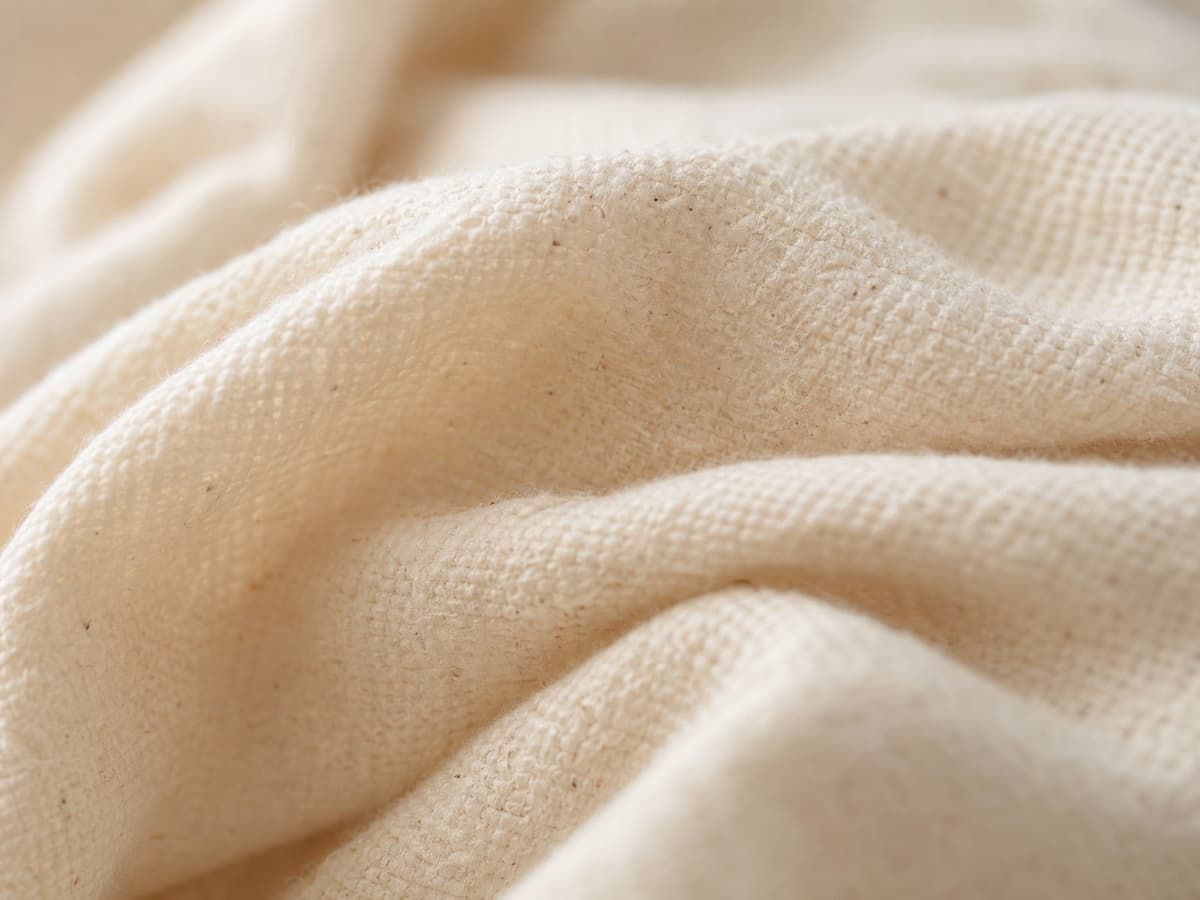
If sustainability is part of your brand’s promise, you need an organic cotton clothing manufacturer who can prove it rather than print the word on a label. We hold GOTS certification — certificate RSC 9687 — and here is the part that matters more than the claim itself: that number is searchable on the Global Organic Textile Standard’s own public certificate database. Look it up before you talk to us. Any manufacturer who will not give you a number you can independently check is telling you something important.
The single most useful thing to understand is that GOTS issues two different certificates, and they answer different questions. A Scope Certificate proves a company is certified to produce GOTS goods in general — that is what RSC 9687 is. A Transaction Certificate proves that your specific shipment was actually made under certified conditions. Most brands only ever ask for the first and assume it covers the second. Retailers and auditors ask for the Transaction Certificate. We can supply both, and we prefer to explain the difference now than have you discover it during a buyer’s compliance check.
Third thing worth knowing before you print a hangtag: GOTS has more than one label grade, and which one your product qualifies for depends on its fibre composition. This is where honest brands accidentally overclaim — describing a blend as “100% organic” when it qualifies for a different wording is a real compliance problem, not a rounding error. We confirm exactly which GOTS wording your fabric choice is entitled to, in writing, before anything goes to print.
Under the current version, GOTS 7.0, certification covers organic fibre content and bans hazardous inputs including PFAS, formaldehyde, heavy metals and GMO material. It also requires wastewater treatment at every facility, and audits working conditions against core ILO conventions — across the entire chain, from field to finished garment. It also now requires certified companies to run human-rights due diligence across their own supply chain. That breadth is the reason GOTS carries weight where a vague “eco-friendly” claim does not. Our full breakdown is in what GOTS-certified organic cotton really means.
One genuine limitation, with a nuance most suppliers get wrong: GOTS limits how much synthetic fibre a certified product may contain, but it is not an outright ban — and the allowance is more generous for stretch categories like leggings and sportswear, specifically so performance garments can still wick. So a cotton-rich legging with elastane in it can carry a GOTS claim. What cannot is polyester- or nylon-based performance fabric with no organic fibre in it at all. We check your specific fabric against the standard and tell you where it lands. We make tees, hoodies, joggers, loungewear, intimates and accessories in certified organic cotton, and we will flag it plainly which pieces in a range can carry the claim and which cannot — from 100 pieces per style and colour.
Certificate RSC 9687 is searchable on GOTS's own public database. we would rather you checked than trusted a logo on a page.
One proves we're certified; the other proves your shipment was. Retailers ask for the second — we supply both and explain which you need.
GOTS has more than one label wording, and which you qualify for depends on fibre composition. We confirm yours in writing before anything is printed.
You don't need a bulk order to go certified-organic. 100 pieces per style and colour, scaling to full production.
Three cotton routes get sold as broadly similar. They differ in what you can prove, what you pay, and what a retailer will accept as a claim.
| Certified organic (GOTS) | Recycled cotton | Conventional cotton | |
|---|---|---|---|
| What you can claim | Documented organic, backed by a certificate covering the chain | Recycled content, verifiable with GRS or RCS | No fibre claim beyond composition |
| Fibre quality | Full staple length — behaves like premium conventional | Shorter staple from reclaimed fibre; usually blended to hold strength | Full staple length |
| Price | A premium over conventional | Varies — blending and sorting add cost | Lowest |
| Colour range | Full, dyed within the certified chain | Narrower — often uses the reclaimed fibre’s existing colour | Full |
| Best for | Brands whose positioning depends on a claim they can document | Reducing virgin-fibre use where a certificate is not the point | Price-led ranges where no environmental claim is being made |
| Wrong choice when | Nobody is asking for documentation and budget is tight | You need consistent colour across repeat runs | Your brand story rests on sustainability |
Conventional cotton is not a failure state. Overclaiming on it is — which is the actual risk this table is about.
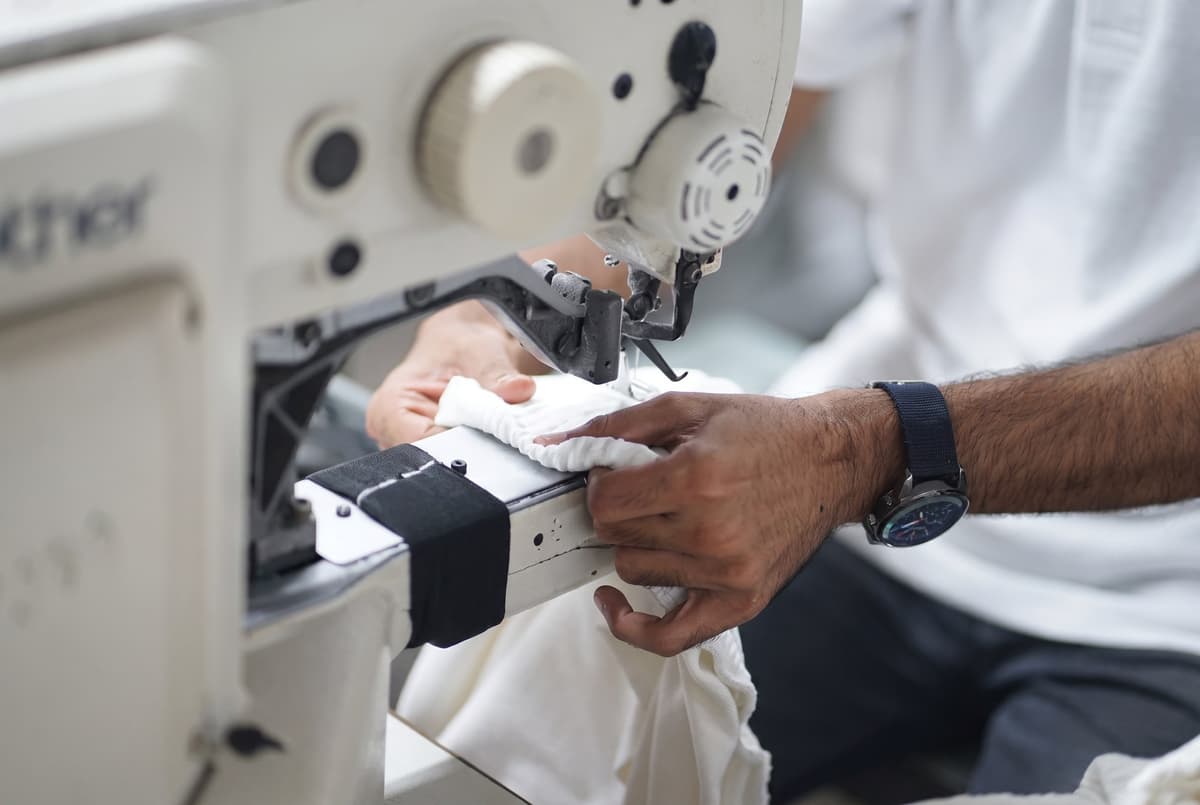
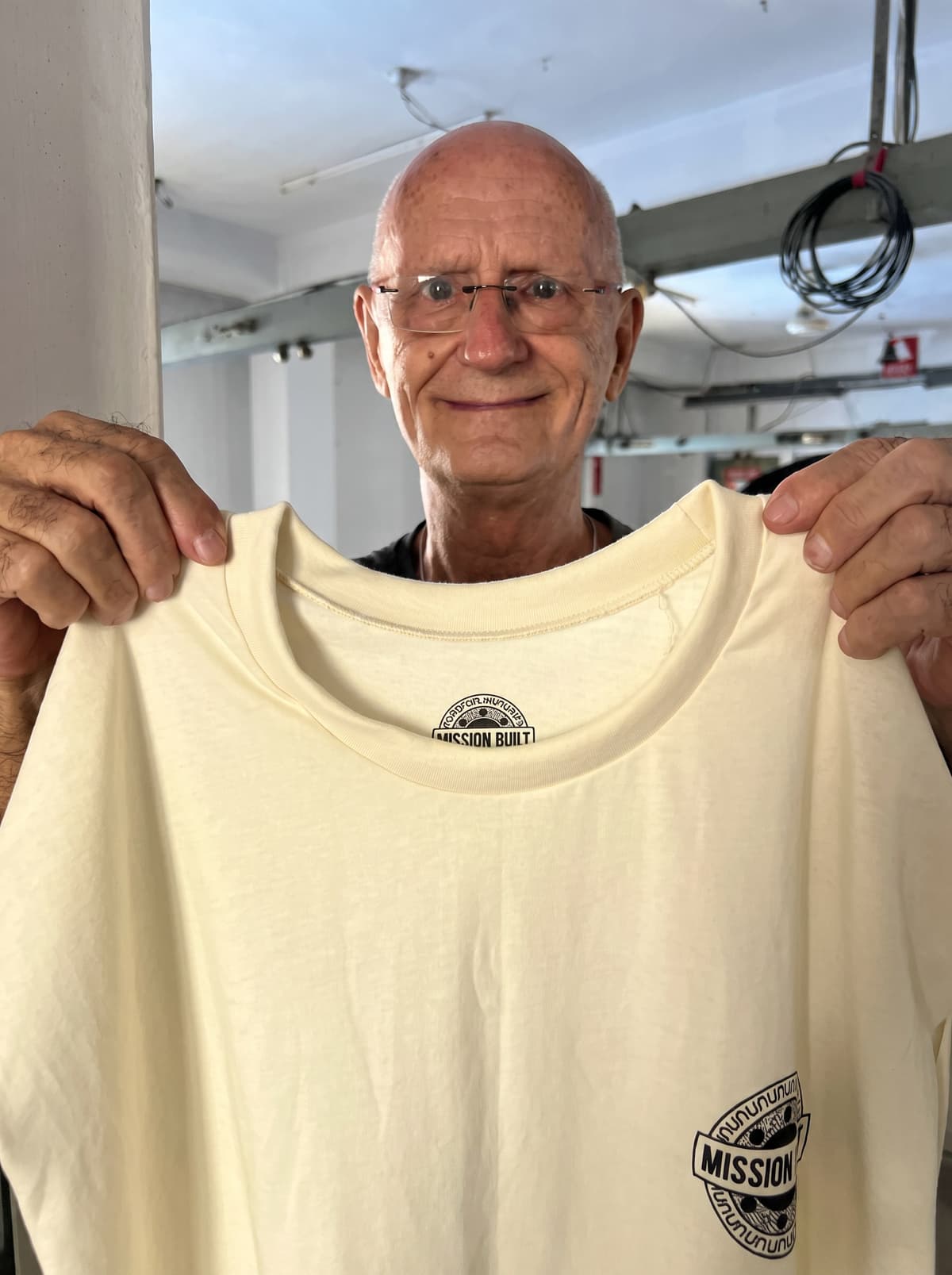
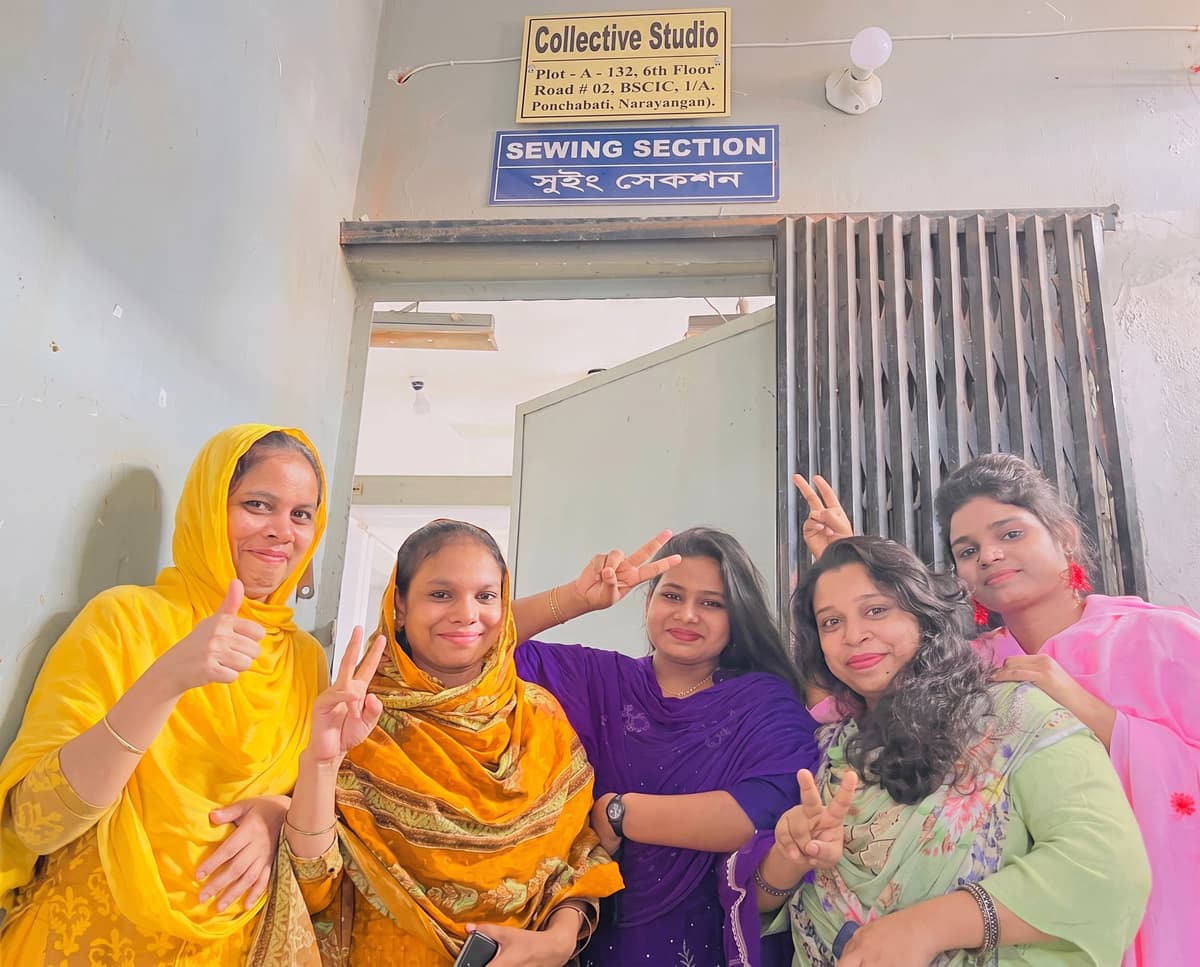
The certification paperwork is covered on our GOTS page. This is the material journey — what happens to the fibre between a farm group and a folded garment, and where the organic supply chain behaves differently from a conventional one.
Certified organic cotton is grown by farm groups on annual cycles, so availability follows harvests rather than a warehouse. For large or unusual quantities this is booked well before a garment is discussed.
Spinning and knitting run at certified partner mills — the certification covers the chain, so every unit handling your fibre holds its own scope. The organic lot is run separately from conventional fibre and documented as it moves, which is what keeps that chain intact. Staple length matches premium conventional cotton, so it spins and knits identically.
The stage where organic differs most. Dyes and auxiliaries are restricted to the GOTS-approved list, so some shades — particularly very deep or fluorescent ones — need reformulating rather than simply mixing. Approve a physical lab dip in daylight and expect deep colours to take longer.
Where delay usually hidesKnitted fabric is relaxed before cutting so the finished garment does not shrink or torque later. Organic cotton behaves like any cotton knit here.
Made on our certified floor. Certified and conventional runs are kept physically separate so the chain of custody holds through production.
Shrinkage measured and recorded against your spec, and shade checked against your approved lab dip rather than a Pantone code — which is what makes repeat runs match.
Delivered duty paid as one landed cost, with your Transaction Certificate if you requested one at order stage.
Certification covers a chain, not a building — so it is worth seeing the chain. These stages happen at partner mills we visit, book and inspect; each unit handling certified fibre holds its own scope certificate.
I have had a very good experience with this company. They are very friendly, professional, and provide fast service. They speak fluent English, which makes communication very easy. The quality of their manufacturing is excellent. I have no doubt in recommending this company to anyone looking for a reliable manufacturing partner in Bangladesh.
Collective Studio is up and coming. Very hard working people who want to please their customers and grow partnerships together. Homaira is very knowledgeable in the knit industry and always willing to learn more. We are looking to grow our business with them.
Yes, and you should check rather than take our word for it. We hold GOTS certification under certificate RSC 9687, and GOTS maintains a public certificate database where you can search that number and confirm it is current, which certification body issued it, and which product categories it covers. That last point matters: a certificate can cover some processes or products and not others, so confirm your product falls inside the scope. The whole design of GOTS is that it removes the need for trust — if a supplier gives you a logo but not a checkable number, or gets vague when you ask, that reluctance is the answer to your question.
This is the detail that catches brands out during a retailer compliance check. A Scope Certificate certifies a company: it names the certified entity, the accredited certification body, the product categories in scope, and a licence number. Ours is RSC 9687. It proves we are able to produce GOTS goods. A Transaction Certificate is order-specific: it proves that a particular shipment was produced under certified conditions. A factory can hold a valid Scope Certificate and still ship you a non-certified run, which is why serious buyers ask for the Transaction Certificate. We can supply both, and we would sooner flag the distinction now than have you find out when a stockist asks.
Four things, across the entire supply chain rather than just the raw fibre. Organic fibre content, grown to a recognised organic farming standard without synthetic pesticides or GM seed. Clean chemistry: hazardous inputs are banned, and under GOTS 7.0 that now includes PFAS alongside formaldehyde, aromatic solvents and heavy metals, with every dye and auxiliary screened for toxicity and biodegradability. Environmental management: wastewater treatment and environmental controls required at every facility. And social criteria built on core ILO conventions — no child or forced labour, freedom of association, living wages, safe conditions — audited along the chain. GOTS 7.0 additionally requires certified companies to run human-rights due diligence on their own supply chain.
Only if it qualifies. GOTS defines more than one label wording, and which one you are entitled to depends on your fabric's fibre composition — so "made with GOTS-certified organic cotton" may be accurate for a blend where "100% organic" is not. That gap is a genuine compliance exposure rather than a stylistic preference, particularly with EU scrutiny of sustainability claims tightening from September 2026. We check your specific fabric against the standard and confirm the exact permitted wording in writing before your labels and hangtags go to print, so you are never guessing. The safest route is to state the certification and the number rather than an unqualified percentage: "GOTS-certified organic cotton, certificate RSC 9687" is checkable and defensible, where "100% organic" invites a question you then have to answer. We will confirm the exact wording your specific blend qualifies for before it goes near a label, because the permitted claim differs by composition and getting it wrong is a compliance problem rather than a marketing one.
Most of our knitwear: tees, polos, hoodies, sweatshirts, joggers, loungewear, kidswear and intimates. The practical limit is fibre composition rather than garment type. GOTS sets a minimum proportion of certified organic fibre and limits how much synthetic content a certified product may contain — with a more generous allowance for stretch categories like leggings and sportswear so performance garments can still wick. In practice that means a cotton-rich legging with elastane can carry a claim, while a polyester-based compression knit with no organic fibre at all cannot, because there is nothing organic to certify. Send us the fabric you have in mind and we will check it against the standard rather than guess. Tell us the range you are planning and we will map which pieces can carry the claim and which need different wording, before you commit to packaging.
Yes, it costs more, and whether it is worth it depends entirely on your positioning. Certified organic fabric carries a premium because the farming is lower-yield and more labour-intensive and the processing is more tightly controlled, plus certification itself has a cost. For a brand competing purely on price, that premium is hard to justify. For a brand whose customers actively look for credible sustainability, it usually pays back three ways: a clearer story, a defensible reason to charge more, and access to retailers who now require certification as a condition of stocking you. Treat it as a positioning decision rather than a material cost — and note that a certificate you can show is what turns the premium into something customers accept.
GOTS certifies the process; OEKO-TEX Standard 100 certifies the product. GOTS starts from organic fibre and audits the whole chain — farming, spinning, dyeing, sewing, trading — against chemical restrictions, wastewater treatment and ILO-based labour criteria. It is the stricter and broader of the two, and it is the only one of the pair that says anything about organic content or working conditions. OEKO-TEX Standard 100 tests the finished textile for harmful substances against limit values. It says nothing about how the item was farmed, who made it, or under what conditions — a conventional polyester garment from any factory can hold it. Neither replaces the other. If you are making an organic claim, you need GOTS. If a retailer wants chemical safety assurance on a non-organic product, OEKO-TEX is what they mean.
Be specific and be able to evidence it. "Natural", "eco-friendly" and "green" are unregulated marketing words with no agreed meaning and prove nothing on their own. Replace them with the certified claim your product actually qualifies for, at the correct grade, and keep the certificate documentation to hand because serious buyers will ask. Apply the claim only to products that really qualify rather than brand-wide unless every item does. Pair it with the human story — who made it and under what conditions — since GOTS covers that too. And date your claims: standards and regulations change, and EU rules on sustainability and durability claims tighten from September 2026.
On the specific things it measures, yes — but the claim is narrower than it sounds, so it's worth being precise. Organic cotton is grown without synthetic pesticides or genetically modified seed, using practices intended to protect soil health, water systems, and the health of the people doing the farming — which is a real difference from conventional cultivation, where pesticide exposure is a genuine occupational risk. What organic certification does not automatically tell you is how the fibre was processed downstream, which is precisely the gap GOTS exists to close by certifying the whole chain rather than the field alone. Organic cotton remains a small fraction of global cotton production, which is part of why certified supply carries a premium.
The fibre is grown by certified farm groups and moves through spinning, knitting and dyeing units that each hold their own certification — that chain is the thing GOTS actually certifies, rather than the field alone. What you can trace depends on which document you hold. Our Scope Certificate, RSC 9687, proves the factory operates within the certified chain and is public. A Transaction Certificate goes further: it names the products, quantities and buyer for one specific shipment, which is what lets a retailer confirm that your particular goods came through certified processing rather than that your supplier is certified in general. Ask for one at order stage. Issuing it retrospectively is difficult because it is generated against production records, and those are far easier to assemble while the order is live.
Yes, within limits, and the limits decide your label rather than your product. GOTS caps synthetic content, and the allowance is higher for stretch categories like leggings and sportswear than for a standard tee — which is why a cotton-rich legging can qualify while a performance knit with no organic fibre cannot. Recycled polyester can sit in a certified blend, and if you want to claim the recycled content specifically you will need GRS or RCS documentation alongside GOTS, because they certify different things. The practical sequence: tell us the blend you want and the claim you intend to print, and we confirm in writing which label wording that composition earns before any labels are produced. Deciding the blend first and the claim afterwards is how brands end up with artwork they cannot legally use.
Substantially, and this is the part most people miss when they assume organic refers only to farming. GOTS restricts the chemical inputs used at every processing stage — dyes, auxiliaries, finishes — against criteria covering toxicity and biodegradability, and it bans several groups outright: azo dyes that release carcinogenic amines, chlorine bleach, formaldehyde, and heavy metals. Version 7.0 added PFAS to that list. It also sets wastewater treatment requirements for the dyeing units in the chain, which is why the certification covers facilities and not just fibre. The practical effect for a brand is that the restriction is on record and auditable, so a customer asking what is in the fabric has a documented answer rather than an assurance.
In construction, no — certified organic cotton has the same staple length and spins to the same counts as conventional, so it cuts, sews and finishes identically. The differences that matter are downstream. Shrinkage behaves as any cotton knit does, meaning you should wash-test your sample and record the measurements before and after rather than assuming the mill's figure applies to your fabric. Colour range is full, though deep shades take dyeing time in the certified chain like any other. Where you may notice a genuine difference is batch-to-batch shade consistency across repeat runs, which is why we retain your approved lab dip on file and match repeats to it rather than re-matching to a Pantone reference each time.
100 pieces per style, per colourway — the same floor as the rest of our manufacturing, so going certified-organic does not require a larger commitment than conventional. The per-colourway part is worth planning around: each colour is a separate fabric batch with its own dye lot, so three colourways of one organic tee is a 300-piece commitment rather than 100. Sizes are flexible within that. If you are launching a sustainable range, our usual advice is to start with one or two carry-over styles in certified organic rather than spreading a first order thin across many, because it lets you prove the positioning before you scale the inventory risk.
Trade and regulatory details on this page last verified 30 July 2026. Tariff and compliance terms change — ask us to confirm the current position for your order.
Whether it’s a large bulk or wholesale run or your first batch of 100, send a sketch, a reference, or a sentence. We’ll reply within one business day with fabric options and an indicative price.