Competitive pricing at volume
Per-unit cost falls as your order grows — real wholesale rates you get by working directly with the factory, not an agent.
A full-scale clothing manufacturer and wholesale supplier — bulk production at competitive prices, made to your brand and shipped worldwide.
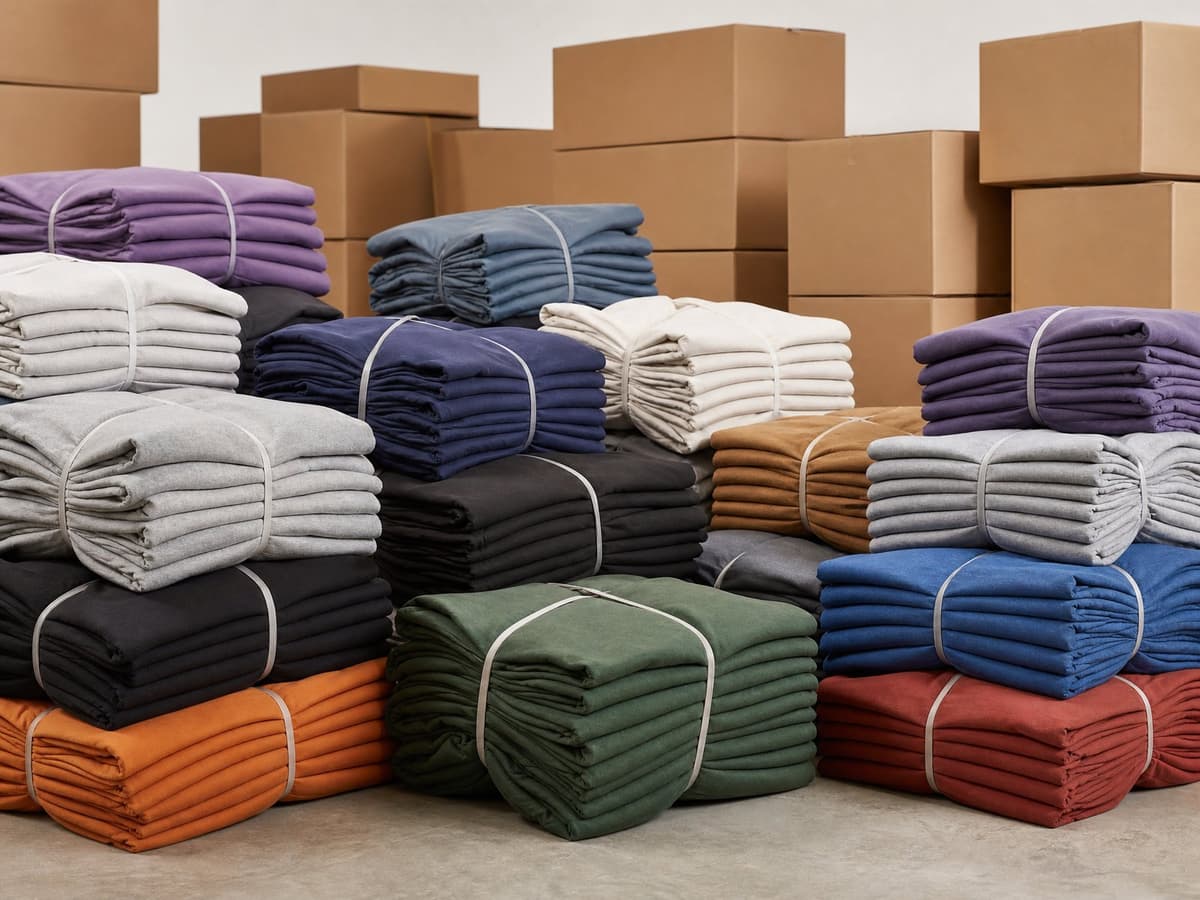
First, a clarification worth making up front, because "wholesale clothing" describes two completely different businesses. Some suppliers sell you blank stock garments in bulk — existing products, off the shelf, that you resell or print on. That isn't what we do. Collective Studio is a manufacturer: we cut and sew your designs, to your pattern and spec, under your own label, in bulk. If you're looking for cases of ready-made blanks to resell, a stock wholesaler will serve you faster and cheaper than we can. If you want your own product made at volume, that's exactly what our factory in Narayanganj does.
You work directly with the factory, not a trading agent, which matters more than it sounds: agents add a margin layer and a communication layer, and both cost you. Whether you're a growing label placing your first thousands or an established brand ordering tens of thousands, we scale with you — and we still support smaller runs from 100 pieces when you need to test a design before committing to bulk.
On pricing: per-unit cost falls as fixed costs (patterns, setup, line changeover) spread across more units, and rates typically step down around 500, 1,000, 5,000 and 10,000 pieces before flattening out near the underlying fabric-and-labour cost. There's a real floor — anyone promising indefinite reductions past that point is quoting something they'll need to claw back elsewhere. Every order includes GOTS-certified organic options (certificate RSC 9687), social-compliance documentation, photos at every production stage, and worldwide DDP delivery as one clear landed cost.
Per-unit cost falls as your order grows — real wholesale rates you get by working directly with the factory, not an agent.
Bulk production from thousands to tens of thousands of units per style, with consistent quality run to run.
Cut-and-sew from your tech pack with custom labels, trims and branded packaging — supplied ready to sell.
GOTS-certified organic options and audited, ethical production — documentation you can show your buyers.
At wholesale volume the question is rarely which country. It is who you are actually contracting with — and that is often unclear until something goes wrong on the floor.
| Direct with the factory | Buying house / agent | Trading company | |
|---|---|---|---|
| Who makes your goods | The factory you are talking to | A factory they select, sometimes unnamed | Often unknown to you, and may change between orders |
| Margin layers | One | Factory price plus an agent commission | Factory price plus a resale margin |
| When something is wrong on the line | You speak to the people who can stop it | A message is relayed, and speed depends on their priorities | You may not be told which line it is on |
| Certification proof | Our own certificate, RSC 9687, checkable by you | The factory's certificate, supplied second-hand | Frequently unavailable per shipment |
| Best for | Repeat programmes where consistency and traceability matter | Sourcing many product types across several factories at once | One-off buys where price is the only variable |
| Wrong choice when | You need ten unrelated product categories at once — an agent covers breadth better than we do | You need to know exactly who sews your garment | You need traceability, audit documentation or repeatable colour |
Agents and trading companies are legitimate and sometimes the right answer. The failure mode is not knowing which of the three you are dealing with.
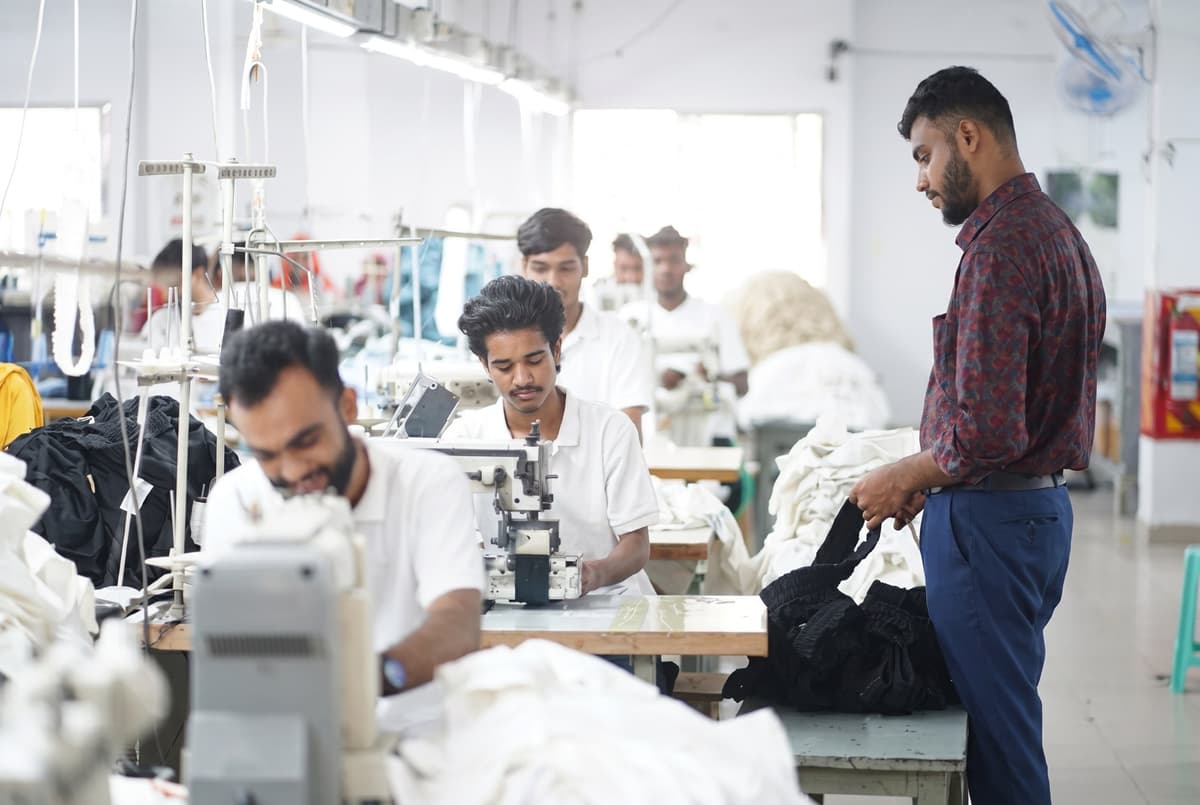
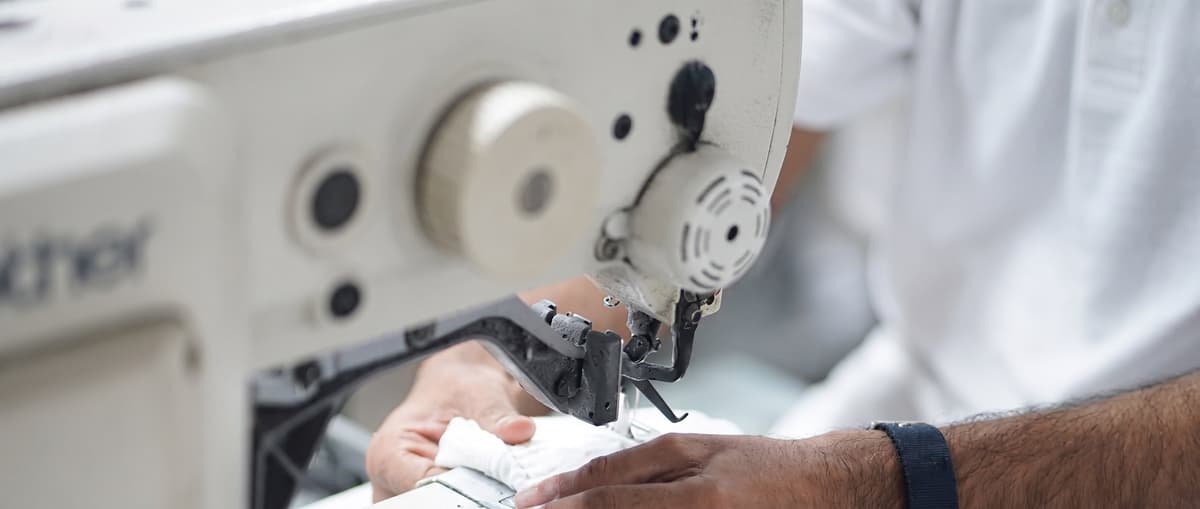
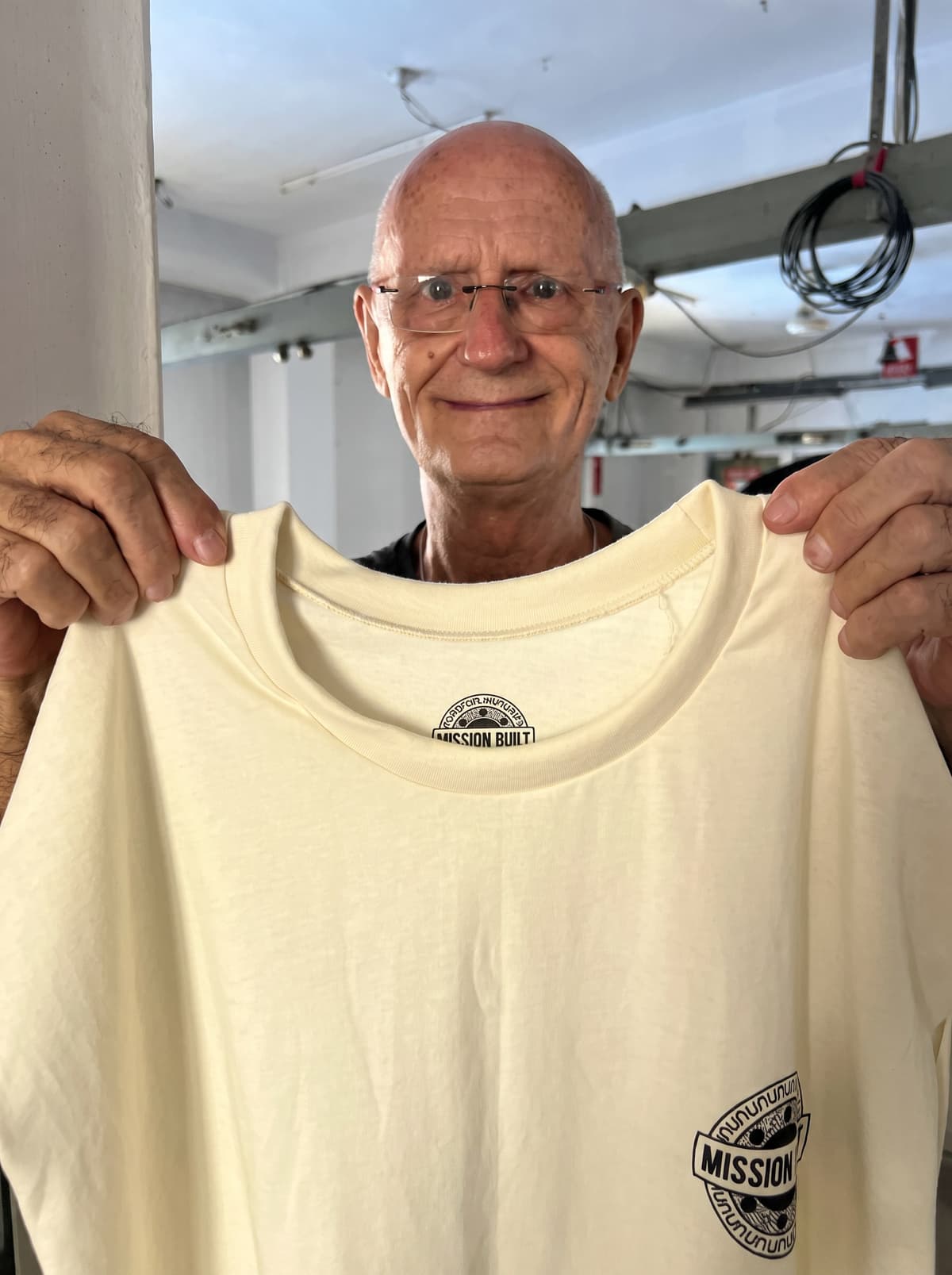
A bulk programme runs on the same eight stages as a first order, but the risk moves: at volume, mistakes are expensive to discover late, so approval gates carry more weight than speed.
Full tech pack, fabric specification and a costed quote per style and colourway, with price breaks shown at each volume step.
At volume this is the constraint. Mill minimums, dye-lot sizes and colour development set the calendar — not sewing capacity. Book early and consolidate colourways where you can.
Where delay usually hidesApproved and sealed before a single bulk metre is cut. At this quantity the sealed sample is your contract, not a formality.
Run on our own floor with staged photography, so you are seeing progress rather than waiting for an outcome.
Inspected against AQL levels during the run as well as at the end, so a defect is caught at 200 pieces rather than 5,000.
Certificates of origin, Transaction Certificates where certified, and the paperwork your customs broker will ask for.
One landed cost. Duty, clearance and freight handled by us rather than arriving as separate invoices.
Sealed sample and approved lab dips stay on file, so the second programme matches the first without re-qualifying colour or fit.
At wholesale volumes the risk shifts. The question stops being whether a factory can sew your order and becomes whether the fabric lands on time and matches across the whole run. Those are two different companies' problems and both have to be managed.
Upstream booking is the part that goes wrong on large orders. Reserving a single dye lot early is what stops carton forty looking different from carton four, which is why we ask for forecast quantities on repeat programmes instead of treating each order as a fresh one.
Collective Studios under the direction of Mr Jamish and his daughter Homaira represent the future of RTW production in Bangladesh. A thorough approach to detail governed by a genuine standard of quality. Masters of and partners in the process!
Collective Studio is up and coming. Very hard working people who want to please their customers and grow partnerships together. Homaira is very knowledgeable in the knit industry and always willing to learn more. We are looking to grow our business with them.
We manufacture custom — your fabric, your fit, your labels, made to your specification. We do not hold blank stock to sell on. The distinction is worth understanding because the two businesses look similar from the outside and produce very different results. A blanks wholesaler ships you someone else's garment, chosen by them, with their neck label in it, and your only control is what you print on the outside. Manufacturing means the fabric weight, the fit, the seam construction, the labels and the packaging are all decisions you make. It costs less per unit at a hundred pieces or more and the product is genuinely yours. What you give up is immediacy: blanks ship tomorrow, manufacturing takes roughly two to three months from first conversation.
A manufacturer. We knit, cut, sew, dye, print and finish in our own factory in Narayanganj, Bangladesh — the goods are made in a building we operate, by people we employ, and you can visit it. That distinction matters more than it sounds. A supplier or trading company takes your order and places it with a factory you never see, which means an extra margin, an extra layer between you and any problem, and no ability to verify who actually made your garments or under what conditions. When something goes wrong with a subcontracted order, the people you can reach are not the people who can fix it. We are BKMEA members and GOTS-certified under RSC 9687, both verifiable in public directories rather than on our say-so.
One hundred pieces per style, per colour — the same floor as everything else we make, which surprises people who expect wholesale to mean higher minimums rather than lower. What does change at wholesale volumes is the price curve: meaningful breaks land around 300, 500, 1,000 and 3,000 pieces, because fabric lots, cutting layers and setup costs spread across more units. If you are supplying a retailer, tell us at quote stage who the stockist is and what they require — carton specification, barcode placement, ratio packs and labelling format are all straightforward to build into the run and awkward to retrofit once goods are boxed. We also pack to a retailer's own standard rather than ours when their buying terms demand it.
It depends what you are comparing against, and the honest answer is that wholesale and manufacturing are different questions. Buying finished stock wholesale saves you the setup work — no patterns, no sampling, no minimums per colour — but you are buying someone else's product and margin, typically at forty to fifty per cent of retail. Manufacturing your own costs more up front in time and sampling, but the per-unit cost is usually a third to a half of a wholesale price for the equivalent garment, and the product is yours. The break-even for most brands sits somewhere around a few hundred pieces per style. Below that, wholesale is genuinely more sensible. Above it, you are paying a large premium for convenience you no longer need.
Yes, DDP to the US, UK, EU, Australia, Canada and most other markets. DDP means we handle export, freight, customs entry and duty, and quote a landed price rather than a factory price with charges arriving later. For wholesale specifically we can pack to your stockist's requirements rather than our default — their carton specification, barcode placement, ratio packs and labelling format. That is straightforward to build into the production run and awkward to retrofit once goods are boxed, so tell us at quote stage who the end retailer is. Air freight suits launch dates and adds roughly five to eight days; sea freight adds four to six weeks at a fraction of the cost and suits repeat bulk.
Yes — all our wholesale production is private label by default. Your woven or printed neck label, your care and content label, your hangtags, your packaging. Nothing carries our branding at any point, and the factory is not identified to your customers. For wholesale specifically we can also produce to a retailer's own labelling requirements when you are supplying a stockist that mandates its own format, and we can pack to their carton and barcode specification rather than ours. Say at quote stage who the end stockist is and what they require, because retailer packing standards are considerably easier to build into the run than to retrofit afterwards once the goods are already boxed.
Trade and regulatory details on this page last verified 30 July 2026. Tariff and compliance terms change — ask us to confirm the current position for your order.
Whether it’s a large bulk or wholesale run or your first batch of 100, send a sketch, a reference, or a sentence. We’ll reply within one business day with fabric options and an indicative price.