Buying House or Factory? How to Check Who Actually Sews Your Clothes in Bangladesh
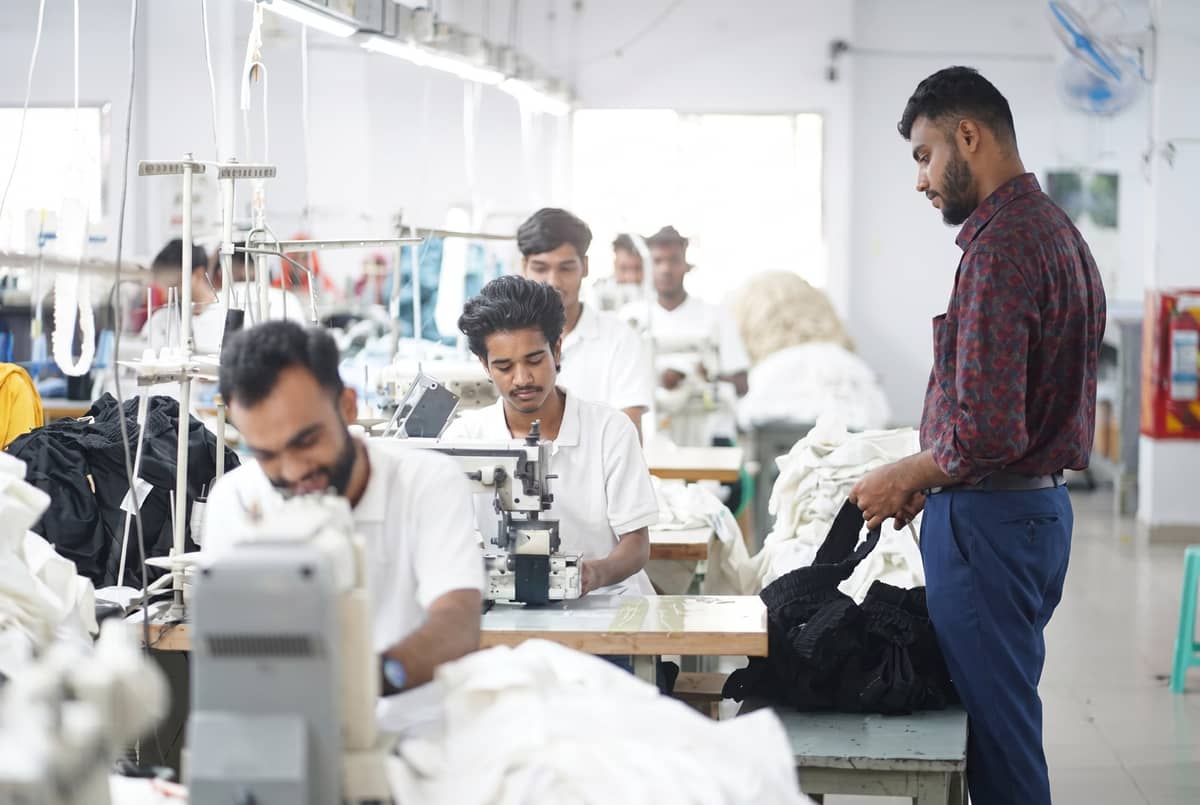
Ask a Bangladesh supplier whether it is a factory and almost every one will say yes. Many are, and many are buying houses: companies that take your order and place it with factories they do not own. According to AKM Saifur Rahman Farhad, vice-president of the Bangladesh Garment Buying House Association, around 70 per cent of factory orders in Bangladesh still come through buying houses. There is nothing wrong with that. The problem is not knowing which one you are dealing with, because it decides who is accountable for your quality, who sets your price and whose floor you can actually visit.
This guide explains what each one does, when a buying house is the better choice, the free public registers that show who runs a factory floor, and the ten things to compare between suppliers before you pay a deposit. Every register below was checked on 16 October 2026.
Factory, buying house, agent: what each one is
A factory owns or runs the floor where your garments are cut and sewn. You can see the lines, the people who run them answer your technical questions, and the company that quotes you is the company that makes the order.
A buying house takes your order and places it with one or more factories it does not own, usually handling merchandising, sourcing, sampling and quality checks along the way and earning a margin or commission for it. It is a formal part of the industry: the Bangladesh Knitwear Manufacturers & Exporters Association even has a member category called Associate Member (Buying House). Agents and traders do a similar job on a smaller scale, sometimes as one person with a phone and a list of factories.
None of these is a scam by itself. The risk comes from a buying house presenting itself as a factory, because then you cannot see who makes your clothes and cannot hold the right company to account.
When a buying house is the right choice
A good buying house earns its margin when your range is wider than one factory can make. Knitwear, woven shirts, denim, sweaters and accessories are made on different machinery, often in different factories, and one contact who manages all of them can save a small team a great deal of time. It also helps when you need more capacity than a single floor has, or simply want someone local to manage several suppliers.
We use one ourselves for exactly that reason. Our floor makes knitwear only, so when a brand’s range also needs denim or woven shirts, our sister buying house, CMB Sourcing Ltd, a separate company with its own contract, sources them from other factories. What matters is that you know which company is doing what.
Why it matters who sews your order
- Accountability. If the factory is a name you have never seen, a quality problem becomes a conversation between two companies, with you outside it.
- Subcontracting. Orders passed down a chain can end up somewhere nobody approved. After the 2012 Tazreen fire, Walmart said the work had been subcontracted without its authorisation, and investigators traced about ten middlemen between brands and the floor.
- Price. Each layer adds its margin. That can be worth paying for, but you should know it is there.
- Communication. Questions about fit or fabric travel through a merchandiser and back, which slows sampling and loses detail.
- Certificates. A GOTS scope certificate covers the facility it names. A supplier that “works with certified mills” is describing its suppliers, not itself.
Six signs you are talking to a buying house
None of these proves anything on its own, and they come from practical experience rather than any official checklist. Two or three together are worth a direct question.
- There is an office address but no factory address, or the factory address belongs to a different company.
- The product range is wider than one floor’s machines could make: knitwear, woven shirts, denim, sweaters, leather and bags from one “factory”.
- A live video call of the floor during a working shift is always difficult to arrange, and you are offered recorded footage instead.
- Certificates and registrations name a different company from the one quoting you.
- BKMEA lists the company as an Associate Member (Buying House), or it has no factory listing with BKMEA or BGMEA at all.
- The answer to “which factory will sew my order, and where is it?” is vague, or changes.
The free public checks, and what each one proves
These registers are free to search and need no login. Most of their data is reported by the factories themselves, so treat each one as evidence to weigh rather than a verdict, and be aware that small or newer factories can be missing from them without anything being wrong. To see what these records look like for real companies, our list of knitwear manufacturers in Bangladesh gives the BKMEA record for each one we could find.
| Check | Where | What it shows | What it does not prove |
|---|---|---|---|
| BKMEA member list (knitwear) | member.bkmea.com | Membership number, member type (ordinary member or buying house), factory address, machines and capacity | That this factory will sew your order; figures are self-reported |
| BGMEA member search (mainly woven) | bgmea.com.bd | Registration number, a separate factory address, employees, machines, yearly capacity | Fields are self-reported and often incomplete |
| Mapped in Bangladesh | mappedinbangladesh.org | A map of export factories run by BRAC University’s Centre for Entrepreneurship Development: address, products, workers, export markets, memberships, certifications | Its data was collected door to door in a project reported to have ended in 2022, so newer and smaller factories may be absent |
| RMG Sustainability Council | rsc-bd.org | Building-safety remediation status, including factories listed as independent by BGMEA or BKMEA | Anything about who makes your order; it covers safety inspection |
| International Accord | internationalaccord.org | Inspection reports and corrective action plans for factories listed by signatory brands | Absence is normal for a small factory that does not supply a signatory brand |
| DIFE factory licence | lima.dife.gov.bd | The current status of a licence number the supplier gives you (the page is in Bangla, with an English switch) | Ownership of the business, only the licensed premises |
| GOTS certified suppliers | global-standards.org | Whether a company holds a GOTS scope certificate | That a shipment is GOTS: that needs its own transaction certificate. The database is still being updated, so also ask for the certificate |
| Company register and export licence | Ask for certified copies; RJSC lets you check a digitally issued copy | That the company exists and is licensed to export | That it owns a factory: buying houses hold both |
The live video test
A live call from the floor while a shift is working is the one check a polished website cannot fake. Book it for a time that suits you, and ask to see specific things rather than accepting a tour of the sample room:
- the cutting tables, with fabric being cut;
- the sewing lines running, with the operators at work;
- finishing, ironing and packing;
- the quality control desk, with measurement charts and an approved sample;
- a garment like yours in production;
- the building entrance or sign, so you can match it to the address on your quote.
Ask your questions of the person on the floor, not only the salesperson. A factory that makes your type of garment will answer questions about stitch types, fabric shrinkage and sizing without passing them on.
Ten things to compare between suppliers
Put every supplier through the same list, in writing, before you pay a deposit; our guide to finding a clothing manufacturer covers how to build the shortlist in the first place. A supplier that is vague on any of these at quote stage rarely becomes clearer afterwards.
| What to compare | What to ask | What a good answer looks like |
|---|---|---|
| Who sews it | Will this order be cut and sewn on your own floor? | Names the floor and its address, and lets you see it |
| Minimum | Is it per style, or per style and colour? | A number in writing, with the size split explained |
| Product type | Do you cut and sew to my pattern, or decorate ready-made blanks? | A clear answer either way |
| Sample | What does a sample cost, and how long does it take? | A fixed price and a number of days |
| Production time | How many days after sample approval, and which ship date? | A ship date committed in writing |
| Landed price | Which Incoterm is this quote? | DDP, or every cost to your door listed |
| Payment | What starts production, and what releases the balance? | Balance paid against an inspection report |
| Quality | Who checks, against what reference, at what AQL? | A named person, a sealed sample, a report |
| Certificates | In whose name is each certificate? | The quoting company’s own name, checkable |
| Communication | Who will answer my questions, and how fast? | A named person, in your language, within a business day |
Where we stand on these checks
We publish our company registration (P-56588/2026), VAT registration (006633503-0204) and export licence (260326210608425) on our certifications page, and send the scope certificate for our GOTS certificate, RSC 9687, on request. We are not yet listed on every register above, and as this guide says, a missing listing proves nothing either way, so we would rather show you directly. Book a live video call from our floor in Narayanganj during a working shift, and ask us for the document behind any claim on this site.
For the rest of the vetting process, read how to avoid clothing manufacturer scams, how to vet a factory for bulk orders and the questions to ask a clothing manufacturer, or see our buyer questions page.
What clients say
I have had a very good experience with this company. They are very friendly, professional, and provide fast service. They speak fluent English, which makes communication very easy. The quality of their manufacturing is excellent. I have no doubt in recommending this company to anyone looking for a reliable manufacturing partner in Bangladesh.
Nice supplier that is looking to develop new buyers and products.
Frequently asked questions
Is it a bad idea to use a buying house in Bangladesh?
No. A buying house is a legitimate service, and for some brands it is the better choice: when your range covers knitwear, woven shirts, denim and accessories that no single factory makes, one company managing several factories can save you a great deal of time, and a good one checks quality on your behalf. What causes trouble is a buying house presenting itself as a factory, because you then cannot see who sews your order or hold the right company to account. If you use one, ask it to name the factory for each style, give you that factory’s address, and arrange a live video call or a visit. Put the factory’s name in your written order, ask whose quality control signs off the shipment, and make sure any certificate you rely on names the factory doing the work rather than the buying house.
How can I find out which factory a buying house will use for my order?
Ask directly, and expect a direct answer. A buying house with nothing to hide will name the factory for each style, give you its address and let you see it on a live video call or visit it. Some prefer to keep their factory list private at enquiry stage, which is reasonable then, but not once you are paying a deposit. Check the name you are given: look it up in the BKMEA member list or BGMEA member search, on Mapped in Bangladesh and in the RMG Sustainability Council’s factory list, and ask for its DIFE licence number to check on the government’s LIMA site. Make sure the factory makes your type of garment, because a woven-shirt factory is the wrong place for jersey tees. Finally, write the factory’s name into your order, so the work cannot be moved elsewhere without your agreement.
Why might a genuine factory be missing from Mapped in Bangladesh or the Accord's list?
Because each register covers a particular group, and none of them is a complete list of Bangladesh’s factories. The International Accord lists factories that supply brands which signed it, so a small factory working with independent brands is legitimately absent. Mapped in Bangladesh, run by BRAC University’s Centre for Entrepreneurship Development, built its data from door-to-door visits in a project reported to have ended in 2022, so factories that opened or changed since then can be missing. The RMG Sustainability Council’s list covers factories in its building-safety programme, and BGMEA and BKMEA list their members only. So a missing listing is a reason to ask, not a verdict: ask the supplier why, and look for other evidence such as a DIFE licence number, registration documents in its own name and a live video call from the floor. A listing, likewise, shows a factory exists, not that it will sew your order.
What is a buying house in the garment industry?
A buying house is a company that takes a brand's clothing order and places it with one or more factories it does not own, usually managing merchandising, sourcing, sampling and quality checks and earning a margin or commission for that work. It is a formal, recognised part of the Bangladeshi industry: the Bangladesh Knitwear Manufacturers and Exporters Association has a member category called Associate Member (Buying House). Agents and traders do a similar job on a smaller scale, sometimes as one person with a phone and a list of factories. According to the vice-president of the Bangladesh Garment Buying House Association, around 70 per cent of factory orders in Bangladesh still come through buying houses. None of this is a problem in itself. The risk arises when a buying house presents itself as a factory, because you then cannot see who makes your clothes or hold the right company to account for quality.
What is the difference between a buying house and a garment factory?
A garment factory owns or runs the floor where your clothes are cut and sewn, while a buying house places your order on floors that belong to other companies. With a factory, you can see the lines, the people who run them answer your technical questions, and the company that quotes you is the company that makes the order. With a buying house, questions about fit or fabric travel through a merchandiser and back, each layer adds its margin, and responsibility for a defect sits between two companies. A buying house earns its place when your range is wider than one factory can make, such as knitwear plus denim, woven shirts and accessories. Collective Studio runs its own knitwear floor in Narayanganj, and when a brand also needs woven products, our sister buying house, CMB Sourcing Ltd, sources them under a separate contract, so you always know which company is doing what.
Is there a list of buying houses in Bangladesh?
Yes, the closest thing to an official list is the BKMEA member directory at member.bkmea.com, which shows whether each company is an ordinary member or an Associate Member (Buying House). Buying houses also have their own trade body, the Bangladesh Garment Buying House Association. The BGMEA member search at bgmea.com.bd covers mainly woven manufacturers and shows registration numbers and factory addresses. Both directories are free to search and need no login, but most of their data is self-reported, so treat a listing as evidence rather than a verdict. Ranked online lists of buying houses in Dhaka are rarely based on checks you can repeat yourself. The more useful question is which factory a buying house will use for your order, and whether you can see that floor on a live video call during a working shift. Ask for that factory's name and address in writing before you pay any deposit.
How can I tell if a Bangladesh clothing supplier is a buying house?
Ask directly which factory will cut and sew your order and where it is, then check the answer against public records and a live video call. Several signs together are worth that direct question: an office address but no factory address, a product range wider than one floor's machines could make, certificates or registrations in a different company's name, and a live call from the floor during a working shift that is always difficult to arrange. A BKMEA listing as Associate Member (Buying House), or no factory listing with BKMEA or BGMEA at all, is another clue. None of these proves anything alone, because small or newer factories can be missing from registers without anything being wrong. On the call, ask to see the cutting tables, running sewing lines, finishing and packing, the quality control desk and the building sign, and put technical questions to the person on the floor rather than only the salesperson.
Should a small clothing brand use a buying house or go direct to a factory?
Go direct to a factory if your range is one product type, such as knitwear, and consider a buying house if your range spans products made on different machinery in different factories. A knitwear-only brand gains little from an intermediary: going direct shortens communication on fit and fabric, removes a layer of margin and makes the company that quotes you the company accountable for quality. A buying house earns its margin when you need knitwear, woven shirts, denim, sweaters and accessories managed by one local contact, or more capacity than a single floor has. Either way, compare suppliers on the same written list before paying a deposit: who sews it, the minimum per style and colour, sample time, production time, the Incoterm, payment terms, who checks quality against what reference, and whose name is on each certificate. A supplier that is vague on any of these at quote stage rarely becomes clearer later.
Sources & further reading
- BKMEA — member list and member search
- BGMEA — member search
- Mapped in Bangladesh (BRAC University CED) — factory search
- RMG Sustainability Council — factory list
- International Accord — Bangladesh factory search
- DIFE — factory licence verification (LIMA)
- GOTS — certified suppliers database
- Apparel Resources — "70% of Bangladesh's factory orders come via buying houses" (3 May 2025)
- Foreign Policy — subcontracting and the Tazreen fire (24 Apr 2015)
Cite this guide
For journalists, writers, researchers and students.
Quoting this guide? Please credit Collective Studio and link to this page.
Reference
Homaira Jashim, Collective Studio. "Buying House or Factory? How to Check Who Actually Sews Your Clothes in Bangladesh." 16 October 2026. https://collectivestudioltd.com/journal/buying-house-vs-factory-bangladesh
Writing about us? Our press kit has our facts, logos and photos, free to use with credit.
Have an idea? Let’s make it.
We manufacture from 150 pieces per style and colour, with organic cotton options from our GOTS-certified facility and photos at every stage. Send a sketch or a sentence — we’ll reply within one business day.