Your colour kept on file
Approved on a physical lab dip held against your account, so a reorder in two years matches the original standard rather than a colour code someone reinterprets.
The hard part of a uniform is not the first order. It is the third one, two years later, still matching the first.
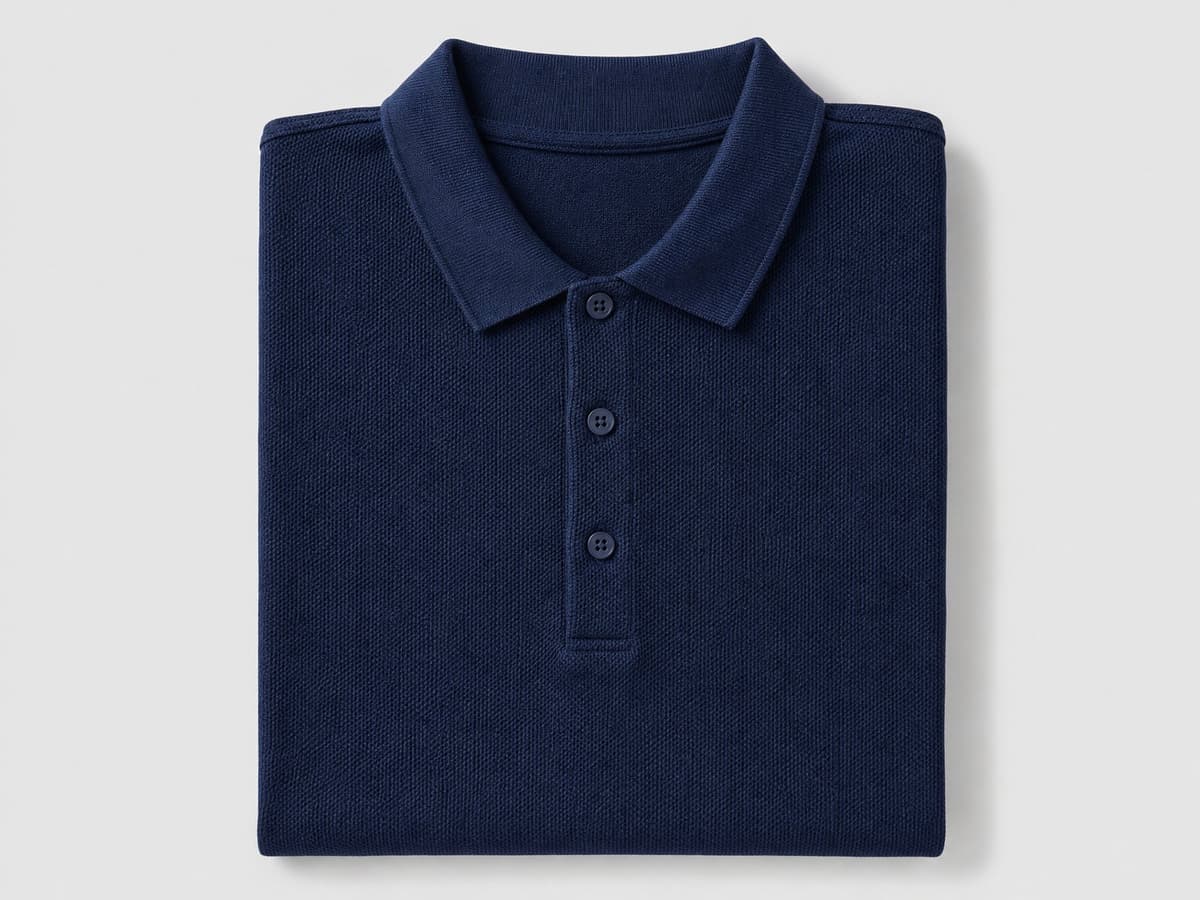
Collective Studio makes workwear and uniforms in knitted fabric — polo shirts, t-shirts, sweatshirts, hoodies, fleece and caps — for companies, schools, gyms, hospitality groups and event teams. Minimum is 100 pieces per style and colour, and logo embroidery and printing happen in our own building rather than at a separate supplier.
Uniform buying is a genuinely different job from fashion buying, and the thing that decides whether it goes well is repeatability. A new employee joining eighteen months after your first order needs a polo that matches the ones their colleagues are wearing. If your second batch is half a shade off, you do not have a uniform any more, you have two uniforms. This is the failure everyone in procurement has experienced and almost no supplier addresses up front.
We handle it in two ways. First, colour is approved on a physical lab dip that we keep on file against your account, not on a Pantone reference read off a screen — so your reorder is matched to the same physical standard as the original rather than to a code that different dye houses interpret differently. Second, for organisations that reorder predictably, we can book fabric ahead against a forecast, which means your top-up quantities come from the same dye lot rather than a new one. That second option is the single most effective thing a uniform buyer can arrange, and it costs nothing to discuss.
The logo is the other durability question. For anything worn daily and washed often, embroidery outlasts print comfortably: thread does not crack, fade or peel the way a surface print eventually will. It has real limits — fine detail below roughly five millimetres closes up, thin lines disappear, and gradients cannot be embroidered at all — so we will digitise a test and show you before you commit. Where a logo is too detailed for thread, we will print it and say so rather than embroider something that arrives looking like a smudge.
One honest limit worth stating clearly: we are a knitwear factory. Polos, tees, sweatshirts, hoodies and fleece are exactly what we do. High-visibility garments to EN ISO 20471, flame-retardant workwear, and structured woven items such as tailored trousers, chef’s jackets or heavy-duty coveralls are not our floor and we will not pretend otherwise. If your uniform programme mixes knit and specialist protective items, we will make the knit half properly and tell you to place the rest with a specialist.
Approved on a physical lab dip held against your account, so a reorder in two years matches the original standard rather than a colour code someone reinterprets.
Tell us your likely top-up volumes and we reserve the lot, so new starters get a garment from the same dye batch as everyone else.
Thread does not crack or peel like a surface print. We digitise and show you a test first, and say so when a logo is too fine for thread.
Hi-vis to EN ISO 20471, flame-retardant and structured woven workwear are not our floor. We make the knit half properly and tell you to place the rest elsewhere.
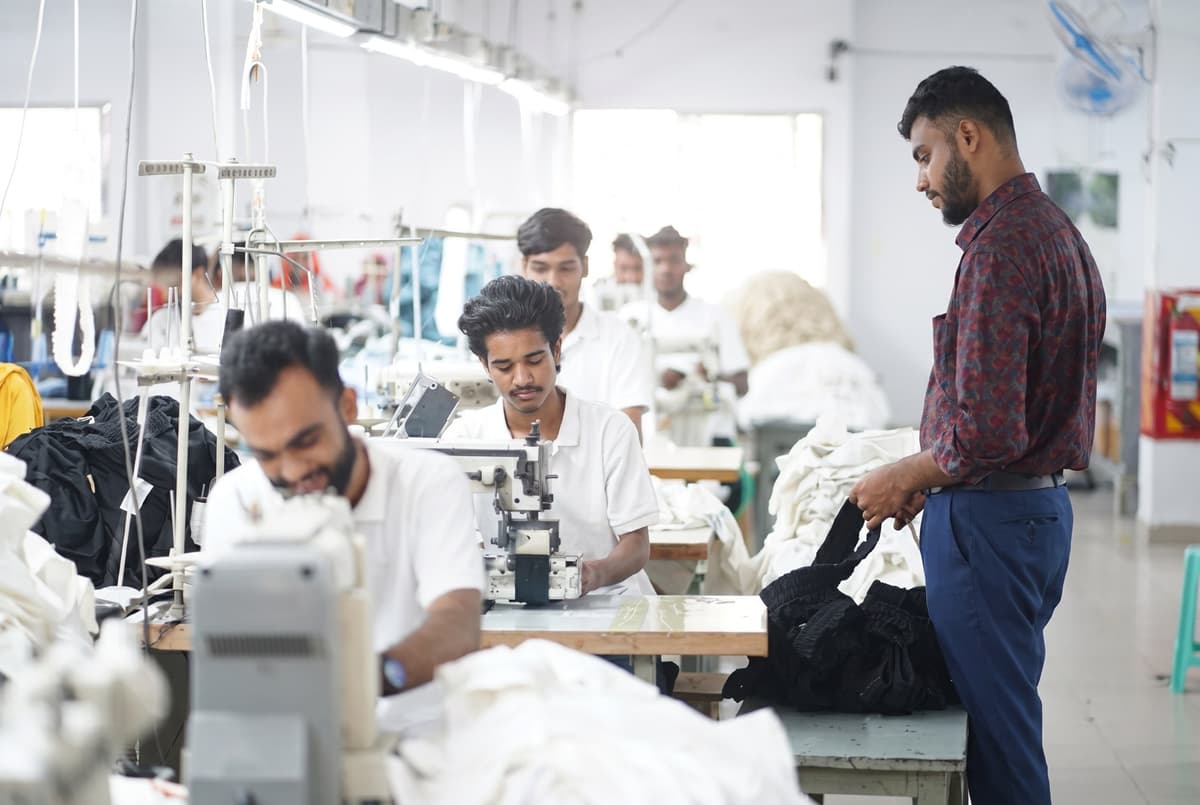
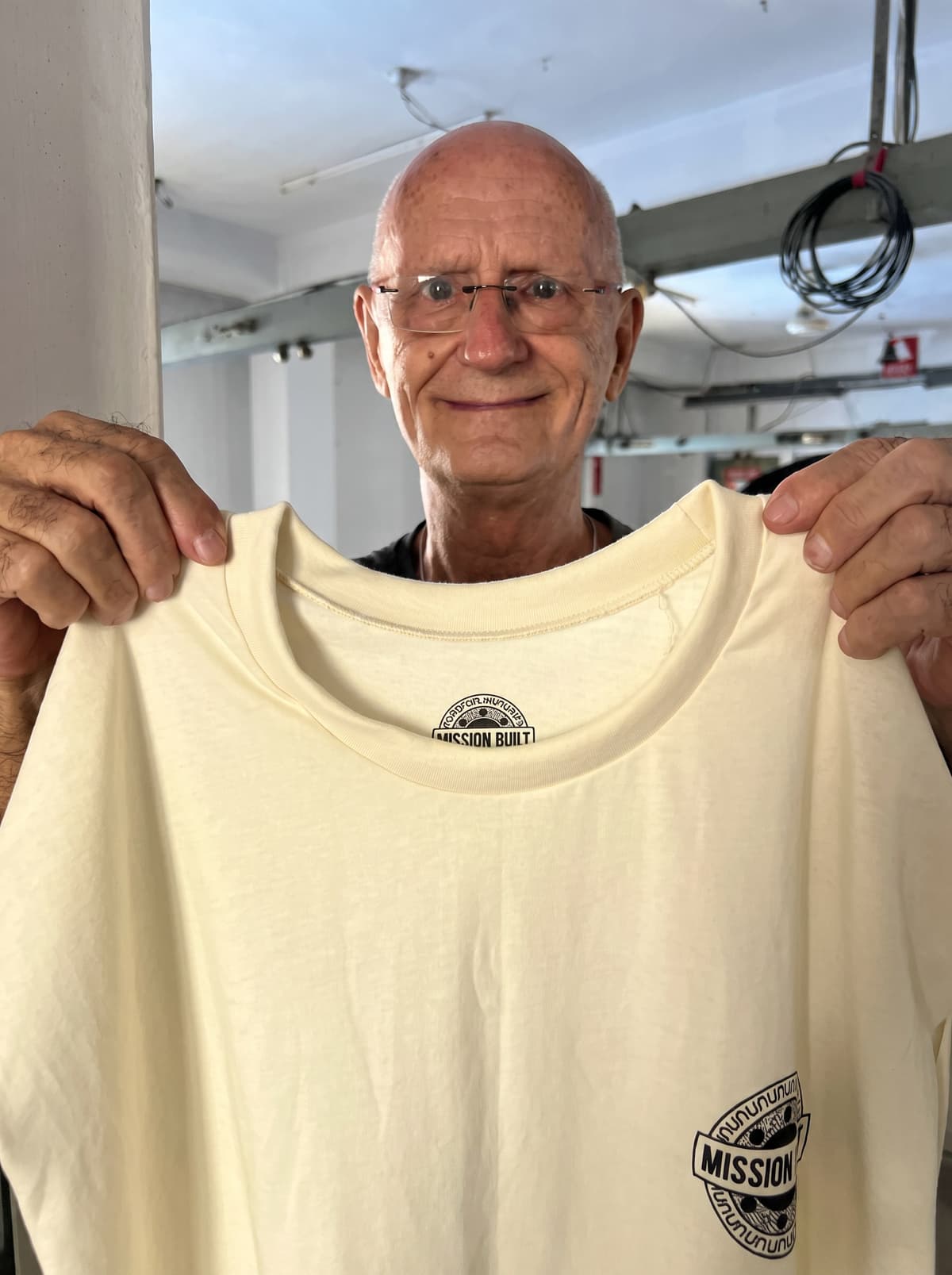
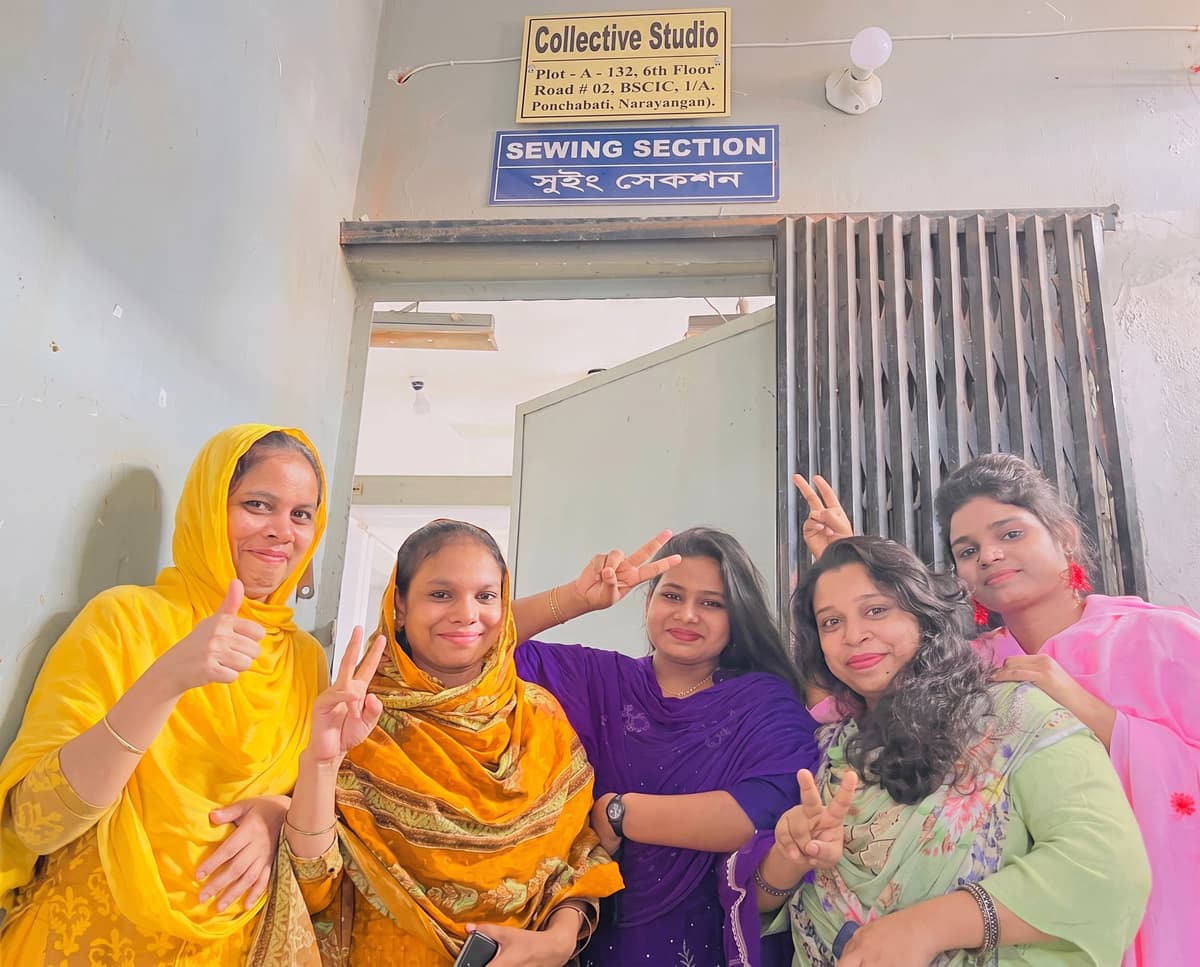
I have had a very good experience with this company. They are very friendly, professional, and provide fast service. They speak fluent English, which makes communication very easy. The quality of their manufacturing is excellent. I have no doubt in recommending this company to anyone looking for a reliable manufacturing partner in Bangladesh.
Talk to the factory directly: +880 1980 055021 · hello@collectivestudioltd.com
That is the question this page exists to answer, and the honest version is: it will match closely if it is planned, and it may not if it is not. Fabric is dyed in batches, and no two batches of the same colour are perfectly identical — they sit within a commercial tolerance that is invisible on unrelated garments and quite visible when two people stand next to each other. We manage this in two ways. Your colour is approved on a physical lab dip that we keep on file against your account, so a reorder is matched to that physical standard rather than to a colour code that a different dye house might read differently. Better still, if you can give us a forecast of your likely top-up volumes, we book the fabric in one lot up front, which removes the variation entirely.
The 100-piece minimum applies to a production run, so a genuine top-up of ten or twenty pieces is not a fresh production order. There are two practical routes. The common one is to order a buffer with your main run — an extra ten to fifteen percent across the size curve — and hold it, which costs a little upfront and gives you instant availability with a guaranteed match. The alternative, for organisations reordering on a predictable cycle, is to schedule a consolidated top-up run once or twice a year covering everyone who joined in that period. What does not work well is a series of tiny unplanned orders, because each one becomes its own dye lot with its own risk of variation. We will help you work out which pattern fits your headcount.
Embroidered, for almost any uniform worn daily, unless the artwork will not survive the translation into thread. Uniforms are washed far more often than fashion garments, frequently at higher temperatures, and a surface print eventually cracks, fades or peels under that treatment. Embroidery is thread stitched into the fabric, so it holds up for the life of the garment. The limits are real and worth knowing before you decide: detail below about five millimetres closes up and becomes illegible, very thin lines disappear entirely, large solid filled areas turn heavy and stiff, and gradients cannot be embroidered at all — only approximated with blended threads. We digitise your logo and send you a stitched test before bulk. If your artwork genuinely does not work in thread we will tell you and print it instead.
No, and we would rather lose the enquiry than take it. High-visibility garments certified to EN ISO 20471 and flame-retardant workwear are regulated protective equipment: they depend on certified fabrics, tested constructions and documented conformity, and they are made by factories set up specifically for that with the certification to prove it. We are a knitwear factory. Producing something that resembles a hi-vis vest without the certification behind it would expose you to real liability and would not protect anyone. The same goes for structured woven workwear such as coveralls, chef's jackets and tailored trousers, which need a different floor and different machinery. If your programme includes those items, we will make your polos, tees, sweatshirts and fleece properly and tell you to place the specialist items with a specialist.
We produce the full adult range as standard and extended sizes on request, and for schools we make children's sizing as well. Two things are worth planning for. First, the 100-piece minimum is per style and colour, not per size, so you can distribute those 100 across the whole size curve however your headcount requires — a handful in the smallest and largest sizes and the bulk in the middle is entirely normal. Second, size distribution is where uniform orders most often go wrong: buyers tend to order to a standard curve rather than to their actual people, then run out of the sizes they really needed. If you can send us your actual headcount by size we will build the order to that, and we will suggest where to weight the buffer stock.
Trade and regulatory details on this page last verified 22 August 2026. Tariff and compliance terms change — ask us to confirm the current position for your order.
Whether it’s a large bulk or wholesale run or your first batch of 100, send a sketch, a reference, or a sentence. We’ll reply within one business day with fabric options and an indicative price.