Bangladesh Garment & Textile Industry, Explained (2026)
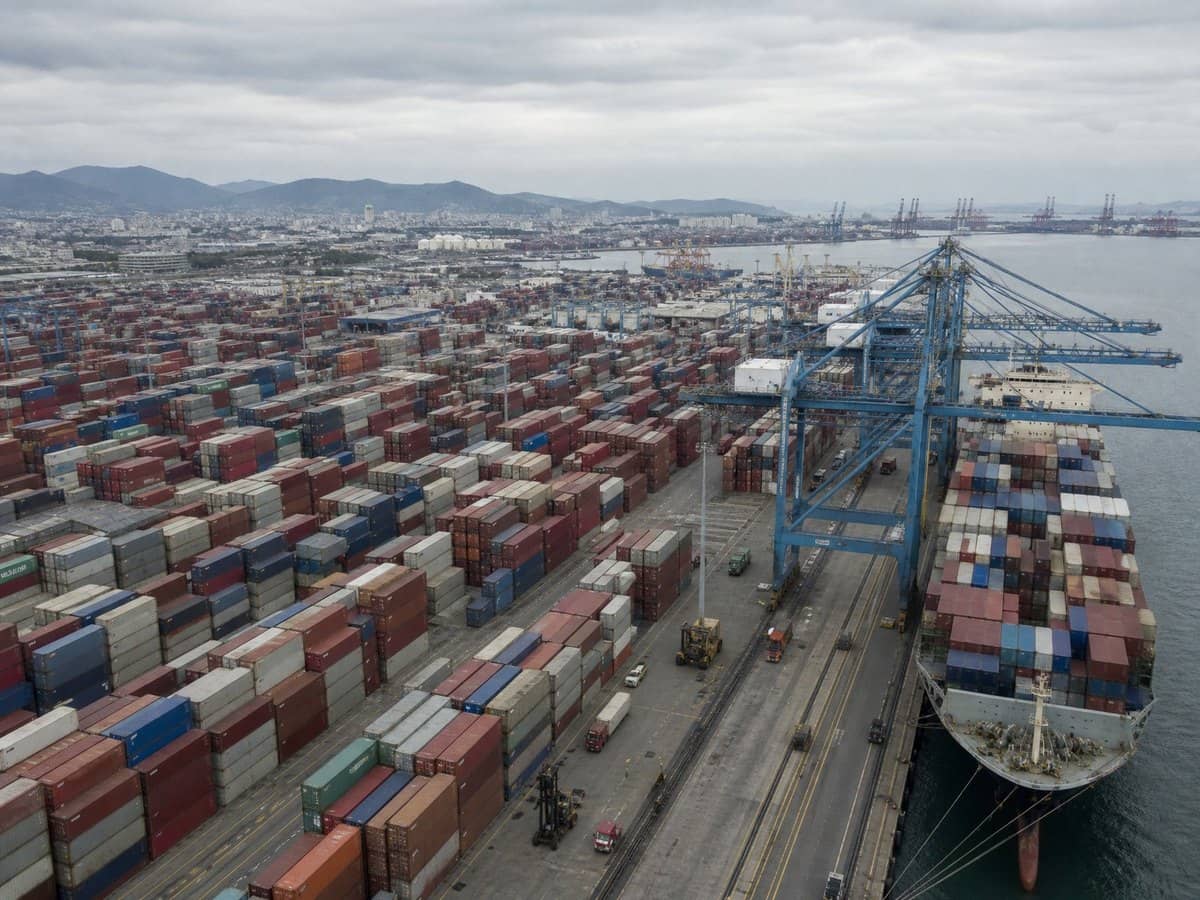
Bangladesh's garment industry is one of the great manufacturing stories of the last forty years — from almost nothing in the early 1980s to the world's second-largest apparel exporter today, behind only China. If you're a brand deciding where to make your clothes, it helps to understand the industry you'd be buying into. Here's the honest overview, with figures sourced and caveated.
How big is it?
Ready-made garments (RMG) are the engine of Bangladesh's economy. The sector earned roughly US$38–50 billion in exports in 2024 (the exact figure depends on whether you measure the fiscal or calendar year), making up around 81% of the country's total export income. Knitwear is the single largest category — knit exports (around US$20 billion) slightly exceed woven — which is why Bangladesh is especially strong for tees, hoodies, sweats and other knit garments.
Who makes it?
The industry employs roughly 4.4 million workers, the majority of them women, across a base of several thousand export factories (see our breakdown of how many garment factories Bangladesh has). Two associations organise it: BGMEA (woven and knit) and BKMEA (knitwear specifically). Much of the supply chain is vertically integrated — spinning, knitting, dyeing and sewing often within the same region — which is a big part of why lead times and costs stay competitive.
Why it became the world's #2
- Deep knit specialisation — decades of accumulated skill in jersey, fleece and terry production.
- Vertically integrated fabric supply — local yarn and knit-fabric mills shorten lead times.
- Scale and capacity — from small runs to hundreds of thousands of units.
- Competitive costs — without the quality trade-off good factories are known for.
- Established export logistics — including DDP shipping to major markets.
The turning point: 2013 and safety reform
The industry's modern shape was forged by tragedy. The 2013 Rana Plaza collapse, which killed more than 1,100 workers, triggered one of the largest factory-safety programmes in industrial history — international accords inspected and remediated thousands of factories against fire, electrical and structural standards, and forced non-compliant units to close or fix up. The industry today is materially safer than a decade ago, though — as everywhere — conditions still vary between individual factories, which is why buyers audit suppliers one by one. More on that in what "Made in Bangladesh" really means.
The country's scale is the headline; the individual factory is what you actually hire. Judge the supplier, not the flag.
Where it's heading
Three currents matter for brands sourcing now: a strong push toward sustainability and certification (Bangladesh has one of the world's highest concentrations of green-certified factories); evolving trade and tariff dynamics, including advantages for US brands using US-origin cotton (see our tariff guide); and growing demand from smaller brands for lower minimums than the industry traditionally offered.
What it means if you're sourcing here
The scale is reassuring, but it's not a guarantee — it means options range from world-class to poor, so your job is to vet the specific factory. Collective Studio is a family-run knitwear manufacturer inside this industry, in Narayanganj: a clothing manufacturer in Bangladesh that is GOTS-certified (RSC 9687), BKMEA and Narayanganj Chamber member, making from a genuine 100 pieces per style up to full bulk production. If you're weighing up Bangladesh, read how to choose the right factory or talk to us directly.
Frequently asked questions
How big is the garment industry in Bangladesh?
Ready-made garments account for the large majority of national export earnings — figures above eighty per cent are commonly cited — making the economy unusually concentrated in a single sector. Bangladesh ranks second globally in apparel exports after China, with employment generally reported in the millions and a workforce that is majority female. These headline numbers vary between sources and reporting years, so they are best treated as orders of magnitude rather than precise values. The structural detail matters more for sourcing decisions than the totals: capacity is distributed across thousands of mid-sized factories rather than concentrated in a few very large groups, which is why order minimums are more negotiable here and why the variance in standards between suppliers is wide.
Why is Bangladesh so big in garment manufacturing?
Four factors compounded over roughly four decades. The sector expanded from the late 1970s under the Multi-Fibre Arrangement quota system, which directed buyers toward countries with available quota. When quotas ended in 2005, the widely predicted contraction did not occur, because domestic capacity had by then developed — particularly in knit, where spinning, knitting and dyeing were established locally rather than dependent on imported fabric. Labour costs remained below regional comparators. And duty-free access to the EU, UK, Canada and Australia under least-developed-country schemes sustained competitiveness against tariffed alternatives. That final factor is time-limited: Bangladesh graduates from LDC status on 24 November 2026, and the transition arrangements differ by market, with some more settled than others.
Is the Bangladesh garment industry ethical now?
The evidence supports 'substantially improved and still uneven' rather than a categorical answer. Following the Rana Plaza collapse in 2013, the Accord on Fire and Building Safety and its successor the RSC conducted structural, fire and electrical inspections across thousands of factories, and independent assessments have documented measurable improvement in building safety. Minimum wages have been revised upward, though whether they constitute a living wage remains disputed between industry bodies and labour organisations. Progress is less consistent on working hours, freedom of association, and conditions within the subcontracting layer beneath registered factories, where monitoring coverage is weakest. Country-level generalisation is therefore unreliable in either direction; verification at the level of the individual supplier is the only approach that yields an answer.
What does Bangladesh mainly export — knit or woven garments?
Knitwear is the larger category and has been for some years — t-shirts, polos, hoodies, sweatshirts, joggers and underwear form the bulk of it. Woven production, covering shirts, trousers, denim and outerwear, is substantial but consistently second. The reason is structural: domestic capacity in knit fabric developed locally, so a knit garment can be produced end to end within the country, whereas woven fabric is more frequently imported, adding cost, lead time and an additional customs step. For sourcing purposes the implication is straightforward — jersey, fleece and rib garments are being sourced from the country's strongest and most vertically integrated category, while technical woven outerwear may be better served by Vietnam or China.
Sources & further reading
Have an idea? Let’s make it.
We manufacture from 100 pieces per style, with GOTS-certified organic options and photos at every stage. Send a sketch or a sentence — we’ll reply within a day.