How Many Garment Factories Are in Bangladesh? (2026)
"How many garment factories are in Bangladesh?" sounds like it should have one clean number. It doesn't — and any source quoting a single exact figure is oversimplifying. The honest answer is that it depends on how you count: association members, operational export factories, or every small subcontracting unit. Here's the real picture, with sources, from a factory inside the industry.
The short answer
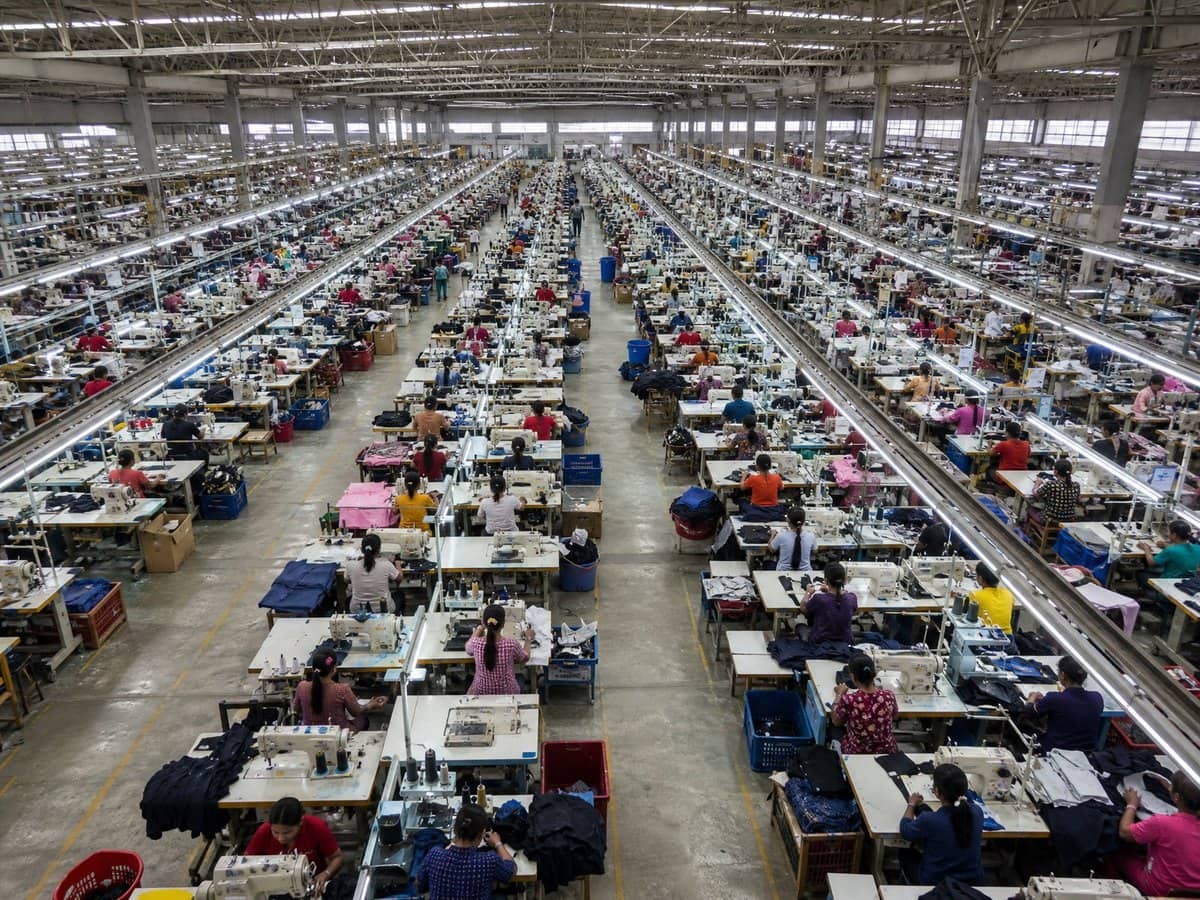
As of 2026, Bangladesh has roughly 4,000 operational, export-oriented garment factories, according to the Bangladesh Garment Manufacturers and Exporters Association (BGMEA). On top of that sit thousands of smaller cut-make-trim and subcontracting units that aren't association members, so the true total — including informal workshops — is higher and not precisely tracked. Treat any single number as an approximation that shifts year to year.
- BGMEA members: ~4,000 registered factories (about 3,500 currently operational).
- BKMEA members: ~2,000 knitwear factories — overlaps with BGMEA, so don't add the two together.
- Operational export factories: ~4,000, employing about 4.4 million workers, mostly women.
- True total (incl. subcontractors & informal units): higher still — research suggests the real number is well above the official rolls.
BGMEA member factories
The Bangladesh Garment Manufacturers and Exporters Association (BGMEA) is the main body for woven and knit export factories. It reports on the order of ~4,000 registered member factories, with roughly 3,500 counted as currently operational in recent years. Membership numbers have fluctuated as factories opened, merged, or closed — particularly after the post-2013 safety consolidation, when many non-compliant units shut down. Around 40% of BGMEA members are knit and sweater manufacturers and about 60% are woven-garment makers.
BKMEA member factories
The Bangladesh Knitwear Manufacturers and Exporters Association (BKMEA) represents the knitwear side specifically and reports on the order of ~2,000 member factories. Important nuance: BGMEA and BKMEA membership overlaps — many knit factories belong to both — so you cannot simply add the two associations' numbers together to get a national total.
Why the number is so hard to pin down
- Membership vs operational — a factory can be a registered member but not currently running, or running but not exporting.
- Overlap — knit factories often hold both BGMEA and BKMEA membership; totals double-count if you add them.
- Small and informal units — thousands of small CMT and subcontracting workshops supply larger factories but appear in no association roll.
- Constant change — new factories keep opening (local reporting has noted well over 100 new units added within a single 15-month stretch) while others close.
- Definition drift — "garment factory" can mean a full export unit, a knitting mill, a washing/dyeing plant, or a small sewing shop, depending on the source.
The real number is bigger than the official count
This isn't only our observation. The NYU Stern Center for Business and Human Rights has argued that the true size of Bangladesh's garment sector is considerably larger than the associations' rolls suggest, because a big share of production runs through indirect sourcing — subcontractor and unregistered units that take overflow work but appear on no official list. Put simply: the ~4,000 figure counts the factories brands deal with directly; the number of places where Bangladeshi garments are actually sewn is higher. For a buyer, that's the real lesson — know exactly which factory, and which subcontractors (if any), will make your order.
The useful number isn't the national total — it's whether the one factory you're about to trust is real, audited, and a fit for your order.
Why the scale matters for buyers
The headline takeaway for a brand founder isn't the exact count — it's what that scale means: Bangladesh has the world's deepest base of export garment factories after China — see how the three stack up in Bangladesh vs China vs Vietnam — with enormous capacity, vertically integrated fabric supply, and a large pool of internationally audited units. It also means quality and ethics vary hugely between factories, so you should always vet the specific supplier rather than the country. We cover exactly how in how to choose a clothing factory in Bangladesh and what "Made in Bangladesh" really means.
A note on these figures
These are the most consistent figures across BGMEA/BKMEA reporting and industry sources at the time of writing, but the associations update their own counts periodically — for a live number, check the official BGMEA and BKMEA pages directly. we prefer to give you the honest range and the sources than a false-precision figure.
Collective Studio is one of those factories — a family-run clothing manufacturer in Bangladesh based in Narayanganj, BKMEA and Narayanganj Chamber member, GOTS-certified (RSC 9687). Our own floor is cut-and-sew knitwear — the category Bangladesh is deepest in — and we run a genuine 100-piece minimum per style right through to full wholesale volume. If you're evaluating suppliers, we'll answer your questions plainly — start your collection.
Frequently asked questions
How many garment factories are there in Bangladesh in 2026?
Approximately four thousand export-oriented factories is the figure most frequently cited as operational, though published estimates range from around three thousand to over seven thousand. The variance is definitional rather than careless: association membership, export licences and physically operating units are three distinct populations, and sources differ on which they are counting. Subcontracting adds a further layer, since registered factories may allocate work to unregistered units that appear in no official register. Registries also lag, because openings, closures and consolidations occur faster than records update. For a buyer the aggregate is of limited practical use; whether a specific supplier holds a verifiable membership number and a checkable certificate is the question that actually affects an order.
What is the total number of garment factories in Bangladesh?
No single authoritative total exists, and the published range of roughly three thousand to over seven thousand reflects three different populations being reported interchangeably. Association membership includes members not currently exporting. Export licences include trading entities alongside manufacturers. Operating factories include units holding neither designation. Subcontracting further obscures the count, as work passes to unregistered units outside any register. Around four thousand export-oriented factories is a defensible order of magnitude for operational capacity. Anyone citing a precise figure without stating which population it describes and which year it comes from is reporting a number without its definition, and the number is not meaningful without it.
How many BGMEA member factories are there?
The Bangladesh Garment Manufacturers and Exporters Association reports membership in the thousands, but total membership and currently-exporting membership are different figures and the association's own published totals have varied across reporting periods. Any specific number should be taken as approximate and dated. The verifiable element is more useful than the aggregate: BGMEA publishes a member directory, so a supplier's claimed membership can be confirmed independently at the source. That single check excludes a meaningful proportion of intermediaries presenting themselves as manufacturers — a documented and common pattern in this market. The knitwear equivalent is BKMEA, which maintains its own directory on the same basis. Membership numbers are also worth treating as a floor rather than a census, since a factory can operate without belonging to either association.
How many BKMEA member factories are there?
The Bangladesh Knitwear Manufacturers and Exporters Association reports membership in the low thousands, subject to the same caveat that applies to every count in this sector: total membership and actively exporting membership diverge, and both change continuously. The number itself is of limited practical value. What is useful is that BKMEA publishes a member directory, making a claimed membership independently verifiable rather than something a buyer has to accept on assertion. Collective Studio is a BKMEA member, and that claim is checkable in the association's directory rather than only on this website — which is the standard any supplier's stated membership should be held to.
Why is it hard to say exactly how many garment factories Bangladesh has?
Because at least three distinct populations are routinely reported as if they were one. Association membership counts members regardless of current export activity. Export licensing counts registered entities including traders that manufacture nothing. Operational counts capture physically producing units, some of which hold neither membership nor licence. Subcontracting compounds the problem: a registered and compliant factory may allocate work to smaller unregistered units that appear in no register at all, which is also the layer where oversight of conditions is weakest. Registry data lags actual openings and closures. The result is that estimates from three thousand to over seven thousand can all be defended, depending on the definition applied, and few sources state which one they used.
Sources & further reading
Have an idea? Let’s make it.
We manufacture from 100 pieces per style, with GOTS-certified organic options and photos at every stage. Send a sketch or a sentence — we’ll reply within a day.