Cut-and-sew, not printed blanks
Made from cloth to your pattern — your fit, your fabric weight, your neck tape and your label. Not a wholesale blank with your logo on it.
A cut-and-sew t-shirt manufacturer in Narayanganj, Bangladesh — your pattern, not a printed blank, from 100 pieces per style in 140–220 GSM, with GOTS-certified organic cotton available and DDP delivery worldwide.
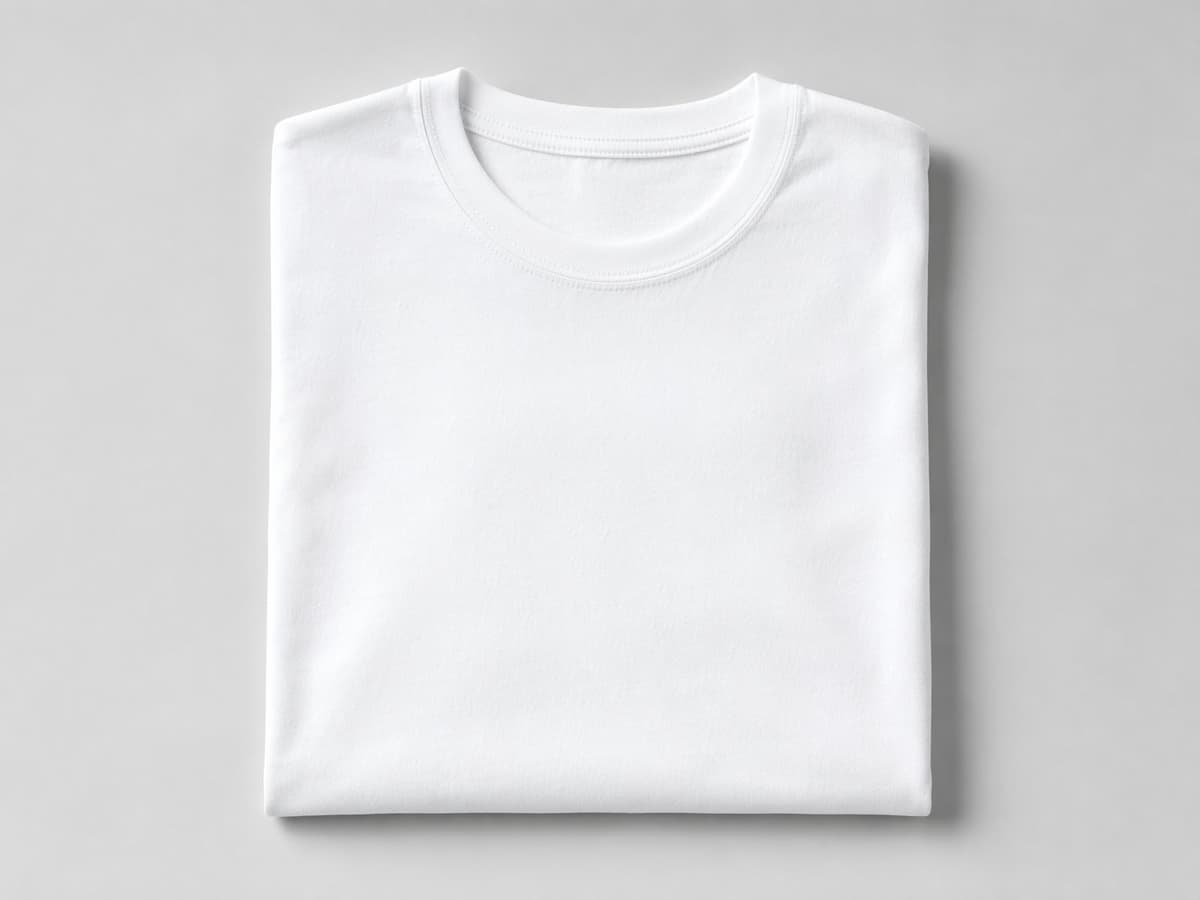
Most people searching for a t-shirt manufacturer in Bangladesh are choosing between two things that look similar in a quote and are not remotely the same garment. One is cut-and-sew: your pattern, your fabric, your fit, made from cloth. The other is printing onto ready-made blanks bought from a wholesaler. Blank printing is cheaper, faster and completely legitimate for a first test run — but you do not control the fit, the fabric weight, the neck construction or the label, and you cannot change any of them, because the shirt already existed before you were involved.
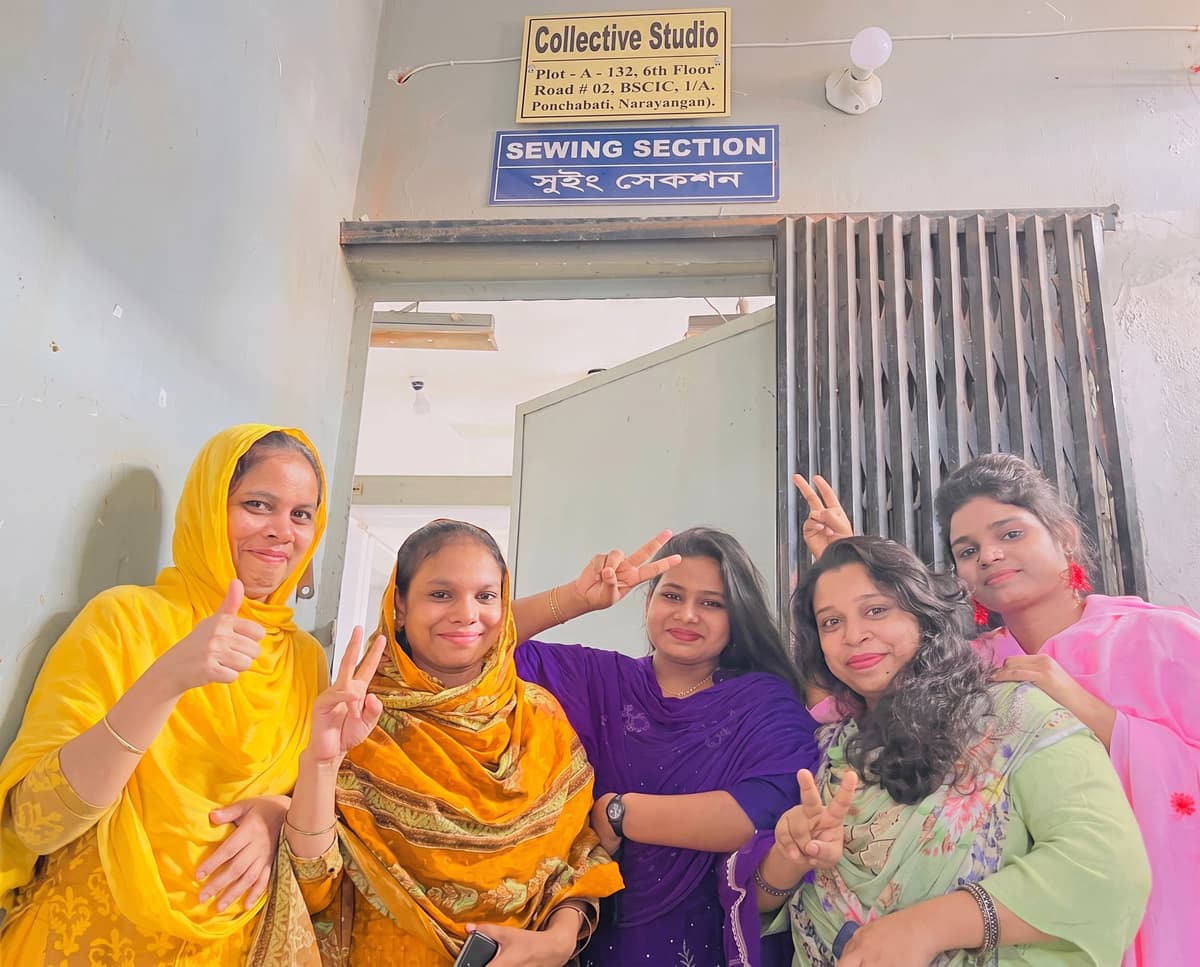
We are the first kind. Collective Studio cuts and sews on our own floor at Plot-A-132, BSCIC Industrial Area, Narayanganj, from 100 pieces per style, per colour. That minimum is real: it exists because below it the pattern making, the mill's fabric minimums and a line changeover stop spreading sensibly across the order, not because someone picked a round number.
Bangladesh is a sensible place to make a tee, and it is worth knowing why rather than taking it on faith. The country is the world's second-largest apparel exporter, and knit garments are its largest export category — so the depth of skill, machinery and fabric supply sits precisely in jersey, French terry, fleece, pique and rib. If you are making tees, you are buying into the part of this industry that is genuinely world-class rather than the part that is merely cheap.
The thing that decides how a tee feels is not the sewing, and most quotes never mention it: it is the yarn. Combed ring-spun cotton has had the short fibres combed out and the long ones twisted together, which gives a smoother, stronger, softer cloth that resists pilling. Open-end yarn is spun by rotor — faster and cheaper, but coarser, weaker, and it pills sooner. Two tees can both be 180 GSM and feel like different price brackets entirely because of this one choice. Ask any factory which yarn they are quoting; if the answer is vague, the answer is open-end.
The second decision is GSM, and it is worth being specific rather than saying "good quality". Lightweight summer tees run 110–140. Everyday tees sit at 140–180. Structured, premium tees that hold their shape are 180–220. Above roughly 220 you are into heavyweight streetwear. We quote the number and send a swatch, because a number you can feel is worth more than an adjective. Our GSM converter will translate that into oz/yd² if your reference is American.
Third is shrinkage, which is where cheap tees quietly fail. Cotton jersey shrinks; the question is whether it was compacted and finished to control that before it was cut. An uncompacted tee can lose a full size in the first wash, and the customer blames your brand rather than the mill. We specify compacting and check measurements against the sealed sample after wash testing, not before.
One thing to say plainly, because it saves everyone time: we are a 100% export factory. Everything we make ships abroad DDP, to brands in Europe, North America, Australia, the Gulf and Asia. We do not supply the Bangladeshi domestic retail market. If you are a Bangladeshi-owned brand selling overseas, that is squarely what we do.
Made from cloth to your pattern — your fit, your fabric weight, your neck tape and your label. Not a wholesale blank with your logo on it.
A genuine minimum, per style and per colourway. Split across sizes however you like.
Lightweight summer tees at 140–160, everyday weight at 180, structured premium tees at 200–220. We quote the number, not an adjective.
Certificate RSC 9687. Organic single jersey and organic rib, with the scope certificate sent before you order rather than after.
Three things get quoted as "custom t-shirts" and they are genuinely different products. Knowing which one you are being sold is the difference between owning a garment and renting somebody else's.
| Cut-and-sew (what we do) | Blank printing | White label | |
|---|---|---|---|
| Where the shirt comes from | Cut from cloth to your pattern | Bought finished from a blanks wholesaler | The supplier's existing house style |
| Fit and pattern | Yours — graded to your measurements | Fixed. You take what the blank is | Fixed by the supplier |
| Fabric weight and yarn | You choose the GSM and yarn count | Whatever the blank is made from | Supplier's standard cloth |
| Neck tape and inside finish | Specified and checked | Whatever the blank has | Supplier's standard |
| Labels | Your woven label, sewn in | Usually a heat-transfer over the original | Your label on their garment |
| Realistic minimum | 100 pieces per style, per colour | As low as 1 | Varies, often 50–300 |
| Time to first delivery | ~40–50 days after sample approval | Days | Weeks |
| Right for | A brand where the garment is the product | Testing a design cheaply | Speed over control |
Blank printing is a perfectly sensible way to test a design, and we would not talk anyone out of it for a first run of thirty shirts. But you cannot build a brand on a garment you did not specify, and at some point the fit and the fabric have to become yours.
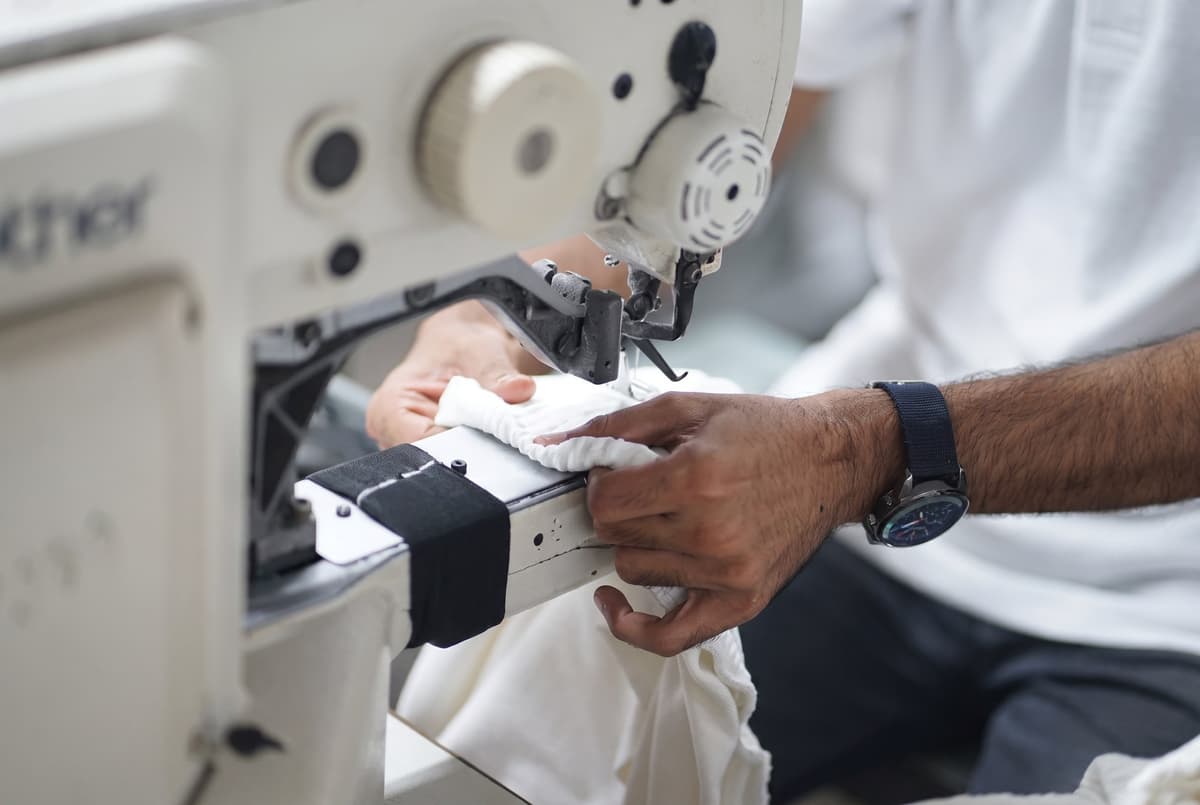
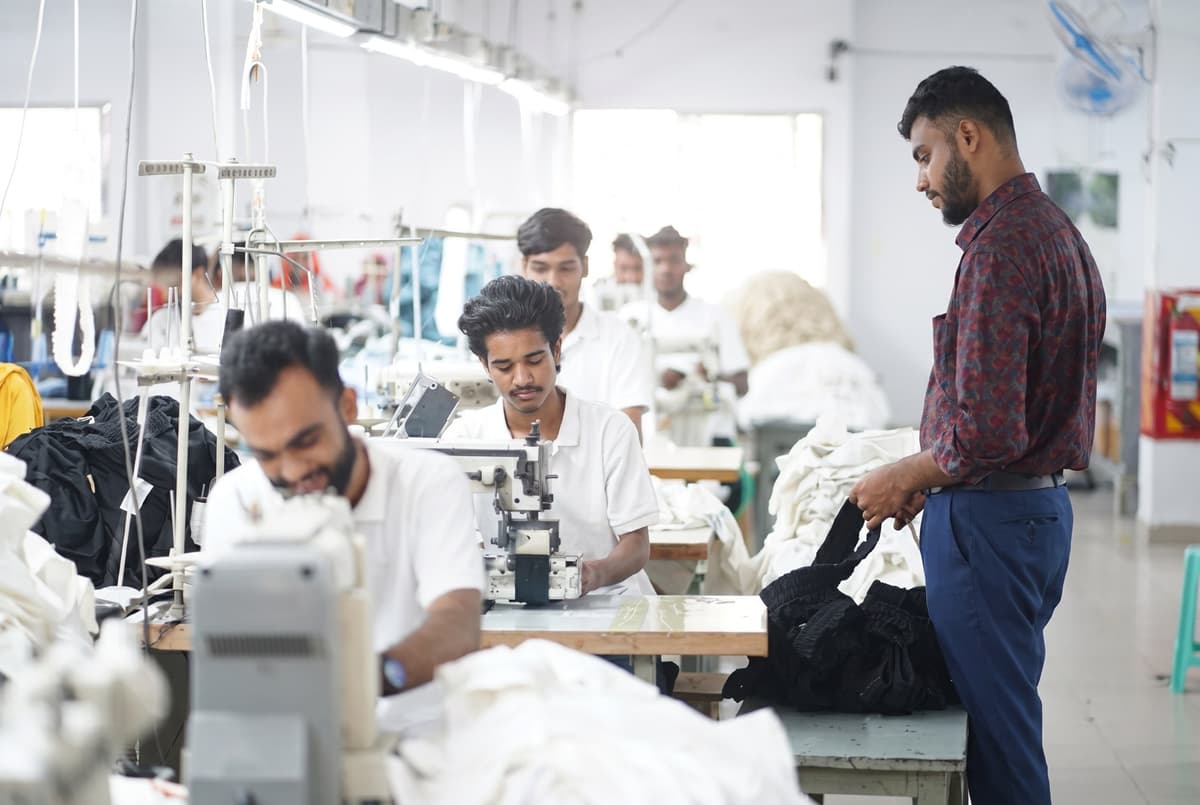
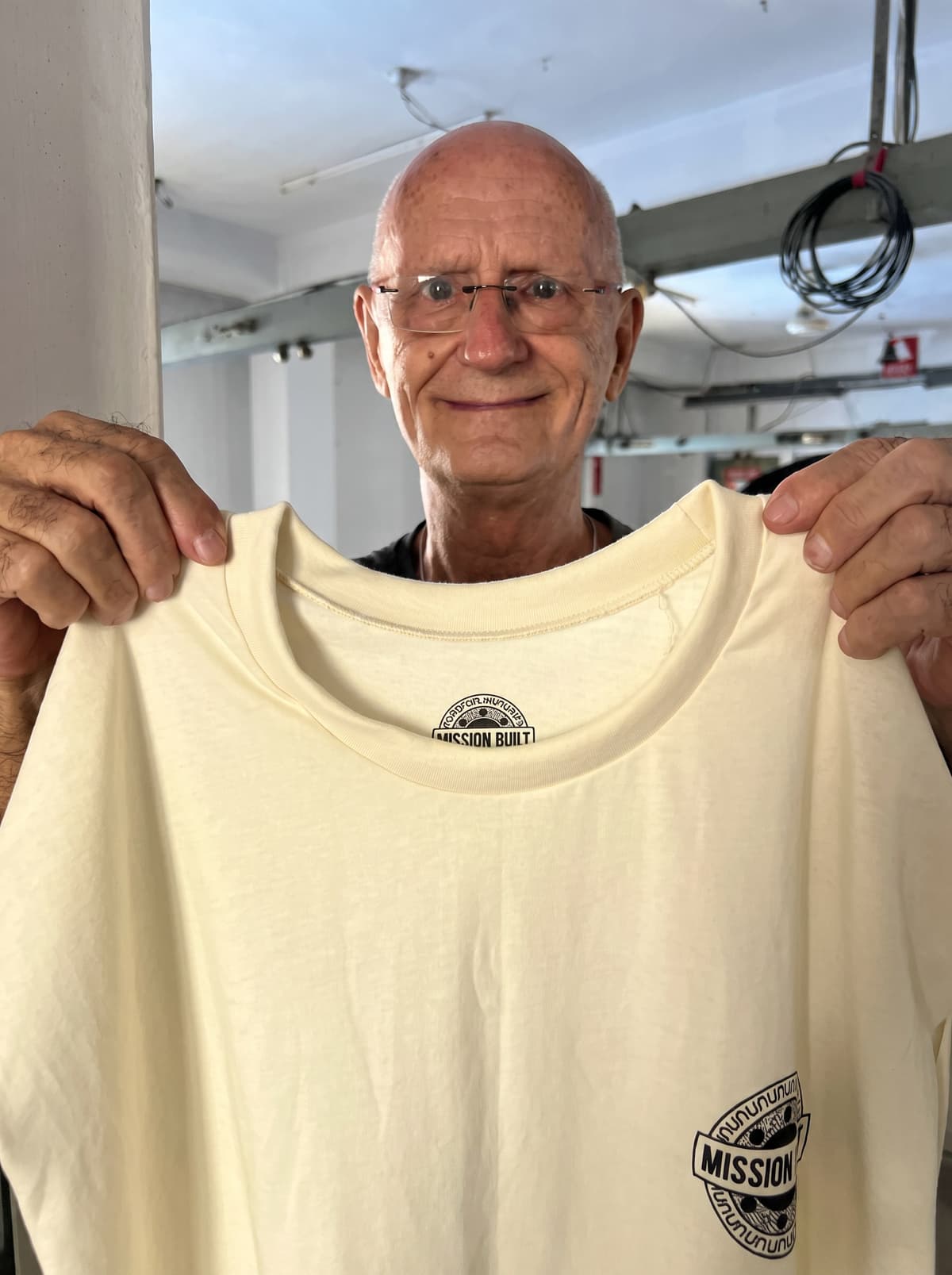
A t-shirt passes through several companies before it becomes a t-shirt. Suppliers are often vague about which parts they actually own, so here is the division of labour behind every tee we make — including the parts that are not ours.
We own the cut-and-sew floor. We do not own the mills, and we will not imply otherwise — a buyer who visits and finds the dye house belongs to someone else has reason to doubt everything else we said. What we do is specify, place, schedule and inspect that work in person.
Ours is 100 pieces per style, per colourway, and the per-colourway part is what catches most new brands out: a tee in black and white is two minimums, 200 pieces in total, because each colour is a separate fabric batch and dye lot with its own setup cost. You can split those 100 pieces across sizes however you like — 20 small, 40 medium, 30 large, 10 extra large is a perfectly normal breakdown. Below roughly 100 units of genuine cut-and-sew, the fixed costs stop spreading sensibly: pattern making, the mill's own fabric minimums and a production line changeover all have to be paid for whether you order 20 pieces or 200. If you see minimums of 25 or 50 advertised, ask whether they are printing onto ready-made blanks rather than cutting and sewing.
GSM is grams per square metre — the weight of the cloth, and the single most useful number for describing how a tee feels. Everyday t-shirts sit at 140–180 GSM. Lightweight summer tees run 110–140, which drapes well but can show through in pale colours. Premium, structured tees that hold their shape are 180–220. Above roughly 220 you are into heavyweight territory, which reads as streetwear rather than a basic. The weight interacts with the yarn: a 180 GSM tee in combed ring-spun cotton feels considerably better than a 180 GSM tee in open-end yarn, because the fibres are longer and more evenly aligned. We will quote both the GSM and the yarn type, and send a fabric swatch before you commit to bulk.
Quality correlates with the specific factory, not the country, and the spread within Bangladesh is wide enough that a national generalisation carries very little predictive value. The same industry supplies premium European labels and the cheapest possible supermarket multipacks, often within a few miles of each other. What is true is that Bangladesh's depth is genuinely in knitwear — knit garments are its largest export category, so the machinery, the fabric supply and the skilled labour for jersey tees are as good as anywhere. The useful question is not "is Bangladesh good" but "can this factory show me a GOTS certificate number, a real address, and a sample before bulk". Ours are RSC 9687, Plot-A-132 BSCIC Industrial Area Narayanganj, and yes.
We make them from fabric. Your pattern is cut from cloth we specify and buy for your order, then sewn on our own floor, then decorated in the same building. That is a different product from printing your artwork onto a wholesale blank, and the difference shows up in everything you can control: the fit, the fabric weight, the neck tape, the shoulder seam, the label, the hem depth. Blank printing is a reasonable way to test a design cheaply and we would not talk anyone out of it for a first run of 30 shirts. But if you are building a brand where the garment itself is part of the product, you eventually have to move to cut-and-sew, and 100 pieces is where that becomes possible with us.
Yes — we hold GOTS certification under certificate RSC 9687, and organic single jersey and organic rib are both available at our standard 100-piece minimum, which is unusual: most factories treat certified organic as a bulk-only option because certified yarn carries its own minimums. Verification matters more than the claim, so ask for the scope certificate rather than a logo. A GOTS scope certificate names the certified facility, the certification body and the validity period, and a transaction certificate covers the specific shipment. We send the scope certificate before you order. A supplier who shows you a GOTS logo but cannot produce a numbered certificate naming their own facility is telling you something worth hearing.
Roughly 40–50 days from approved sample to delivery at your door, shipped DDP. Before that clock starts there is a sampling stage: we make a sample from your tech pack or sketch, send it, and you tell us what to change. Expect one to three rounds depending on how tightly specified the original brief was — a clear tech pack usually gets there in one. Sampling typically adds two to three weeks, so a realistic first order from first contact to delivered goods is around two to three months. Reorders of an approved style are considerably faster because the pattern and the fabric specification already exist. If you have a hard launch date, tell us at the quote stage rather than after sampling.
It depends on fabric, weight, decoration and quantity, and anyone quoting a single number without asking those is guessing. The larger drivers are the yarn and GSM, the number of print or embroidery placements, and whether the colour clears a full dye lot. Prices step down at around 1,000 pieces per colour, where fabric reaches mill minimums and you stop paying a surcharge for a short dye lot, and again around 10,000 where yarn and fabric can be bought to your order rather than from available stock. Our pricing calculator gives you a realistic range before you talk to anyone, and we quote DDP so freight and duty are inside one landed number rather than arriving later.
Carded cotton has been cleaned and roughly aligned; combed cotton goes through an extra step that removes the shorter fibres and leaves only the longer ones, which are then twisted together. The result is smoother to the touch, stronger, and much less prone to pilling after a few washes. It costs more per kilo, and it is the single clearest upgrade you can make to a basic tee — more noticeable to a customer than most design decisions. There is a second distinction worth knowing alongside it: ring-spun versus open-end. Ring-spun twists the fibres into a finer, softer yarn; open-end is rotor-spun, faster and cheaper but coarser. Combed ring-spun is the specification you want for a premium tee, and it is what we quote unless you ask us to price down deliberately.
Cotton jersey shrinks — that is physics, not a defect. What separates a good tee from a bad one is whether the shrinkage was controlled before the garment was cut. Fabric is compacted and finished at the mill to relax the knit and take most of the shrinkage out in advance; skipping that step is a common cost saving and it is why a cheap tee can lose most of a size in its first wash. We specify compacting, and we measure the finished garment against your sealed sample after wash testing rather than before, so what you approve is what survives laundry. Expect around 3–5% residual shrinkage on a well-finished cotton tee. If you need lower, say so at the quote stage — it is achievable but it changes the fabric and the price.
Usually, and it is one of the more efficient ways to brief us. Send the garment itself if you can, or detailed photographs plus your own measurements taken flat: chest one inch below the armhole, body length from the high point of the shoulder, sleeve length, shoulder width, neck opening. From a physical reference we can reverse-engineer the pattern, identify the fabric weight and construction, and tell you honestly which parts we can match exactly and which we cannot. What we will not do is claim an exact match sight unseen. If the original used a fabric we cannot source, we will say which part will differ before you commit rather than after the sample arrives. Our free tech pack template covers what else is useful to send.
No — we are a 100% export manufacturer. Everything we make ships abroad DDP to brands overseas, and our minimums, documentation and pricing are all built around export orders. The distinction that matters is where the goods end up rather than where you are sitting: if you are a Bangladeshi-owned brand selling into Europe, North America, Australia or the Gulf, that is exactly what we do and several of our clients are founders with roots here and customers somewhere else. If you need stock for domestic retail in Dhaka, Chattogram or Narayanganj, a local supplier will serve you faster and cheaper, and we would rather say so now than after you have spent a week on a tech pack.
Trade and regulatory details on this page last verified 26 August 2026. Tariff and compliance terms change — ask us to confirm the current position for your order.
Whether it’s a large bulk or wholesale run or your first batch of 100, send a sketch, a reference, or a sentence. We’ll reply within one business day with fabric options and an indicative price.