Made, not printed on blanks
You choose fabric weight, fit, neckline and label — the things that decide whether merch gets worn or drawered. None of it is in your control when printing on stock blanks.
Premium custom merch for creators, brands, and events — branded tees, hoodies, caps and totes that feel like real product, from 150 pieces.
Collective Studio manufactures branded merch — tees, hoodies, sweats, caps, beanies and totes — in Narayanganj, Bangladesh, from 150 pieces per style and colour, 40–50 days' production after sample approval, shipped DDP. About 70 days from order to your door by air. Instead of printing onto a wholesaler's blank, the garment is made to your specification, so fabric weight, fit, neckline rib and a woven label are yours to decide.
Or message the factory directly: WhatsApp +880 1980 055026 · hello@collectivestudioltd.com · Homaira replies within one business day.
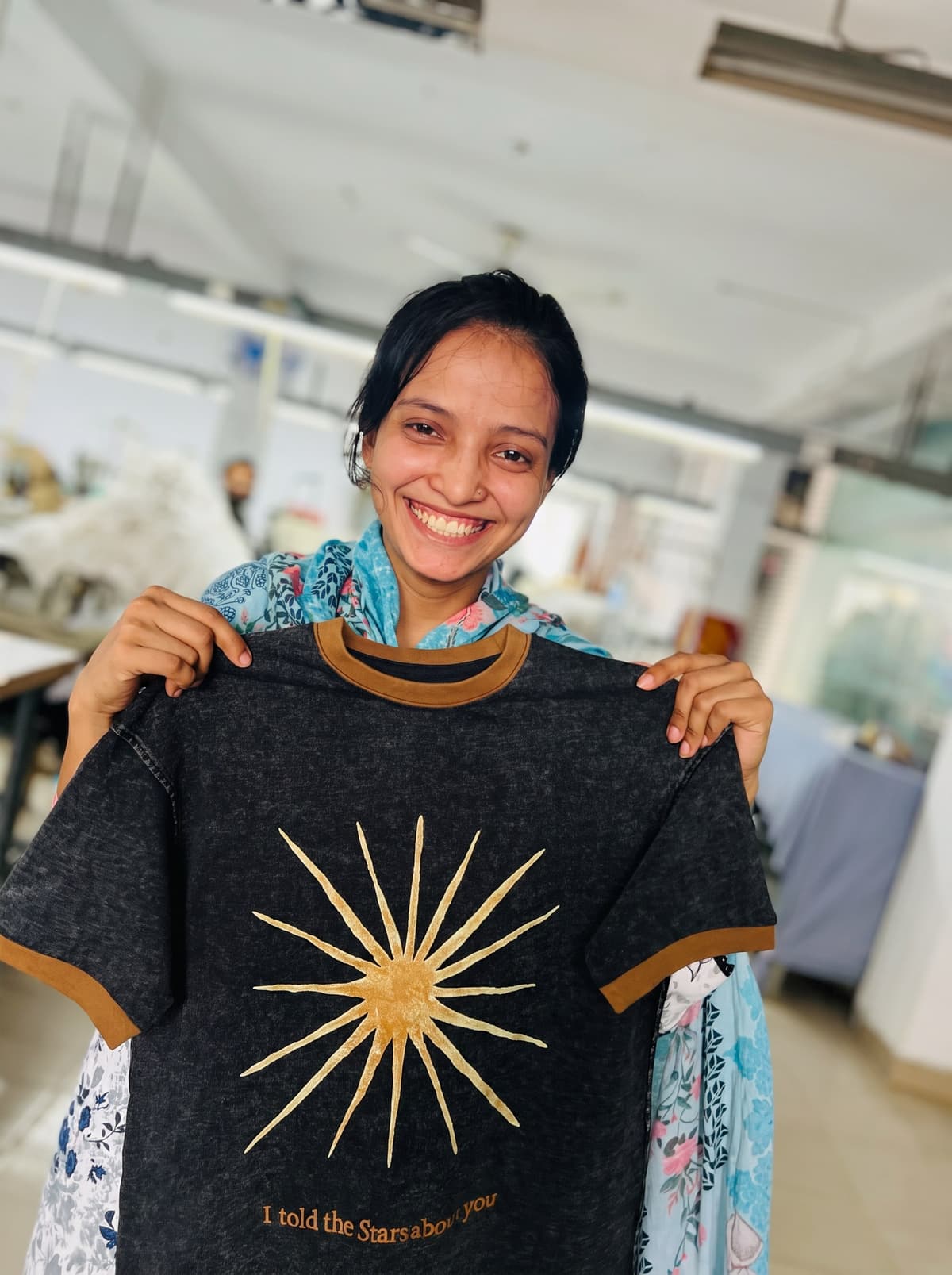
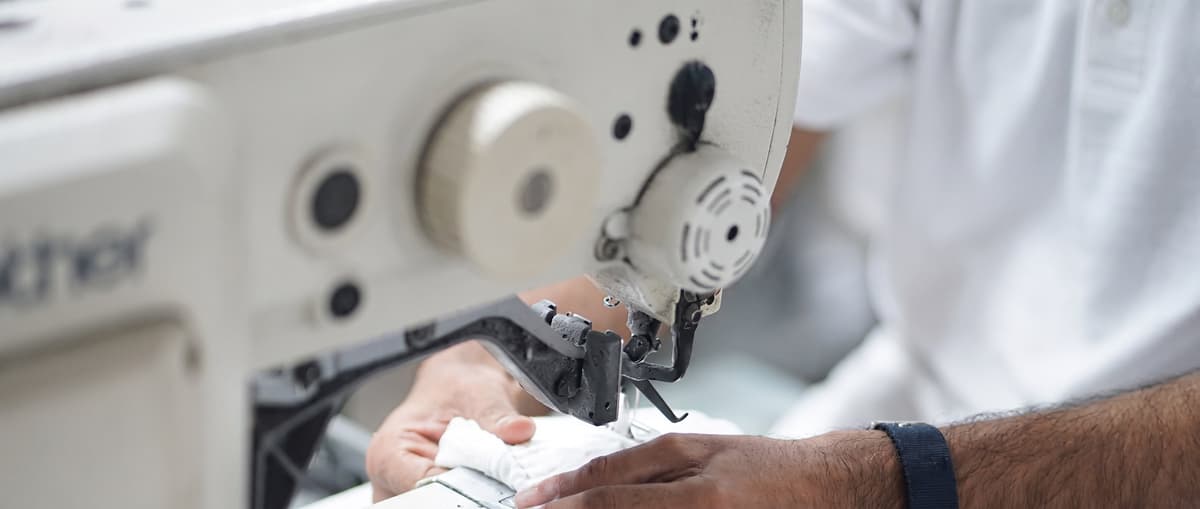
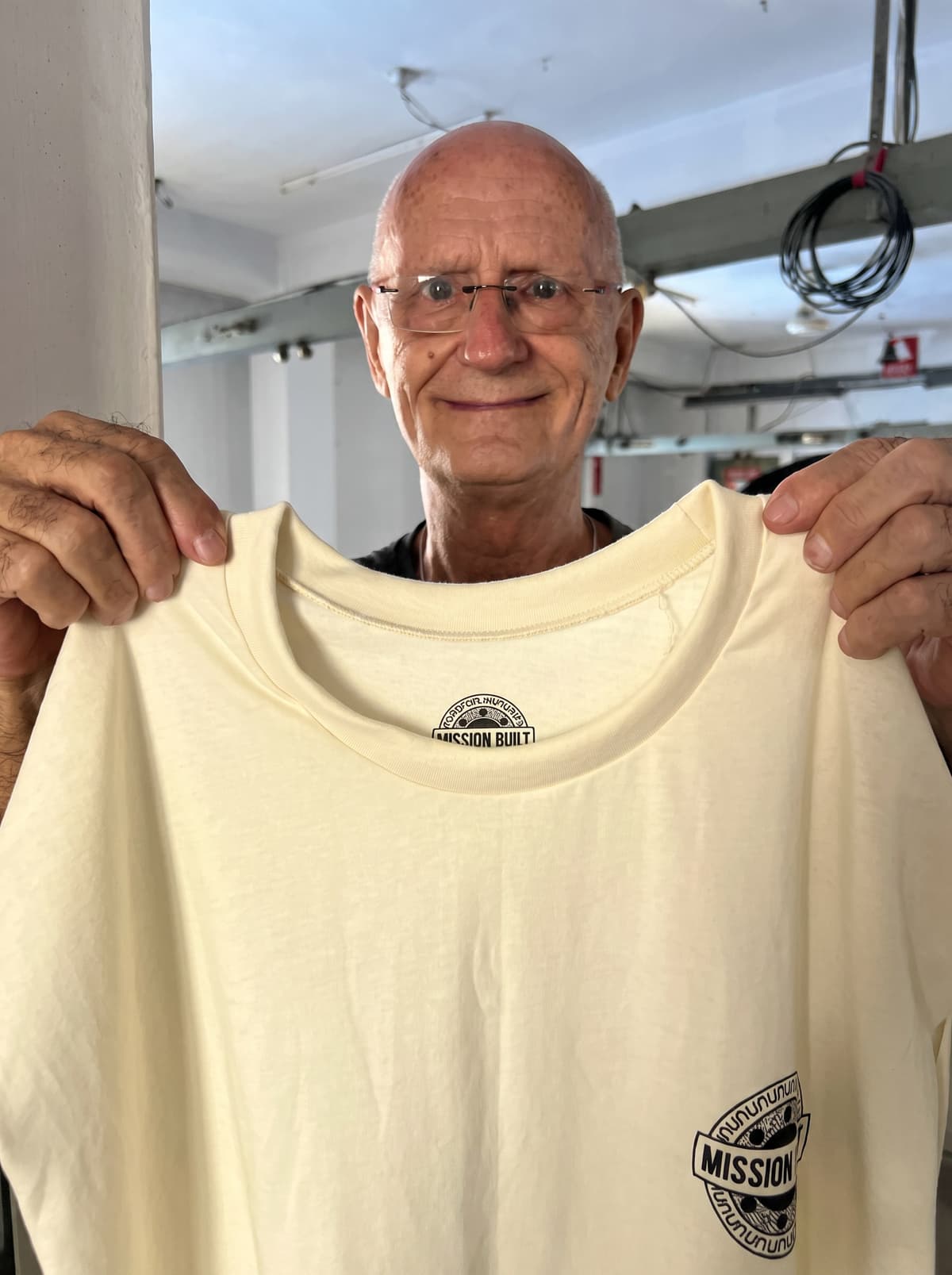
Made by our own team in Narayanganj. See the floor ↓Client reviews on Google ↗GOTS certificate RSC 9687 →
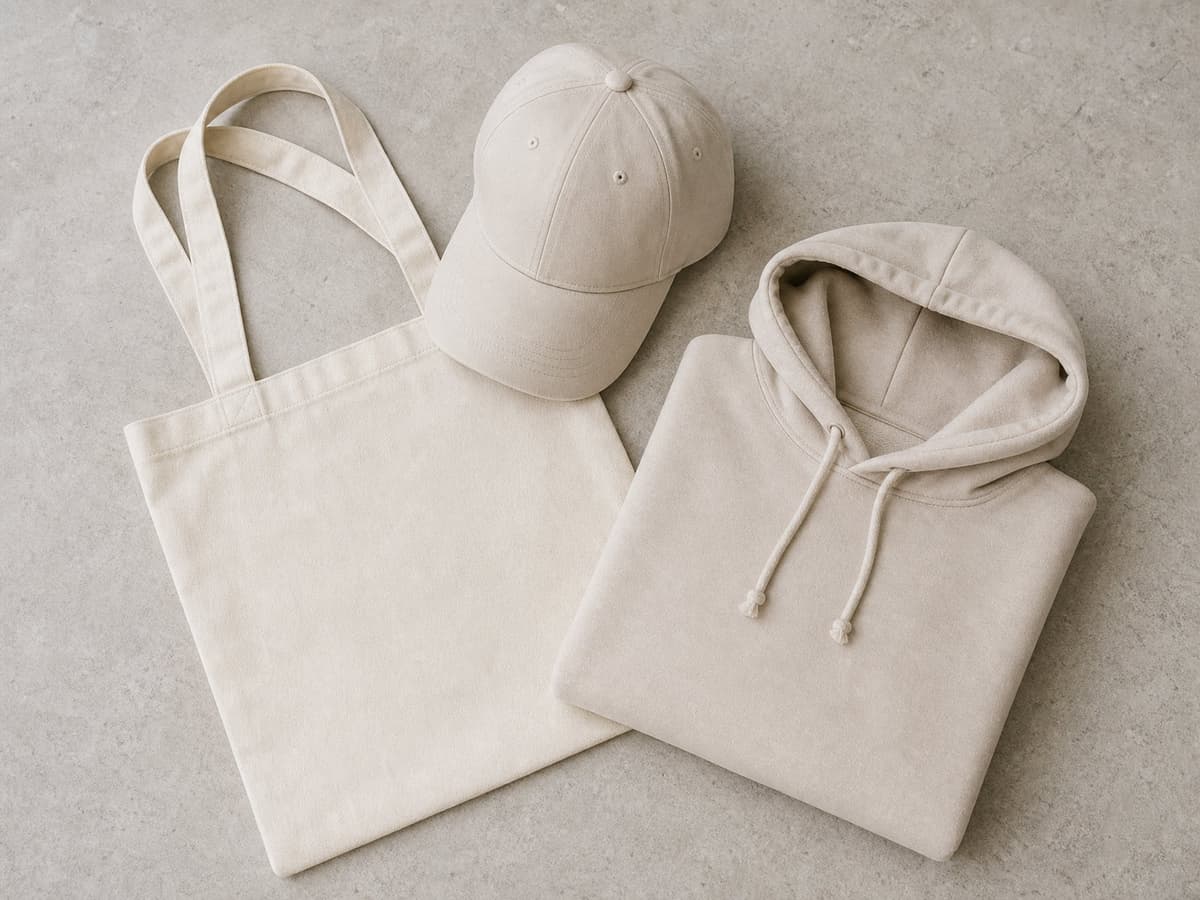
There's a real difference between merch people wear and merch people accept politely and never touch again, and it's almost entirely decided by whether you printed on a blank or made the garment. Print-on-demand and blank-printing services buy someone else's wholesale tee and put your logo on it — which means your brand is attached to a garment you didn't choose the weight, fit, or neckline of. If the blank is a 150 GSM boxy tee with a thin collar, that's what your audience associates with you, regardless of how good the artwork is.
Making it properly means you control the things that decide whether someone reaches for it: fabric weight (a 180–220 GSM tee feels substantially different from a 150 GSM one), the fit and shoulder line, the neckline rib, and whether there's a woven label instead of a scratchy printed care tag. None of that is exotic — it's just not available to you when you're printing on stock.
The honest trade-off is speed and commitment. Print-on-demand ships tomorrow with zero inventory; we need about 10 days for sampling and 40–50 days of production after you approve it, plus freight, and a 150-piece minimum per style and colour. If you're testing whether anyone wants merch at all, print-on-demand is the right first step and we'd say so. Once you know it sells, made-to-spec costs less per unit, earns better margin, and produces something people wear in public — which is the only version of merch that actually markets you.
You choose fabric weight, fit, neckline and label — the things that decide whether merch gets worn or drawered. None of it is in your control when printing on stock blanks.
Order branded merch from 150 per style, per colourway.
If you're still testing whether your audience wants merch at all, print-on-demand is the right first step. Come to us once you know it sells.
Screen print, embroidery, woven labels, and custom packaging — the details that make merch feel like product.
Start narrow. One T-shirt and one hoodie in one colour each is 300 pieces at our minimum of 150 per style and colour, and it tells you more about what your audience buys than six styles in small numbers.
Size the run from your audience, not a standard curve. If you have sold merch before, use those sales by size. If not, ask the people who will buy it: a quick poll of your audience is a better guide than a generic retail size ratio, especially for fits like oversized tees.
Decide the decoration early. Screen printing suits large blocks of colour on bigger runs, embroidery suits small logos on hoodies and caps, and both are priced per position. Our print method comparison sets out the trade-offs.
Count back from the launch date. With about 10 days of sampling, then 40–50 days of production after you approve the sample, plus freight, a drop for a tour or a launch should be briefed about three months ahead. The launch date calculator does the arithmetic.
Wonderful people to work with — very professional and knowledgeable, also accommodating to the needs of their customers.
I have had a very good experience with this company. They are very friendly, professional, and provide fast service. They speak fluent English, which makes communication very easy. The quality of their manufacturing is excellent. I have no doubt in recommending this company to anyone looking for a reliable manufacturing partner in Bangladesh.
Collective Studios under the direction of Mr Jamish and his daughter Homaira represent the future of RTW production in Bangladesh. A thorough approach to detail governed by a genuine standard of quality. Masters of and partners in the process!
Made-to-spec merch is priced like any cut-and-sew garment plus its decoration and branding trims; the comparison that matters is against print-on-demand, which charges a higher unit rate for zero commitment.
A made tee at 180–220 GSM is heavier than the roughly 150 GSM blank most print services use. Fabric is bought by the kilo, so the heavier tee costs more in cloth per piece; that is the price of merch that feels substantial in the hand, and it is the main reason a made tee quotes above a printed blank.
A tee, a hoodie, a cap and a tote are four styles, each with its own 150-piece minimum per colour, its own pattern or spec and its own sample. Spreading a fixed budget across many products means each one sits at the bottom of the quantity curve, whereas concentrating on two products moves both down it.
Screen printing is priced per colour and per location, embroidery by stitch count with a one-off digitising fee, and woven patches are bought in with their own minimums and then sewn on as an extra operation. A single-colour print is the cheapest route; an embroidered chest logo plus a printed back is two decoration jobs.
Woven neck labels, hem tags, hang tags and branded packaging each come from a trim supplier with a minimum run, so on a first order they are a fixed cost divided across 150 pieces. They are what stops the garment feeling like a blank, and once bought the surplus usually covers the second order.
Pattern, sample and trim minimums are paid once; the second run of the same style carries none of them and prices lower per unit. Print-on-demand never gets cheaper because there is nothing to spread. The crossover point is the moment you know the design sells, which is worth testing with print-on-demand first.
150 pieces per style and per colour, and every product in a merch drop counts as its own style. A tee, a hoodie and a sweatshirt are three styles, each with its own pattern, its own sample and its own 150 per colour, so all three in two colours is 900 pieces, not 150. That is why a first merch drop usually lands at four or five hundred pieces across two garments: a private label t-shirt in two colours and a hoodie in one. Sizes within each 150 are yours to choose, so a tee can run heavy on M and L at no extra setup cost. We usually advise against a wide first range. Six styles at 150 each sit at the expensive end of the quantity curve, tie up cash in stock that has not proven itself, and blur which design sold. Two strong pieces reordered cost less the second time, because pattern, sample and trim minimums are paid only once.
Print-on-demand until a design proves it sells, then a made-to-spec run with us: that is our honest advice, even though it costs us early orders. POD holds no stock and needs no cash upfront, so it is the sensible way to test whether your audience wants merch. The price of that safety is a unit cost two to three times that of a manufactured piece, and a garment someone else designed: usually a blank of roughly 150 GSM whose fit, neck rib and label you cannot change. Once a style sells steadily, that premium comes out of your margin on every order. At 150 pieces per style and colour the sums reverse: a made tee can be 180 to 220 GSM, cut to your own fit with a woven label, at a lower unit cost than print-on-demand charges. For merch, keep POD for one-off event designs and manufacture the pieces people keep buying. Our print-on-demand vs manufacturing guide compares the costs.
There is no fixed price list: we price each merch order from its spec, because cost moves with four choices. Fabric weight comes first: cloth is bought by the kilo, so a 180 to 220 GSM tee costs more in fabric than the roughly 150 GSM blank most print services use, and that weight is the main reason a made tee quotes above a printed blank. Second is how many products share the budget, since each style and colour starts at 150 pieces and a thin spread keeps each one at its most expensive quantity. Third is decoration: a one-colour screen print is the cheapest route, while an embroidered chest logo plus a printed back is two jobs. Fourth is branding trims such as woven labels and hang tags, a fixed first-order cost. Reorders price lower per piece because pattern, sample and trim minimums are not paid again. With our quote, the pricing calculator shows your margin at any merch price.
Send us your logo or artwork, the products you want and rough quantities; you do not need a tech pack (our tech pack template is a free download if you want one), and we reply within one business day. From there each garment in the order follows the same steps. We agree the spec with you: fabric weight, fit, neckline, colours, decoration method and where the logo sits. We make a physical sample of each style, and nothing goes into bulk until you have approved it, so fit and print are judged on a real garment rather than a screen. Bulk is then cut, sewn, decorated, labelled and packed under your brand to match that sample, and our QC lead, Walter Meyer, checks print and finish before the run ships DDP to your warehouse or fulfilment centre. Plan on at least 150 pieces per style and colour, and start with the one or two products your audience is most likely to buy. A short message on our contact page is enough to begin.
Because you inherit every decision someone else made. When a printer works with blanks, they receive finished garments and control nothing about them — not the fabric weight, not the fit, not the seam placement, not the neck construction. If the fabric is too textured to hold fine detail, they find out at print stage. If a seam sits exactly where your design needs flat fabric, the design moves rather than the seam. You also cannot label it properly: most blanks carry their own neck label, so you are either overprinting someone else's brand or paying to relabel. Making the garment means the print is planned alongside it — seams kept clear, fabric chosen to take the ink you want, flat panels printed before assembly where a design crosses a seam.
Yes: your logo, labels and packaging are part of the order, and the finished merch carries your brand with nothing identifying the factory. The logo goes on by screen print, embroidery, sublimation, heat transfer, woven patch or woven label, and we recommend whichever suits your artwork rather than whichever is easiest to run. Pricing differs: screen print by colour and by print location, embroidery by stitch count after a one-off digitising fee, and patches are bought in with their own minimums. Packaging covers hang tags, polybags, tissue, stickers and cartons printed with your artwork. Labels, tags and packaging come from trim suppliers with minimum runs, a fixed first-order cost spread over your 150 pieces, and the surplus usually covers the reorder. Send the logo as vector artwork (AI, EPS or PDF) so it is reproduced exactly; if you only have a PNG, send it and we will say whether it holds at your chosen size.
Yes: we ship DDP worldwide, including to the US, UK, EU, Canada and Australia, to your own warehouse or to a third-party fulfilment centre, and one run can be split between two destinations if you sell in more than one region. Under DDP we arrange the export documents, freight, customs clearance and duty, and quote one landed price, so freight and duty are already inside the figure you plan your merch margin on. How import VAT or GST is treated varies by country, and your quote states it. Air freight suits launch dates and smaller drops, adding roughly five to eight days depending on destination; sea freight adds four to six weeks and costs a fraction as much, which makes sense for repeat bulk. What we do not do is dropship single orders to your customers: we are a manufacturer, and per-order fulfilment is a different business, done better by a fulfilment specialist.
Trade and regulatory details on this page last verified 30 July 2026. Tariff and compliance terms change — ask us to confirm the current position for your order.
Whether it’s a large bulk or wholesale run or your first batch of 150, send a sketch, a reference, or a sentence. We’ll reply within one business day with fabric options and an indicative price.
Or message the factory directly: WhatsApp +880 1980 055026 · hello@collectivestudioltd.com · Homaira replies within one business day.