Low MOQ — from 100 pieces
Start with 100 pieces per style and colour — ideal for launching or extending a line.
Premium joggers and sweatpants, made to your fit — from 100 pieces a style. Heavyweight fleece, organic options, full branding, worldwide delivery.
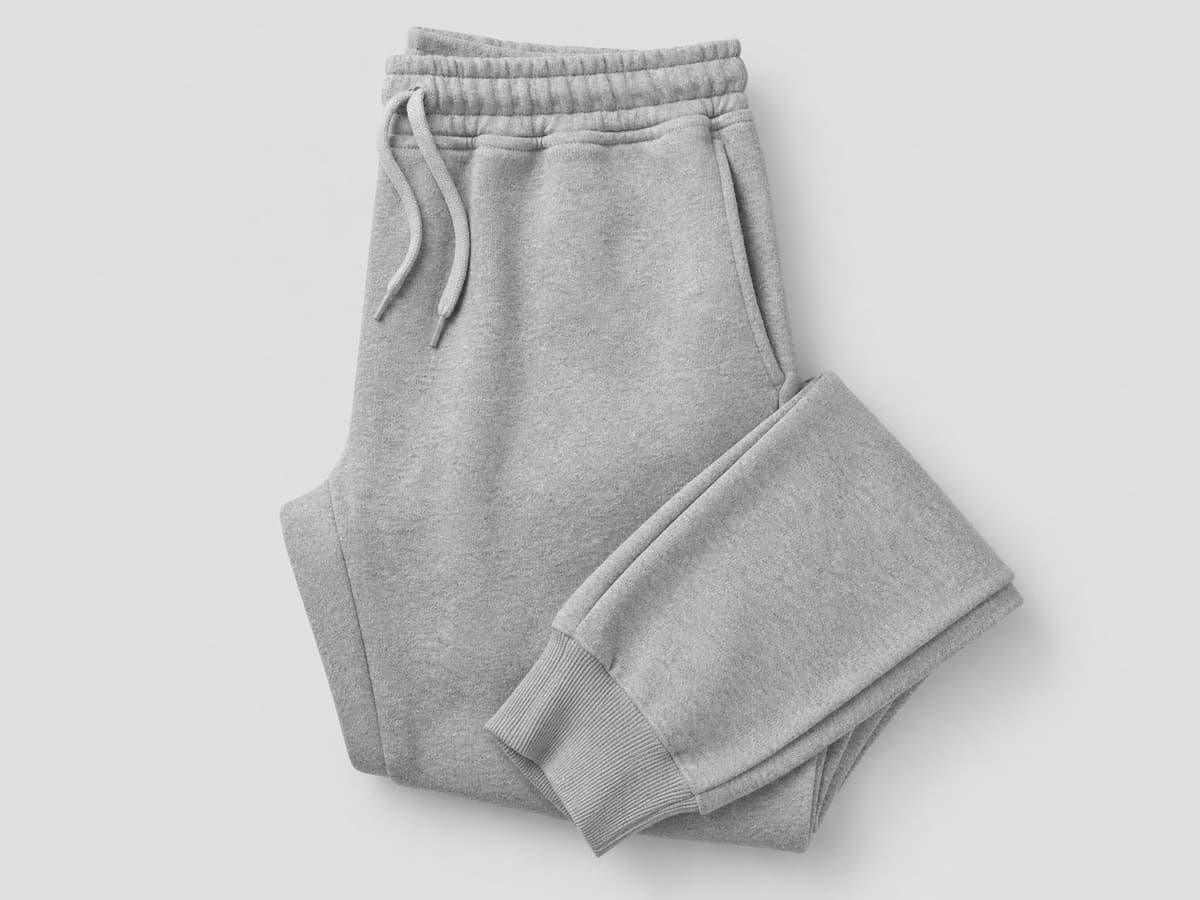
The first decision on any jogger is French terry or brushed fleece, and they behave differently enough that picking wrong changes the whole product. French terry is a loopback knit — the inside face is visible loops, unbrushed. It's breathable, it drapes, and it works year-round, which is why most premium and warm-climate joggers use it. Fleece is the same base construction with the inside brushed, which lifts the fibres into a soft nap. It's warmer and softer to the touch, but the brushing is also what makes cheap fleece pill after a dozen washes. Neither is better; they're different products.
Weight is the second decision. Below roughly 280 GSM a jogger feels flimsy and clings; 320–400 GSM is the range most premium joggers live in; above 450 GSM you're into actually heavyweight territory that reads as substantial but takes noticeably longer to dry. We run 280–450 GSM and will tell you plainly where your target weight sits on that trade-off.
Two details that separate joggers that hold up from ones that don't: cotton fleece shrinks unless the fabric is compacted or pre-shrunk before cutting — skip that and your customer's size L becomes a size M after one hot wash. And the rib cuff needs elastane in it for recovery; a 100% cotton rib stretches out and stays stretched, which is why budget joggers end up with saggy ankles. We handle both as standard. Cuffed joggers, open-hem sweats, shorts and wide-leg, from 100 pieces per style, with GOTS-certified organic cotton available (certificate RSC 9687).
Start with 100 pieces per style and colour — ideal for launching or extending a line.
Loopback terry breathes and drapes year-round; brushed fleece is warmer and softer but pills more readily if the base fabric is cheap. We'll spec whichever suits the product.
Cotton fleece is compacted before cutting so it doesn't shrink a size in the first hot wash, and cuff rib carries elastane so ankles don't go saggy.
GOTS-certified organic cotton (RSC 9687) and recycled blends available, with documentation.
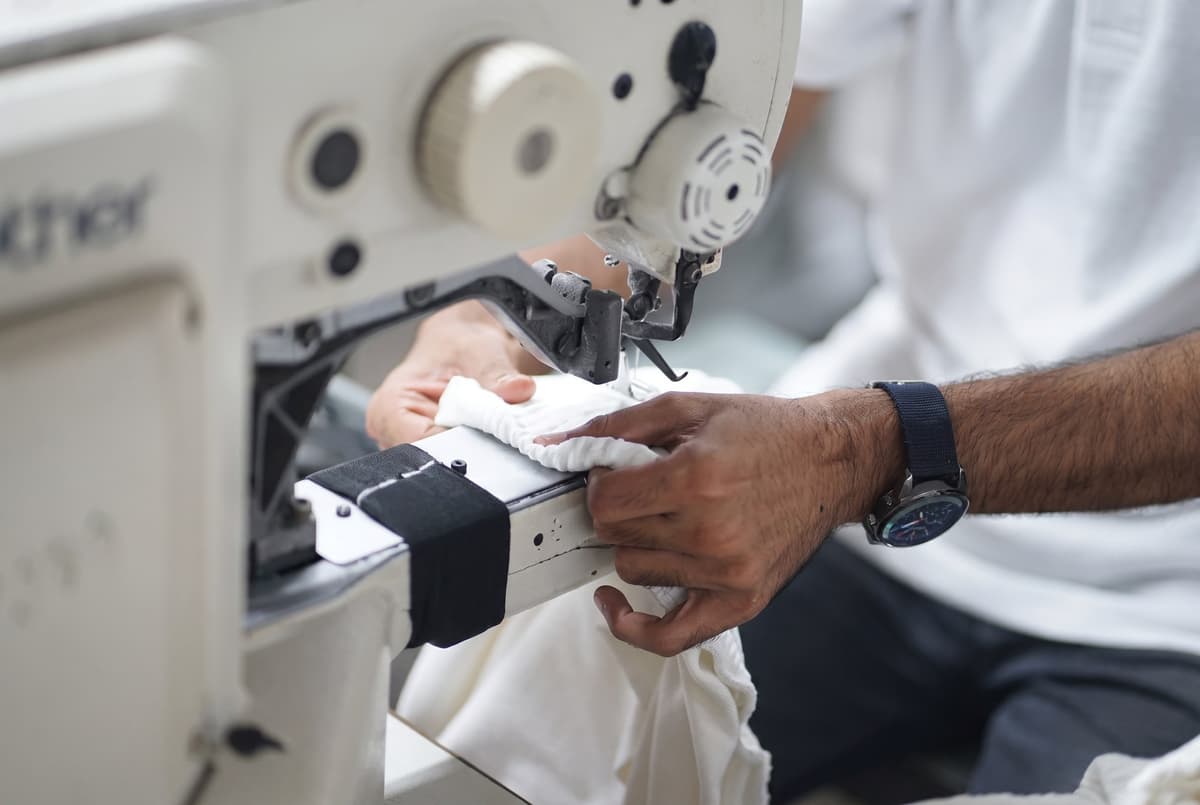
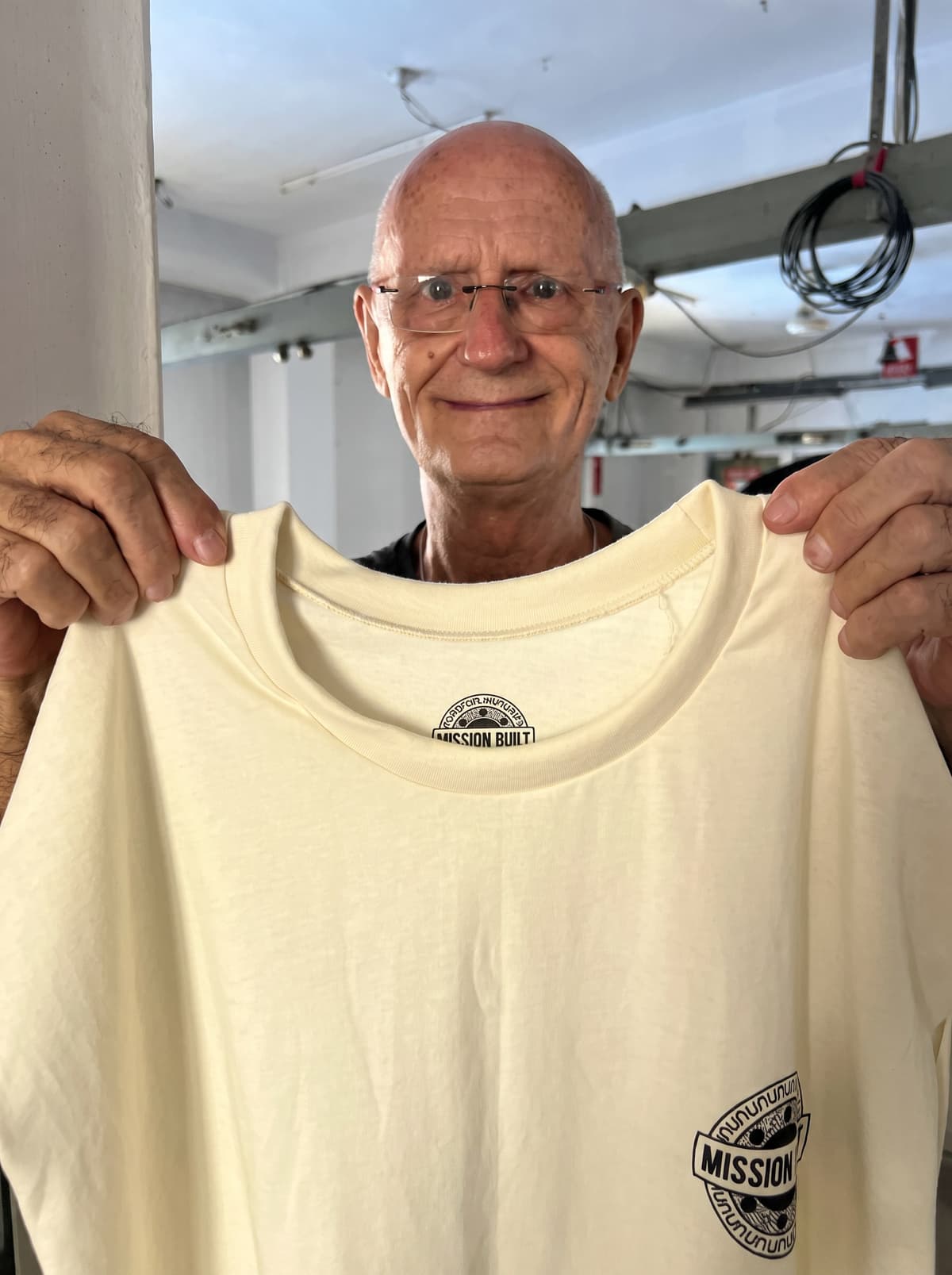
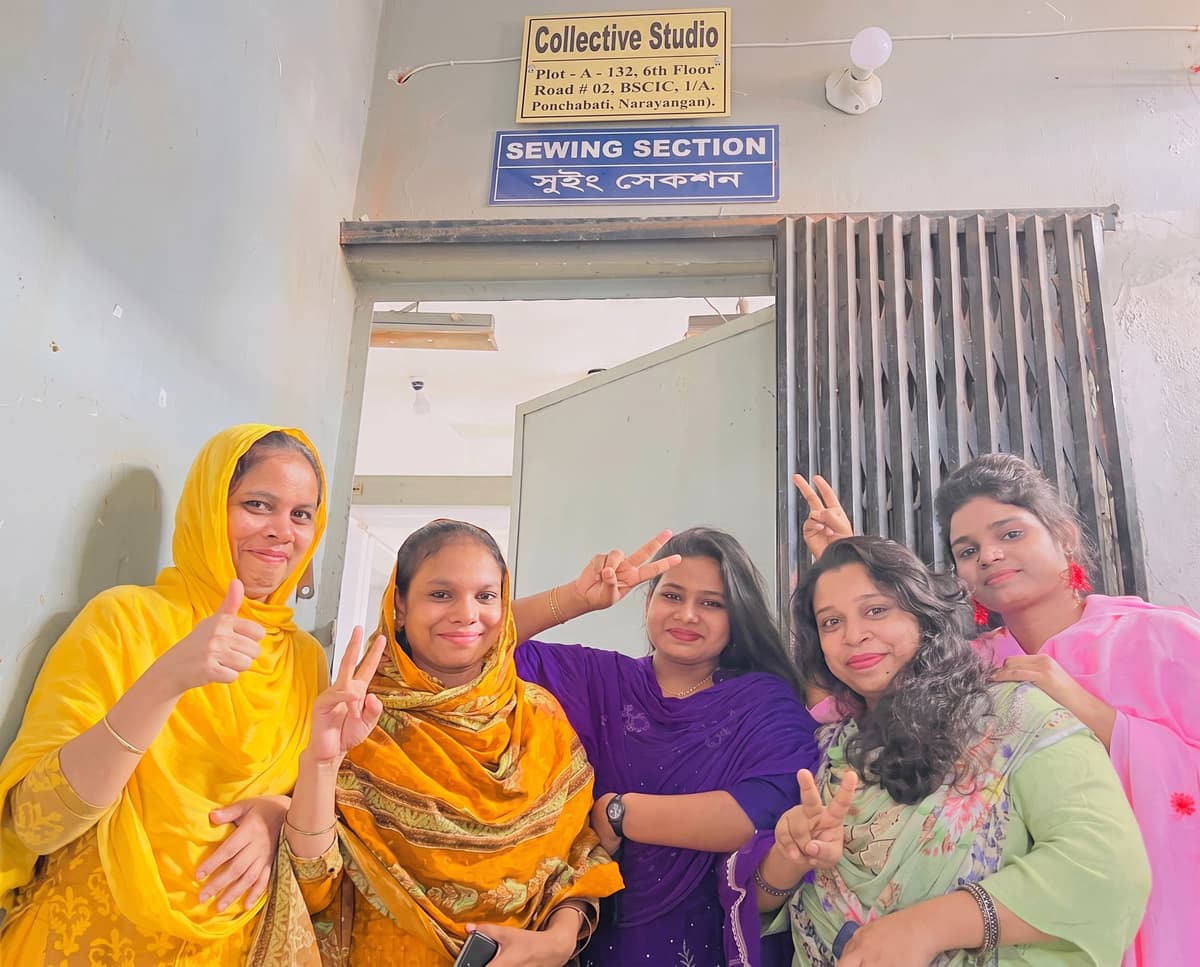
Collective Studio is up and coming. Very hard working people who want to please their customers and grow partnerships together. Homaira is very knowledgeable in the knit industry and always willing to learn more. We are looking to grow our business with them.
Talk to the factory directly: +880 1980 055021 · hello@collectivestudioltd.com
One hundred pairs per style, per colour. Joggers sit at the more construction-heavy end of what we make — waistband with drawcord and eyelets, elasticated or ribbed cuffs, pockets, and often a gusset — so the pattern and sample stage matters more than it does on a tee. That work is done once and reused on every reorder. The per-colour floor is fabric-driven: fleece and French terry are knitted and dyed in lots, and splitting a hundred pairs across three colours means three separate lots. If you are testing, run one colour deep. Black or heather grey sells first almost universally, and the reorder pattern will tell you what your second colour should be far more reliably than a guess at launch.
Both are knitted with a face side and a back, and the difference is what happens to the back. French terry leaves the loops intact — you can see them — which makes it lighter, more breathable, and quicker to dry, so it suits transitional weather and warmer climates. Fleece brushes those loops into a soft nap, which traps air and makes it warmer, softer and heavier. The trade-off is pilling: brushed fleece pills more readily than terry, and how badly depends heavily on yarn quality, which is where cheap fleece gives itself away after a few washes. Weight for weight, fleece feels warmer and terry feels crisper. For a year-round hoodie most brands land on French terry around 280 to 320gsm; for winter pieces, brushed fleece from 320 upward.
For most brands, 280 to 380gsm in French terry or fleece. Below about 260 the fabric drapes rather than holds shape and reads as loungewear; above 400 you are into heavyweight territory that feels substantial but runs hot and costs noticeably more, since fabric is roughly half the unit price and you buy it by the kilo. The 300 to 340 range is where most premium joggers sit — enough weight to hang properly and survive washing without being oppressive. French terry is looped on the inside and lighter in feel; brushed fleece is warmer and softer but pills more readily if the yarn is poor. The honest advice: tell us the season and market rather than picking a number, and we will send swatches so you feel the difference.
A little, and we account for it rather than leaving you to discover it. All cotton knits shrink, typically three to five per cent, and the shrinkage is greater lengthwise than across. What separates a well-made jogger from a cheap one is that the pattern is cut oversized to compensate and the fabric is pre-shrunk or compacted before cutting, so the finished measurements after the first wash match the size chart rather than falling short of it. We wash-test the pre-production sample and set the size chart from the washed measurements, not the unwashed ones, which is the step most often skipped. Expect minimal further change after the first wash. If your customer tumble-dries on high, expect a little more — that is true of any cotton garment.
Yes, in GOTS-certified organic cotton fleece or French terry, certificate RSC 9687, verifiable in the Global Standard public database. Worth knowing on joggers specifically: most people want a small amount of elastane for recovery at the knee and seat, otherwise the fabric bags out after a few wears. GOTS permits up to ten per cent synthetic content in a certified garment, rising to twenty-five per cent for categories including leggings and sportswear, so a jogger with elastane can still carry the certification. That surprises people who assume any stretch disqualifies organic. We will confirm exactly which certification wording your specific blend qualifies for before you print it on a label, because the permitted claim differs by composition.
Send us the garment. That is genuinely the most useful thing you can do — measurements taken from a physical piece you already like beat any description or sketch, and it removes most of the guesswork from the first sample. We measure it at every point, build the pattern from those numbers, and send you a sample to compare side by side. If you do not have a reference garment, a size chart with points of measure works, though expect an extra sampling round while we converge on what you meant. What we cannot do is match a fit from a photograph or a brand name; two garments labelled medium from different labels can differ by four centimetres in the chest, so "like a standard men's medium" is not something anyone can cut to.
Trade and regulatory details on this page last verified 30 July 2026. Tariff and compliance terms change — ask us to confirm the current position for your order.
Whether it’s a large bulk or wholesale run or your first batch of 100, send a sketch, a reference, or a sentence. We’ll reply within one business day with fabric options and an indicative price.