An office in Amsterdam
Soetendaal 61, 1081 BN Amsterdam: brand and design conversations, samples and compliance paperwork in your time zone, from people you can meet.
Premium knitwear manufacturing for Dutch brands — duty-free under Everything But Arms, the Netherlands' 21% import VAT inside one landed price, and a brand office at Soetendaal 61, Amsterdam, in your own time zone.
Collective Studio cuts and sews knitwear for Dutch brands in Narayanganj, Bangladesh, and runs its brand office at Soetendaal 61, Amsterdam. Orders start at 150 pieces per style and colour, take about 10 days to sample and 40–50 days to produce, and ship DDP: 0% duty under Everything But Arms, with the 21% Dutch import VAT inside the quote and Dutch fibre labels sewn in. About 70 days from order to your door by air.
Or message the factory directly: WhatsApp +880 1980 055026 · hello@collectivestudioltd.com · Homaira replies within one business day.
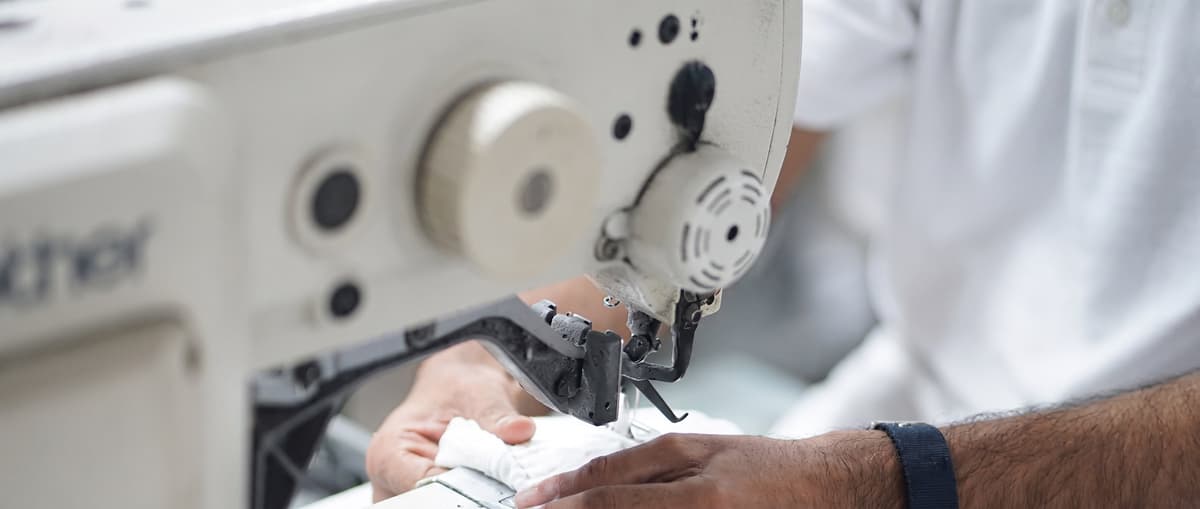
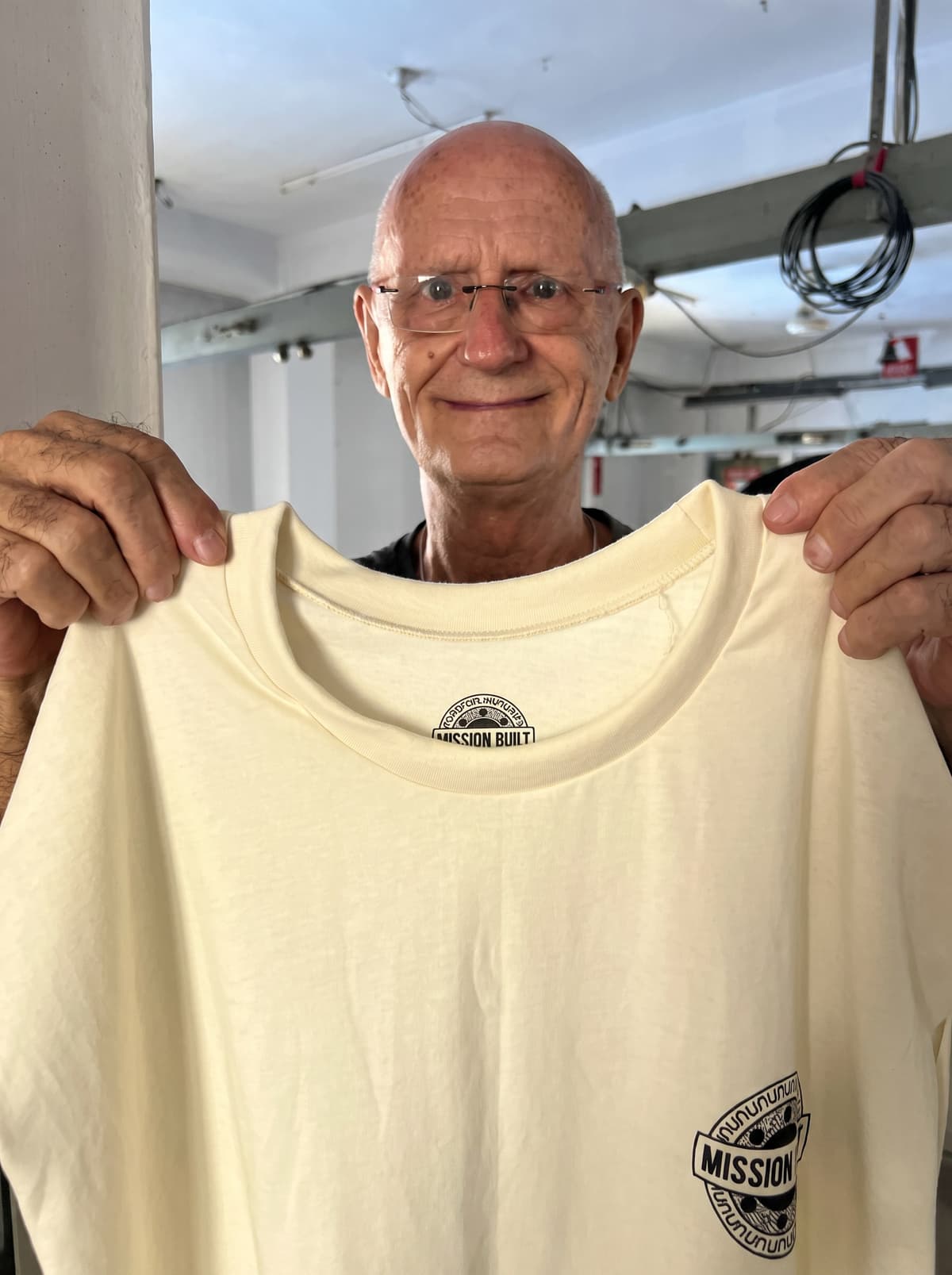
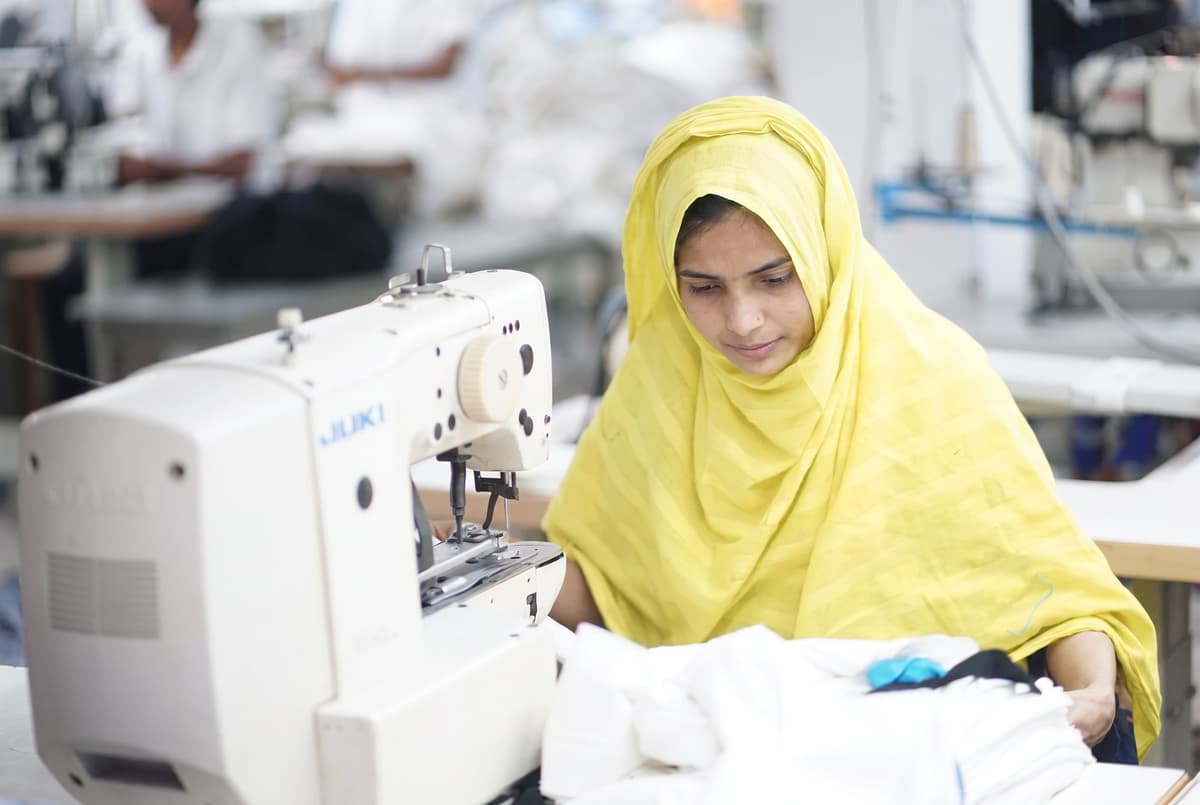
Made by our own team in Narayanganj. See the floor ↓Client reviews on Google ↗GOTS certificate RSC 9687 →
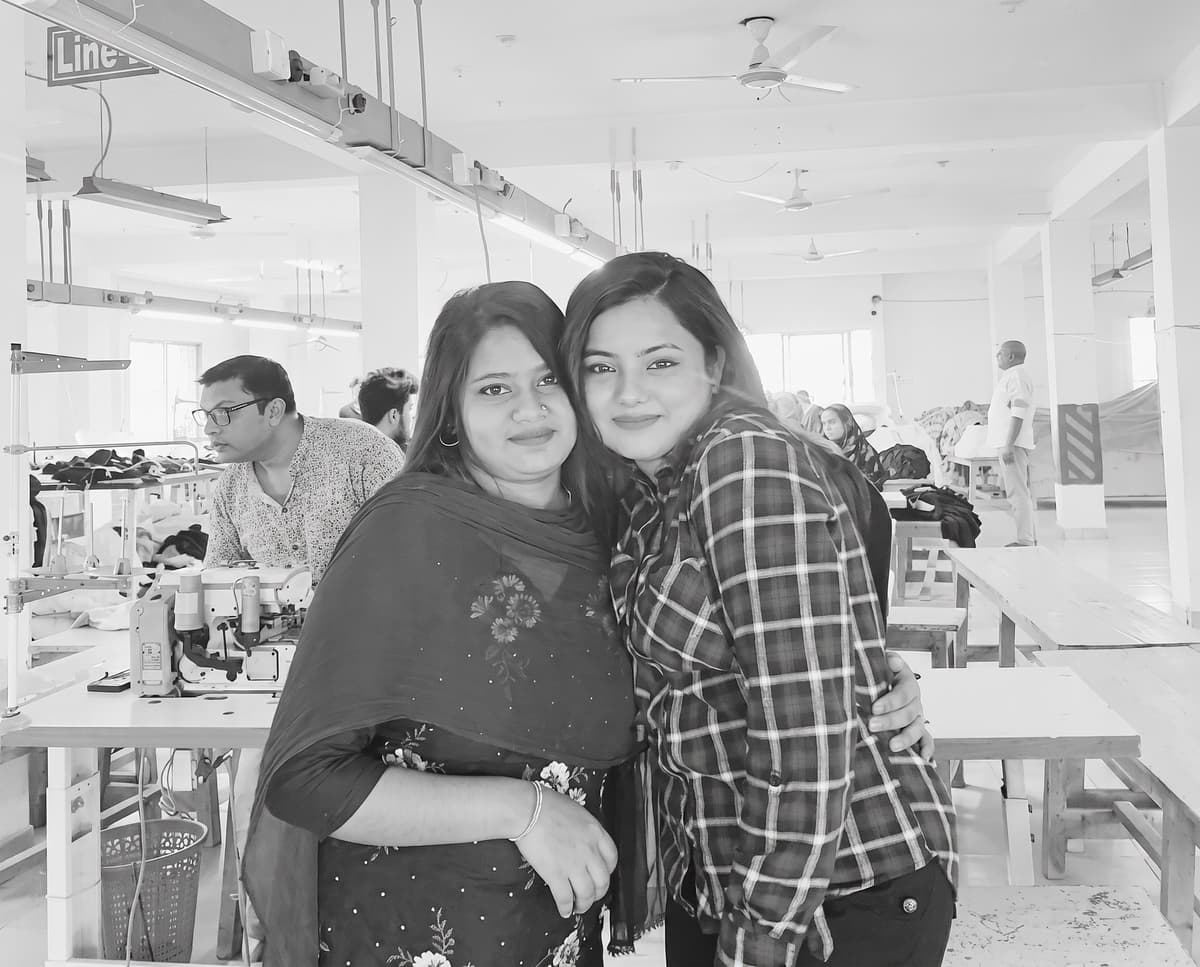
We are a clothing manufacturer for Dutch brands with a difference most sourcing pages cannot claim: we have our own office in the Netherlands. Production runs on our own floor in Narayanganj, Bangladesh; brand and design conversations, samples and compliance paperwork run from our office at Soetendaal 61, 1081 BN Amsterdam. A Dutch founder can meet us in Amsterdam on Tuesday and have the sample on the table, not on a video call at midnight.
The numbers that are Dutch rather than European are the tax and the port. Bangladesh-made apparel enters the EU duty-free under Everything But Arms, and the Netherlands charges import VAT at its standard rate of 21% on the customs value plus any duty and the transport and insurance costs to the first place of destination in the Netherlands. Because we ship DDP, that VAT sits inside the landed price you approve rather than arriving as a separate assessment, and if you are BTW-registered it is normally reclaimed on your return.
Rotterdam is the natural port, and in our experience sea freight from Chattogram lands there in roughly four to five weeks, with air freight into Schiphol adding five to eight days door to door. Many Dutch brands warehouse in the Netherlands for the whole EU; if you clear at Rotterdam and distribute across the Union, the import VAT is charged in the Netherlands, where the goods first enter the EU, and we set the paperwork up for that.
Compliance is where the Amsterdam office earns its keep. Since 13 December 2024 the EU's General Product Safety Regulation requires an EU-established responsible economic operator and a technical file kept for ten years; a Dutch company importing from us is that operator, and our office can hold the file where that suits your structure. On an organic order, GOTS certificate RSC 9687 supplies the fibre, chemistry and chain-of-custody evidence behind it, and fibre labels are sewn in Dutch as Regulation (EU) No 1007/2011 requires.
From your pattern we cut and sew t-shirts, polos, hoodies, sweatshirts, joggers, shorts, activewear, loungewear, underwear and kidswear, starting at 150 pieces per style and colour. Denim, jackets and woven shirts are not made on our floor; our sister buying house in the same industrial area sources them as a separate order. Within the 150 you can split sizes however you like, but not colours, because every colour is dyed as its own lot.
If your search for a kledingfabrikant keeps landing on agents, ask each one for the factory's street address, its BKMEA membership and a live video call from the floor during a working shift. Our floor is at Plot-A-132, Road No. 02, BSCIC Industrial Area, Panchabati, Narayanganj 1420, we are BKMEA members, and the Amsterdam address above is an office you can walk into.
| Bangladesh (our floor) | China | Vietnam | Turkey | Portugal | |
|---|---|---|---|---|---|
| Duty preference into the Netherlands | 0% under Everything But Arms on single-transformation origin, for three years past LDC graduation; 21% Dutch import VAT, as on any non-EU origin | No preference; the standard EU rate for the commodity code applies | EU–Vietnam trade agreement preferences apply only where its fabric-origin rules are met | EU–Turkey customs union: no duty on goods in free circulation | EU production: no import, no customs entry, no import-VAT event |
| Sea route to the Netherlands | Via Suez to Rotterdam; on our experience about four to five weeks by sea, five to eight days by air into Schiphol | Via Suez; a similar sea leg | Via Suez; a similar sea leg | Road and short-sea; days rather than weeks | Road; days |
| Where it tends to be strongest | Cotton knit basics at low minimums, organic cotton under GOTS, landed cost at Rotterdam | Breadth of fabrics, trims and technical construction | Large woven, outerwear and sportswear programmes | Speed to market, denim and knit, mid-range cost | Premium made-in-EU positioning, small runs, highest unit cost |
| Choose it when | You want cotton knitwear from 150 pieces a colour, Dutch labels and a GPSR file built on the line, and an Amsterdam office where you can review samples | You need materials or constructions a knit specialist cannot source | You are placing large woven or performance programmes | You need weeks, not months, and can carry a higher unit cost | The made-in-Europe label is central to the brand and price is secondary |
Soetendaal 61, 1081 BN Amsterdam: brand and design conversations, samples and compliance paperwork in your time zone, from people you can meet.
Duty-free under EU EBA; the Netherlands' 21% import VAT is charged on the customs value plus any duty and onward transport, and sits inside our DDP price, reclaimable if you are BTW-registered.
A Dutch brand can start with one style in one colour, 150 pieces with sizes split freely, and add colours once the first one sells.
Dutch fibre labels as standard; on organic orders, certificate RSC 9687 gives your GPSR technical file its fibre, chemistry and traceability evidence, and our Amsterdam office can keep the file.
Belastingdienst tariff page re-read 14 October 2026; duty rules verified 21 September 2026.
Customs duty is common EU law, so at Rotterdam or Schiphol a garment cut and sewn on our floor is entered at 0% under Everything But Arms, whose origin rule needs only that single transformation, and Regulation (EU) 2026/1395 keeps the preference for three years after Bangladesh's LDC graduation. The Dutch decision is the tax: the Belastingdienst calls 21% the general tariff and keeps 9% for goods such as food, medicines and books, so clothing pays 21% (page re-read 14 October 2026).
For 500 tees at a US$6.00 customs value, US$3,000 including freight and insurance to the EU border, the entry carries US$630 of import VAT before onward transport and no duty, inside our DDP price. A BTW-registered importer normally reclaims it on the next return, and a Dutch importer holding an Article 23 licence can move the import VAT from the border to that return instead of paying it at entry; ask your accountant whether that suits you and tell us before we file the entry.
Before you set Dutch prices, have your douane-expediteur confirm the commodity code for each style; we state the duty position for your order in writing, and the landed-cost calculator runs the sum at 21% for any quantity.
Labelling and UPV Textiel rules read on Dutch government pages on 14 October 2026; GPSR as listed under Sources below.
Dutch rules on clothing labels come from Regulation (EU) No 1007/2011, applied in the Netherlands through the Warenwetbesluit textielproducten. The government's business guidance sums up the practice: the label must be in the language of the country of sale, so Dutch here; it must be durable, legible and visible; fibres take their names from the EU list; and "100%", "zuiver" or "puur" is reserved for a single fibre. The NVWA checks labels and can act when the information is wrong. Care instructions are not a legal requirement in the Netherlands; we sew them if you want them. Country of origin is not required either, but the customs declaration states it and any Made-in claim you print must be true.
Since 13 December 2024 the General Product Safety Regulation (EU) 2023/988 has required an operator established in the EU for every garment; when a Dutch company imports from us it fills that role, with its name and postal and electronic address on the product or packaging beside the manufacturer's, a risk analysis, and technical documentation available for ten years. Our Amsterdam office can hold the file if that suits your set-up. On organic orders our GOTS certificate RSC 9687 supplies the fibre, chemistry and traceability evidence; the file also covers REACH Annex XVII entry 43, which bans azo dyes that release listed aromatic amines above 30 mg/kg in skin-contact textiles, and EN 14682 on kidswear drawstrings, as the GPSR guide explains.
The Netherlands already has producer responsibility for clothing. UPV Textiel has applied since 1 July 2023, and a Dutch company that imports clothing to sell here counts as a producer: it registers with the government, reports to Rijkswaterstaat by 1 August each year on what it placed on the market the year before, and meets the targets itself or through a producer responsibility organisation such as Stichting UPV Textiel. From 2025 at least 50% of the weight placed on the market must be prepared for reuse or recycled, rising to 75% from 2030, and the ILT supervises compliance. The government's business guidance says joining an organisation becomes compulsory from 2028. Separately, the Commission plans the apparel Digital Product Passport for the fourth quarter of 2027, and most of the data it will need is what a GPSR file already holds.
Our DDP quote to a Dutch address carries the freight, the Douane entry at Rotterdam or Schiphol, the import VAT and the final delivery as one landed price; the commercial invoice, packing list and statement on origin reach you before the goods move. In our experience the sea leg from Chattogram to Rotterdam takes roughly four to five weeks, and air freight five to eight days door to door.
The floor in Narayanganj keeps Bangladesh Standard Time, UTC+6 year-round, five hours ahead of Amsterdam in winter and four in summer, and works Saturday to Thursday, 09:00 to 17:00. A Dutch morning overlaps our afternoon; the rest of the Dutch working day is covered by our Amsterdam office, in Dutch or English, for design, samples and compliance paperwork. You are welcome at the office, a visit to the floor can be arranged, or we walk you through a working shift on a live video call.
UN LDC portal re-checked on 14 October 2026.
Bangladesh is now due to leave the UN list of Least Developed Countries on 24 November 2029. It asked in February 2026 for more preparation time; the Committee for Development Policy said an extension would be appropriate if domestic reforms progress significantly, and in a decision of 21 July 2026 the Economic and Social Council recommended that the General Assembly act before 24 November (UN LDC portal). On 29 October 2026 the General Assembly granted it, moving graduation back three years from 24 November 2026.
Graduation touches only the duty line of a Dutch landed cost, and only after a delay: Regulation (EU) 2026/1395 keeps Everything But Arms running for three years beyond the graduation date, so a Dutch order stays duty-free to about the end of 2032. The 21% import VAT at Rotterdam or Schiphol applies either way. Whether GSP+ takes over afterwards is undecided; our LDC graduation guide sets out the scenarios.
Bangladesh is the second-largest source of the knitted clothing the Netherlands imports. In Eurostat's 2025 trade figures for HS chapter 61, knitted or crocheted apparel, China supplied 19.6% of the value of all Dutch imports, Bangladesh 15.0% and Germany 14.0%. By weight, Bangladesh shipped 119,263 tonnes, 18.4% more than in 2024, while the tonnage from China fell by 8.6%. Of the knitted clothing that reached the Netherlands from outside the EU, 22.7% by value was made in Bangladesh.
Read the figures with two cautions. Eurostat records non-EU imports by country of origin but goods from other member states by country of consignment, so Germany's share can include clothing made elsewhere and sent on from a German warehouse. And the EU-level figures also count goods cleared in the Netherlands and sent straight on to another member state, which Eurostat calls quasi-transit, so part of what the table shows is sold elsewhere in the Union: the warehousing pattern described at the top of this page. The broad picture still holds: China and Bangladesh together supplied just over a third of the knitted clothing the Netherlands bought from the world in 2025.
| Origin | Share of Dutch knitted-clothing imports by value, 2025 | Weight shipped, 2025 (tonnes) | Change in weight on 2024 |
|---|---|---|---|
| China | 19.6% | 138,853 | -8.6% |
| Bangladesh | 15.0% | 119,263 | +18.4% |
| Germany (EU member, by consignment) | 14.0% | 43,987 | -10.9% |
| Vietnam | 5.9% | 33,385 | +23.0% |
| Cambodia | 5.8% | 48,365 | +49.8% |
| Turkey | 5.5% | 23,483 | -18.8% |
| All origins outside the EU | 66.2% | 478,706 | +13.5% |
I have had a very good experience with this company. They are very friendly, professional, and provide fast service. They speak fluent English, which makes communication very easy. The quality of their manufacturing is excellent. I have no doubt in recommending this company to anyone looking for a reliable manufacturing partner in Bangladesh.
Wonderful people to work with — very professional and knowledgeable, also accommodating to the needs of their customers.
Collective Studios under the direction of Mr Jamish and his daughter Homaira represent the future of RTW production in Bangladesh. A thorough approach to detail governed by a genuine standard of quality. Masters of and partners in the process!
No, we manufacture in Bangladesh, but we run our own office in the Netherlands, at Soetendaal 61, 1081 BN Amsterdam. Every garment we make is cut and sewn on our floor at Plot-A-132, Road No. 02, BSCIC Industrial Area, Panchabati, Narayanganj 1420, Bangladesh. The Amsterdam office handles brand and design conversations, samples and compliance paperwork, in Dutch or English, so a founder in Utrecht or Eindhoven can put the sample on a table in Amsterdam rather than on a video call. Bangladesh Standard Time is four to five hours ahead of the Netherlands, so your morning overlaps our afternoon and the office covers the rest of your working day. If you need production inside the Netherlands itself, we are not the right fit. Comparing kledingfabrikant options and finding mostly agents? Ask each one for an address you can walk into; ours in Amsterdam has real people in it. Office visits are welcome, and floor visits can be arranged.
The simplest route is to buy DDP, delivered duty paid: the supplier handles freight, the Douane (Dutch Customs) entry and the import VAT, and you receive the goods at any Dutch address for one landed price, which is how we quote it. Three things matter at the border. Origin: Bangladesh-made garments enter at 0% duty under Everything But Arms, but only when the entry carries valid proof of Bangladeshi origin; we state the duty position for your order in writing. Tax: 21% Dutch import VAT, charged at Rotterdam or Schiphol. Documents: the commercial invoice, the packing list and a statement on origin, which above EUR 6,000 of originating goods per consignment must be made out by a REX-registered exporter. Many Dutch brands warehouse in the Netherlands for the whole EU; if you clear at Rotterdam and distribute across the Union, the import VAT is charged in the Netherlands. Buying FOB means appointing your own forwarder and broker; our Incoterms guide compares the two.
No, not at present: Bangladesh-made clothing enters the Netherlands at 0% duty under the EU's Everything But Arms scheme, on a single-transformation origin rule our Narayanganj cut-and-sew floor satisfies. Bangladesh is scheduled to graduate from UN Least Developed Country status on 24 November 2029; it asked for an extension in February 2026, the UN Economic and Social Council referred that request to the General Assembly in July 2026, and the General Assembly granted it on 29 October 2026. Regulation (EU) 2026/1395 then gives three more years of Everything But Arms after graduation, which keeps a Dutch order duty-free until about the end of 2032. After that it depends on whether Bangladesh qualifies for GSP+, which is unresolved. Graduation touches only the duty line of a Dutch landed cost; the 21% import VAT is charged at Rotterdam or Schiphol either way. We state the duty position in writing on every Dutch quote; our LDC graduation guide sets out the scenarios.
Import VAT on clothing entering the Netherlands is 21%, the Dutch general rate; clothing is not among the goods the Belastingdienst lists for the reduced 9% rate. The Belastingdienst calls 21% the general tariff, and its 9% list covers food, water, ornamental plants, medicines and medical aids, art, collectibles and antiques, and books and periodicals (both read 27 September 2026). The VAT is charged on the customs value plus any duty and the transport and insurance costs to the first place of destination in the Netherlands. On 500 tees at a US$6.00 customs value (which includes freight and insurance to the EU border), US$3,000 in total, the VAT on the customs value is US$630 and the duty nothing. On our DDP quotes that VAT is already inside the landed price you approve. If your business is the importer on the entry and is BTW-registered, it normally reclaims that VAT on its next return. Dutch importers can also hold an Article 23 licence, which moves import VAT from the border onto the VAT return.
Yes: our minimum is 150 pieces per style and per colour, so a Dutch brand can launch one tee in one colour. Sizes split freely inside that 150, so XS to XXL all count towards it. A second colour is a second 150, because every colour is dyed as a separate lot: one tee in three colours means 450 pieces priced as three runs, and putting all 150 into one colour gives you more depth for the same order. We suggest planning a first Dutch range at three to five hundred pieces over two or three styles, so the GPSR technical file is built once and reused on reorders. If you plan to test in the Netherlands and later sell across the EU, order the combined-language label from the first run. Before you ask for a quote, the MOQ calculator shows how your styles and colours add up.
Yes, the fibre composition label must be in Dutch for garments sold in the Netherlands. Article 16(3) of Regulation (EU) No 1007/2011 requires the official language of the member state where the garment is sold, and the same regulation requires every fibre by its generic name and percentage, in descending order, on a durable and legible label. Dutch-language fibre labels are our standard on Dutch orders, so a range sold only in the Netherlands needs nothing more on that label. The question changes when a Dutch warehouse starts shipping abroad: a range sold in Germany and France needs German and French as well. Put every language you expect to need on one combined label from the first run, rather than relabelling finished stock later. We sew them in during production, to your artwork. The manufacturer details GPSR adds are covered in the next answer, and our labels and packaging guide covers the physical choices.
The Dutch company that imports the clothing is the EU-established responsible economic operator under the General Product Safety Regulation (EU) 2023/988. A factory in Bangladesh cannot hold that role; the alternatives to an EU importer are an authorised representative appointed in writing by the manufacturer, or a fulfilment service provider. Since 13 December 2024 the Regulation has required a risk analysis and technical documentation, which the importer keeps available for ten years, plus the manufacturer's name and postal and electronic address on the product or its packaging. We build the file during production, and our Amsterdam office at Soetendaal 61 can hold it where that suits your structure, so the paperwork sits in the same country as your brand. On an organic order, GOTS certificate RSC 9687 supplies the fibre, chemistry and traceability evidence behind it; the scope certificate is available on request. Azo-dye limits under REACH and, for kidswear, drawstring rules under EN 14682 belong in the same file.
It depends on what the brand is built on: Bangladesh for cotton knit basics at low minimums, GOTS-certified production and landed cost; Portugal when a made-in-Europe label is central and a higher unit cost is acceptable; Turkey when speed to market justifies a mid-range cost. That is our own view, not a price comparison. For a Dutch buyer the difference is the border. Portuguese goods are EU production and arrive by road, with no import, no customs entry and no import-VAT event. Turkish goods clear at the Douane with no duty on goods in free circulation under the EU-Turkey customs union, but Dutch import VAT still applies. Bangladeshi goods land at Rotterdam or Schiphol and clear at the Douane duty-free under Everything But Arms, with the same 21% import VAT. Choose us for cut-and-sew knitwear from 150 pieces. We do not make denim, jackets or woven shirts; our sister buying house sources those as a separate order.
About ten days for sampling, forty to fifty days for production once the pre-production sample is signed off, then transit: in our experience roughly four to five weeks by sea to Rotterdam, or five to eight days by air into Schiphol. We ship DDP, so the Dutch customs entry, the 21% import VAT and delivery to your door sit with us, on one landed price. Tell us when you ask for a quote whether the goods go to a warehouse, a studio or a shop, because the landed price is quoted to that door. The part you control is the start: production counts from sample sign-off, so a clear tech pack and quick comments on the first sample keep the schedule on track, and you can review samples in person at our Amsterdam office rather than over a video call. From order to your door, plan on about 70 days by air.
Yes, if your company is named as the importer on the Dutch customs entry. business.gov.nl says anyone who imports goods into the Netherlands or deals with Dutch Customs needs an EORI number. A company with an RSIN number that files its own declarations can create the number itself; if a douane-expediteur (customs agent) files for you, you apply to the Customs Administration instead, as a sole proprietorship also must. On a DDP order we agree in writing, before freight is booked, whose name goes on the entry, so you know early whether your EORI is needed. Three other registrations are worth having before the first delivery: your BTW number, to reclaim the import VAT; UPV Textiel, because the company that first places the clothing on the Dutch market counts as its producer; and, if it suits you, an Article 23 licence that moves import VAT onto your return.
Mostly knitted clothing, the cut-and-sew work our floor does. In Eurostat's 2025 figures, knitted garments (HS chapter 61) made up about 61% of the value of the clothing the Netherlands imported from Bangladesh, and woven clothing (chapter 62) the rest. Within the knitted share, broken down by heading, T-shirts, singlets and vests (6109) were 32.7% of the value, jerseys, pullovers, sweatshirts and cardigans (6110) 24.5%, and women's and girls' knitted dresses, skirts, trousers and similar garments (6104) 12.4%. Men's and women's underwear and nightwear (6107 and 6108) added 15.4% between them, and babies' garments (6111) 3.1%. Woven clothing is not made on our floor; our sister buying house sources denim and woven shirts as a separate order. One caution: these are Dutch import figures, and part of what clears in the Netherlands is sent on to other member states. The practical point: tees and sweatshirts, the two largest headings, are the core of what we make.
Trade and regulatory details on this page last verified 21 September 2026. Tariff and compliance terms change — ask us to confirm the current position for your order.
Whether it’s a large bulk or wholesale run or your first batch of 150, send a sketch, a reference, or a sentence. We’ll reply within one business day with fabric options and an indicative price.
Or message the factory directly: WhatsApp +880 1980 055026 · hello@collectivestudioltd.com · Homaira replies within one business day.