Ring-spun or open-end, stated
Ring-spun yarn is smoother, stronger and pills less; open-end is cheaper and coarser. Two tees at identical GSM can feel entirely different. We tell you which you're getting.
Cut-and-sew knitwear made properly — jersey, fleece, French terry, pique and rib, from your first 100 pieces to full bulk production.
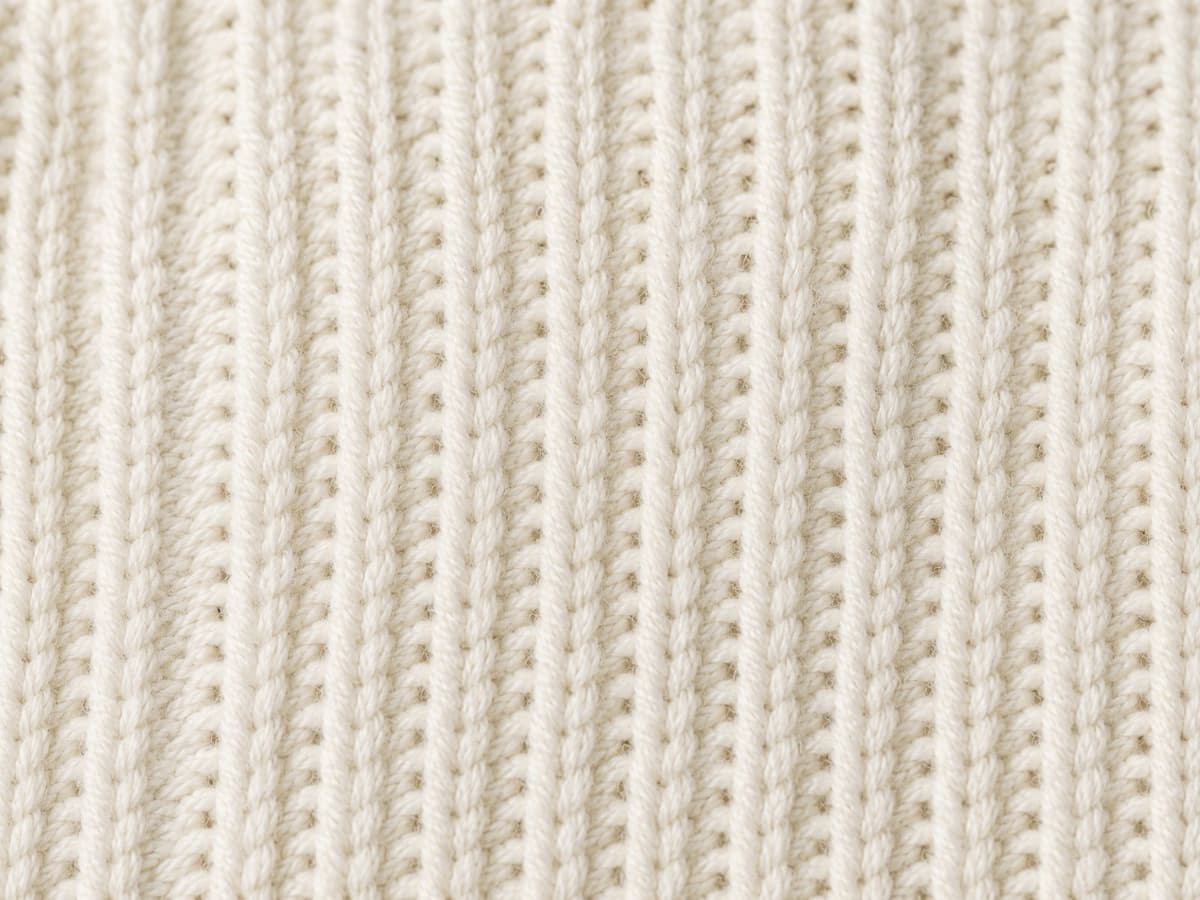
Collective Studio is a family-run knitwear manufacturer in Narayanganj, at the centre of Bangladesh’s knit industry. Our floor does cut-and-sew knits — garments cut from knitted fabric and assembled, as distinct from garments knitted to shape. That covers t-shirts, polos, hoodies, sweatshirts, joggers, leggings, loungewear, underwear and kidswear.
The word “knitwear” does describe two different manufacturing processes, and it is the first thing to settle. Cut-and-sew starts with rolls of knitted fabric, which are cut to pattern pieces and sewn — our core. Flat-knit builds a garment directly from yarn on a knitting machine, which is how sweaters, jumpers and cardigans are made. Those need different machinery entirely. We take flat-knit orders on a limited basis through vetted partner units rather than in-house, so if a sweater-led range is your plan, raise it in your first message and we will be straight about fit, minimums and lead times.
Within cut-and-sew, the fabric families behave differently and each suits particular garments. Single jersey is the standard t-shirt knit: light, one smooth face, drapes well. Interlock is a double knit — heavier, smooth on both sides, more stable, less prone to curling at cut edges. French terry is loopback with visible loops inside: breathable, year-round, the premium hoodie and jogger choice. Fleece is French terry with the inside brushed into a soft nap — warmer, plusher, and where pilling starts if the base yarn is poor. Pique has a textured waffle surface that lifts fabric off the skin, which is why polos use it. Rib stretches and recovers, so it does the work at cuffs, hems and necklines.
One specification separates good knitwear from cheap knitwear and almost never appears on a spec sheet: the yarn. Ring-spun yarn is twisted continuously, producing a smoother, stronger, softer fabric with fewer protruding fibre ends. Open-end yarn, spun by rotor, is faster and cheaper but coarser and weaker, and it pills sooner. Two tees at the same GSM in the same colour can feel completely different because of this alone. Ask any factory which they are quoting; we will flag it without being asked, and we can quote both if budget requires it.
Two finishing steps matter as much as the knit itself. Cotton knit must be compacted before cutting or it shrinks in the first hot wash — enough to move a customer down a size. And knitted tubes are prone to spirality, the twisting that makes a hem sit crooked after washing; side-seamed construction and correct fabric relaxation control it. Both are standard here. Minimum is 100 pieces per style and colour, with GOTS-certified organic cotton available under certificate RSC 9687.
Ring-spun yarn is smoother, stronger and pills less; open-end is cheaper and coarser. Two tees at identical GSM can feel entirely different. We tell you which you're getting.
Single jersey, interlock, French terry, fleece, pique and rib — matched to the garment rather than whatever is on the shelf.
Fabric compacted pre-cut so it doesn't shrink a size, and side-seamed construction to control the spirality that makes cheap hems twist.
Sweaters and cardigans are knitted from yarn on different machines. We run those through vetted partners, not in-house — ask before planning a sweater range.
Knit, woven and flat-knit are three different manufacturing disciplines. They are frequently discussed as if a factory does all three equally well, and almost none do.
| Cut-and-sew knit (our floor) | Woven | Flat-knit | |
|---|---|---|---|
| How the fabric is made | Knitted into rolls, then cut and sewn | Yarn woven on a loom, then cut and sewn | Knitted to shape from yarn — no cutting |
| Typical products | Tees, hoodies, joggers, activewear, loungewear | Shirts, tailoring, denim, outerwear | Sweaters, cardigans, beanies |
| Stretch | Inherent in the structure | Only if elastane is added | High, and shape-dependent |
| Where Bangladesh is deepest | Strongest category in the country | Capable, and a different supply base | Limited — specialist units |
| Our capability | Cut-and-sew on our own floor; knitting and dyeing at partner mills we book and inspect | Available through the wider supply base | Vetted partner units, not our line |
| Wrong choice when | You need a structured shirt or tailored piece | You want inherent stretch without elastane | You need cut-and-sew economics at volume |
We say which of these runs on our own floor because the distinction decides who is accountable when something needs fixing.
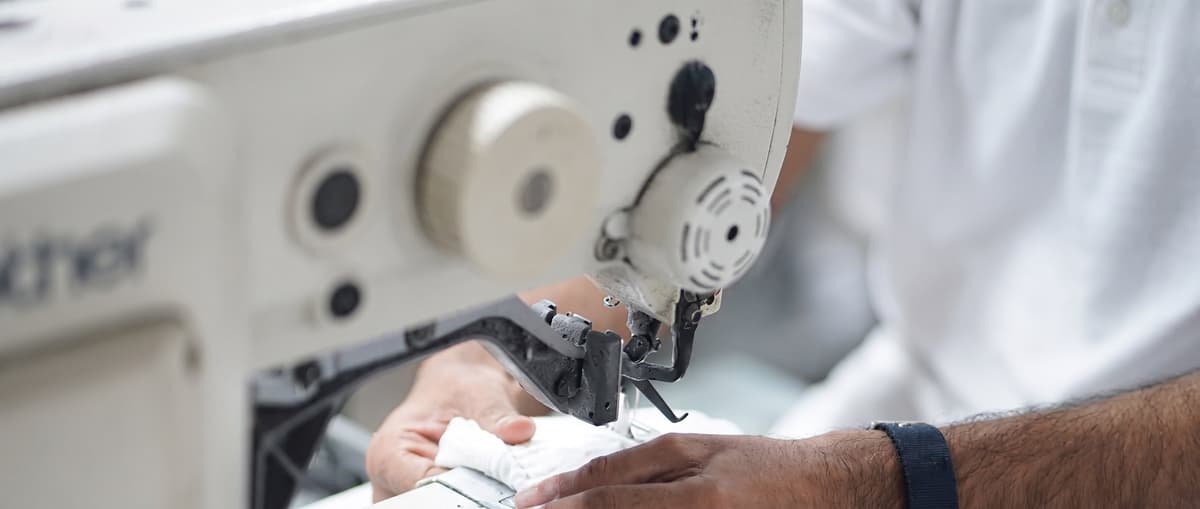
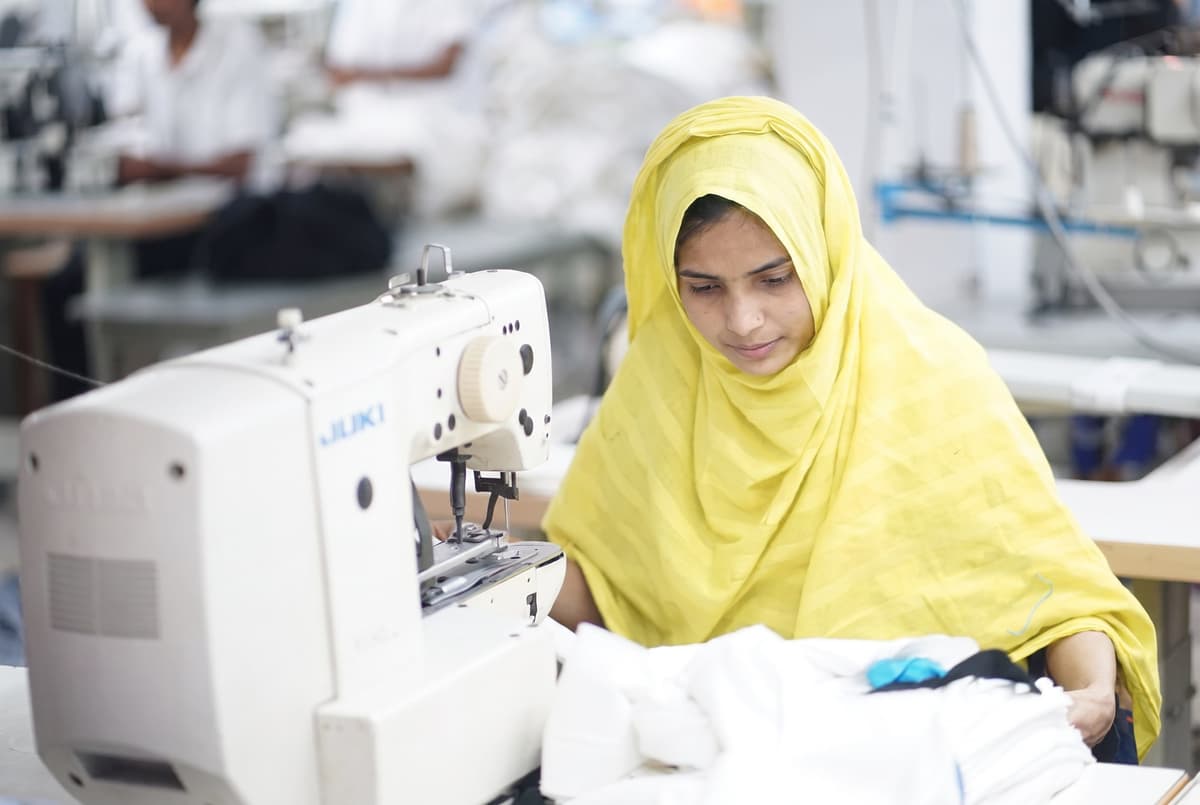
Roughly 40 to 50 days from approved sample to delivery. Cutting and sewing happen on our own floor; knitting and dyeing run through mills and dye houses we have worked with for years, in the same district rather than the other side of the country. We name which stage happens where, because that is what decides who fixes a problem.
Jersey, French terry, fleece, pique or rib, and the weight in GSM. The knit structure decides drape, cost and how the garment ages.
Construction, seam type, trims and decoration, quoted per style and per colourway.
Fabric knitted to your specified gauge and weight at a partner mill rather than bought as stock, which is what keeps the hand-feel consistent between runs. We book it, spec it and inspect it — you deal with us throughout.
Colour is matched to a physical lab dip you approve, and each colourway is its own dye lot with its own minimum. A developed shade is the long end of this stage.
Where delay usually hidesKnitted fabric is relaxed before cutting so it does not shrink or torque after the garment is made — the step most often skipped elsewhere.
Made on the production line, then sealed as the reference for bulk.
On our own floor in Narayanganj, with staged photos.
Checked against the sealed sample, delivered duty paid as one landed cost.
Most of a garment happens before anyone sews it. These are the stages your fabric goes through first, filmed on our own visits to the mills we work with. We do not own these plants — we book, spec and inspect them, and we go and look. The last stage is the one that happens on our floor.
Collective Studio is up and coming. Very hard working people who want to please their customers and grow partnerships together. Homaira is very knowledgeable in the knit industry and always willing to learn more. We are looking to grow our business with them.
Wonderful people to work with — very professional and knowledgeable, also accommodating to the needs of their customers.
Two different manufacturing processes needing different machinery. Cut-and-sew begins with rolls of knitted fabric: the fabric is cut into pattern pieces and sewn together, which is how t-shirts, hoodies, joggers and loungewear are made. Flat-knitting builds the garment directly from yarn on a knitting machine, shaping panels or whole pieces as it knits — the process behind sweaters, jumpers and cardigans. A factory equipped for one is not automatically equipped for the other. Our floor is cut-and-sew, and we handle flat-knit orders through vetted partner units instead of pretending otherwise. If your range centres on sweaters, tell us early so we can set realistic minimums and lead times or point you elsewhere.
It refers to how the yarn was spun, and it matters more than almost any other unlisted spec. Ring-spinning twists fibres continuously as the yarn forms, producing a smoother, stronger thread with fewer loose fibre ends — the resulting fabric feels softer, resists pilling longer and holds print better. Open-end spinning uses a rotor instead: much faster and cheaper, but the yarn is coarser, weaker and fuzzier, so the garment pills sooner and feels rougher. Because GSM measures weight rather than quality, two tees at 180 GSM can feel completely unalike depending on the yarn. Ask any supplier which they have quoted. We state it upfront and can price both if budget is the constraint.
Match the fabric to the garment rather than picking one for a whole range. Single jersey for t-shirts and lightweight tops: light, smooth-faced, good drape. Interlock where you want more substance and stability, since it is a double knit that resists curling at the edges. French terry for hoodies and joggers that need to work year-round — loopback inside, breathable, holds shape. Fleece where warmth and a plush hand matter more than breathability, accepting that brushed surfaces pill sooner on cheap yarn. Pique for polos, because the textured surface lifts the fabric off the skin. Rib at cuffs, hems and necklines, where stretch and recovery are the job. Send us the garment and target price and we will spec it.
Not if the fabric is compacted before cutting, which is standard on our floor. Untreated cotton knit relaxes and contracts on its first hot wash, and the loss can be enough to move a customer effectively down a size — one of the most common complaints on budget knitwear, and entirely a pre-production fabric-finishing issue rather than a sewing fault. The related problem is spirality: knitted tubes want to twist, so a hem that looked straight in the factory sits crooked after a few washes. Side-seamed construction and correct fabric relaxation control it. Both steps cost a little and both are included rather than sold as upgrades. We set the size chart from washed measurements rather than unwashed ones, which is the step most often skipped — it means the garment your customer owns after the first wash matches the chart, rather than falling short of it.
100 pieces per style and colour for cut-and-sew knits. Counting is per colourway because each colour is a separate fabric batch with its own dye lot and setup, so one style in three colours is a 300-piece commitment; sizes stay flexible within each 100 since splitting across a curve does not change the setup. Many knitwear factories in Bangladesh quote 300 or more per style and colour, because their economics assume long runs. Ours is lower deliberately, and the same styles scale to full bulk in the same building against a sealed sample, so you are not forced to re-qualify quality elsewhere once volume grows. Full-fashion knitwear takes longer to sample than jersey, because the knit programme is written from scratch for each style and gauge rather than cut from existing fabric. Budget an extra week or two at the sampling stage on a first order; reorders skip it entirely.
Because the depth is in knits here rather than spread thinly across categories. Bangladesh is the world's second-largest apparel exporter and knit garments are its largest export category, which concentrates skill and machinery in jersey, terry, fleece, pique and rib. Much of the industry is vertically integrated, with knitting, dyeing and sewing under common ownership — that shortens lead times and, more usefully, improves colour consistency between production runs because fewer parties handle the fabric. For tees, hoodies, joggers and loungewear that integration is the real advantage. For structured wovens or tailoring, other countries suit better and we would say so.
Full-fashion knitwear, yes — sweaters, cardigans, knitted vests and accessories, made on flat-bed knitting machines rather than cut from jersey. That distinction matters because it is a different discipline from cut-and-sew. Full-fashion pieces are knitted to shape, panel by panel, then linked together, so there is no cutting waste and the edges are finished by the knit itself rather than by an overlock. Gauge is the key specification, roughly the equivalent of fabric weight: 3 to 5 gauge gives chunky, heavy knits, 7 to 12 gives finer, lighter pieces. Yarn choice — cotton, wool, blends, recycled — changes hand, drape and price more than anything else. Minimums are the same hundred pieces per style per colour, though sampling takes longer than jersey because the knit programme is built from scratch.
A hundred pieces per style per colour in GOTS-certified organic cotton, certificate RSC 9687, verifiable at global-standard.org. Most factories treat certified organic as bulk-only, because certified yarn comes in its own lot minimums and the chain-of-custody paperwork costs the same whether you order a hundred pieces or ten thousand. We run it at a hundred because that paperwork is part of how we operate rather than an exception. Two honest caveats. Certified organic yarn costs more per kilo, and on full-fashion knitwear — where the garment is heavier than a jersey tee — that difference is more noticeable. And shade range is slightly narrower, because some intense brights are harder to achieve within GOTS-permitted dye chemistry. We will show you what is achievable before you commit to a colourway.
Trade and regulatory details on this page last verified 30 July 2026. Tariff and compliance terms change — ask us to confirm the current position for your order.
Whether it’s a large bulk or wholesale run or your first batch of 100, send a sketch, a reference, or a sentence. We’ll reply within one business day with fabric options and an indicative price.