How Much Does It Cost to Manufacture Clothing?
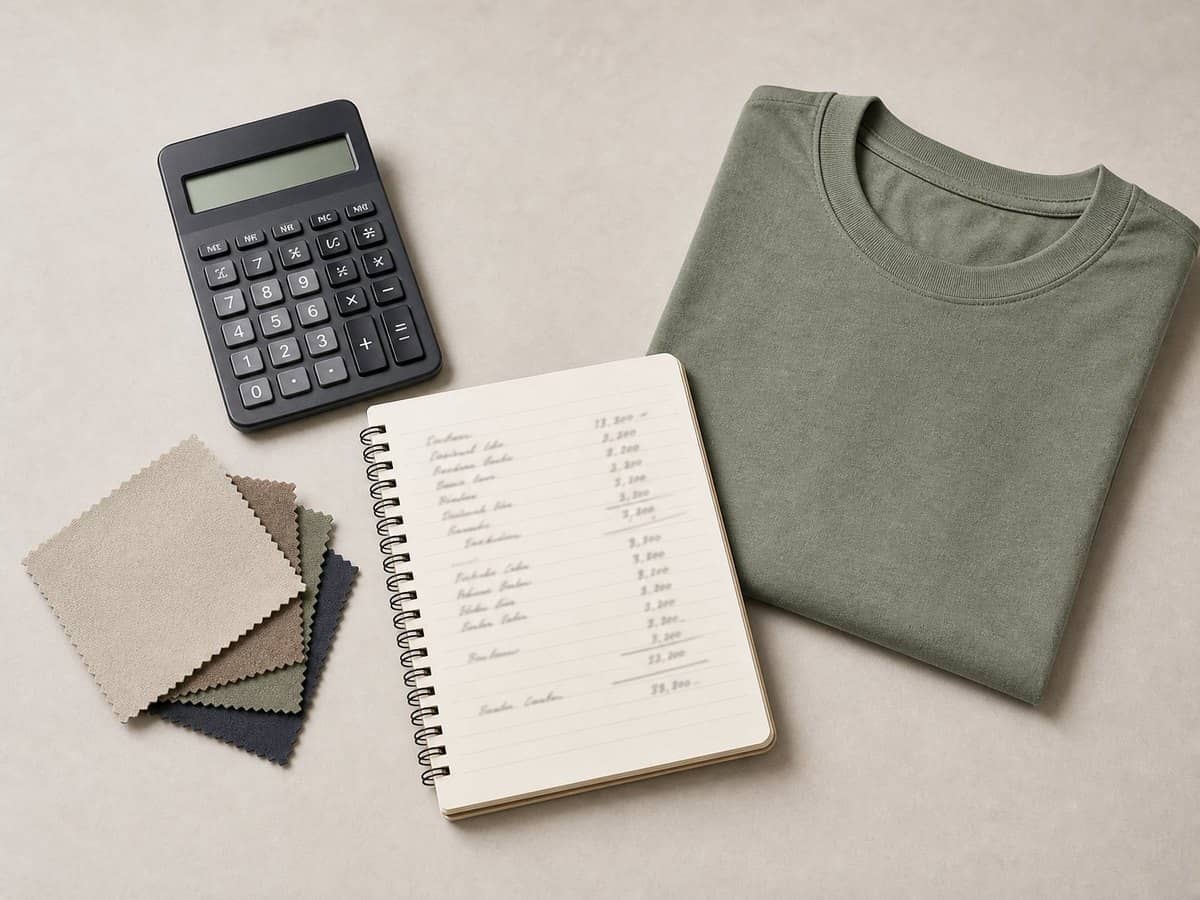
"How much does it cost to make clothing?" is the question every founder asks — and the honest answer is "it depends." But you can understand the cost structure, and once you do, the quotes you receive stop being a mystery.
The main cost components
- Fabric — usually the biggest single cost; driven by type, weight (GSM), and whether it's certified organic.
- Cut, make & trim (labour) — the work of turning fabric into a finished garment.
- Trims & components — labels, drawcords, zips, threads, hardware.
- Sampling — a one-off cost to perfect the first piece before bulk.
- Shipping & duties — far easier to plan with a DDP (delivered duty paid) quote that bundles them into one landed cost.
- Quantity (MOQ) — the more you make, the lower the per-unit cost, because fixed costs spread across more units.
A rough way to think about it
For knitwear, your per-unit price drops as volume rises — a run of 100 costs more per piece than a run of 1,000. But remember the trade-off: a bigger run lowers the unit price while raising your cash risk. For most new brands, a smaller run at a slightly higher unit cost is the cheaper decision overall, because unsold stock is the most expensive thing of all.
The cheapest unit price and the cheapest decision are rarely the same thing. Risk is a cost too.
What sits inside a unit price
A quote arrives as one number, which makes it hard to know what to push on. Broken down, a typical cut-and-sew garment looks roughly like this — and the proportions explain why some negotiations work and others do not.
| Component | Rough share | Moves with |
|---|---|---|
| Fabric | 50–65% | Weight, fibre, whether the colour is stock or developed |
| Cut, make, trim (labour) | 20–30% | Construction complexity, seam count, finishing |
| Trims & labels | 5–10% | Woven vs printed labels, hardware, packaging |
| Decoration | 0–15% | Print method, colour count, placement count |
| QC, handling, overhead | 5–10% | Inspection level, order size |
Why small orders cost more per piece
The fixed costs of a run — pattern making, grading, sampling, machine setup, the line changeover — are largely the same at 100 units as at 1,000. On a small run each garment absorbs a larger share, which is why per-unit prices step down noticeably around 500, 1,000, 5,000 and 10,000 pieces before flattening near the underlying fabric-and-labour floor.
The useful reframing: the number that matters early is not price per piece, it is cash at risk. Paying more per unit on 100 pieces risks far less money than tying your budget into 1,000 units of a design nobody has bought yet — and the second scenario is the more common way a new brand runs out of room.
How to lower costs without cutting corners
- Simplify the design — fewer panels, trims, and special operations cut labour.
- Choose fabric deliberately — a mid-weight that suits the garment beats an expensive one you don't need.
- Order full colours, fewer of them — splitting a run across many colours raises minimums and cost.
- Reorder your winners — develop once, then scale what sells instead of over-producing on day one.
- Get a DDP quote — so customs and freight don't ambush your margin later.
Want a realistic price band for your specific idea? Send us the details and we'll come back with fabric options and an indicative cost — we are a clothing manufacturer in Bangladesh quoting DDP, so the number includes duty and freight rather than adding them at your border. Read next: low MOQ vs high MOQ and how to choose the best clothing factory in Bangladesh.
Frequently asked questions
How much does it cost to manufacture clothing?
It depends on the garment, the fabric and the quantity, but the structure of the price is consistent. Fabric is usually the largest single component, often around half the unit cost, which is why fabric weight and composition move your price far more than negotiation ever will. Then comes cut-make-trim, the labour of cutting the pieces and sewing them together. Then trims and finishing: labels, drawcords, zips, packaging. On top sit one-off costs — pattern making, grading, and sampling — which are spread across the order, so they hit small runs hardest. A useful way to think about it: a 180 GSM tee and a 400 GSM heavyweight hoodie differ mostly because of fabric volume, not labour. Ask any quote to be broken into fabric, CMT and trims so you can see what is actually driving it.
Why are small clothing orders more expensive per unit?
Because fixed costs are divided across fewer pieces. Pattern making, size grading, sampling, machine setup and the production line changeover cost roughly the same whether you make 100 units or 1,000, so on a small run each garment absorbs a much larger share of them. Fabric works the same way: mills price better per kilo at volume and often charge a surcharge below their own minimum quantity. In practice, per-unit prices tend to step down noticeably around 500, 1,000, 5,000 and 10,000 pieces before flattening out near the underlying fabric-and-labour cost, and no supplier can keep reducing indefinitely past that floor. The trade-off is worth it for a first run: paying more per piece on 100 units risks far less cash than tying up your budget in 1,000 units of an unproven design.
What makes up the cost of a garment?
Fabric is the biggest single line, usually forty to sixty per cent of the factory price — which is why weight and composition move your cost more than anything else you can change. Trims come next and surprise people: labels, thread, elastic, drawcords, zips, buttons, hangtags and packaging together often run ten to twenty per cent. Cutting and sewing labour is fifteen to thirty depending on how construction-heavy the piece is; a plain tee and a lined jacket are not comparable. Then decoration, if you have any. Then the factory's overhead and margin. What sits outside all of that is freight and duty, which is why a quote only means something once you know whether it is FOB or DDP. Want the number lower? Fabric weight and colour count, in that order.
Where this applies
The manufacturing pages this guide relates to, if you are costing a real run.
Free tools & guides for this
Sources & further reading
Have an idea? Let’s make it.
We manufacture from 100 pieces per style, with GOTS-certified organic options and photos at every stage. Send a sketch or a sentence — we’ll reply within a day.