How to start a clothing brand
New to making clothing? Follow this path in order. Each step links to a short, honest guide or a free tool — from your first questions to your first production run.
Almost every new clothing brand fails at the same two points, and neither is design. The first is misunderstanding the minimum order— discovering too late that a 100-piece MOQ means 100 per colour, so a three-colour launch is 300 pieces and three times the budget. The second is skipping the physical sample and approving production from a photo, which is how a fit problem becomes 300 unsellable garments instead of one corrected sample.
The six steps below are in the order that keeps you out of both. Work through them in sequence: understand the money and the minimums first, because they constrain every decision after; get the product specified properly; vet the factory before you send anything; sample before you commit; price it so the business survives; then produce. Each step links to a short guide or a free tool. Nothing here requires you to work with us — it is the path we would want a friend to follow whoever they made with.
- 01
Understand the basics: MOQ & cost
Before anything else, learn how minimum orders and costs work — it shapes every decision that follows.
- 02
Design your product
Turn your idea into something a factory can make: a tech pack, the right fabric, and a size chart.
- 03
Find & vet a factory
Choose a real, trustworthy manufacturer — and protect yourself from the risks new brands worry about.
- 04
Sample before bulk
Never approve production off a photo. Get a physical sample right first — it's the whole game.
- 05
Price it properly
Set a price that leaves room to actually run the business — cost, margin, and markup.
- 06
Place your first order
Bring it together and produce your first run — from 100 pieces, with samples and QC built in.
Prefer to just talk it through? We're a family-run factory that works with new brands from 100 pieces. Tell us what you're planning and we'll point you to the right next step — no pressure.
What step six actually looks like
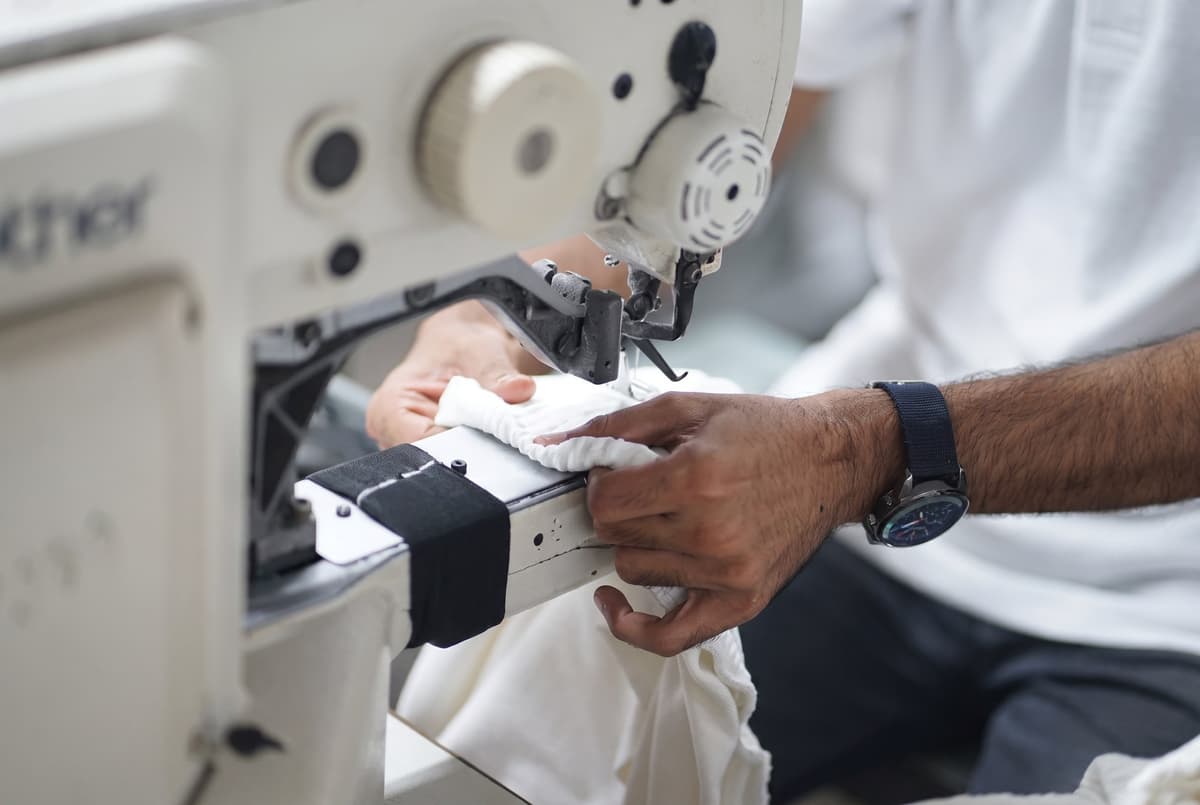
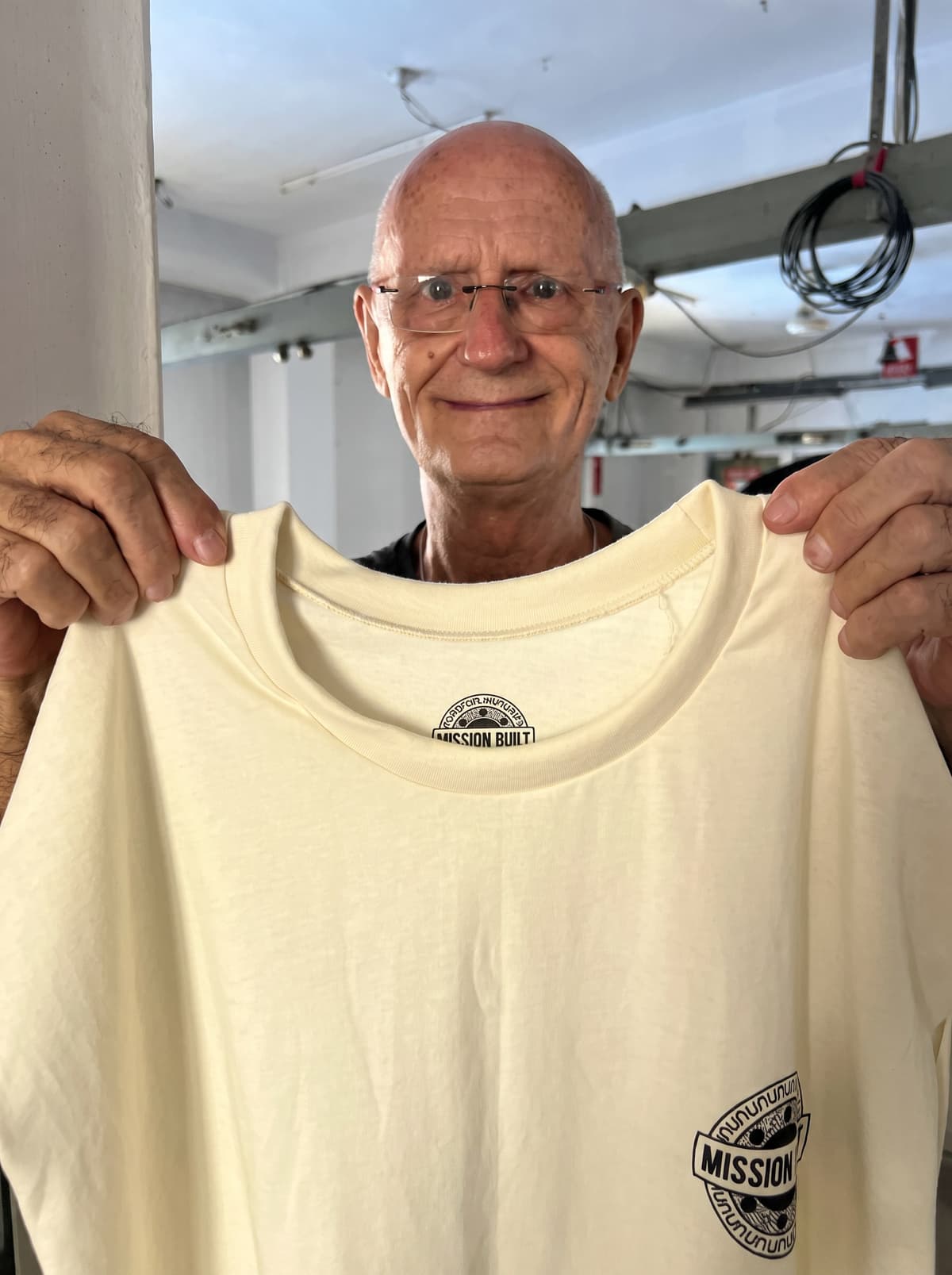
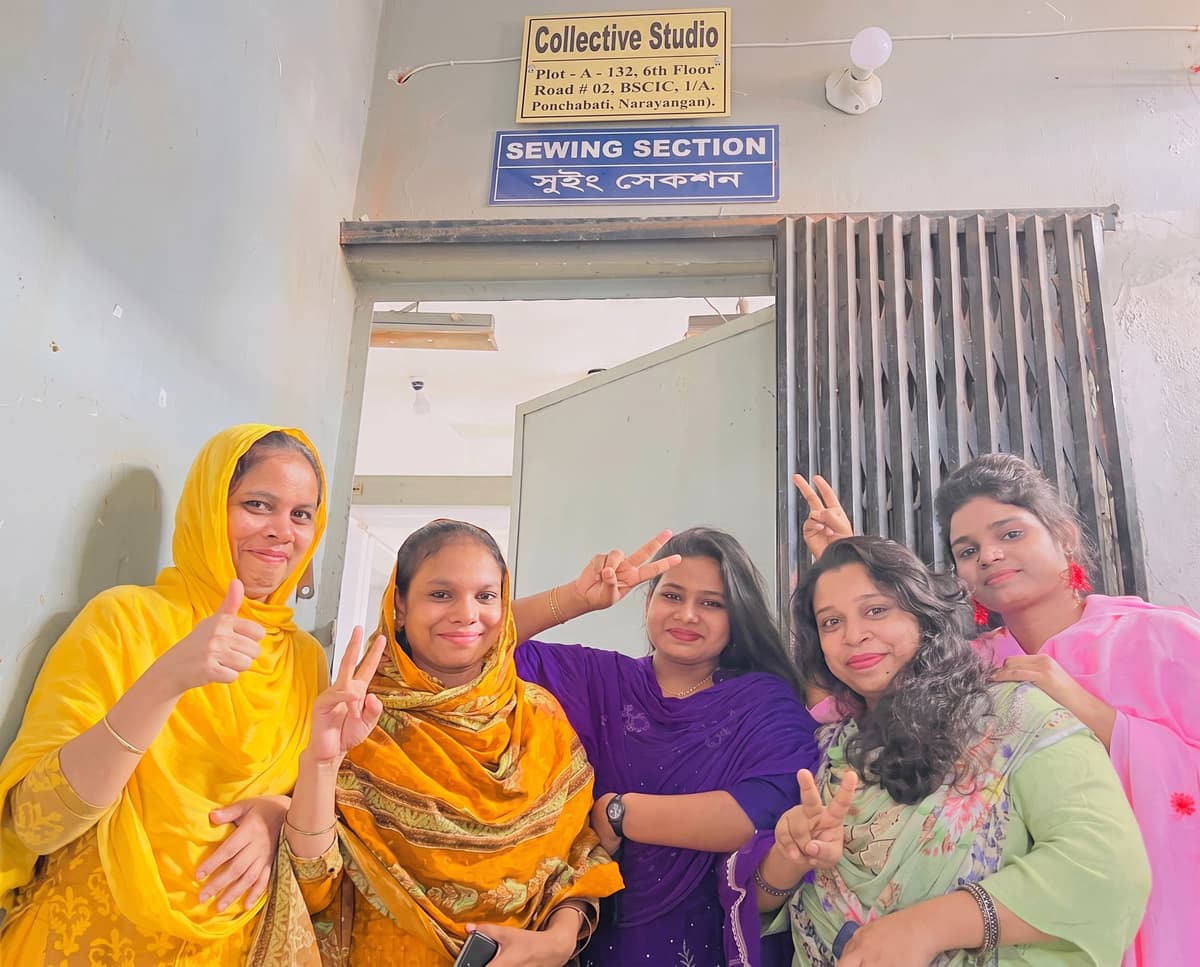
What new brands ask before they start.
How much does it cost to start a clothing brand?
Less than most people assume for the product itself, and more than most expect for everything around it. A single style at a 100-piece minimum is the realistic entry point for genuine cut-and-sew manufacturing, and the manufacturing cost of that first run is usually a four-figure sum rather than five, depending heavily on fabric weight and decoration. What catches founders out is the surrounding cost: sampling is charged separately and normally needs at least one revision round, then labels, hangtags and packaging, then shipping, then photography and a website. Budget for the whole picture rather than the unit price, and keep a reserve for a reorder — running out of your bestseller three weeks after launch, with no cash to restock, is a more common failure than not selling at all.
Do I need a tech pack before contacting a manufacturer?
No, and most founders who contact us do not have one. A sketch, a photograph of a garment whose fit you like, or a clear paragraph describing what you want is enough to start a conversation and get an indicative price. A tech pack is the technical specification a factory works from — measurements at each size, fabric and GSM, trims, stitch types, construction notes, label placement — and building one is part of what a good manufacturer does with you before you spend money on sampling. If you would rather arrive prepared, our free tech pack template and checklist walk through every field. But treat it as useful, not as a gate you have to pass before you are allowed to ask questions.
What is an MOQ and why does it matter so much?
MOQ is minimum order quantity — the fewest pieces a factory will make in one run — and it matters because it sets the size of your first financial risk. The detail that trips up nearly every new brand is that it is counted per style AND per colour, not per order. A t-shirt in black and white at a 100-piece MOQ is 200 pieces, not 100, because each colourway is a separate fabric batch with its own dye lot and setup. Sizes are different: you can normally split the minimum across a size curve however you like. When comparing factories, always ask for the minimum stated as "per style, per colour" — a headline number quoted per order can multiply several times once you pick your range.
How do I know a manufacturer is legitimate and not a scam?
Ask for things that can be independently verified, then verify them. A real factory will give you a certification number you can look up yourself — our GOTS certificate is RSC 9687, searchable on the public database at global-standard.org — plus social-compliance audit references such as BSCI, Sedex/SMETA or WRAP, and client references. They will agree to a video walkthrough of the production floor or an in-person visit. They will make you a physical sample before bulk. The warning signs are the mirror image: vagueness about the certificate number, reluctance to show the floor, pressure to pay in full upfront on a first order, and insistence on payment methods with no recourse. Willingness to tell you plainly what they cannot do is a good sign, not a weak one.
How long does it take to get from idea to finished stock?
Plan on roughly three months from serious conversation to stock in hand, and work backwards from your launch date rather than forwards from today. The sequence is: speccing and quoting, about 3 to 7 days; sampling, about 10 to 15 days including shipping the sample to you; your review and at least one revision round, which is entirely in your control; bulk production, about 20 to 25 days; then quality control and shipping. That totals roughly 40 to 50 days from an approved sample, plus everything before it. Add a buffer, because one sample revision is normal rather than exceptional. Brands that miss launch dates have usually started the clock at bulk production and forgotten the eight weeks in front of it.
Should I start with one product or a full collection?
Start narrow. One or two styles done properly will teach you more than six done thinly, and it keeps your cash recoverable if the first guess is wrong. If you want to test more than one idea, testing three styles at the 100-piece minimum each is usually more informative than 300 units of a single design, because you learn which product your audience actually wants rather than only whether they liked the one you picked. Choose something that sells year-round for a first run rather than a strongly seasonal piece — a slow-moving seasonal item ties up your cash exactly when you need it for a restock. Range extension is much easier once you have real sales data instead of assumptions.
Will a factory steal my design if I send it to them?
It is a reasonable question and you should not settle for reassurance alone. Practically: your designs, patterns and tech packs remain yours, a serious manufacturer will sign an NDA before you send anything sensitive, and will not produce your styles for other customers. But the strongest protection is the one you control, which is registering your trademark in your own market — a brand name and logo are far more defensible than a garment silhouette, since basic garment shapes generally are not protectable. Practical habits help too: share what a factory needs to quote rather than your entire range at first contact, and keep your own records of designs and dates. Our guide on this walks through what actually protects you.
What should I ask a manufacturer on the first call?
Ask a consistent set of questions so you can compare answers rather than impressions. The essentials: minimum order per style and per colour; lead time from approved sample to delivery; which incoterm they quote, because an FOB price and a DDP price are not comparable numbers; whether sampling is charged separately and what it costs; certifications with a number you can verify; social-compliance audits; payment terms; and confirmation you will approve a physical sample before bulk. Then pay attention to how they answer. Specific, direct responses — including telling you plainly when something is outside what they do well — are a better signal than a supplier who agrees to everything.
Sources & further reading
Trade, standards and regulatory details on this page last verified 30 July 2026. Terms change — ask us to confirm the current position for your order.
- GOTS public certificate database — verify any factory's organic claim
- amfori BSCI — social compliance auditing for factories
- Sedex / SMETA — supply-chain due diligence and audits
- WIPO — trademark and design-right basics before you share designs
- ISO 8559 — size designation and body measurements for clothing