Collars that don't curl
Fused self-fabric or elastane rib collars — the single detail that decides whether a polo still looks sharp after six months, and the one budget production skips.
Premium custom polo shirts, made to your design — from 100 pieces a style. Diamond pique, jersey, organic options, full branding, worldwide delivery.
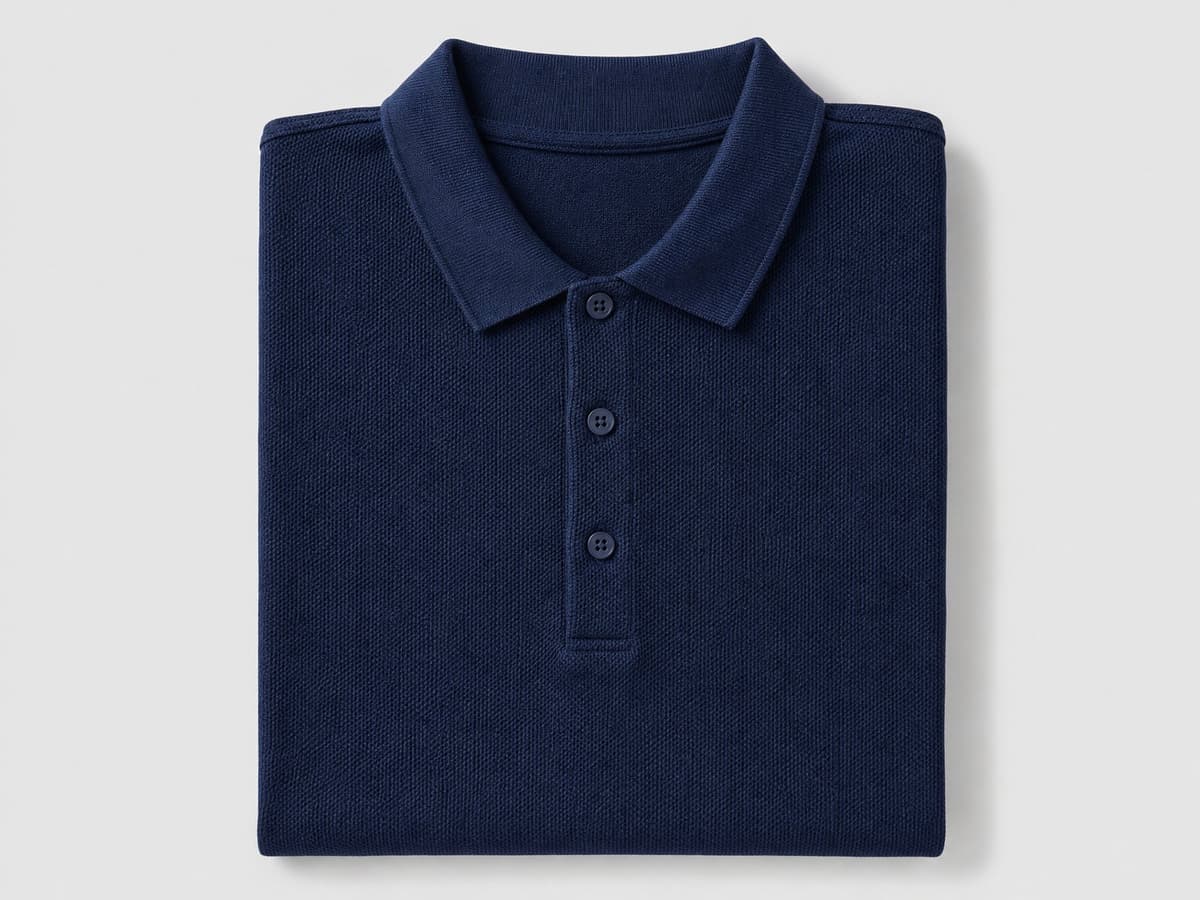
There's one detail that separates a polo that still looks good after six months from one that doesn't, and it isn't the fabric — it's the collar. A knitted collar with no interlining will curl and go limp after a handful of washes, and once it does, the whole shirt reads as cheap no matter how good the body fabric is. A properly constructed polo collar is either self-fabric with a fused interlining, or a separately-knitted rib collar with elastane for recovery. This is the first thing we spec and the first thing we check on a sample, because it's the detail most low-cost polo production quietly skips.
Fabric is the second decision. Piqué is a textured waffle knit — more structured, more breathable because the texture lifts the fabric off the skin, and the classic choice for a polo that should hold its shape. Jersey is a smooth flat knit: softer, drapier, more of a modern casual look, but it clings more and shows body shape. Interlock sits between the two — double-knit, so it's heavier, smoother than piqué and more stable than jersey.
Beyond that: the placket can be self-fabric (cleaner, more premium) or a separate applied piece; side vents with a reinforcing bar tack stop the side seam splitting; taped shoulder seams stop the shoulders stretching out over time; and tipping — a contrast stripe on the collar and cuff edge — is the cheapest way to make a polo look considered rather than generic. We make classic, slim, long-sleeve, women's and performance polos from 100 pieces per style, in cotton, blends, and GOTS-certified organic (certificate RSC 9687).
Fused self-fabric or elastane rib collars — the single detail that decides whether a polo still looks sharp after six months, and the one budget production skips.
Launch or test a polo line with 100 pieces per style and colour.
Piqué for structure and breathability, jersey for soft modern drape, interlock in between. We'll tell you which suits the look you're describing.
Self-fabric plackets, bar-tacked side vents, taped shoulder seams, and contrast tipping on collar and cuff.
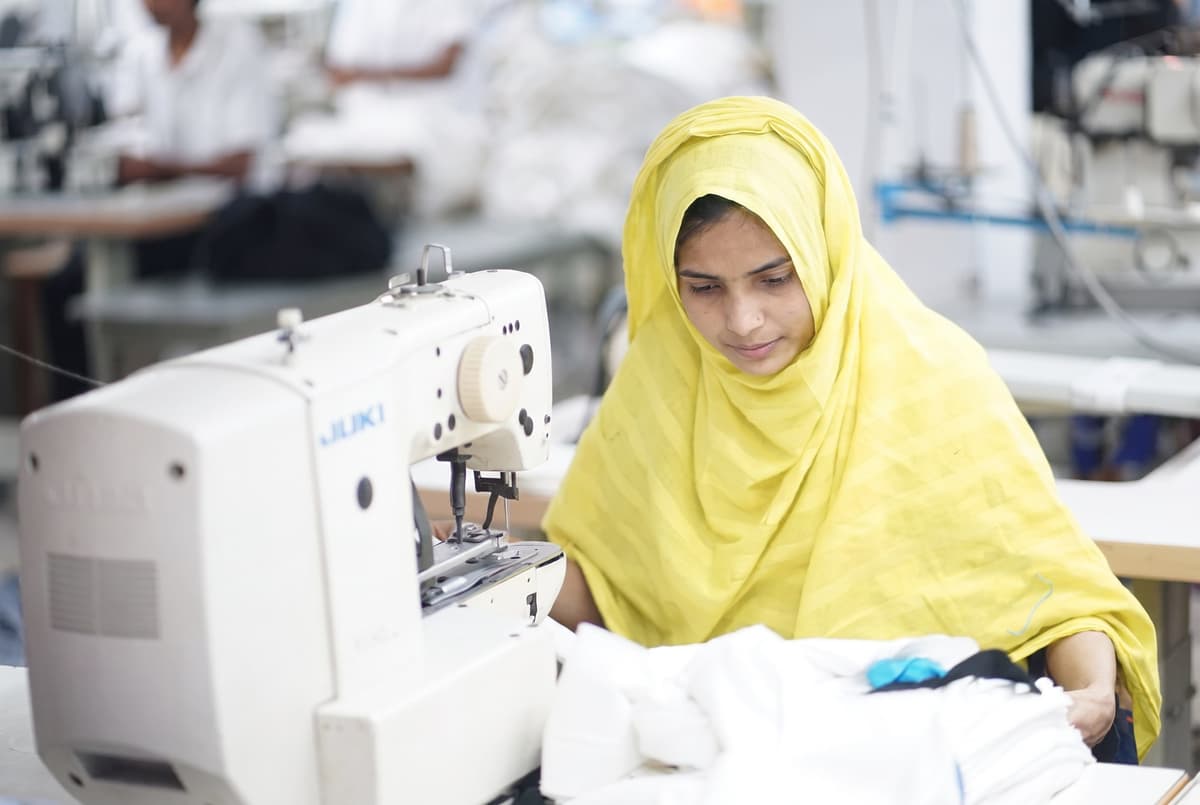
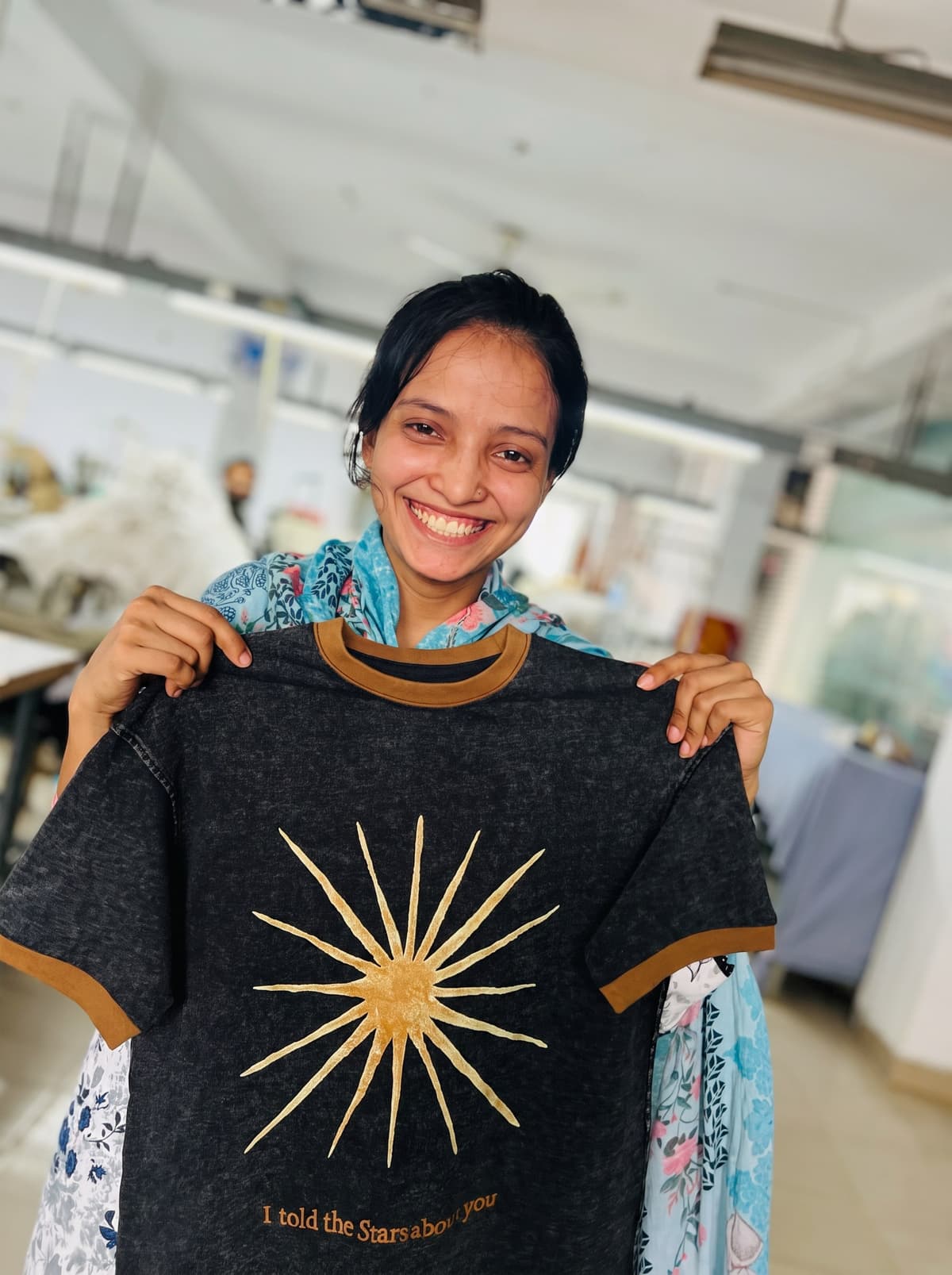
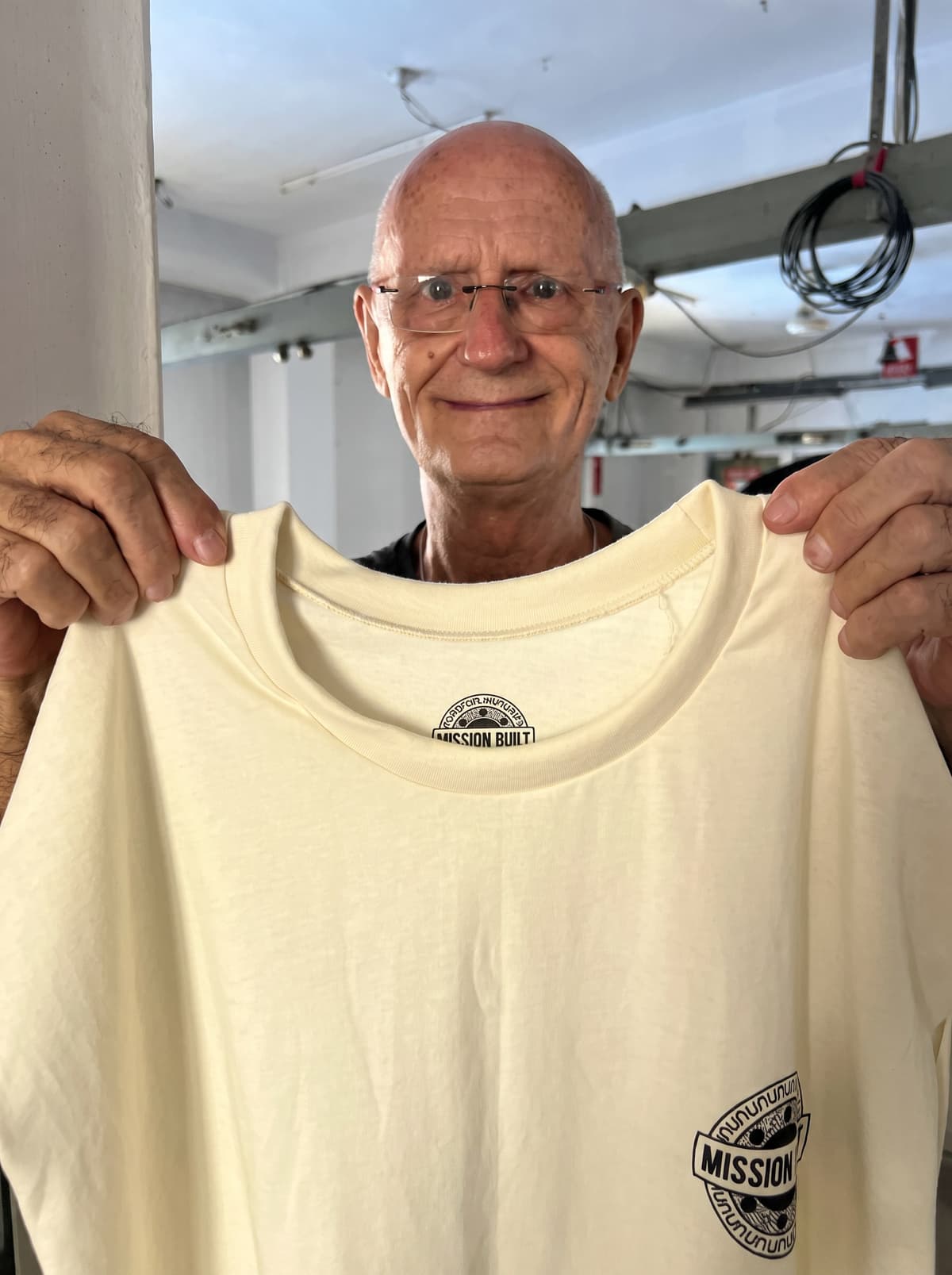
Wonderful people to work with — very professional and knowledgeable, also accommodating to the needs of their customers.
Talk to the factory directly: +880 1980 055021 · hello@collectivestudioltd.com
One hundred pieces per style, per colour. Polos carry more setup than a plain tee because of the collar and placket: the collar is usually knitted separately as a rib or flat-knit piece rather than cut from body fabric, and the placket needs interlining, buttonholes and buttons matched to it. That means the trim package is agreed before production rather than during it. The upside is that all of it is one-off work — the collar spec, the placket construction and the button choice carry into every reorder at no extra cost. As with everything we make, splitting a hundred pieces across several colours triggers separate fabric and collar lots, so one colour deep is materially cheaper than three shallow.
Curling is almost always an interlining problem. A polo collar is a separate knitted or flat-knit piece, and without the right interlining fused inside it, the collar has nothing holding it flat — so it rolls at the points after a few washes. Cheap polos either skip the interlining or use one too light for the collar fabric. The fixes are specification rather than craft: an interlining weight matched to the collar, fused properly at the right temperature and pressure, and a collar knitted at a firm enough gauge to hold its own shape. Tipping and edge finishing add stability too. We spec the interlining alongside the collar rather than treating it as a trim detail, and you will see the difference in the pre-production sample after we wash it.
Piqué for a classic polo, jersey for a modern one, and they behave differently enough that it changes the garment. Piqué is a textured waffle-like knit — that is the traditional polo fabric, and the texture gives it body, breathability and a matte finish that hides creasing. It holds shape well and reads as smart-casual. Jersey is a flat single knit, softer and closer to a t-shirt in feel, with a slight sheen and more drape; it suits a slimmer, more contemporary polo but shows creasing more and can cling. Weight matters alongside the structure: 200 to 240gsm piqué is the usual range for a quality polo. If the polo is for hospitality or corporate wear, piqué almost always. For a fashion range, jersey is worth sampling.
Flat, puff, appliqué, chenille or tonal, depending on what your artwork suits — and we will tell you which rather than defaulting. There is one setup cost you pay once: digitising, where the logo is converted into a stitch file specifying every needle movement, sequence and underlay. That file is yours and reorders skip the cost. What matters most is sending vector artwork, because clean outlines convert to stitch paths without interpretation; a blurry PNG has to be redrawn, and redrawing means someone guesses at your logo. Also tell us the finished width in centimetres and where it sits — left chest, back, sleeve, cap — because those placements have different maximum sizes and backing requirements. Fine detail below about five millimetres will not hold in thread regardless of the file quality.
Yes. Performance polos use a knitted piqué or interlock with elastane for recovery, or a polyester blend where moisture management matters more than natural feel. The construction differs from a cotton polo in several places: side seams are often flatlocked to sit flat during movement, the collar is knitted with a firmer gauge so it holds shape through repeated washing, and the placket is lighter so it does not stiffen the chest. If the polo is for golf, hospitality or team wear, tell us at the quote stage, because expected wash frequency changes both the fabric and the collar spec. We can also sublimate performance polos for all-over graphics, which is only possible on polyester — cotton will not take it.
Tipping is a contrast trim applied to the edge of a polo collar and cuff — usually one or two fine stripes in a different colour to the body. It is a small detail that reads as considered rather than decorative, which is why it appears on club, hospitality and premium sportswear polos far more than on plain retail ones. Practically, it is knitted into the collar rather than sewn on afterwards, so it has to be specified before the collar is made and cannot be added later. That means picking the colours at the same time as the body fabric. Two or three millimetre stripes are the usual widths. It adds modestly to cost because the collar is a separate knitting setup, and none of that changes on reorders.
Trade and regulatory details on this page last verified 30 July 2026. Tariff and compliance terms change — ask us to confirm the current position for your order.
Whether it’s a large bulk or wholesale run or your first batch of 100, send a sketch, a reference, or a sentence. We’ll reply within one business day with fabric options and an indicative price.