Three-year transition, confirmed in writing
The British High Commission in Dhaka confirmed to Bangladesh's Commerce Secretary that existing UK market access continues for three years after graduation, then moves to Enhanced Preferences.
Premium knitwear manufacturing for UK brands — duty-free under the UK's DCTS scheme, low MOQ, and DDP delivery with one clear landed cost.
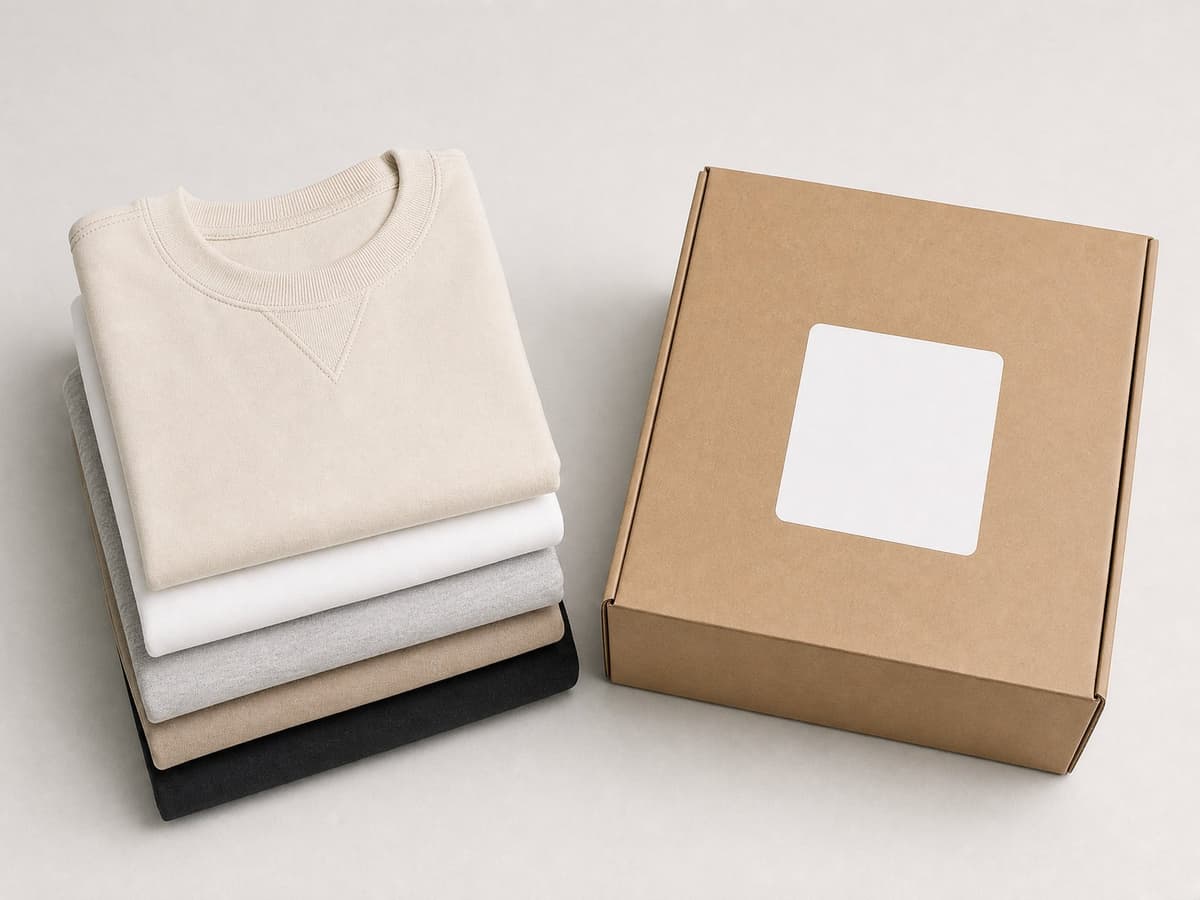
We're a clothing manufacturer for UK brands, and the question every British founder sourcing from Bangladesh is actually asking is what happens at LDC graduation. The short answer, and it is better than most sourcing pages will tell you: the UK has confirmed it in writing. Since June 2023, UK imports of Bangladeshi ready-made garments have run under the Developing Countries Trading Scheme (DCTS), and Bangladesh currently gets tariff-free access on roughly 99.8% of its goods exports to the UK.
Bangladesh is scheduled to graduate from Least Developed Country status on 24 November 2026. What happens next is not speculation: in a formal letter to Bangladesh's Commerce Secretary, the British High Commission in Dhaka confirmed that Bangladesh retains its existing UK market access for three years after graduation, then moves into the DCTS Enhanced Preferences tier, where 92% of goods stay duty-free. And the part that matters most to you specifically: Bangladesh's Commerce Ministry has stated that garments under HS chapters 61 and 62 — knitwear and woven — see no change in market access under Enhanced Preferences. The headline 99.8%-to-92% drop is real, but it is driven by other product categories, not apparel.
The second change gets far less coverage and is arguably more useful. In July 2025 the UK reformed DCTS rules of origin for garments, removing the double transformation requirement for eligible countries including Bangladesh. Previously a garment generally needed two qualifying manufacturing stages in the exporting country to claim preference — which made where your fabric came from a customs question. Now the cutting and making in Bangladesh qualifies the garment, even where the fabric was imported. Regional and extended cumulation were widened at the same time. Primark's interim CEO described the package as removing the "cliff edge" at graduation, which is a fair summary of the intent.
One live caveat, stated plainly rather than buried: the graduation date itself is unsettled. The UN Committee for Development Policy has recommended deferring it to 24 November 2029, and in July 2026 the UN's Economic and Social Council unanimously forwarded that to the General Assembly for a vote expected before the original date. Because the UK's three-year transition runs from whenever graduation actually happens, a deferral moves the whole sequence later rather than changing its shape. We ship DDP (delivered duty paid), so whatever the position is on your shipping date, it is inside the number we quote — not something a broker tells you afterwards. Note that UK import VAT at 20% is separate from duty and remains payable by you as importer, though it is recoverable if you are VAT-registered.
Before any of that matters, there is a prior question worth answering honestly: should you be making in Britain at all? Search clothing manufacturers UK and you will find good ones, and for some brands they are the right answer. Are you running fifty pieces a style? Do you need a sample re-cut on Thursday because you saw it on Tuesday, or want to stand on the floor while it is sewn? Is Made in Britain part of what you are selling? Then a UK clothing manufacturer will serve you better than we will. We would rather say so than waste a month of your time.
Where we are the better answer is knitwear at volume. UK cut-and-sew capacity is small, weighted toward woven and tailoring, and jersey minimums are often no lower than ours once you find a factory that will take the work at all. Bangladesh is the world’s second-largest apparel exporter and knit garments are its largest category, so the fabric range, the machinery and the skilled labour for tees, hoodies and joggers are deeper here than anywhere in Europe — and with DCTS duty at zero, the landed cost gap is wider than the sticker price suggests. So: a hoodie manufacturer for UK brands, a t-shirt manufacturer for a UK small business, a first run for a UK startup at 100 pieces a style. That is what we are for. A dozen samples in a week is not.
If you are weighing up Bangladesh clothing manufacturers from the UK, the question worth settling first is who you are actually contracting with. A great deal of what surfaces in that search is trading houses and agents based elsewhere, quoting on capacity they do not own and subcontracting the work to a floor they will not name. You can test it in one message: ask for the factory's street address, its BKMEA or BGMEA membership number, and a live video call from the production floor during a working shift. An agent will offer a recorded tour instead. Ours is Plot-A-132, BSCIC Industrial Area, Panchabati, Narayanganj 1420, and the call is not a problem.
On timing: our lead time is 50 days from confirmation to delivery, about 10 days sampling, 33 production and 5 shipping. Ask any supplier you are comparing for that split rather than a single number, because a quote that gives you one figure is usually describing production alone, and the sampling weeks still have to happen somewhere in your calendar.
A note for the search that probably brought you here. If you have been looking for clothing manufacturers in the UK for small businesses or startups, you have likely found either domestic factories priced for domestic production or blank-printing services. We are the third option: genuine cut-and-sew at a low MOQ — 100 pieces per style and colour — made in Bangladesh and landed in the UK duty-free under DCTS, with GOTS-certified organic cotton available under certificate RSC 9687 if you are comparing eco clothing manufacturers. Before your first order there are four UK-specific things to sort out, and one of them will stop your goods at the border if you miss it: our guide to starting a clothing brand in the UK covers company registration, the VAT decision, the EORI number and the composition-labelling law.
The British High Commission in Dhaka confirmed to Bangladesh's Commerce Secretary that existing UK market access continues for three years after graduation, then moves to Enhanced Preferences.
Bangladesh's Commerce Ministry states HS chapters 61 and 62 — knitwear and woven — keep their market access unchanged. The 99.8%-to-92% figure is driven by other categories, not apparel.
UK rules of origin no longer require two manufacturing stages for DCTS garments. Cutting and making in Bangladesh qualifies the garment even on imported fabric.
Launch or test in the UK market with 100 pieces per style, per colour, not thousands.
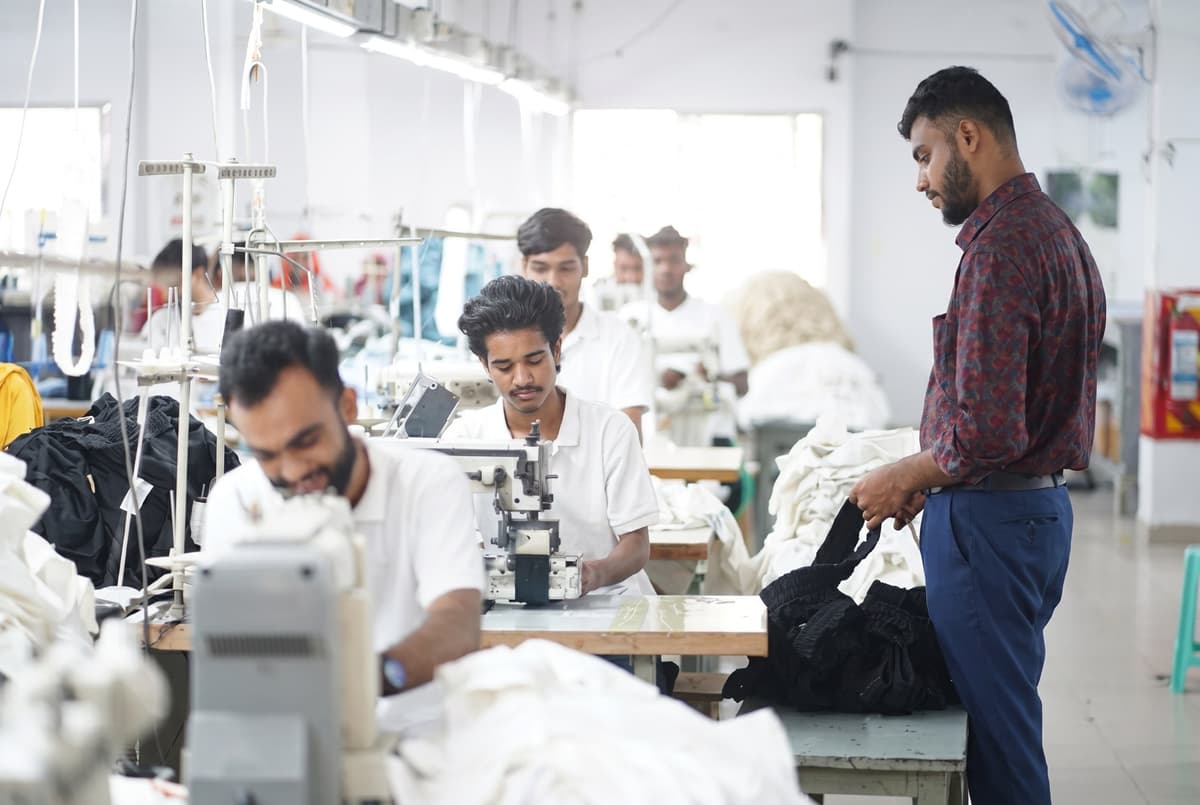
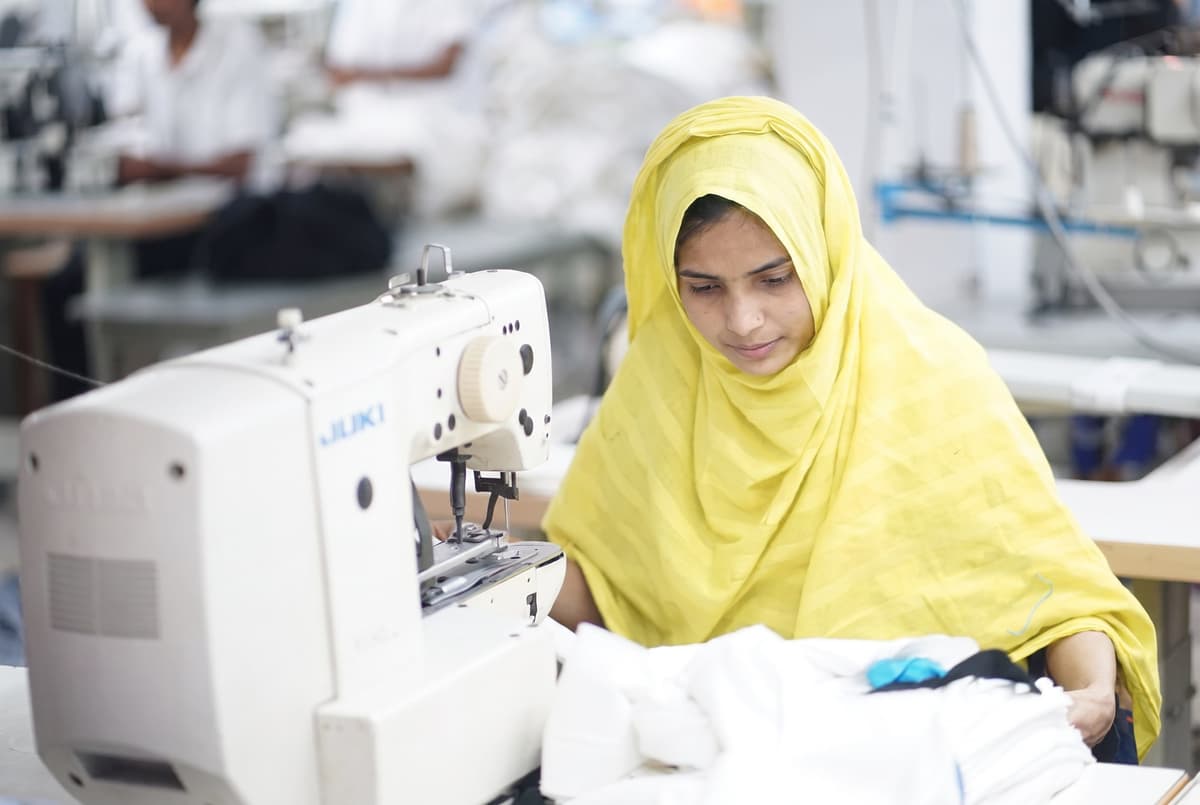
Until July 2025, UK rules of origin for garments required two manufacturing steps in the exporting country — the "double transformation" rule — which made a factory's fabric sourcing a customs question, not just a quality one. That requirement is gone for DCTS garments. Here is what we actually do.
Under double transformation, a factory that bought in its fabric rather than knitting it had to prove a second qualifying process to claim preference — which is exactly why some UK importers historically pushed for vertically integrated mills regardless of whether they were the better maker. With that requirement removed for DCTS garments, the cutting and making is what qualifies. That is the work we do ourselves, so we can describe the rest of the chain accurately rather than overstating what we own.
Wonderful people to work with — very professional and knowledgeable, also accommodating to the needs of their customers.
Talk to the factory directly: +880 1980 055021 · hello@collectivestudioltd.com
Yes, DDP — delivered duty paid. We handle export from Bangladesh, freight, UK customs entry and any duty owed, and the price we quote is the price you pay. No broker invoice arrives three weeks later. You will need an EORI number to be named as importer of record, which takes about a week to get from HMRC and is free; if you do not have one yet, tell us early and we will time the shipment around it. Goods land at Felixstowe or Southampton by sea, or Heathrow and Manchester by air. We send you the commercial invoice, packing list and certificate of origin before the goods move, so your accountant has the paperwork in advance rather than chasing it after the fact.
This is more settled than most sourcing pages suggest, because the UK put it in writing. In a formal letter from the British High Commission in Dhaka to Bangladesh's Commerce Secretary, the UK confirmed Bangladesh retains its existing market access for three years following graduation. After that transition, Bangladesh moves directly into the DCTS Enhanced Preferences tier, where 92 per cent of goods continue to qualify for duty-free access — down from the roughly 99.8 per cent Bangladesh enjoys today. The critical detail for anyone making clothing: Bangladesh's Commerce Ministry has stated that garments under HS chapters 61 and 62, which cover knitwear and woven garments, see no change in market access under Enhanced Preferences. The reduction from 99.8 to 92 per cent is driven by other product categories. Separately, the graduation date itself may move — the UN has recommended deferring it to 24 November 2029, with a General Assembly vote pending — and because the three-year transition runs from actual graduation, a deferral shifts the whole sequence later rather than changing it.
Yes, in July 2025, and it is the most useful UK change most sourcing pages have not caught up with. Previously, claiming DCTS preference on a garment generally required double transformation — two qualifying manufacturing stages performed in the exporting country. In practice that made your factory's fabric sourcing a customs question, not just a quality one, and it is why some UK importers historically insisted on vertically integrated mills whether or not they were the better maker. The July 2025 reform removed the double transformation requirement for garments from eligible countries including Bangladesh: the cutting and making now qualifies the garment even where the fabric was imported. The same package widened regional and extended cumulation, letting Bangladeshi manufacturers source inputs from a much broader range of countries and still qualify. Primark's interim CEO described the reforms as removing the potential cliff edge at LDC graduation.
One hundred pieces per style, per colour. For a UK brand that usually means a first order of three or four hundred pieces across a small range, which is enough to test a market without committing to stock you cannot shift. The per-colour part is the one people miss: three hundred tees in one colour is a single fabric lot and a single cutting run, while a hundred each in three colours is three of everything, and it prices accordingly. If you are launching and unsure which colourway will sell, we would rather you ran one strong colour deep than three shallow — it costs less, it arrives faster, and the reorder tells you more than a split first run ever will. If you want to see what that split actually costs, our free MOQ calculator works it out.
Sampling runs about ten days, bulk production forty to fifty days once the pre-production sample is signed off, then freight on top. Air freight to the UK adds roughly five to seven days door to door and suits first orders, launch dates and anything under a couple of hundred kilos. Sea freight adds about thirty to thirty-five days including customs clearance, and costs a fraction of air — it makes sense for repeat bulk where the date is not tight. Most brands we work with air-freight the launch order to hit a date, then move to sea for reorders once the range is proven. We give you a realistic date at quote stage rather than an optimistic one, and tell you early if it slips.
Yes, and it is GOTS-certified rather than self-declared — certificate RSC 9687, which you can look up yourself in the Global Standard public database rather than taking our word for it. That certification covers the supply chain, not just the fibre: chemical inputs, wastewater treatment and labour conditions are all audited, which is what separates a certified claim from a marketing one. For UK brands this matters commercially as well as ethically, because retailers and marketplaces increasingly ask for the certificate number before they will list a product as organic. We issue a Transaction Certificate for the specific order when you need one for a customer, a retailer or your own compliance file — not just the Scope Certificate that proves the factory is certified.
Trade and regulatory details on this page last verified 23 August 2026. Tariff and compliance terms change — ask us to confirm the current position for your order.
Whether it’s a large bulk or wholesale run or your first batch of 100, send a sketch, a reference, or a sentence. We’ll reply within one business day with fabric options and an indicative price.