Ireland, not the UK
EU rules apply: duty-free under Everything But Arms and 23% Irish import VAT, not the UK's DCTS scheme and 20%. Our UK page covers Great Britain; this page covers you.
Premium knitwear manufacturing for Irish brands — duty-free under Everything But Arms, Ireland's 23% import VAT inside one landed price, English-speaking from the first email, and an EU office in Amsterdam in your time zone.
Collective Studio makes cut-and-sew knitwear for Irish brands on its own floor in Narayanganj, Bangladesh, from 150 pieces per style and per colour. Production takes 40–50 days after the sample is approved, freight is added on top, and delivery is DDP under EU rules: no duty under Everything But Arms, Ireland's 23% import VAT in the quote, and 0% on qualifying children's clothing. About 70 days from order to your door by air. Labels are in English, GOTS certificate RSC 9687 supports the GPSR file, and the Amsterdam office is an hour ahead of Dublin.
Or message the factory directly: WhatsApp +880 1980 055026 · hello@collectivestudioltd.com · Homaira replies within one business day.
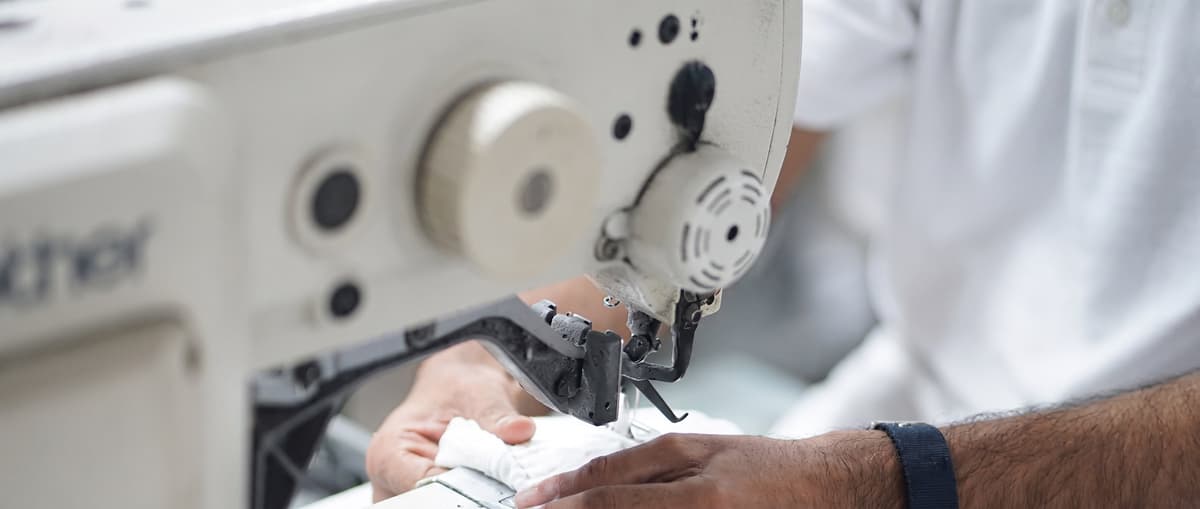
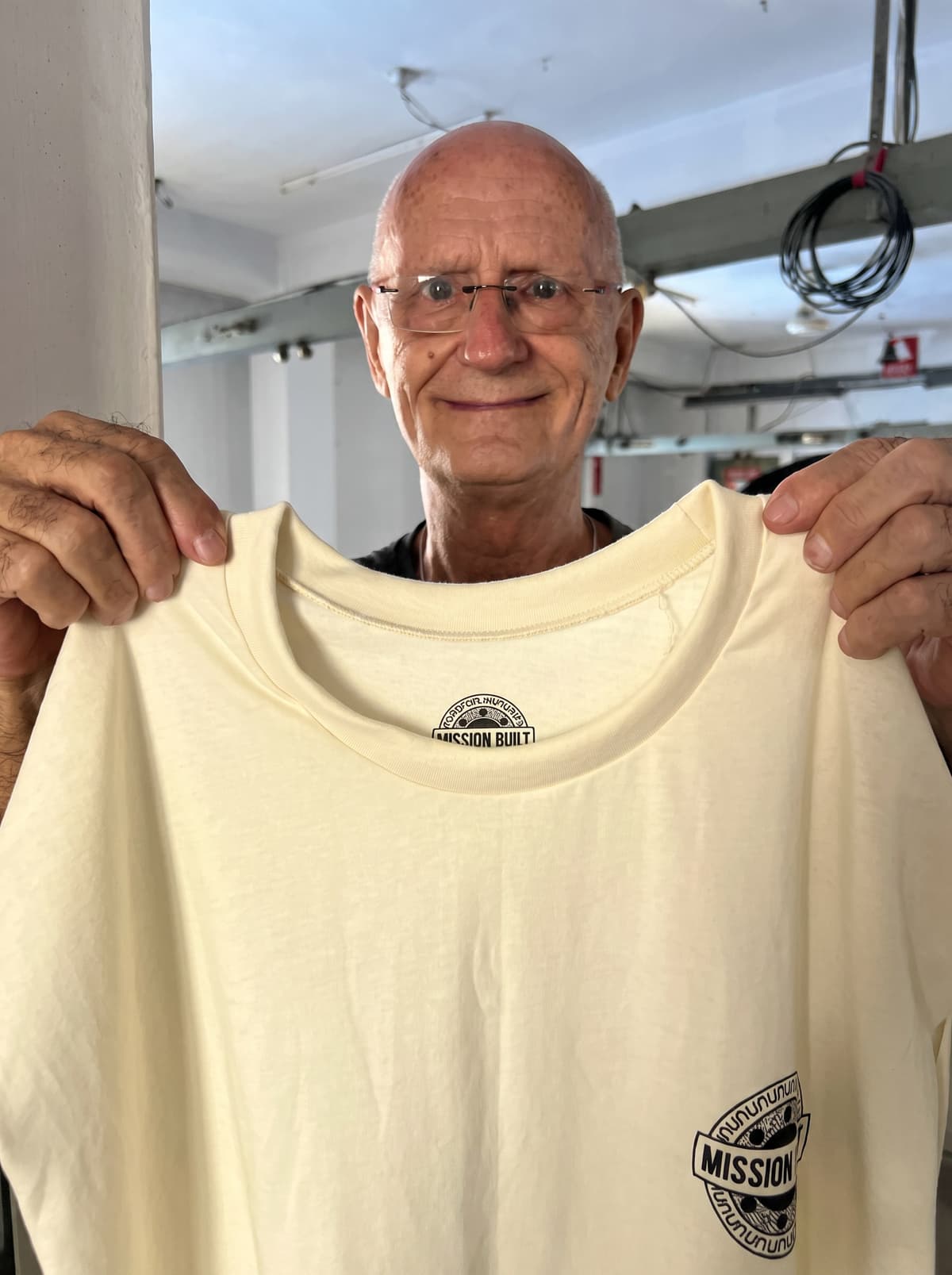
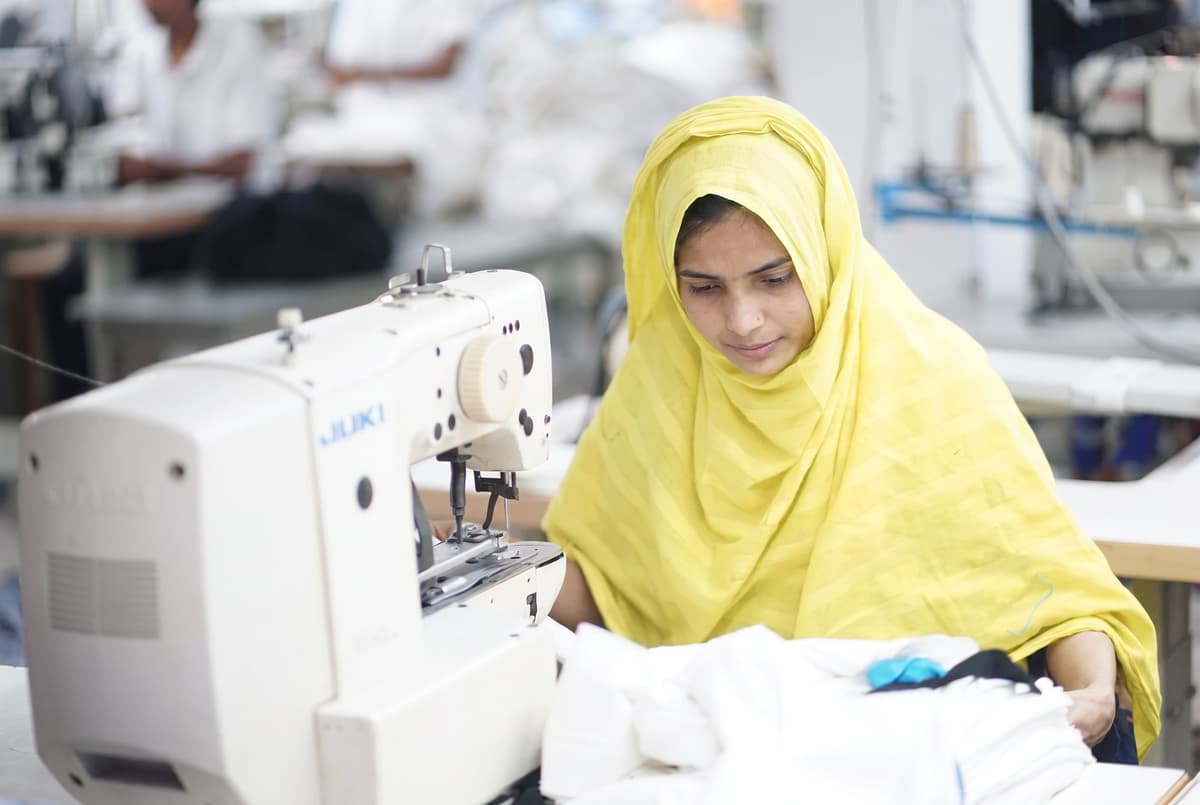
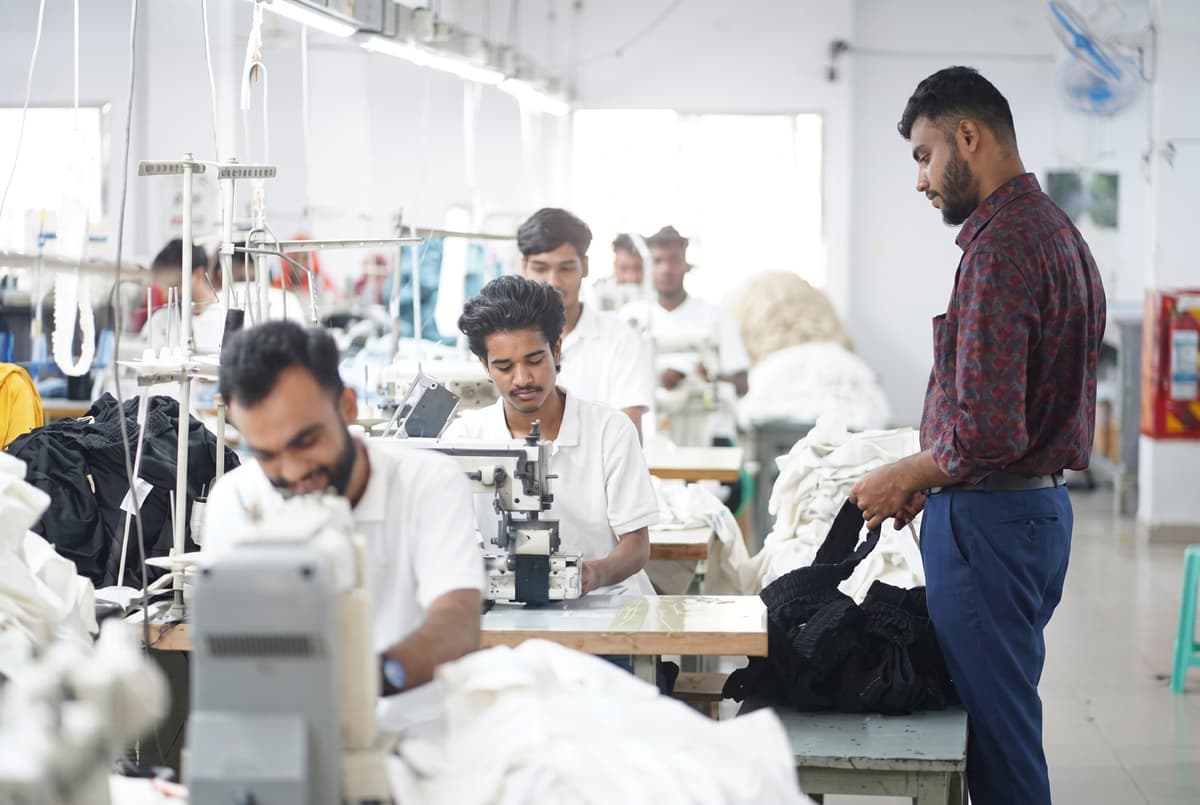
Made by our own team in Narayanganj. See the floor ↓Client reviews on Google ↗GOTS certificate RSC 9687 →
We are a clothing manufacturer for Irish brands, and the first thing to say is that Ireland is not the United Kingdom. An Irish founder who searches in English tends to land on sourcing pages written for London, where the duty scheme is the UK's and the VAT is 20%. Ireland is inside the EU customs territory, so the rules that apply to your order are the EU's: duty-free entry under Everything But Arms, and Irish import VAT at 23%. Our page for clothing manufacturing for UK brands covers Great Britain; this one is for you.
The numbers: Bangladesh-made apparel enters every EU member state duty-free under Everything But Arms, and Revenue charges import VAT at the standard rate of 23% on the customs value plus any duty and the transport costs to the place of destination. We ship DDP, so that VAT is inside the landed price you approve rather than a separate bill at Dublin Port. A VAT-registered Irish business can use postponed accounting to declare and reclaim the import VAT on the same VAT3 return instead of paying it at the border; it is optional, and worth asking your accountant about before we file the entry. One Irish rule to know early: clothing sized and marketed for children under 11 is zero-rated, at import as well as on sale.
What we make: t-shirts, polos, hoodies, sweatshirts, joggers, shorts, activewear, loungewear, underwear and kidswear, cut and sewn from your pattern on our own floor in Narayanganj, Bangladesh, from 150 pieces per style and colour, with organic cotton available under our GOTS certification (RSC 9687). Sizes split freely inside the 150; colours do not, because each colour is its own dye lot. Denim, jackets and woven shirts are sourced on a separate order by our sister buying house in the same industrial area.
Labels are sewn in English, the language the Irish market uses, with Irish added if a retailer asks. The EU fibre-labelling regulation lets each member state require its own official language, and under the General Product Safety Regulation the Irish importer is the EU-based operator whose name and addresses go on the product or packaging. Our Amsterdam office can hold the technical file where that suits your structure.
Ports and timing: most sea freight for Ireland lands at Dublin Port, with Rosslare as the alternative, and air cargo comes into Dublin Airport. Containers from Chattogram usually transship at a continental hub, so the transit is quoted for your port rather than printed here; air takes days. Count about 10 days for sampling and 40–50 days of production after you approve the sample, then the freight; the launch-date calculator counts back from your on-sale date.
Comparing clothing manufacturers for Irish brands and meeting mostly agents? Ask each for a street address, its BKMEA membership and a live video call from the floor during a shift. Ours is Plot-A-132, Road No. 02, BSCIC Industrial Area, Panchabati, Narayanganj 1420; our brand office is at Soetendaal 61, Amsterdam, an hour and a half from Dublin by air and one hour ahead.
| Bangladesh (our floor) | China | Vietnam | Turkey | Portugal | |
|---|---|---|---|---|---|
| Duty into Ireland | 0% under Everything But Arms; access continues three years beyond LDC graduation (verified 21 Sep 2026); Irish VAT on every origin: 23%, or 0% on qualifying children's clothing | No preference: the EU standard duty for the code | EU–Vietnam agreement rates only where fabric-origin rules are met | EU customs union: free-circulation goods enter without duty | EU-made: no customs entry, no import VAT at the border |
| Sea route to Ireland | Via Suez, usually transshipped at a continental hub to Dublin or Rosslare; we quote the transit for your port | Via Suez with a hub transshipment; similar timing | Via Suez and a hub, as from China | Road and ferry or short-sea; days rather than weeks | Short-sea, or road and ferry; days |
| Strongest at, for an Irish range | Cotton knit basics and kidswear from 150 pieces, organic cotton under our GOTS certification, landed cost | Range of fabrics, trims and technical constructions | Woven, outerwear and sportswear in volume | Speed to market, denim and knit at mid-range cost | Made-in-EU positioning on small runs, highest unit cost |
| An Irish brand picks it when | It wants knitwear from 150 pieces under EU rules, duty-free, with the GPSR file built during production | It needs constructions or materials beyond a knit specialist | It is placing large woven or performance programmes | Weeks matter more than the unit price | A made-in-Europe label leads and price follows |
EU rules apply: duty-free under Everything But Arms and 23% Irish import VAT, not the UK's DCTS scheme and 20%. Our UK page covers Great Britain; this page covers you.
Charged on the customs value plus transport to destination; inside our DDP price, and reclaimable on the same VAT3 return under postponed accounting if you use it.
Test the Irish market with 150 pieces per style and colour; children's styles labelled by age or size can qualify for Ireland's 0% VAT.
On orders made under our GOTS certification, certificate RSC 9687 supplies the fibre, chemistry and traceability evidence for your GPSR file; English labels as standard, Irish on request.
Rates re-checked on 14 October 2026 against Revenue and the Commission's VAT table; origin rules as verified on 21 September 2026. Sources below.
Ireland applies EU customs rules, not British ones, so a garment cut and sewn on our floor enters duty-free under Everything But Arms on a single-transformation origin rule, and Regulation (EU) 2026/1395 keeps that for three years after Bangladesh's LDC graduation. VAT is Irish: Revenue's current VAT rates put the standard rate at 23%, and Revenue's import-VAT page sets the taxable value as the customs value plus any duty and the transport, handling and insurance costs to the place of destination. Children's clothing is the exception that matters to a kidswear range: Revenue's guidance on clothing zero-rates the supply and importation of garments sized for children under 11, up to a 32-inch chest, 26-inch waist and 152 cm height, provided they are described, labelled or marketed by age or size.
Worked through on 500 adult tees at a US$6.00 customs value, freight and insurance to the EU border included: US$3,000 of goods, no duty and roughly US$690 of VAT before the transport element joins the base, inside our DDP price. The same quantity of children's tees within the size limits would carry 0%, so put age or size bands on the label and hang tag of children's styles; we sew them to your artwork. A VAT-registered importer can use postponed accounting to declare the import VAT on the VAT3 return and reclaim it on the same return, subject to the usual deductibility rules; Revenue says it is available to traders registered for VAT and Customs and Excise and is not compulsory. Tell us which route you want before we file the entry.
Before the first entry, the importer needs an EORI number. Revenue's EORI registration guide explains that a VAT-registered business normally receives IE followed by its VAT number, that the registration is made through ROS alongside a Customs and Excise registration, and that the number works immediately on declarations lodged in Ireland. Confirm the commodity code for each style with your broker; the landed-cost calculator runs the arithmetic for any quantity.
Revenue's clothing guidance and the textiles EPR consultation read on 14 October 2026; EU texts as verified on 21 September 2026. Sources below.
The fibre label follows Regulation (EU) No 1007/2011: each fibre by generic name with its percentage, largest first, on a durable, legible label. Article 16(3) lets a member state require its own official language; Ireland has two, Irish and English, and the Irish market labels in English, which is what we sew unless you ask for both. Ireland gives the regulation effect through S.I. No. 142 of 2012, enforced by the Competition and Consumer Protection Commission. Origin is optional under the regulation, though the customs declaration states it and anything you print must be true.
Under the General Product Safety Regulation (EU) 2023/988, applying since 13 December 2024, an Irish company importing from us is the EU-established operator: its name and postal and electronic addresses go on the product or packaging, and it keeps a risk analysis and technical documentation for ten years. GOTS certificate RSC 9687 supplies fibre, chemistry and traceability evidence on organic orders. For children's ranges, which the 0% rate makes attractive in Ireland, the file should cover EN 14682 on cords and drawstrings as well as REACH Annex XVII entry 43, which bans azo dyes releasing listed amines above 30 mg/kg in skin-contact textiles; our GPSR guide walks through it.
Producer responsibility for textiles is on its way. The Department of Climate, Energy and the Environment released a draft Textiles EPR Delivery Plan for stakeholder consultation on 14 July 2026, with submissions closing on 9 September 2026; it notes that the revised Waste Framework Directive must be transposed into Irish law by 17 June 2027, that the scheme must be established by 17 April 2028, and that micro-enterprises come in from 17 April 2029. The Commission describes producers paying a fee for each product they place on the market, so if your company first places clothing on the Irish market, plan for registration and per-piece fees from 2028; we can give you fibre composition and quantities by style for the declarations.
We quote DDP, delivered duty paid, to any address in the Republic: freight, the customs entry, the import VAT and delivery in one landed price, with the commercial invoice, packing list and statement on origin sent before the goods move. Dublin Port and Rosslare take the sea freight and Dublin Airport the air cargo; Irish-bound containers usually change ships at a continental hub, so the transit for your port comes with the quote.
Bangladesh is on UTC+6 with no daylight saving, six hours ahead of Dublin in winter and five in summer. The floor works Saturday to Thursday, 09:00 to 17:00, so its day ends in the late morning or around midday in Dublin, and our Amsterdam office, one hour ahead of you, covers design conversations, samples and compliance paperwork in English through your afternoon. Selling into Northern Ireland too? Goods moving there have their own arrangements under the Windsor Framework, and we set that entry up with your broker rather than guess.
UN graduation record checked 14 October 2026; EU GSP regulation as read on 21 September 2026. Sources below.
Bangladesh is now scheduled to leave the UN's Least Developed Country list on 24 November 2029. After its request for an extension in February 2026, the Committee for Development Policy said an extension would be appropriate if domestic reforms make significant progress, and ECOSOC on 21 July recommended that the General Assembly decide before 24 November. On 29 October 2026 the General Assembly granted it, moving graduation back three years (UN LDC portal).
For an Irish importer, unlike a British one, the rule that counts is the EU's: Regulation (EU) 2026/1395 keeps Everything But Arms for three years after graduation, so duty-free entry into Ireland lasts to about late November 2032. Irish VAT, including the 0% on qualifying children's clothing, does not change with it. What follows depends on GSP+, still undecided; our LDC graduation guide sets out the scenarios.
Searching for Irish clothing manufacturers mostly turns up local workshops, and the official figures show why. The Central Statistics Office counted 949 active enterprises in textiles and wearing apparel in Ireland in 2024, engaging 3,362 people between them, or about three and a half per business (CSO, Business Demography, table BRA31). 885 of them, 93%, had fewer than ten people; 590 were sole traders (table BRA32); 11 had between 50 and 249 people, and none appears in the 250-and-over band.
That makes Ireland a good place to develop a range, with small studios that can fit a toile with you in the same room. It is a harder place to run several hundred pieces of each knit basic, because a business of three or four people has to fit that run around all its other work. One way to split it: fit and first samples close to home, bulk on a production floor.
If you work that way with us, send the approved sample or its pattern with your measurements, and we sew our own pre-production sample from it in about 10 days, on the line that will make the bulk. Once you approve it, that garment becomes the sealed sample every bulk piece is checked against, because it shows our fabric and our operators rather than the studio's.
| CSO measure, Ireland | 2022 | 2023 | 2024 |
|---|---|---|---|
| Active enterprises, textiles and wearing apparel | 941 | 950 | 949 |
| With fewer than 10 persons engaged | 871 | 882 | 885 |
| With 10 to 19 | 38 | 33 | 34 |
| With 20 to 49 | 21 | 23 | 19 |
| With 50 to 249 | 11 | 12 | 11 |
| Sole traders (individual proprietorships) | 574 | 572 | 590 |
| Persons engaged in total | 3,384 | 3,468 | 3,362 |
Wonderful people to work with — very professional and knowledgeable, also accommodating to the needs of their customers.
Nice supplier that is looking to develop new buyers and products.
I have had a very good experience with this company. They are very friendly, professional, and provide fast service. They speak fluent English, which makes communication very easy. The quality of their manufacturing is excellent. I have no doubt in recommending this company to anyone looking for a reliable manufacturing partner in Bangladesh.
No, not at present: a garment cut and sewn on our floor in Narayanganj qualifies for 0% duty into Ireland under the EU's Everything But Arms scheme, and the preference is claimed on the entry with the origin documents we confirm with your quote. Cutting and sewing here meets the single-transformation origin rule that makes the garment Bangladeshi. LDC graduation is now due on 24 November 2029: the UN General Assembly granted Bangladesh's extension request on 29 October 2026. Regulation (EU) 2026/1395 gives a graduating country three more years of Everything But Arms access after graduation, so an Irish brand ordering now keeps duty-free eligibility until about late November 2032 as things stand. Duty-free is not tax-free: Revenue charges 23% import VAT on garments from every country. We confirm the live duty position for your commodity code in writing with each Irish quote.
23%, Ireland's standard rate, which Revenue lists as current (read 27 Sep 2026). At import it is charged on more than the factory invoice: the base is the customs value, which already includes freight to the EU border, plus any duty, plus the transport, handling and insurance costs onward to the place of destination in Ireland. On 500 tees at a US$6.00 customs value (which includes freight and insurance to the EU border), US$3,000 in total, that is roughly US$690 before the transport element is added, and no duty. We quote DDP with that VAT inside the landed price, so there is no separate bill at Dublin Port. The alternative: if your company is registered for VAT and for Customs and Excise and is named as importer on the entry, postponed accounting lets it declare the import VAT on its VAT3 return and reclaim it on the same return. Revenue says that route is optional, so agree it with your accountant and tell us before we lodge the entry.
Yes: 150 pieces per style and per colour is the minimum for an Irish brand, delivered DDP to any address in Ireland. Sizes split freely inside those 150, so one tee can run from XS to XXL; colours do not, since every colour needs a dye lot of its own. Two styles in two colours is therefore 600 pieces, not 300, and for a first drop in a market the size of Ireland's that usually argues for fewer colours made deeper. Our MOQ calculator models an Irish first drop before you commit. A small Irish order is still a full import: a customs entry, 23% VAT on the customs value plus onward transport, English fibre labels and a General Product Safety Regulation file held by your Irish company. That file is built once per style and updated, rather than rebuilt, on reorders, which keeps a 150-piece test worthwhile. Send the styles and colours and we reply within one business day.
Yes: Ireland is in the EU, so clothing from Bangladesh enters at 0% duty under Everything But Arms and pays 23% Irish import VAT, while Great Britain uses the UK's Developing Countries Trading Scheme and 20% VAT. A sourcing guide written for London therefore gives an Irish founder the wrong scheme and the wrong rate. Clear the goods in Ireland, at Dublin Port, Rosslare or Dublin Airport, rather than through a British importer, because routing the order through a British importer creates a second customs event. If you also sell into Northern Ireland, tell us at the quote stage: goods moving there have their own arrangements under the Windsor Framework, and we set that entry up with your broker rather than guess. Our page for UK brands covers Great Britain; this page covers brands based in the Republic of Ireland, where Revenue charges the import VAT on the Irish customs entry.
About ten days for sampling, forty to fifty days for production once the pre-production sample is signed off, then transit. Sea freight from Chattogram to Dublin or Rosslare usually transships at a continental hub, so we confirm the figure for your port with the quote; air freight into Dublin is measured in days. Dublin Port is the usual sea entry and Rosslare the alternative, so tell us which is closer to your warehouse or fulfilment partner and we quote to that port. Either way we ship DDP to any Irish address, so the customs entry, the 23% import VAT and the final delivery are handled on our side. We send the commercial invoice and packing list before the goods move, and confirm the origin documents for the Everything But Arms claim with your quote. The launch-date calculator in our free resources counts back from your Irish launch date. From order to your door, plan on about 70 days by air.
Not in practice: English is one of Ireland's two official languages, it is what the Irish market labels in, and it is what we sew; we add Irish whenever you or a retailer ask. The rule is Article 16(3) of Regulation (EU) No 1007/2011 (read 27 Sep 2026): the label must be in the official language or languages of the member state where the garment is sold, unless that state provides otherwise. Ireland applies the regulation through S.I. No. 142 of 2012, enforced by the Competition and Consumer Protection Commission. S.I. No. 142 of 2012 adds no language rule of its own; it enforces the EU regulation. If you need certainty on an English-only label, ask the CCPC or your adviser; if a stockist wants both languages, we sew both. The label lists the fibres by generic name and percentage, in descending order. Selling across the EU too? We sew those languages in the same run.
It makes your Irish company the EU-established responsible economic operator for the garments you import from us, with duties of its own. The General Product Safety Regulation (EU) 2023/988, applying since 13 December 2024, requires, among other things: your Irish company's name and postal and electronic address on the garment (on the packaging only where the garment cannot carry it), because a brand selling under its own name or trademark is the manufacturer under Article 3(8); a type or batch number on each garment; a risk analysis; and technical documentation kept up to date for ten years. We build the file with you during production, and the garments must also meet REACH Annex XVII entry 43, which bans azo dyes releasing listed aromatic amines above 30 mg/kg in textiles worn against the skin. We are GOTS certified (RSC 9687); for an organic order, the scope certificate is available on request for your file. Our Amsterdam office can also hold a copy of the file where that suits your structure.
In our view, Bangladesh if you want cotton knitwear from 150 pieces with landed cost as the priority; Ireland or elsewhere in the EU if a made-in-EU label matters more. Making inside the EU, in Portugal for example, avoids the import altogether: no customs entry and no import VAT at the border, but in our view the highest unit cost. Turkey is in a customs union with the EU, so there is no duty on goods in free circulation, and it suits speed to market at a mid-range cost. Our floor suits cotton knit basics at low minimums and organic cotton under our GOTS certificate: duty-free into Ireland under Everything But Arms, with 23% import VAT inside the DDP price and the GPSR file built during production. The trade-off is distance: the sea route runs via Suez and usually transships at a continental hub before Dublin or Rosslare. Whichever origin you choose, Irish VAT is still due when you sell the garments.
Yes: we make t-shirts and hoodies for Irish brands at our own Narayanganj factory, cut and sewn from your pattern at 150 pieces per style and colour, alongside polos, sweatshirts, joggers, shorts, activewear, loungewear, underwear and kidswear. Denim, jackets and woven shirts are outside what we sew: CMB Sourcing Ltd, a separate buying house in the same BSCIC Industrial Area, sources them under its own contract, so an Irish range that pairs a hoodie with a denim jacket involves two companies, and we tell you that at the start. For an Irish brand the garment is the same as anywhere; the differences sit around it. The care and fibre label is sewn in English, with Irish if a stockist asks, your company's name and address as the EU importer go on the garment (on the packaging only where the garment cannot carry it), and the 23% VAT sits inside the DDP price. For the garment detail, see our private-label t-shirt and custom hoodie pages.
Yes: our EU office at Soetendaal 61 in Amsterdam is about an hour and a half from Dublin by air and one hour ahead of Irish time, and we can walk you round the sewing floor on a live video call during a working shift. An Irish founder can bring swatches, fit samples or labelling questions to Amsterdam and talk them through in English, face to face. The sewing happens at our own factory, Plot-A-132, Road No. 02, BSCIC Industrial Area, Panchabati, Narayanganj 1420, Bangladesh. Bangladesh Standard Time is UTC+6 with no daylight saving, so the floor is five hours ahead of Ireland in summer and six in winter: your morning overlaps our afternoon, and Amsterdam covers the rest of your working day. If you would rather see the line in person before a first order, pre-arranged visits to Narayanganj are welcome. Either way, send a message and we reply within one business day.
Yes, if it is true, and provided nothing on the garment suggests it was made in Ireland. Section 43 of the Consumer Protection Act 2007 treats a commercial practice as misleading if it gives false information, or is likely to deceive the average consumer, about a product's main characteristics in a way likely to change their decision to buy, and the list includes geographical and commercial origin. So "Designed in Dublin" on a swing tag describes your studio, while "Irish made" on a tee cut and sewn in Narayanganj would be false. The EU fibre-labelling regulation does not require an origin mark, but the customs entry declares Bangladesh, so any origin you print should match it. A common pattern is "Made in Bangladesh" on the care label and your Irish design story on the hang tag; we sew in your labels and attach your hang tags to your artwork. If a claim feels borderline, take advice before printing.
Yes: one DDP shipment, one customs entry, and the two VAT rates applied line by line. The commercial invoice lists each style separately with its sizes, so adult styles carry Ireland's 23% import VAT and children's styles that meet Revenue's conditions carry 0%: sized for children under 11, within the 32-inch chest, 26-inch waist and 152 cm height limits, and described, labelled or marketed by age or size. Put the age or size band on the label and hang tag of each children's style, and keep any style that crosses into adult sizing as its own line, since the zero rate follows the garment, not the shipment. The minimum is the same for both: 150 pieces per style and per colour, with sizes split freely inside it. We leave neck and hood drawcords off children's garments, which keeps the cord rules of EN 14682 simple; our kidswear page covers the rest of the safety detail.
Trade and regulatory details on this page last verified 21 September 2026. Tariff and compliance terms change — ask us to confirm the current position for your order.
Whether it’s a large bulk or wholesale run or your first batch of 150, send a sketch, a reference, or a sentence. We’ll reply within one business day with fabric options and an indicative price.
Or message the factory directly: WhatsApp +880 1980 055026 · hello@collectivestudioltd.com · Homaira replies within one business day.