One label across the range
Tees, hoodies, joggers, leggings and kidswear can all carry the same neck label, care-label layout and hang tag, so a mixed first order reads as one brand.
One brand across a whole knitwear range: tees, hoodies, joggers and more, cut and sewn to your pattern and finished with your own trims, so a mixed first order still arrives looking like it came from one house.
A private label clothing manufacturer makes garments carrying only your brand. Collective Studio cuts and sews knitwear to your specification on its own floor in Narayanganj, Bangladesh, and finishes it with your neck and care labels, hang tags and packaging, from 100 pieces per style and colour. Organic cotton is available; woven goes to a separate partner buying house.
Or message the factory directly: WhatsApp +880 1980 055026 · hello@collectivestudioltd.com · Homaira replies within one business day.
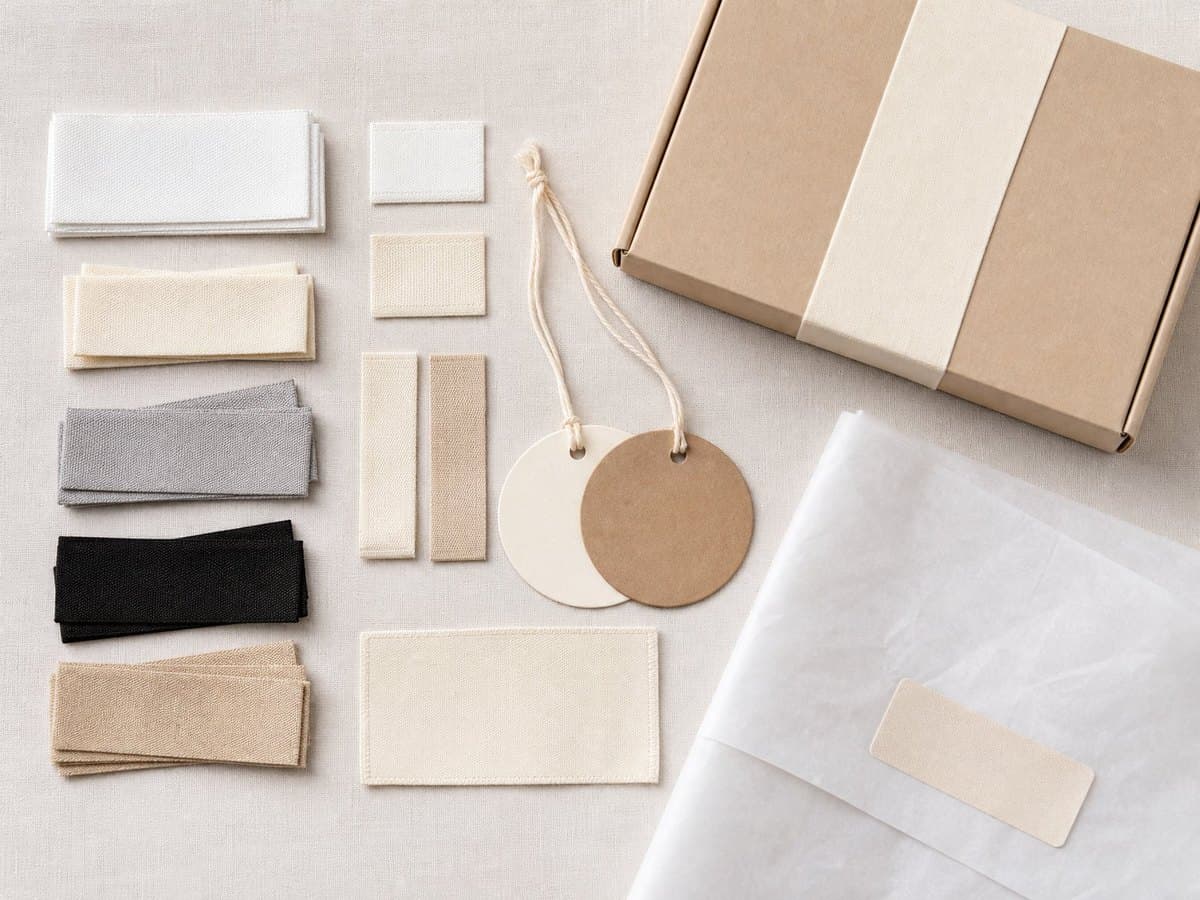
Private label clothing is clothing sold under the name of a brand that did not sew it. The factory makes the garment; your labels, tags and packaging are the only names your customer ever sees. Collective Studio is a private label clothing manufacturer for knitwear: we cut and sew garments to your specification on our own floor in Narayanganj, Bangladesh, and finish them with your branding, from 100 pieces per style and colour.
This page covers the layer every garment in a range has in common. A tee, a hoodie and a pair of joggers each raise their own fabric and construction questions, and each has its own page. What they share is the label in the neck, the care label in the seam, the swing tag on the outside and the bag they travel in. Settling those once, and repeating them on every style, is what turns a handful of garments into a brand a customer recognises.
| Part | Options | What you send us |
|---|---|---|
| Neck label | Woven, printed, or tagless heat transfer | Logo files |
| Care and content label | Fibre content, care instructions, country of origin, the business responsible | Your markets, plus any identifier only your business holds, such as a US RN |
| Hang tag | Brand line, price, barcode | Tag copy, retail price and barcode |
| Packaging | Polybags, boxes, mailers, tissue, stickers, thank-you cards | Packaging artwork |
| Spare trims | 5–10% surplus recommended | Nothing: we order them, and leftovers are held for your reorder |
Tees, hoodies, joggers, leggings and kidswear can all carry the same neck label, care-label layout and hang tag, so a mixed first order reads as one brand.
Label, tag and packaging artwork is approved alongside the pre-production sample, so the branding and the garment reach bulk together rather than one waiting on the other.
Your label is the only brand on the garment and the packaging. The factory is not named anywhere your customer will look.
Each garment type in each shade starts at 100 pieces, with the size curve inside that hundred left to you and matching pieces booked from one dye lot.
Suppliers use “private label” in two senses. Some mean a proven base garment sold under your name; others mean a garment built to your pattern and sold by nobody else. Ask which one a quote describes before comparing it. We work in private label and OEM: your fit, fabric weight and trims, cut and sewn here. Our guide to private label vs white label vs OEM sets the three side by side.
Everything on our floor is knitwear, so one label can run across most of a casual or athletic range: t-shirts, polos, hoodies, sweatshirts, joggers, shorts, leggings, activewear, loungewear, underwear and kidswear. Tees have their own private label t-shirt page, and each other garment has a page for its fabrics and construction; this one is about the brand they share. Organic cotton is available, and our organic cotton clothing page covers it.
Woven garments are not sewn here. Shirting, denim and jackets go to our partner buying house, CMB Sourcing Ltd, a separate company that quotes, contracts and invoices its own work.
The checklist above is the whole branding layer, and each line is a decision rather than a default. The neck label is the part a customer touches first. The care and content label is the part the law reads. The hang tag and the packaging are what a customer sees on the rail or on opening the parcel. We produce all of it as part of your order, and the guide to custom labels, hang tags and packaging walks through the options for each.
Timing is where trims usually go wrong. Labels and tags come from separate suppliers on their own schedules, and a finished garment cannot ship without them. So the trim artwork is signed off at the same moment as the pre-production sample, the labels are made while bulk is being sewn, and we recommend ordering five to ten percent more than the run needs, so one damaged batch of labels does not hold up a shipment.
Last verified: 23 September 2026
Some labels are the law rather than a design choice. Depending on where you sell, a garment can need its fibre content, care instructions, country of origin and an identifier for the business responsible for it, which in the United States can be an RN. Tell us every market before any artwork is drawn: the answer changes the label, and responsibility for it usually sits with the brand or importer rather than the factory. The clothing labelling requirements by country guide works through five markets, and our pages for US, UK and EU brands cover each in context. The fibre line is taken from the fabric actually used on your order.
The shape of a plain tee cannot be owned by anyone; the name and artwork on it can, which is why the label carries so much weight. We sign NDAs routinely, your designs, tech packs and artwork stay yours, and you know which factory sews your cut-and-sew styles, because it is ours. The stronger protection sits on your side: register your brand name and logo as a trademark in the markets you sell in, keep dated records of your files, and let the purchase order say who owns the samples, patterns and artwork. Our guide will my manufacturer steal my design? explains what an NDA can and cannot do. This is general information, not legal advice.
The minimum is 100 pieces for each style in each colour. Inside that hundred, the size curve is yours to set, weighted to the middle or skewed large as your sales suggest. Colour is the expensive axis, because every shade is dyed as its own lot: a hoodie in three colours is 300 pieces, and a tee in three colours plus a hoodie in two is five runs, or 500 pieces. A first private label range usually does better spending its minimums on more styles in fewer colours, and the MOQ calculator adds up any split you try. Our low MOQ page explains why the floor sits at 100 rather than lower.
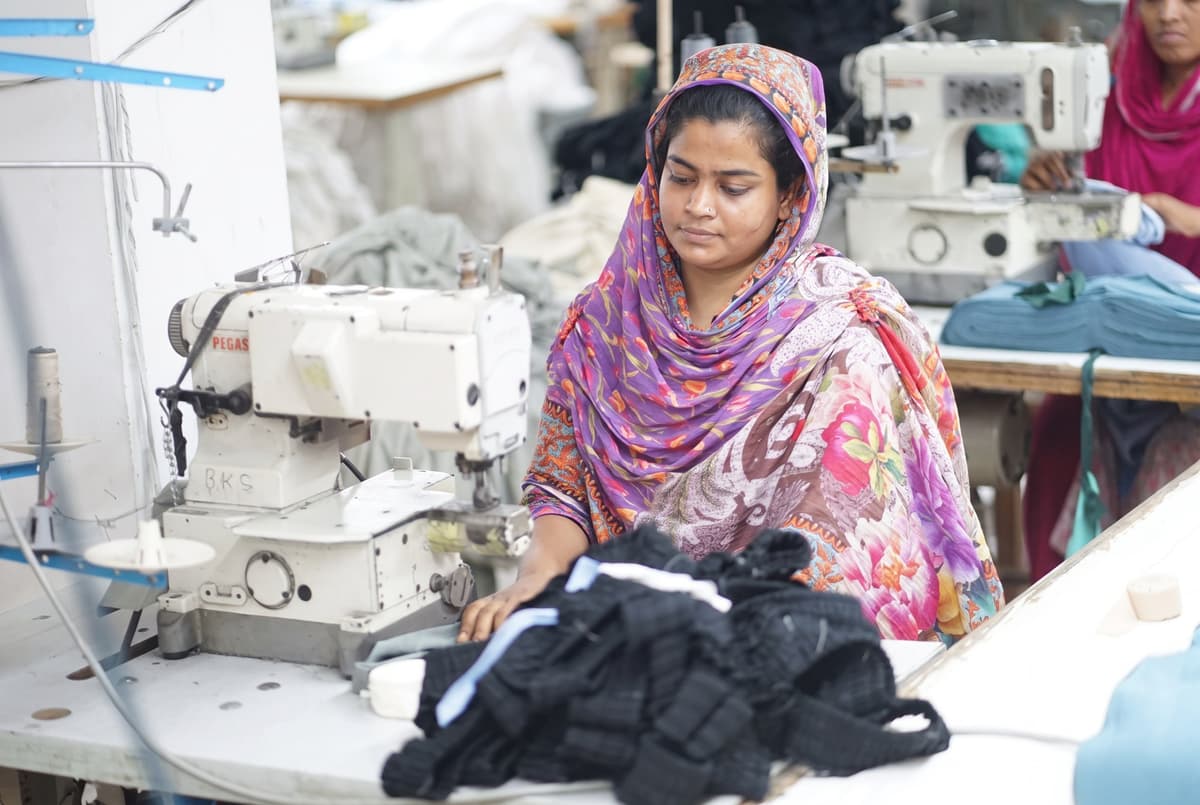
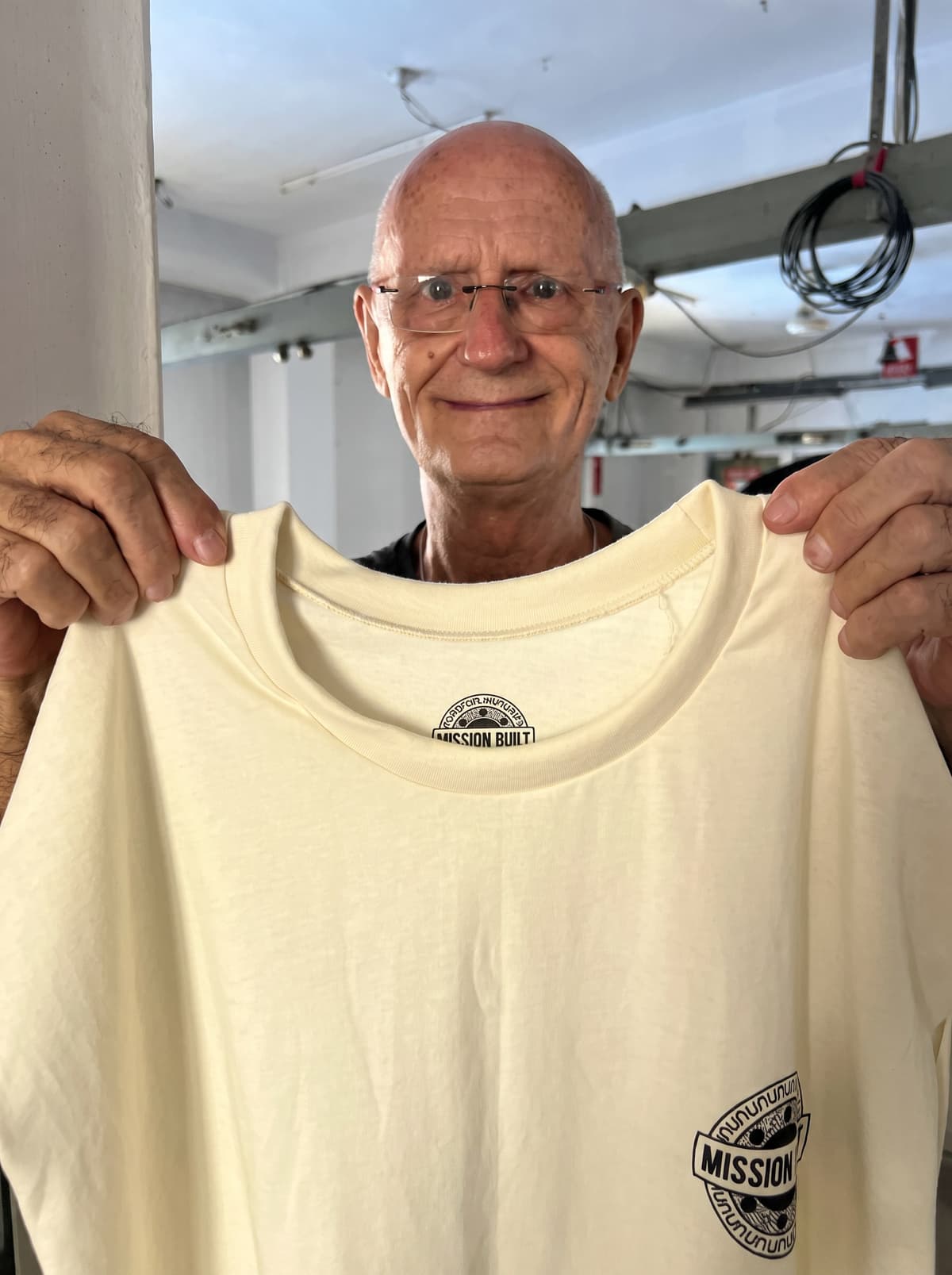
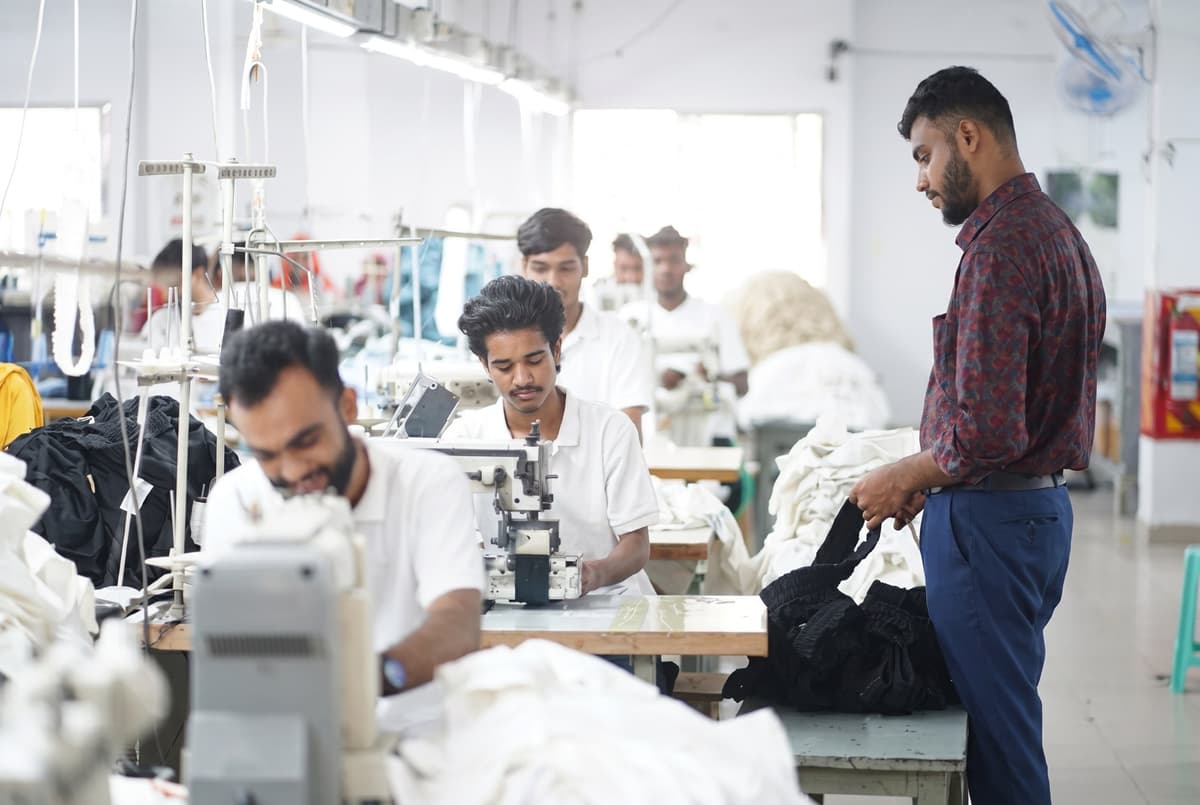
Collective Studios under the direction of Mr Jamish and his daughter Homaira represent the future of RTW production in Bangladesh. A thorough approach to detail governed by a genuine standard of quality. Masters of and partners in the process!
Talk to the factory directly: +880 1980 055021 · hello@collectivestudioltd.com
A private label quote is the garment first and the branding second, and the branding behaves differently on a first run of 100 than on a reorder.
Cloth is the largest share of a garment's cost, and it is priced per kilo. Heavier weights, combed yarns and organic cotton each lift that kilo price, so a range that mixes jersey tees with fleece hoodies is costed fabric by fabric rather than at one blended rate.
Every shade is dyed as its own lot, with its own lab dip and its own 100-piece minimum for each style. Pieces sold as a set are drawn from a single dye lot, so the shades agree. A first range usually does better with more styles in fewer colours than with one style in many.
Woven labels, printed labels, care labels and hang tags come from trim suppliers with minimums of their own, which on a first run can be more than the garments use. The surplus carries into your reorder, but the first order pays for it. One neck label design across every style spreads that minimum furthest.
A plain polybag is the baseline. Printed boxes, mailers, tissue, stickers and thank-you cards each add a bought-in part and a packing step, and printed packaging carries a supplier minimum of its own. Bulkier packing also means bigger, heavier cartons, which moves the freight share of a DDP price.
Print is costed by colours and passes, embroidery by stitches, and both sit on top of the garment. Pattern making, grading and samples are one-off costs, shared by every piece in the run, so the same branded garment costs less each at 500 than at 100, and less again on a reorder.
Yes. Each garment type counts as its own style, so a tee, a hoodie and a pair of joggers in one colour is three minimums of 100 pieces, 300 in all, with the size split inside each hundred left to you. Pieces meant to be worn together come from one dye lot, so their colours match. The branding is shared across all of them: one neck label design, one care label layout with the fibre content changed for each fabric, and one hang tag. That artwork is approved at the same time as the pre-production samples, and the labels are made while the garments are being sewn rather than afterwards. We recommend ordering five to ten percent more trims than the run needs, and whatever is left, including any excess from the trim suppliers' own minimums, is kept for your reorder.
Your logo files, the list of markets you sell in, and any identifiers that only your business can hold. From the logo we spec the neck label with you, woven, printed or a tagless transfer, and the hang tag, which usually carries your brand line, price and barcode. Your markets decide what the care and content label must say and in which language. The fibre content comes from us, taken from the fabric actually used, and the care instructions are backed by wash testing. The identifiers come from you. For the United States, the label names the business responsible or shows its RN. The FTC issues RNs only to US businesses, so no overseas factory can supply one, and it does not require one to trade. A brand name alone does not count unless it is the name your company trades under. We need these details before anything goes to print.
Yes. Every piece in the order carries the labels you approved, and none of them carries ours: nothing on the garment names the factory. The one line that does say where it was made is the country of origin, such as Made in Bangladesh, because the markets that require it treat it as part of the legal label. Placement is part of the specification. The neck label sits where the pre-production sample shows it, the care and content label goes where each market expects to find it, and a tagless print can replace the neck label if you would rather nothing touched the skin. Hang tags and packaging go on at the end. Because the labels are part of the sealed sample, Walter Meyer's QC team checks them in bulk alongside measurements and workmanship, so a missing or crooked label is caught before anything ships.
Yes, and the reorder is where private label starts to pay back. The sealed pre-production sample stays on file as the reference for every repeat run, so the second order is checked against the same garment as the first. Pattern and sampling are already paid for, which makes a reorder cheaper per piece than the launch, and the unit price steps down again as quantities pass the usual breaks, around 500, 1,000 and 5,000 pieces. Your label surplus carries forward as well: any surplus ordered for the first run, plus anything left from the trim suppliers' minimums, is used before new labels are bought. If you change the label artwork between runs, tell us when you place the reorder, and the new version is approved before anything is printed, as the first was. A reorder can also add a colour to an existing style, starting at 100 pieces.
Not on our floor. We cut and sew knitwear only, so woven garments go to CMB Sourcing Ltd, the partner buying house in our industrial area. CMB is a separate company, with its own contract, invoice and paperwork for the pieces it handles. Its website, clothingmanufacturerbangladesh.com, read on 23 September 2026, describes it as a buying house and says plainly: “We do not own sewing lines.” The same site says each product category goes to factories that specialise in it, and lists woven shirts and bottoms, denim, and jackets and outerwear among its products. For a range that mixes knit and woven, the practical route is one brand and two suppliers: we make the knit pieces, CMB handles the woven ones, and the same label artwork can go to both, since CMB's site lists logo and label artwork as what a brand supplies under its private label model. We make the introduction.
Trade and regulatory details on this page last verified 23 September 2026. Tariff and compliance terms change — ask us to confirm the current position for your order.
Whether it’s a large bulk or wholesale run or your first batch of 100, send a sketch, a reference, or a sentence. We’ll reply within one business day with fabric options and an indicative price.
Or message the factory directly: WhatsApp +880 1980 055026 · hello@collectivestudioltd.com · Homaira replies within one business day.