Private Label vs White Label vs OEM: Clothing Manufacturing Explained
If you've started researching how to make clothes, you've hit a wall of jargon: white label, private label, OEM. They describe how much of the product is yours versus the factory's. Whether you search it as private label vs white label or white label vs private label, the difference between them comes down to one question: can you change the garment itself, or only the label on it? Here's the plain-English version, with a table if you just want the comparison.
White label
The factory makes a ready-made, generic product that many brands can buy and put their own label on. Fastest and cheapest to launch, but you're selling the same blank tee as everyone else — limited differentiation.
Private label
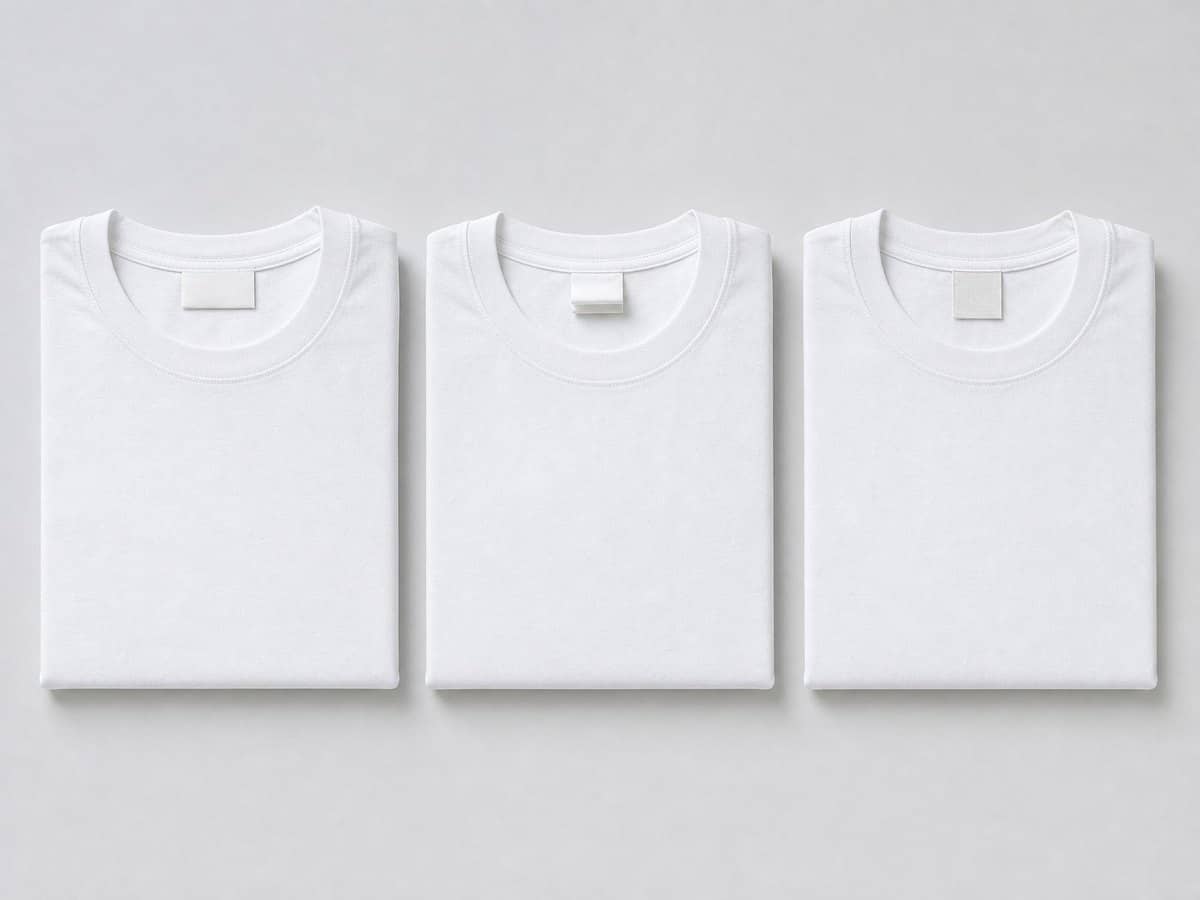
You take a manufacturer's existing base products and customise them to your brand — your fabric choices, colours, fit tweaks, labels, and packaging. A strong middle ground: more distinctive than white label, far simpler than building from scratch. It's how most brands make their first run — for example, private-label t-shirts in your own colours and branding.
OEM (cut, make, trim / full custom)
OEM means the factory makes your design from the ground up — your patterns, your fabric, your construction. The most original and the most control, with a bit more time and cost up front for sampling and development. This is where real, defensible brands are built.
- White label — fastest, cheapest, least unique.
- Private label — customised base products; great balance for most new brands.
- OEM / full custom — your design start to finish; most distinctive.
| White label | Private label | OEM / full custom | |
|---|---|---|---|
| Who designs the garment | The supplier. You pick from designs that already exist | The supplier's block, adjusted for you | You, from your own pattern and specification |
| Can you change fit or fabric | No | Within limits — colour, fabric options, trims | Yes, anything you can specify |
| What carries your brand | Label and packaging | Label, packaging, and some detailing | Everything, including the shape itself |
| Typical minimum | Lowest of the three | Low to moderate | Set by the factory — ours is 100 pieces per style |
| Time to first delivery | Fastest, the garment already exists | Moderate | Slowest, because it is sampled first |
| Who owns the design | The supplier. Others can sell the identical garment | Usually the supplier's block | You |
| Best for | Testing whether anyone wants it | Growing a brand on shapes that already sell | A product that has to be yours |
There's no "best" model — only the one that matches how unique you need to be and how fast you want to move.
Who owns what, and why it matters later
The definitions are useful, but the question that decides your options two years from now is ownership — specifically, who owns the pattern. It is rarely discussed at quoting stage and it is the thing brands wish they had settled.
- Private label: the pattern is developed for you, from your spec. Establish in writing that it is yours and can be transferred, and you can move factories later without starting over.
- White label: the pattern belongs to the supplier. You are buying access to their product, so you cannot take it elsewhere — and neither can you stop them selling the same base garment to someone else.
- ODM: similar. The design is theirs; your contribution is branding and, usually, colour.
- CMT: the pattern is yours because you supplied it, along with the fabric and trims.
This is not a legal technicality. It determines whether your bestselling style is an asset you control or a product you rent, and it is far easier to agree at the first order than to renegotiate once the style is selling.
The tell in a supplier’s quote
You can usually identify which model you are being offered without asking directly. A quote that arrives quickly, with no questions about fabric weight, fit or construction, and with a low minimum, is almost always white label or decoration on blanks — the product already exists. A private-label quote takes longer and comes back with questions, because nobody can price a garment that has not been specified yet.
Neither is worse. They are different purchases, and the mistake is comparing their prices as though they were the same thing.
Which is right for you?
Testing an idea quickly and cheaply? White or private label. Building a brand with a real point of view? Private label to start, moving to OEM as you grow. Collective Studio works across the spectrum — from customising proven bases to full cut-and-sew production from your tech pack.
Read next: how much it costs to manufacture clothing and what a tech pack is.
Frequently asked questions
What is the difference between private label and white label?
White label means taking a product that already exists and putting your branding on it. The manufacturer designed it, chose the fabric and fit, and sells the same item to other buyers — so speed and cost are good, and exclusivity is nil. Private label means the garment is produced to your specification and carries only your brand: you choose fabric, weight, fit, construction and trims, and the pattern is yours. The practical consequence people underestimate is competitive. With white label, a competitor can order the identical garment from the same source and undercut you on price, because there is nothing to differentiate on. With private label, the product itself is the moat. Speed and cost against control and ownership — that is the whole trade.
What does OEM mean in clothing manufacturing?
OEM stands for Original Equipment Manufacturer, and in apparel it means the factory produces entirely to your design and specification — your patterns, your tech pack, your engineering decisions. The factory supplies capability rather than product ideas. It sits at the custom end of the spectrum, further than private label in most usage, though the two terms overlap and suppliers apply them loosely. You will also meet ODM, Original Design Manufacturer, where the factory offers its own designs for you to adapt and brand — closer to white label with modifications. Because the vocabulary is used inconsistently across the industry, the useful move is to ignore the acronym and ask directly: whose pattern is this, and can anyone else buy the same garment?
Which is best for a new clothing brand?
It depends which risk you are more able to carry. White label removes product risk and gets you selling fastest, which suits testing whether an audience exists at all before committing capital to manufacturing. The cost is that you are selling something anyone can source, so you compete on marketing and price rather than product. Private label or OEM costs more upfront and takes longer, but produces something that belongs to you and can be improved over time. A common and sensible sequence is to prove demand on white label, then move to private label once you know what people actually buy — by which point you also know which fit, weight and details to specify, which makes the first custom run far less of a guess.
Where this applies
The manufacturing pages this guide relates to, if you are costing a real run.
Free tools & guides for this
Sources & further reading
Have an idea? Let’s make it.
We manufacture from 100 pieces per style, with GOTS-certified organic options and photos at every stage. Send a sketch or a sentence — we’ll reply within a day.