Low MOQ — from 100 pieces
Launch or test an activewear line with 100 pieces per style and colour, not thousands.
Performance activewear, made to your design — from 100 pieces a style. Technical fabrics, 4-way stretch, sustainable options, delivered worldwide.
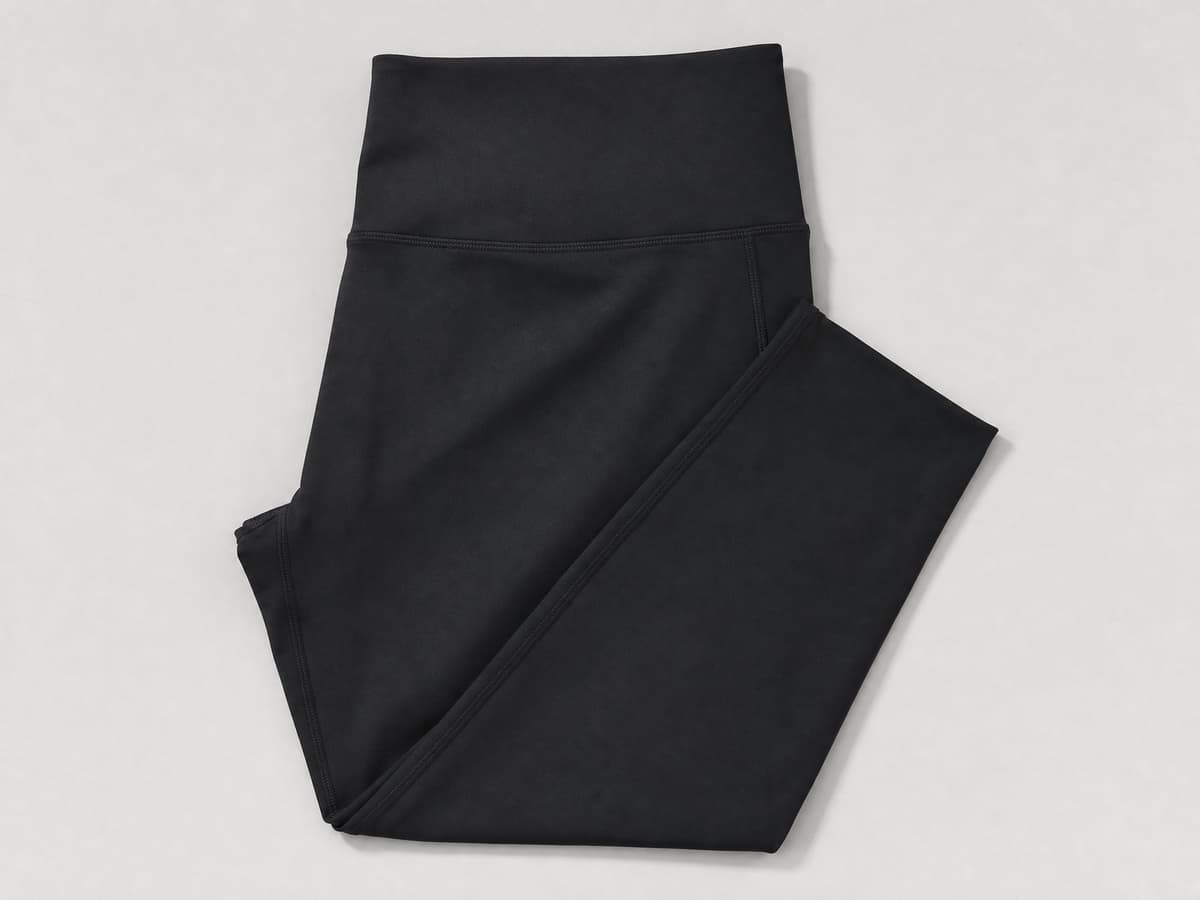
Most activewear that fails does so for one of two reasons, and both are decided at the spec stage, not the sewing stage. The first is opacity — the "squat-proof" question. That isn't about stretch, which is the common misconception; it's about knit density and fabric weight. A 190 GSM legging fabric will go sheer under tension no matter how good the elastane content is. We generally spec 240–280 GSM for leggings that stay opaque when stretched, and we'll say so if the weight you've asked for won't hold up.
The second is seam choice. Overlock seams are cheaper and perfectly fine on a loose training tee, but they leave a raised ridge that chafes under repetitive movement — which is why performance leggings and sports bras use flatlock seams, which butt the fabric edges together so the join sits flush against skin. Add a diamond gusset in the crotch of a legging and you remove the four-way seam intersection that's the single most common blowout point. These are unglamorous details that decide whether a customer reorders.
On fibre: polyester and nylon both wick because they're hydrophobic — they move moisture along the fibre surface rather than absorbing it, and that is why cotton, which absorbs, is the wrong choice for sweat. Nylon/spandex feels softer and drapes better but costs more; poly/spandex is more colourfast and more economical. Elastane content typically runs 12–25% depending on how much compression you want. We make leggings, sports bras, shorts, training tops and tanks from 100 pieces per style, with recycled performance blends available.
One note on terminology, because it decides which kind of supplier you end up talking to. Private label activewear means the garment is cut and sewn to your own spec and carries your brand, which is what happens here. White label means buying a finished stock design and putting your label on it — a different business, usually a different supplier, and worth knowing before you enquire; we set out the distinction in private label vs white label vs OEM. If you are searching for a fitness clothing manufacturer, a sportswear clothing manufacturer, one of the sports clothing manufacturers, a workout or gym wear supplier, or an athleisure factory, all of those describe the same production to us: cut-and-sew from your pattern in technical fabric, from 100 pieces per style. The word that matters more than any of them is whether the factory sews the garment or buys it in.
One practical note for anyone comparing activewear clothing manufacturers, or searching specifically for a workout clothing manufacturer or yoga clothing manufacturers: ask to see a squat test on the actual fabric before you commit, not a swatch. Opacity under tension is the single most common failure in this category and it cannot be judged flat on a table. We will send a stretched sample photographed against print, or make you a fit sample in the real fabric, because a legging that passes on the roll and fails on a body is a returns problem rather than a fabric problem.
Launch or test an activewear line with 100 pieces per style and colour, not thousands.
Opacity under tension comes from knit density and weight — we spec 240–280 GSM for leggings that don't go sheer, and say so if your target weight won't.
Flatlock sits flush to skin instead of ridging like overlock, and a diamond gusset removes the four-way seam intersection where leggings usually blow out.
Recycled performance blends and organic cotton-rich fabrics available, with GOTS documentation (RSC 9687) where the fabric qualifies.
Performance fabric choice is usually presented as nylon versus polyester. The honest version includes what each gives up, and where cotton still belongs.
| Nylon-elastane | Polyester-elastane | Cotton-rich blends | |
|---|---|---|---|
| Handle | Softest, best drape, reads most premium | Good, slightly more technical to the touch | Most comfortable at rest |
| Moisture | Wicks well | Wicks well, dries fastest | Absorbs — wrong for sweat |
| Colourfastness & chlorine | Fades faster under sustained UV; poor in chlorine | More colourfast and chlorine-resistant | Good, but irrelevant for performance use |
| Cost | Highest | More economical | Lowest |
| Best for | Premium leggings, studio and lifestyle activewear | Training kit, swim-adjacent, high-wash-frequency pieces | Gym-to-street, loungewear, low-intensity |
| Wrong choice when | The product lives in a pool or strong sun | You want the softest possible hand at a premium price | The garment is for real sweat |
One number matters more than fibre for leggings: below roughly 240 GSM, fabric goes sheer under stretch regardless of composition.
Roughly 40 to 50 days from approved sample to delivery, and activewear is the category where budgeting for two fit rounds rather than one is genuinely the norm.
Fibre blend, GSM, and what the garment has to do — studio, running, gym-to-street. A legging and a training tee are different engineering problems.
Performance knits are developed rather than shelf stock, and a specific stretch recovery or a new colour adds weeks before cutting. Raise unusual fabric at the first email, not after the quote.
Where delay usually hidesMade in the actual performance fabric — a fit sample in a substitute knit tells you very little about a stretch garment.
Wear it and train in it. A stretch garment behaves differently on a moving body than on a table, and seam placement problems only appear under load.
Brands that budget for two rounds on a first activewear style are rarely disappointed. Treat it as expected rather than as a setback.
Flatlock or overlock as specified, with the seam type checked against your approved sample.
Includes an opacity check under stretch, then delivered duty paid.
Wonderful people to work with — very professional and knowledgeable, also accommodating to the needs of their customers.
I have had a very good experience with this company. They are very friendly, professional, and provide fast service. They speak fluent English, which makes communication very easy. The quality of their manufacturing is excellent. I have no doubt in recommending this company to anyone looking for a reliable manufacturing partner in Bangladesh.
100 pieces per style, per colourway — cut and sewn from your pattern, not printed onto ready-made blanks. The per-colourway detail matters more in activewear than most categories, because technical fabric is dyed in batches and colour consistency between lots is difficult: two runs of the same black legging can read slightly differently unless the lab dip is retained and matched. Sizes are flexible within the 100, so you can weight the split toward wherever your demand actually sits. Below roughly 100 units of technical cut-and-sew the fixed costs — pattern making, grading a stretch garment across sizes, the mill's own minimum for performance fabric — cease to spread sensibly.
Knit density and fabric weight — not stretch, which is the usual misconception, and not elastane percentage either. When you stretch a fabric you open the gaps between yarns, so a lightweight knit goes sheer under tension however much elastane it contains. We generally spec 240–280 GSM for leggings that stay opaque when stretched, and we will test it on your sample so you can check it yourself rather than take our word for it. If you ask for a lighter weight than that, we will say so plainly what you are trading away. The other half of the answer is colour: light and heather shades go transparent more readily than dark solids at the same weight.
Because of where the seam sits against skin. An overlock seam folds the fabric edges together and leaves a small raised ridge on the inside, which is completely fine on a loose training tee. Under the repetitive movement, sweat and direct skin contact of leggings or a sports bra, that ridge becomes a chafe point — and chafing is one of the most common reasons a garment gets a bad review despite fitting well. Flatlock butts the two fabric edges together and stitches across them so the join lies flush. It costs more to run and takes longer, and it is one of the clearest quality tells in activewear. On leggings we also add a diamond gusset, which removes the four-way seam intersection at the crotch where leggings most often blow out.
Both wick well because both are hydrophobic — they move moisture along the fibre surface rather than absorbing it the way cotton does — cotton, by contrast, holds onto sweat instead of moving it, which is the whole reason it's the wrong pick here. The difference between the two is feel versus durability. Nylon is softer, drapes better and reads more premium, which is why most high-end activewear brands use it, but it costs more and holds colour slightly less well over sustained UV exposure. Polyester is more colourfast, more chlorine-resistant, dries faster and is more economical, but never feels quite as luxurious. Recycled versions of both are widely used in performance apparel and are generally specified interchangeably with virgin fibre, though independent test data on long-term durability is thinner than suppliers imply — worth asking for mill test reports rather than taking parity on trust. We will recommend based on your price point and the specific piece rather than defaulting to one across a range.
Typically 12–25%, and the right figure depends on how much compression you want rather than how much stretch. Toward the lower end you get comfortable four-way stretch with minimal squeeze — appropriate for yoga, loungewear-adjacent pieces and training tops. Toward the upper end you get genuine compression, which is what performance leggings and support bras need, and which also holds shape better through wear. Higher elastane costs more and slightly reduces breathability. On certification the position is more generous than most suppliers will tell you: GOTS limits synthetic content in a certified product but allows more of it in stretch categories like leggings and sportswear, precisely so performance garments can still wick. So a cotton-rich legging with elastane in it can carry a GOTS claim. A polyester-based compression legging with no organic fibre in it cannot, because there is nothing organic to certify. We check the actual fabric against the standard before you make any claim.
Yes, though it is worth understanding which are fabric properties and which are construction. Moisture-wicking and four-way stretch are inherent to the fabric you choose, not treatments added afterwards — so they are specified at fabric selection, and any supplier offering to "add wicking" to a cotton garment is overselling. What we build in through construction is the part that decides whether the garment survives real training: flatlock seams to prevent chafe, a diamond gusset for range of movement and seam durability, coverstitch or bonded hems that do not curl, and where relevant a waistband with an internal drawcord channel. Tell us the use case — studio, running, lifting, everyday — and we will spec accordingly.
It will if it is managed deliberately, and this matters enormously in activewear because customers buy pieces across seasons and compare them side by side. Dye lots naturally vary between production runs, so identical colour on repeat orders is not automatic — it comes from retaining your approved lab dip and matching each new batch against that physical reference rather than re-matching to a Pantone code from scratch. We keep your lab dip on file and do exactly that. Technical fabric is less forgiving here than cotton, so if you plan to build a continuing range rather than one drop, raise it at the start and we will plan colour continuity into the first order.
Yes, and sublimation is the right technique for it — which is a happy accident of chemistry, because sublimation bonds dye into synthetic fibre and activewear is already polyester-based. That means the print runs seam to seam with no boundary and will not crack or peel the way a surface print eventually does, because the colour is in the fibre rather than sitting on top. Two constraints to design around: sublimation cannot print white, so the base fabric must be light and any white in your artwork is simply the fabric showing through; and it needs polyester content, so it will not work on a cotton-rich piece. For logos on leggings and bras we would usually suggest heat transfer over embroidery, since dense stitching restricts four-way stretch and can pucker.
Yes — recycled polyester and recycled nylon performance blends are available, and they are generally specified interchangeably with virgin fibre in this category — though we would sooner you asked us for the mill's test reports than took parity on trust, since independent long-term durability data is thinner than the marketing suggests. On certification the position is better than commonly assumed and worth getting right. GOTS limits synthetic content in certified products but allows a higher proportion in stretch categories like leggings and sportswear, specifically to permit moisture-wicking performance. So a cotton-rich stretch piece can carry a GOTS claim. What cannot is a polyester- or nylon-based fabric with no organic fibre content, which covers most high-compression performance knits. we will tell you which fabrics in your range qualify before you build packaging around a claim, rather than after.
Roughly 40–50 days from approved sample to delivery, made up of about 10–15 days sampling, 20–25 days bulk production, then quality control and DDP shipping. Technical fabric can add time at the front end if a specific performance knit needs to be sourced or a colour developed, so raise unusual fabric requirements early. Expect at least one sample revision — activewear fit is harder to get right first time than a woven or a basic tee, because a stretch garment behaves differently on a body than on a table. Wear the sample, train in it, don't just try it on. Brands that budget for two fit rounds on a first activewear style are rarely disappointed.
Trade and regulatory details on this page last verified 30 July 2026. Tariff and compliance terms change — ask us to confirm the current position for your order.
Whether it’s a large bulk or wholesale run or your first batch of 100, send a sketch, a reference, or a sentence. We’ll reply within one business day with fabric options and an indicative price.