Squat-tested before bulk
Stretched over a curved surface in daylight, not judged flat on a table. Opacity failures are found at sampling, which is the only stage they can still be fixed.
Leggings that pass the test that matters — opacity under stretch, a gusset that stops seam twist, and a waistband that stays up.
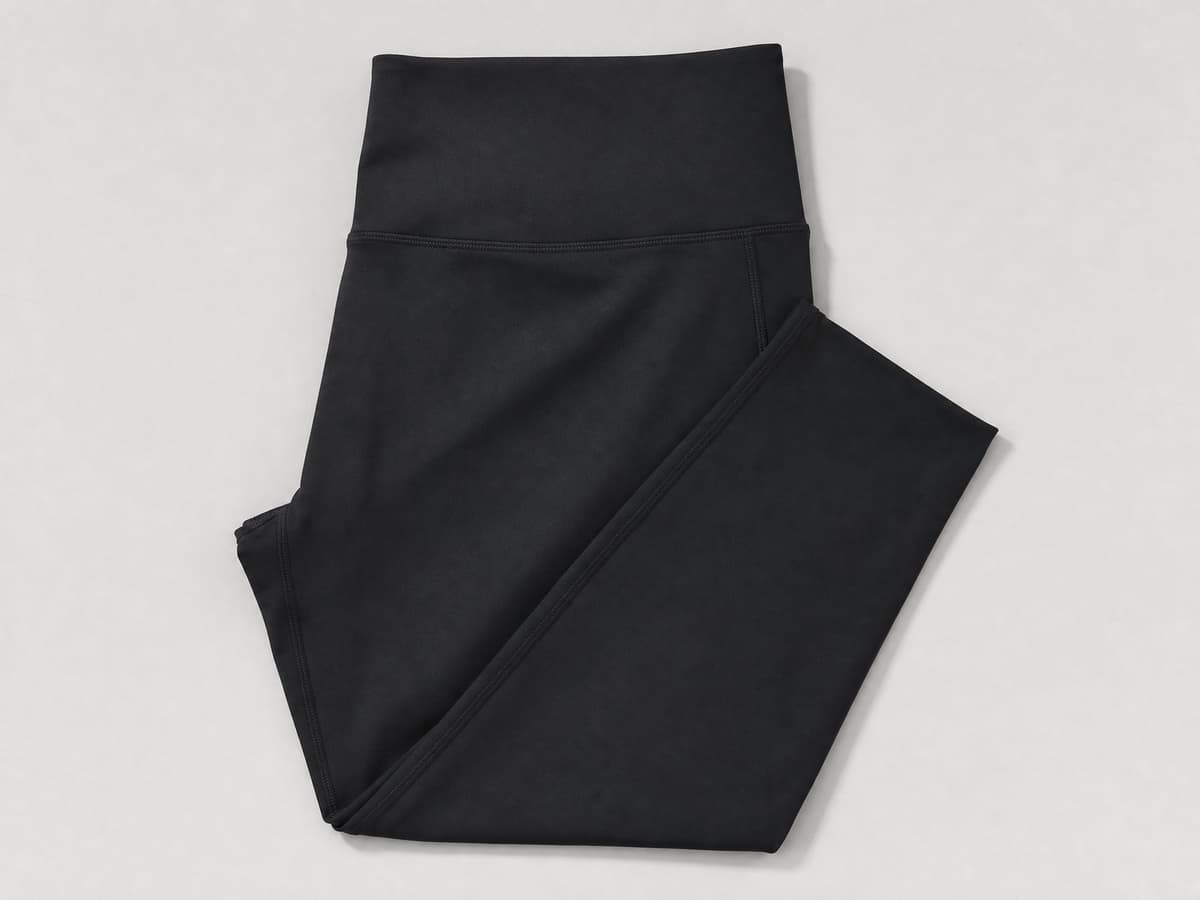
Collective Studio is a family-run leggings manufacturer in Narayanganj, Bangladesh, making custom leggings for activewear, yoga and lifestyle brands: full-length, 7/8, capri and cycling-short lengths, in high-rise and mid-rise, with or without pockets. Minimum is 100 pieces per style and colour.
There are three ways a legging fails, and every one of them is decided before bulk. The first and most damaging is opacity under stretch. A fabric that looks solid flat can go sheer the moment it is stretched across the seat, which is why the squat test exists and why no serious brand skips it. Opacity is a function of fabric weight, knit density and colour: lighter shades and heather greys are far less forgiving than black. We recommend a minimum of around 280 GSM for a squat-proof legging in a mid or light shade, and we test your sample stretched over a curved surface, in daylight, before bulk is approved — not after.
The second is the gusset. A legging built with four panels meeting at a single point in the crotch puts every seam under load at the same spot, which causes the inseam to rotate forward as it is worn and creates the twisted, uncomfortable line that leads to returns. A diamond or triangular gusset replaces that junction with a separate panel, spreading the stress and letting the inseam sit where it was drafted to sit. It costs slightly more in cutting and sewing and it is the difference between a legging that stays comfortable and one that does not.
The third is the waistband. A high-rise waistband that rolls down or digs in ruins an otherwise good garment. The fix is not a wider band, it is the right construction: a bonded or multi-layer band with adequate power holds shape where a single folded layer of the main fabric collapses under tension. Where a drawcord is wanted, the channel needs to be sewn so it cannot twist. We will specify the band separately from the body fabric rather than treating it as an afterthought.
On fabric, the usual choice is a nylon-elastane blend for the smoothest hand and best recovery, or polyester-elastane for a lower price and better colour retention in printed styles. Cotton-elastane feels good for lifestyle wear but does not manage moisture and will bag at the knee under training use, so we steer brands away from it for genuine performance. Flatlock seams lie flush against the skin and are the standard for anything worn in training; a normal overlocked seam ridges and rubs.
Stretched over a curved surface in daylight, not judged flat on a table. Opacity failures are found at sampling, which is the only stage they can still be fixed.
A diamond gusset spreads the load and stops the inseam rotating forward. It is the difference between a legging that stays comfortable and one that twists.
A high-rise band that rolls or digs needs different construction from the body fabric — bonded or multi-layer with real power, not one folded layer.
Flush seams for training use. A standard overlocked seam ridges and rubs, which is what customers describe as chafing.
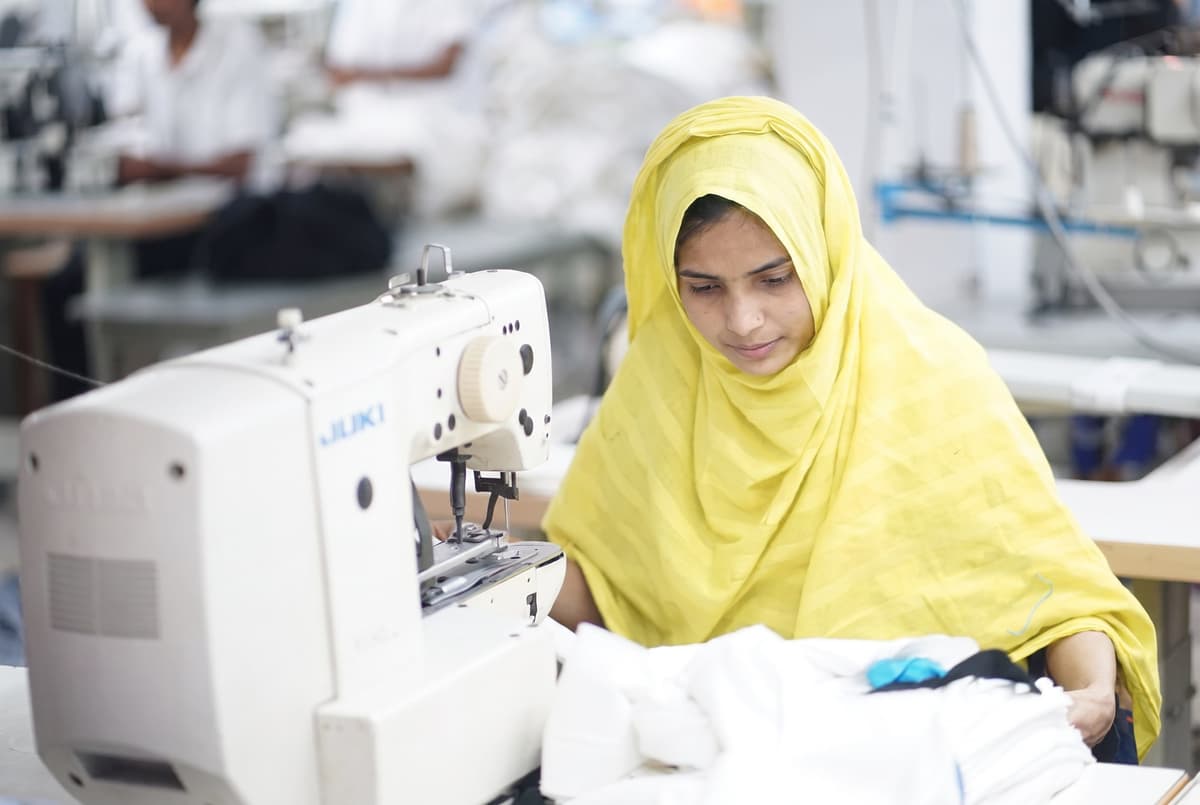
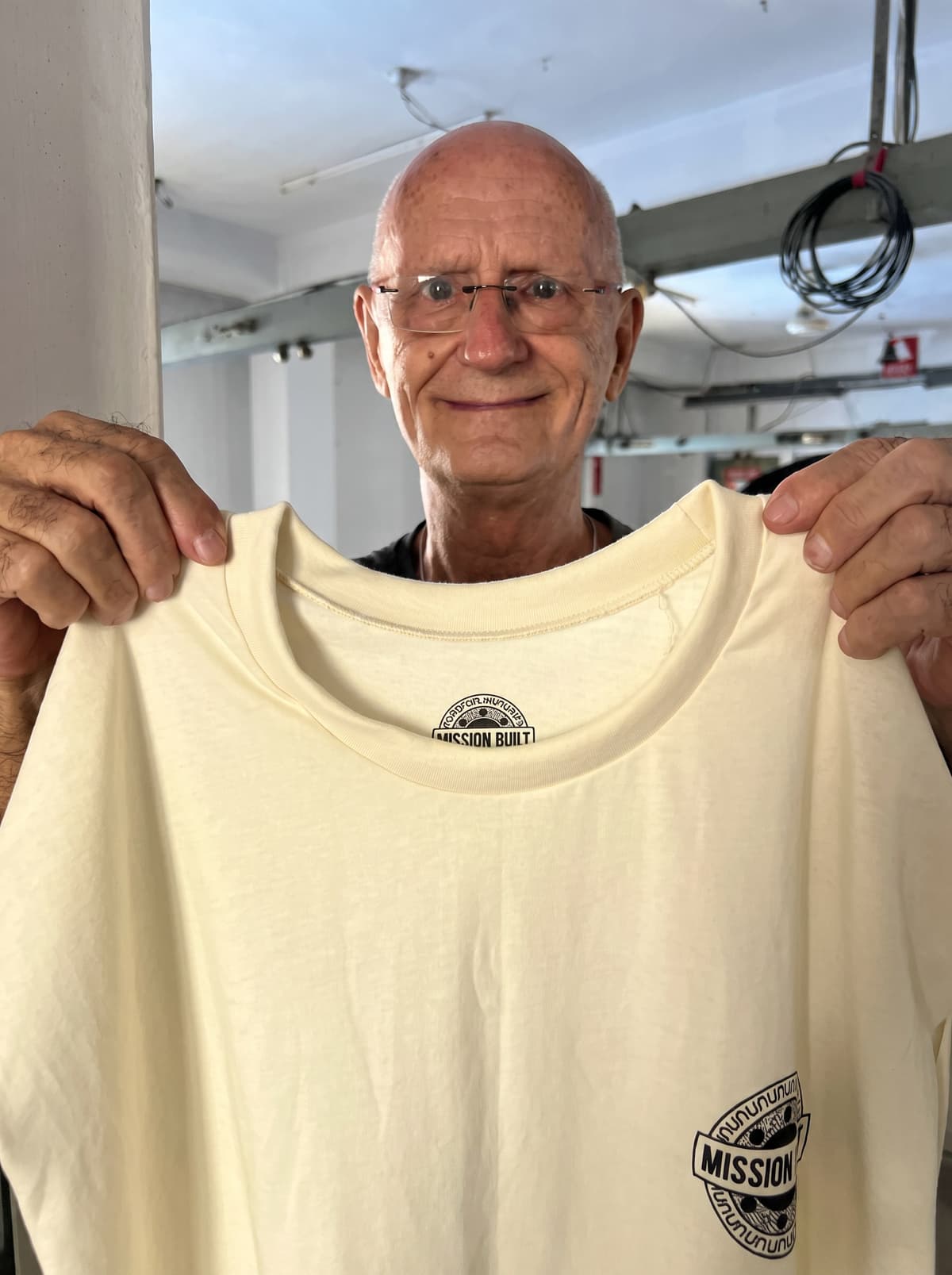
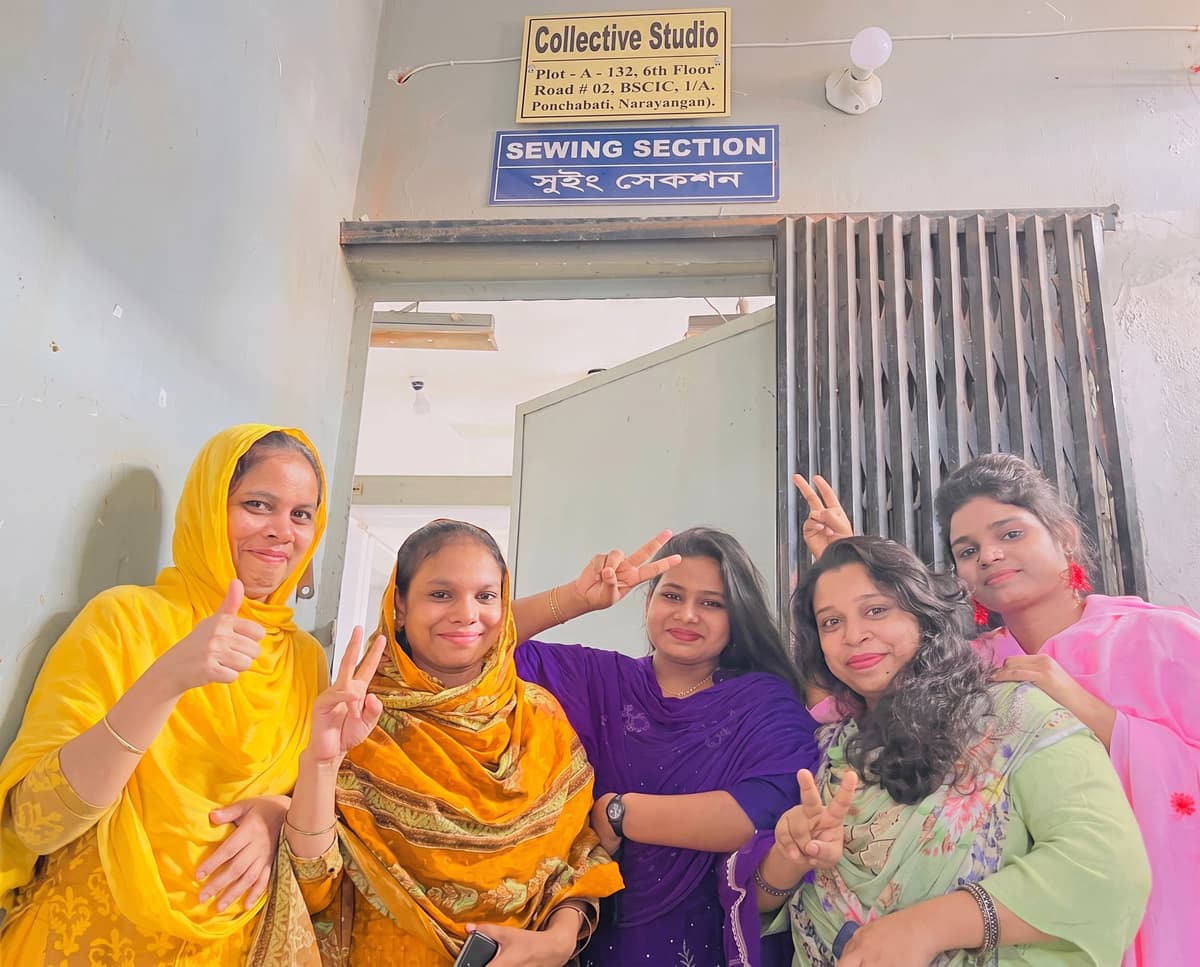
Collective Studios under the direction of Mr Jamish and his daughter Homaira represent the future of RTW production in Bangladesh. A thorough approach to detail governed by a genuine standard of quality. Masters of and partners in the process!
Talk to the factory directly: +880 1980 055021 · hello@collectivestudioltd.com
By choosing the right fabric weight and then actually testing it, in that order. Opacity under stretch comes down to fabric weight, knit density and colour. As a working rule we would not go below about 280 GSM for a legging in a mid or light shade, and black is considerably more forgiving than grey, beige or any pastel — heather greys are the most common failure of all, because the lighter fibres in the melange separate visibly under tension. Weight alone is not proof, though, which is why we test. We stretch your actual sample over a curved surface in daylight and look at it the way a customer in a gym mirror would, before bulk is approved. Finding an opacity problem at sampling is inconvenient; finding it after five hundred units are made is expensive and public.
A gusset is a separate panel of fabric set into the crotch, usually diamond or triangular, and yes — on any legging meant for movement you need one. Without it, the front, back and two inseams all meet at a single point, so every seam is loaded at the same place. Under repeated movement that junction pulls, and the inseam gradually rotates towards the front of the leg. That is the twisted seam customers complain about, and it is also where crotch blowouts start. A gusset replaces the four-way junction with a panel that distributes the stress, letting the inseam stay where it was drafted. It adds a small amount to cutting and sewing cost. It is one of the clearest signals of whether a legging was designed by someone who understood the garment.
Nylon-elastane for the best feel and recovery, polyester-elastane for value and print performance, and cotton-elastane only for lifestyle rather than training. Nylon blends give the smooth, slightly buttery hand that premium brands are known for, and they recover well, which is what stops bagging at the knee. Polyester blends cost less, hold printed colour better, and dry faster, though the hand is less refined. Cotton-elastane feels lovely in the hand and is genuinely comfortable for lounging or casual wear, but cotton absorbs and holds moisture and has poor recovery, so under training it becomes heavy, cold and baggy at the knee and seat. If your brand is performance-positioned we will steer you away from it, and explain why rather than simply refusing.
Yes — side drop-in pockets, a zipped pocket, and a hidden waistband pocket are all straightforward, but each changes the pattern and the price, so raise them at quotation rather than after sampling. The main thing worth understanding is that a pocket sits in fabric under tension, so its construction has to account for that. A side pocket bag needs to be cut in a lighter, stable fabric or it will show as a rectangle through the leg, and its opening must be reinforced or the corners will eventually tear. A zipped pocket needs the zip tape to be soft enough not to be felt against the leg. We will suggest the construction that suits the position you want and flag it if a requested placement will show through in a light colour.
100 pieces per style and per colour. As with everything we make, the per-colour part matters: black and navy of the same legging is 200 pieces, not 100, because each colour is a separate dye lot with its own setup. You can split the 100 across your size range however you like. For a first activewear order we would generally suggest launching one strong style in one or two colours rather than spreading thin across several, because leggings live or die on fit, and concentrating your first run gives you clearer feedback on whether the fit is right before you commit to a wider range. Once your sealed sample is approved, reorders match it exactly, so scaling up later is straightforward.
Trade and regulatory details on this page last verified 22 August 2026. Tariff and compliance terms change — ask us to confirm the current position for your order.
Whether it’s a large bulk or wholesale run or your first batch of 100, send a sketch, a reference, or a sentence. We’ll reply within one business day with fabric options and an indicative price.