Drafted on women's blocks
Not a men's pattern scaled down. The shoulder, waist position and armhole are drafted for the body the garment is for — the difference shows immediately on a fitted style.
Womenswear cut on women’s blocks — tops, dresses, sets, loungewear and activewear, from your first 100 pieces to full bulk.
Collective Studio is a family-run women’s clothing manufacturer in Narayanganj, Bangladesh, making cut-and-sew knitwear for womenswear brands: jersey tops and tees, dresses, co-ord sets, loungewear, leggings and fitted activewear. Minimum is 100 pieces per style and colour, with GOTS-certified organic cotton available under certificate RSC 9687.
The thing that separates a real womenswear factory from one that simply accepts womenswear orders is the block. A block is the base pattern every style is drafted from. Grading a men’s block down — shrinking it by a percentage across the board — produces a garment that is technically the right size and wrong everywhere it matters: the shoulder sits too wide, the waist falls in the wrong place, and the armhole is cut too low and too open. We draft womenswear from women’s blocks, which is not a premium service, it is the baseline. Ask any factory you are considering whether they do the same, and be wary of a vague answer.
Grading is the second half of that problem. Bodies do not scale uniformly, so a size range cannot be produced by multiplying one pattern. Bust, waist and hip grow at different rates from each other, and shoulder width barely grows at all past the middle sizes. A garment graded with a single flat increment fits the middle of your range and fails at both ends — which is where your returns come from. We grade with different increments per measurement point and will show you the grade rules before bulk, so you can see what is actually changing between sizes rather than trusting that something sensible happened.
Fabric choice carries more weight in womenswear because more of the garment is fitted. Where a boxy tee forgives a fabric with poor recovery, a fitted top does not: it bags at the elbow and seat within a few wears. For fitted styles we specify jersey with elastane and check recovery on the sample rather than trusting the mill’s spec sheet. For drape-led styles — slip dresses, wide-leg sets, anything meant to fall rather than cling — viscose, modal and cotton-modal blends behave very differently from cotton jersey and need a different pattern allowance. We will tell you which of the two your design actually is, because brands often describe a garment as one and draw the other.
One honest limit: we are a knit factory. Structured woven garments — tailored blazers, denim, shirting with fused collars and cuffs — are not what our floor is set up for, and we would rather say so than take the order and disappoint you. If your range mixes knits and wovens, send it over anyway and we will tell you plainly which pieces we should make and which you should place elsewhere.
Not a men's pattern scaled down. The shoulder, waist position and armhole are drafted for the body the garment is for — the difference shows immediately on a fitted style.
Bust, waist and hip grow at different rates and shoulders barely grow at all. Flat-percentage grading fits your middle sizes and fails at both ends.
Fitted knitwear bags at the elbow and seat when the elastane is wrong. We check recovery on your sample instead of trusting the mill's spec sheet.
We are a knit factory. Tailoring, denim and fused shirting are not our floor, and we will tell you that before you commit rather than after.
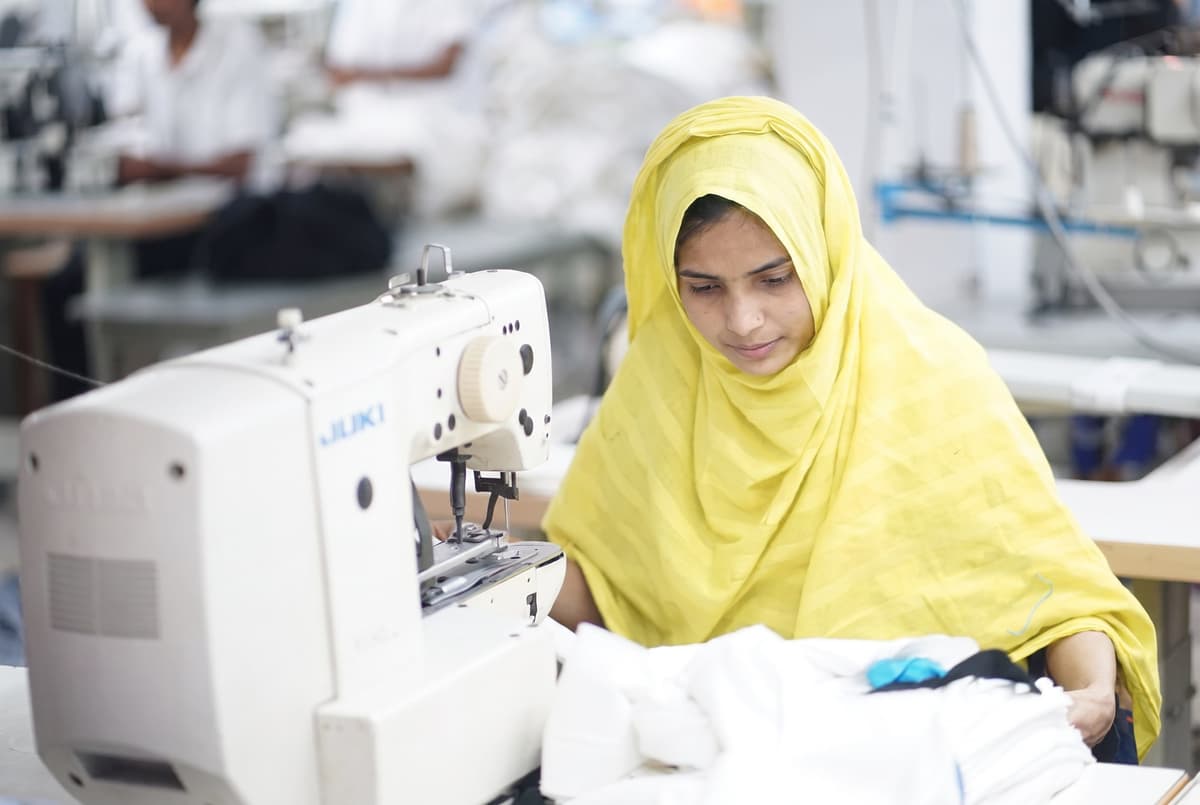
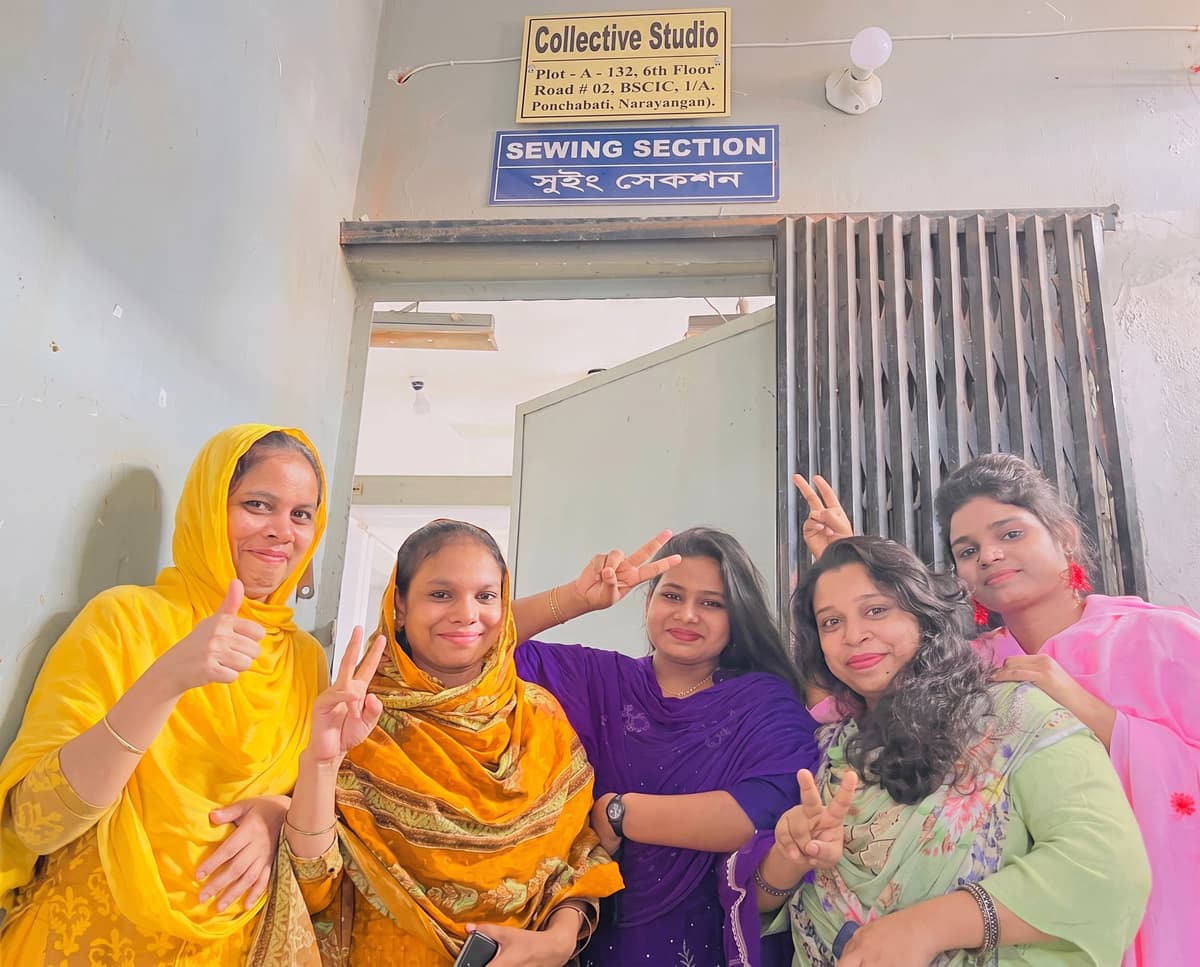
Womenswear depends on two things that sit in different buildings: the pattern, which decides whether it fits, and the fabric, which decides whether it stays fitting. We do one of those ourselves.
The reason we are specific about elastane content when quoting is that it is decided at the knitting mill, weeks before we cut anything. A fitted dress in the wrong jersey cannot be rescued by good sewing, so that conversation happens at the start rather than when the samples disappoint.
Wonderful people to work with — very professional and knowledgeable, also accommodating to the needs of their customers.
Talk to the factory directly: +880 1980 055021 · hello@collectivestudioltd.com
Women's blocks, drafted in-house. This matters more than most brands realise when they are comparing quotes. Scaling a men's pattern down produces a garment that measures correctly on a size chart and fits badly on a body: the shoulder seam falls outside the shoulder, the waist suppression sits at the wrong height, and the armhole is cut low and wide because a men's armhole is drafted for a different underarm. You notice it immediately on anything fitted and only slightly less on a boxy tee. It is also very hard to fix at sample stage, because the problem is in the foundation rather than in one seam. If you are getting quotes from several factories, ask each of them this question directly. A factory that drafts womenswear properly will answer it in one sentence; one that does not will talk about something else.
With different increments for each measurement point, not one flat percentage applied to everything. Bodies do not scale uniformly. Between a size 10 and a size 16 the bust and hip grow substantially, the waist grows faster still, and the shoulder width grows barely at all. A garment graded by multiplying one pattern therefore fits whoever sits in the middle of your range and progressively fails towards both ends, which is exactly where concentrated returns come from. We set grade rules per point and send them to you before bulk so you can see what changes between each size rather than assuming something sensible happened. If you already have grade rules from a previous factory we will work to those. If you do not, we will propose a set based on your target customer and the fit of your sealed sample, and explain the reasoning rather than just sending numbers.
100 pieces per style and per colour. The per-colour part is the bit worth understanding, because it surprises people. Two colourways of the same top is 200 pieces, not 100, because each colour is a separate fabric batch with its own dye lot and its own setup. You can split those 100 across your whole size range however suits your customer — 15 in the smallest size and 30 in your best seller is fine. For a first womenswear order we usually suggest fewer styles in more sizes rather than more styles thinly spread, because you learn more about your fit and your customer that way, and because a style that sells out in the middle sizes and sits in the extremes tells you something useful for your second order.
Both, as long as they are knitted rather than tailored. Jersey dresses, ribbed dresses, slip dresses in modal or viscose, T-shirt dresses and knitted co-ord sets are all comfortably within what our floor does. What sits outside it is structured tailoring: a lined blazer, a fitted shirt with a fused collar and cuff, anything built on interfacing and canvas rather than on knitted fabric. That is a genuinely different factory with different machines and different skills, and taking that order would not serve you. Send your full range over regardless. We will tell you which pieces we should make and which you should place with a woven specialist, and we would rather do that at the quotation stage than discover it halfway through your sampling.
The answer is almost always in the fabric rather than the sewing. Bagging at the elbow, the knee and the seat is a recovery failure: the fabric stretches under load and does not return. It is caused by too little elastane, poor quality elastane, or a knit structure that was never intended to hold a fitted shape. Because that is decided at the knitting mill weeks before we cut, we specify elastane content up front rather than leaving it to whatever the fabric supplier has available. We also test recovery on your actual sample — stretched, released, and checked again after washing — instead of relying on the mill's spec sheet. If your design is fitted, expect us to ask about it early. If it is meant to drape rather than cling, the requirement is completely different and we will specify accordingly.
Trade and regulatory details on this page last verified 22 August 2026. Tariff and compliance terms change — ask us to confirm the current position for your order.
Whether it’s a large bulk or wholesale run or your first batch of 100, send a sketch, a reference, or a sentence. We’ll reply within one business day with fabric options and an indicative price.