Binding a garment with contrast tape
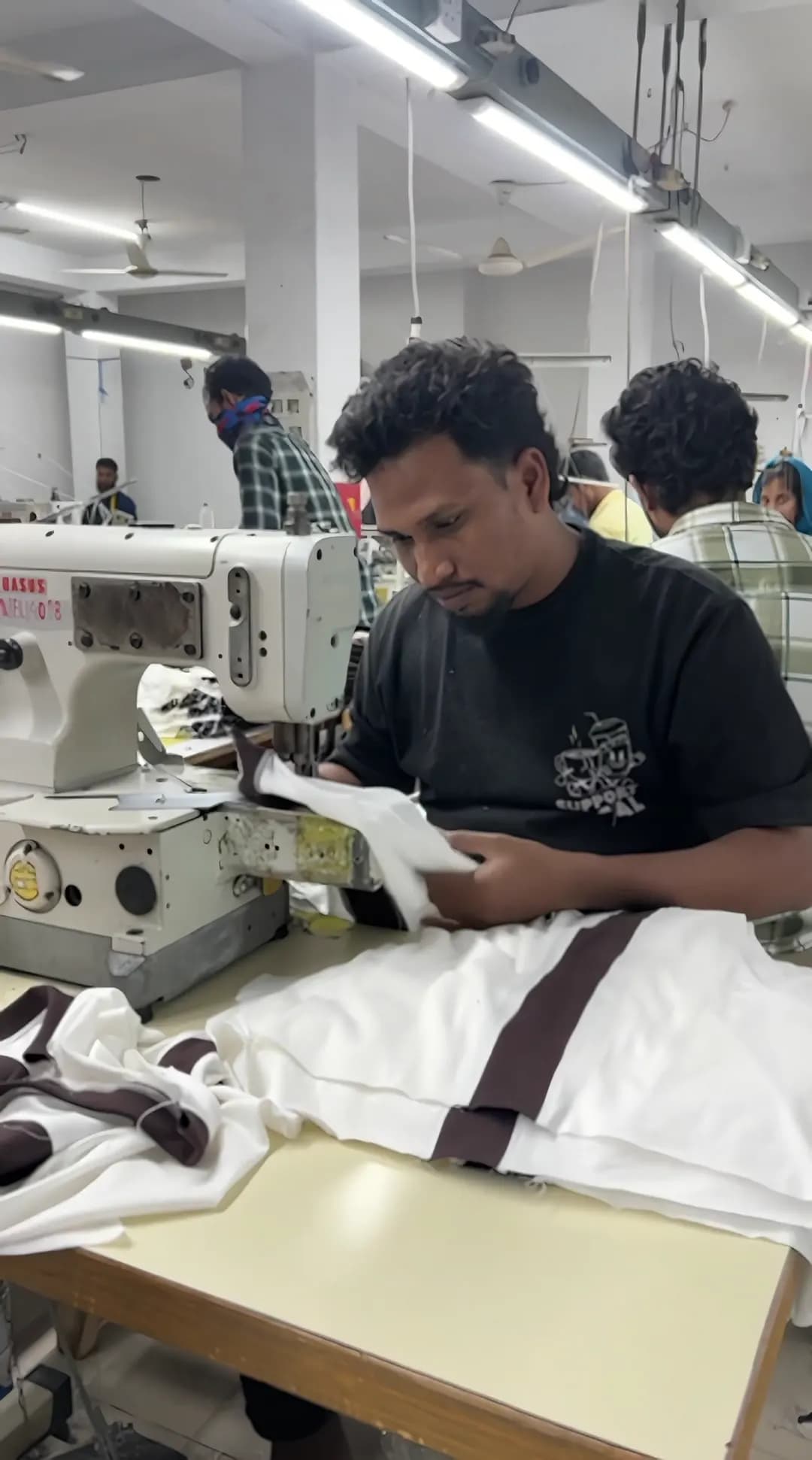
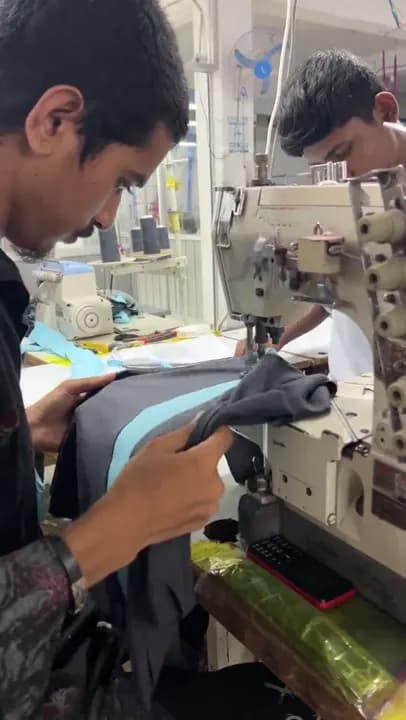
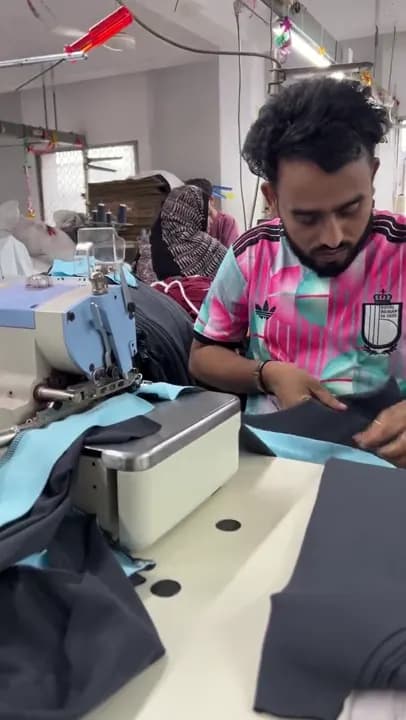
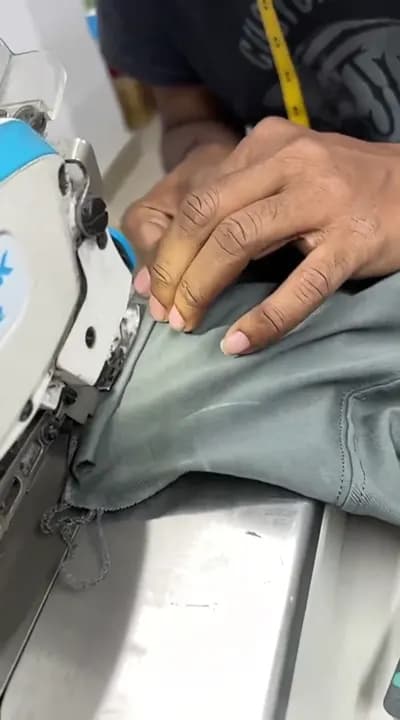
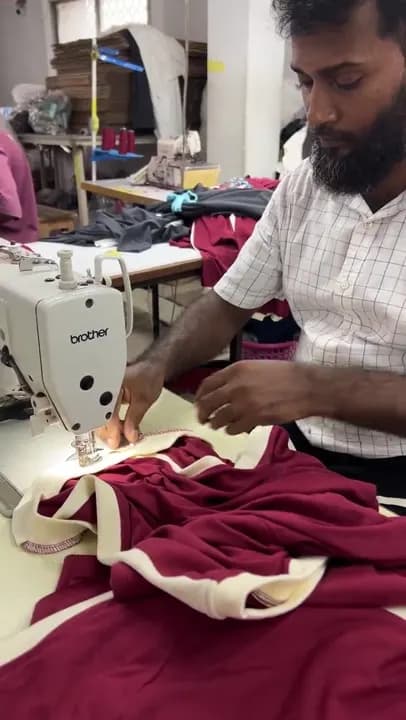
Aqua binding tape feeds from an overhead reel into a binder as a machinist edges a charcoal garment on the Collective Studio floor in Narayanganj.
- Length
- 0:23, no sound
- Filmed at
- Collective Studio, Narayanganj, Bangladesh
What you are seeing
The tape runs off the reel above the machine and through a folder that wraps it around the raw edge as it is stitched, so the binding is folded and sewn in one pass.
Contrast binding is a common detail on necklines, armholes and sports trims. In a tech pack, give its finished width, its colour and what it is made of, and say whether it is cut from the body fabric or bought in as tape.
Two strands of aqua tape come down from the reel, and the charcoal garment on the table already carries two parallel aqua lines. A roller sits behind the presser foot to draw the work through at a steady rate, and a second worker's hands keep the bulk of the garment moving from the front of the table.
Where a trim runs as two lines, the gap between them is part of the design. Give that spacing and the width of each line in your tech pack, and on the sample check that the lines stay parallel and meet cleanly where they cross a seam.
How a binder attachment works
A binder is a metal folder fixed in front of the presser foot. A flat strip of binding is fed into it, the folder shapes the strip into a channel, and the garment's raw edge slides into that channel just before the needles stitch through all the layers. Folding and sewing happen in one pass, which is what gives bound edges their even width. The roller behind the foot in this clip pulls the work through at a steady rate, so the binding is not stretched more in one place than another.
Because the folder sets the finished width, a binding width is tied to the folder size. Changing a 1 cm binding to a wider one is usually a different folder rather than an adjustment, so settle the width on the sample, not halfway through bulk.
Specifying contrast binding
Write five things in the construction and bill of materials sections of your tech pack: the finished width, whether it is folded double or single, what it is made of, its colour reference, and where it starts and ends on the garment. For two parallel lines, as on the garment here, add the spacing between them. Binding on knitwear is usually a knit strip with some stretch, cut across the width of the fabric or bought as knitted tape, and it needs enough give to go round curves without puckering.
A contrast colour also needs approving like any other colour. Bought tape comes from a different supplier and a different dye lot from your body fabric, so ask for a sample of the actual tape in the actual shade before bulk, and see our guide to dye lots for why two batches of the same colour can differ. If you want binding cut from rib instead, the rib knit guide explains how the structures differ.
Faults to check on bound edges
Look along the binding for places where the raw edge has slipped out of the channel and shows as a thin frayed line, for binding that twists or rolls over itself, and for width that wanders. Where two lines run in parallel, check that they stay the same distance apart along their whole length, including round curves.
Then wash it. A charcoal body next to an aqua binding is exactly the combination where a dark dye can stain a lighter trim if its wash fastness is poor. Ask for a wash fastness test to ISO 105-C06, which grades staining on adjacent fabric, and wash the sample with like colours before you approve it. Sports trims like this one are common on activewear, where garments are washed often and hard.
Where this clip appears
- Women’s Clothing Manufacturer
- Streetwear Clothing Manufacturer
- Clothing Manufacturer for Startups
- Clothing Manufacturer for UK Brands
- Clothing Manufacturer for European Brands
- Clothing Manufacturer for Swedish Brands
- Clothing Manufacturer for German Brands
- Bekleidungshersteller für deutsche Marken
- Clothing Manufacturer for Canadian Brands
- Clothing Manufacturer & Garment Supplier in Bangladesh
- Low MOQ Clothing Manufacturer
- Low MOQ Clothing Manufacturer in Bangladesh
- Wholesale Clothing Manufacturer & Supplier
- Custom Clothing Manufacturer
- Clothing Manufacturer for Austrian Brands
- Bekleidungshersteller für österreichische Marken
- Klädtillverkare för svenska varumärken
- Fabricant de vêtements pour marques canadiennes
- Bekleidungshersteller für den Großhandel in Bangladesch
- Fabricant et fournisseur de vêtements en gros
- Fabricante de ropa al por mayor en Bangladesh
- Bekleidungshersteller für kleine Mengen
- Fabricant de vêtements en petite quantité
- Fabricante de ropa en pocas unidades
- Producent odzieży z niskim minimalnym zamówieniem
- Hurtowa produkcja odzieży: producent i dostawca z Bangladeszu
- 小ロット対応のアパレルOEMメーカー
- Was Trump's Suit Made in Bangladesh? The Facts So Far
- How to Vet a Clothing Factory for Large Orders
- How Many Garment Factories Are in Bangladesh? ~4,000 (2026)
- Bangladesh Garment & Textile Industry: 2026 Key Figures
- Low MOQ Clothing Manufacturers in Bangladesh: 12 Compared
Binding a garment with contrast tape: questions brands ask
What is the difference between binding and a rib neckband?
Binding wraps the raw edge and shows on both sides; a neckband is a separate folded band sewn to the edge with its seam inside. With binding, the strip folds over the edge and is stitched through, so you see the same narrow strip from the outside and the inside. It gives a flat, clean edge and is common on tank tops, armholes, baby clothes and sports trims. A rib neckband is a loop of rib, folded in half lengthways and overlocked to the neck opening, so it stands slightly proud of the body and has more stretch, which is why it is the usual finish on T-shirt and sweatshirt necks. Neither is better in general. Binding suits a lighter, more minimal edge or a contrast stripe; rib suits a neck that has to stretch over a head many times and recover. Say which you want in your tech pack.
Should my binding be cut from the body fabric or bought in as tape?
Cut it from the body fabric when the colour must match exactly, and buy tape when you want a contrast or a very even width. Self-fabric binding comes from the same dye lot as the garment, so the shade matches and it shrinks at the same rate in the wash, which keeps the edge flat after washing. It does use extra fabric and an extra cutting step. Bought tape arrives on a reel ready for the binder, gives a very consistent width and makes contrast colours easy, but it comes from another supplier in another dye lot, and custom-dyed tape carries its own minimum per colour. The risk with tape is a different shrinkage from the body: if one shrinks more than the other, the edge puckers or waves after the first wash. Whichever you choose, wash the sample before you approve it, and name the tape supplier or reference in your bill of materials.
What is binding on a garment?
Binding is a narrow strip of fabric folded over a raw edge and stitched through, so it finishes the edge and shows on both the outside and the inside. On knitwear it is used on necklines, armholes, sports trims and children's clothes, where a flat, clean edge suits the design better than a rib band. Because the strip wraps the edge, it has no exposed seam allowance and gives a light, minimal finish. Binding can match the body colour or contrast with it, as the aqua tape on the charcoal garment in this clip does. On knits, it is usually a knitted strip with some stretch, so it can follow curves without puckering. In a tech pack, binding gets its own line: finished width, whether it is folded double or single, what it is made of, its colour reference, and where it starts and ends on the garment.
What is a binder attachment on a sewing machine?
A binder is a metal folder fixed in front of the presser foot that folds a flat strip of binding around a raw edge as it is sewn. The strip feeds into the folder, which shapes it into a channel, and the garment edge slides into that channel just before the needles stitch through all the layers. Folding and sewing happen in one pass, which is what gives a bound edge its even width. In this clip at Collective Studio in Narayanganj, the aqua tape runs down from a reel above the machine into the binder, and a roller behind the foot draws the work through at a steady rate so the binding is not stretched more in one place than another. Because the folder sets the finished width, each binding width needs its own folder, which is why the width is settled on the sample and not changed during bulk.
Can I change the width of my binding after the sample?
You can, but it is best decided before bulk, because a new width usually means a new binder folder and a new sample. The folder on the machine sets the finished width of the binding, so going from a narrow binding to a wider one is not a quick adjustment of the machine. The width of the strip that is fed in, the fold and sometimes the stitch position all change with it. That is why the approved sample should already carry the binding width you want, written into the tech pack as a finished measurement. If you are unsure, compare a few garments you like, measure their binding, and send one as a reference. Changing the width halfway through production would leave two versions of the style in one order, so settle it at sample stage, along with the colour and the material of the binding.
Will a contrast binding bleed onto the garment in the wash?
It can, if either fabric has poor wash fastness, so it should be tested rather than assumed. A dark body next to a light binding is the riskiest combination, because a deep shade such as charcoal, navy or black can release a little dye in washing and stain the lighter trim beside it. A strong bright binding can also mark a pale body. Ask for a wash fastness test to ISO 105-C06 on both fabrics, which grades the change in each fabric's own shade and the staining on an adjacent fabric. Then wash your sample with like colours at the temperature your care label will give, and compare the binding with an unwashed piece. Bought tape comes from a different supplier and dye lot from your body fabric, so approve a sample of the actual tape in the actual shade before bulk, not just a colour reference.
What fabric should binding be made from on a knit garment?
On knitwear, binding should be a knitted strip with enough stretch to follow curves, either cut across the width of the fabric or bought as knitted tape. Stretch matters because a neckline or armhole is a curve, and a binding with too little give puckers the edge or makes the opening too small to pull on. Cutting the strip across the fabric's width uses the direction in which most knits stretch most. Self-fabric binding, cut from the body fabric, matches the colour and shrinks at the same rate. Bought tape gives a very even width and makes contrast colours easy, but its shrinkage can differ from the body. Rib is another option for a firmer, springier edge. Whatever you choose, list its composition and colour reference in the bill of materials, and wash the sample to check that the binding and body behave the same way.
How do I get two parallel contrast lines on a neckline or sports trim?
Specify each line's width and the gap between them, then check on the sample that the lines stay parallel all the way round. Two-line trims like the one on the charcoal garment in this clip are fed from two strands of tape on the reel above the machine, so the spacing between the lines is part of the design, not a side effect. Write it into the construction notes as a measurement, along with the finished width of each line and the colour reference of the tape. On the sample, look along the full length of both lines, especially round curves, where they are most likely to drift closer together or further apart. Check that they meet cleanly where they cross a seam, rather than stepping at the join. Two-line trims are common on activewear and sports tops, where garments are washed often, so wash the sample before you approve it.