No charge per colour
A six-colour design costs the same as a one-colour design. That is the whole reason to choose these methods over screen printing on a first run.
Detailed, multi-colour artwork printed without paying for a screen per colour — on garments we cut and sewed ourselves.
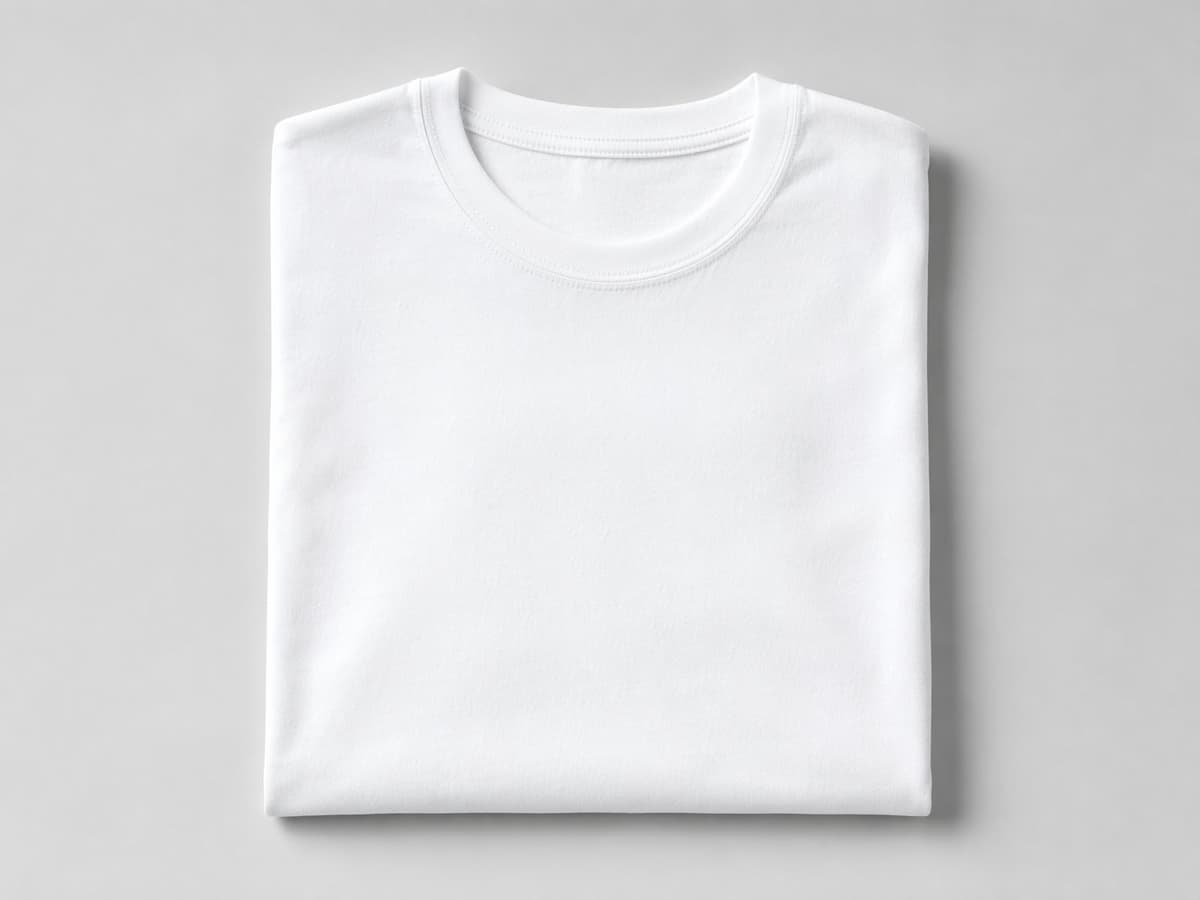
Collective Studio prints DTF (direct-to-film) and DTG (direct-to-garment) on the knitwear we manufacture in Narayanganj, Bangladesh. The reason this matters is not the technology, it is the pricing model: screen printing charges you per colour, and these do not. A six-colour design costs the same to print as a one-colour design, which changes what is affordable on a first run of 100 pieces.
DTF prints your artwork onto a film, coats it with a hot-melt adhesive powder, cures it and heat-presses it onto the garment. Because the ink sits on a carrier rather than being absorbed, it works on cotton, polyester and blends, on dark fabric as readily as light, and holds fine detail and photographic gradients that screen printing cannot practically reproduce. The trade-off is hand-feel: the print sits on the surface of the fabric rather than in it, so a large solid area has a noticeable film-like quality. For designs with detail, colour and moderate coverage it is excellent. For a large solid block of one colour, screen printing is both cheaper and better.
DTG sprays pigment ink directly into the fabric, like an inkjet printer. It gives the softest result of any full-colour method — the print becomes part of the garment rather than sitting on it — and is the best choice when hand-feel matters most. Its limits are real, though: it needs a high cotton content to work properly, dark garments require a white pretreatment that can leave a faint halo if applied carelessly, and it is slower per unit, so it suits smaller quantities rather than bulk.
The honest comparison with screen printing runs like this. Screen wins on durability, on opacity over dark fabric, on large solid coverage, and on unit price once quantities climb, because the setup cost is spread across more garments. It loses on colour count and on fine gradient detail. DTF and DTG win on artwork freedom and on low quantities, and lose on cost at scale — their per-unit price barely falls as volume rises, so at a few thousand units screen printing becomes clearly cheaper. There is no method that is best at everything, and any supplier who tells you otherwise is describing whichever machine they happen to own.
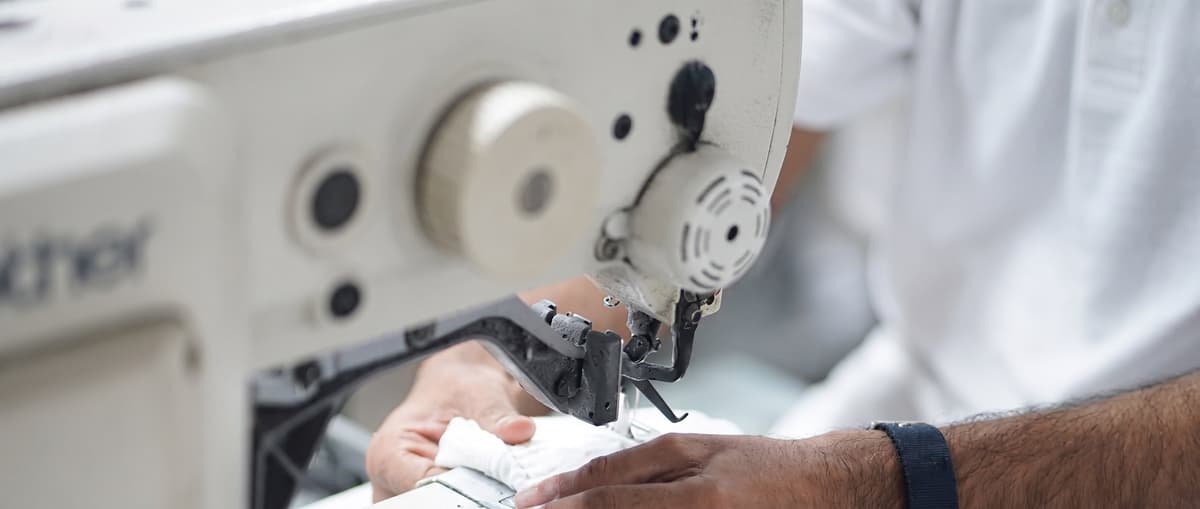
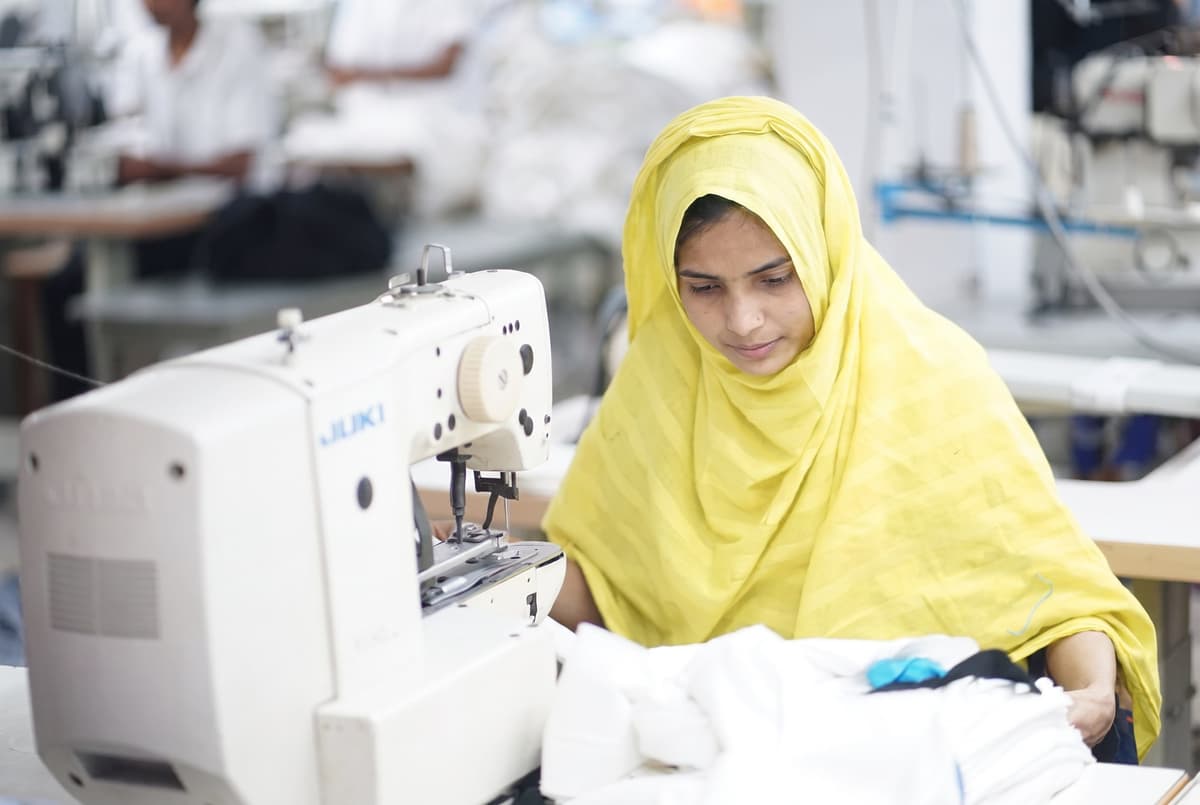
Because we make the garment as well as printing it, the two decisions get made together. We can place seams clear of the print area, choose a fabric that takes the ink you want, and print flat panels before assembly when a design crosses a seam — none of which is possible when a printer receives finished blanks and has to work around whatever arrives. Minimum is 100 pieces per style and colour.
A six-colour design costs the same as a one-colour design. That is the whole reason to choose these methods over screen printing on a first run.
Seams placed clear of the print, fabric chosen to take the ink, flat panels printed before assembly. A printer working from bought-in blanks cannot do any of that.
DTF for detail and dark fabric, DTG for the softest hand, screen for solid coverage and volume. We recommend against ourselves when screen is the right answer.
Prints are washed and checked for cracking and colour loss on your actual fabric, because durability is where cheap printing shows itself first.
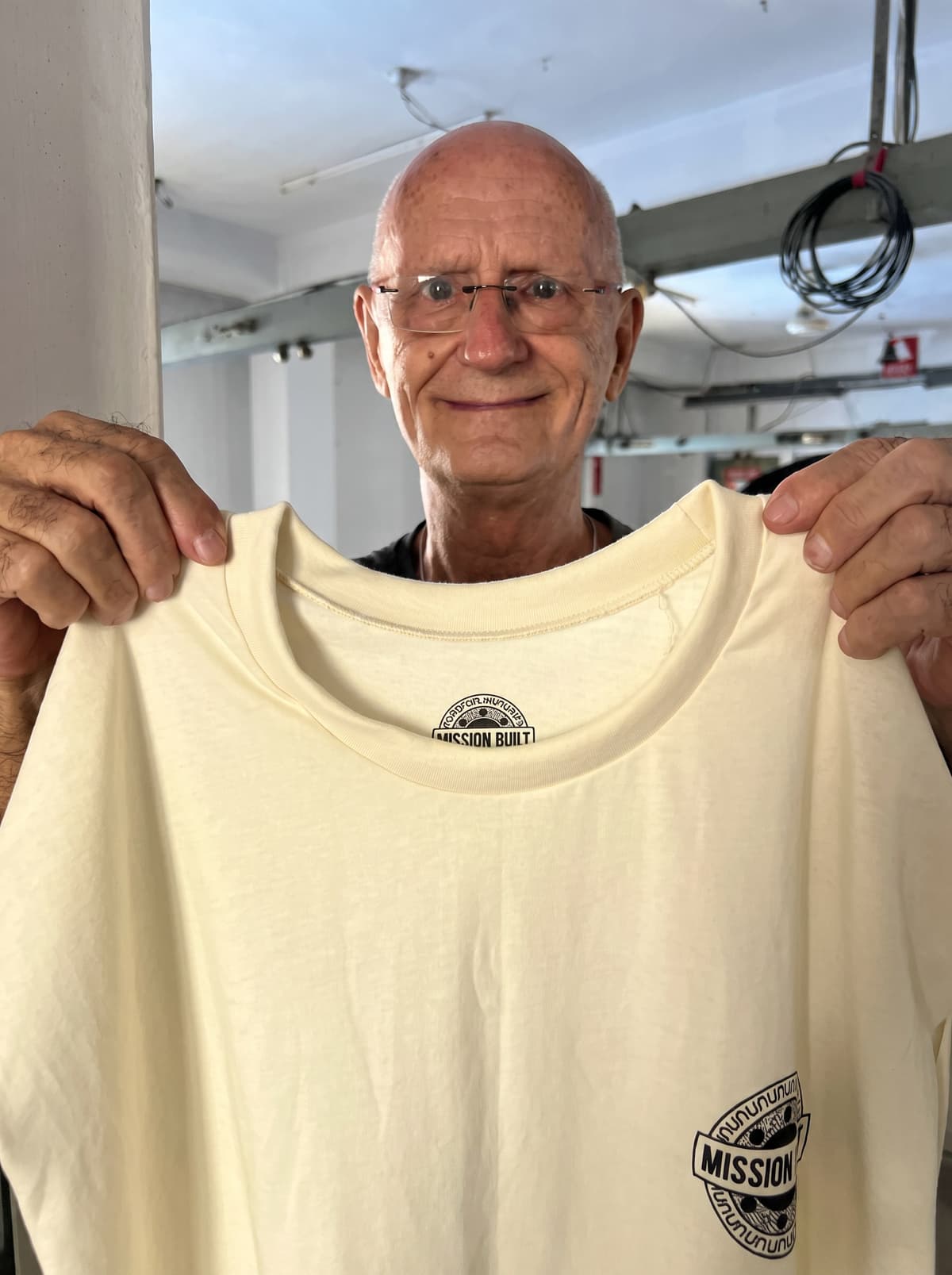
Nice supplier that is looking to develop new buyers and products.
Talk to the factory directly: +880 1980 055021 · hello@collectivestudioltd.com
Count the colours in your design and the units in your order. If your artwork has one to three flat colours and you are ordering several hundred pieces or more, screen printing is almost certainly the right answer: it lays down a thicker, more durable and more opaque layer of ink, it handles solid blocks on dark fabric better than anything else, and its per-unit cost falls as quantity rises because the setup is spread wider. If your artwork is photographic, has gradients, or uses more than about four colours, screen printing becomes impractical or expensive, and DTF handles it at no extra cost per colour. The crossover point depends on your specific design, so send us the artwork and the quantity and we will quote both and tell you which we would choose, including when that means recommending against the newer method.
Where the ink ends up. DTF prints onto a film and heat-presses that film onto the garment, so the print sits on top of the fabric. That makes it work on almost any fibre, including polyester and blends, and on dark colours without difficulty, and it holds fine detail well. The cost is hand-feel — across a large solid area you can feel the print as a distinct layer. DTG sprays ink directly into the fabric, so the print becomes part of the garment and feels much softer, which is why it suits premium tees where hand matters. But DTG needs high cotton content, requires pretreatment on dark garments, and is slower per unit. In short: DTF for versatility and dark or synthetic fabric, DTG for the softest result on cotton.
Screen printing is more durable, and we would rather say that plainly than pretend otherwise. A properly cured screen print on cotton will typically outlast the garment. A good DTF print, correctly applied and cured, holds up well through normal domestic washing — commonly fifty washes or more without significant loss — but it is a surface-applied film, so it is more vulnerable to cracking at fold lines, to high-temperature tumble drying, and to ironing directly over the print. Much of what people report as poor DTF durability comes from under-curing or the wrong pressing parameters rather than from the method itself. We wash-test prints on your actual fabric before bulk and will tell you what care instruction to print on the label, because the difference between good and poor longevity is largely in how it is handled after purchase.
Yes, and it is often the sensible choice. A common pattern is a large screen-printed back graphic in one or two colours, where screen gives the best coverage and price, combined with a small full-colour DTF badge on the chest that would have cost four extra screens to do any other way. Embroidery can be added on top of either for a logo that needs a premium, tactile finish. Because everything happens in our own building, mixing methods does not mean shipping garments between suppliers or adding a fortnight to the schedule. Send us the full artwork package with placements marked and we will propose a method per placement, with the reasoning, rather than defaulting everything to a single technique.
Somewhere in the low thousands, though the exact point depends on how many colours your design has. The economics are straightforward: screen printing has a fixed setup cost per colour that is spread across the run, so its per-unit price keeps falling as quantity rises. DTF has almost no setup cost but a fairly flat per-unit cost, so it barely gets cheaper at volume. That means DTF is markedly cheaper for a hundred pieces and markedly more expensive for five thousand. A one-colour design flips to screen printing quite early; a full-colour photographic design may never flip at all, because screen simply cannot reproduce it. If you expect to scale, tell us your projected volumes and we will show you where the crossover falls for your artwork.
Trade and regulatory details on this page last verified 22 August 2026. Tariff and compliance terms change — ask us to confirm the current position for your order.
Whether it’s a large bulk or wholesale run or your first batch of 100, send a sketch, a reference, or a sentence. We’ll reply within one business day with fabric options and an indicative price.