Launch from 150 pieces
No five-figure first order. Start small, prove demand, and reorder your winners.
Start your brand without a five-figure first order. We make from 150 pieces per style and colour, guide you from sketch to delivery, and grow with you.
Collective Studio is a clothing manufacturer for startups: a family-run knitwear factory in Narayanganj, Bangladesh, that cuts and sews your own design from 150 pieces per style and colour. A sketch is enough to start. A sample takes about 10 days, production 40–50 days after you approve it, then DDP freight as one landed price. About 70 days from order to your door by air.
Or message the factory directly: WhatsApp +880 1980 055026 · hello@collectivestudioltd.com · Homaira replies within one business day.
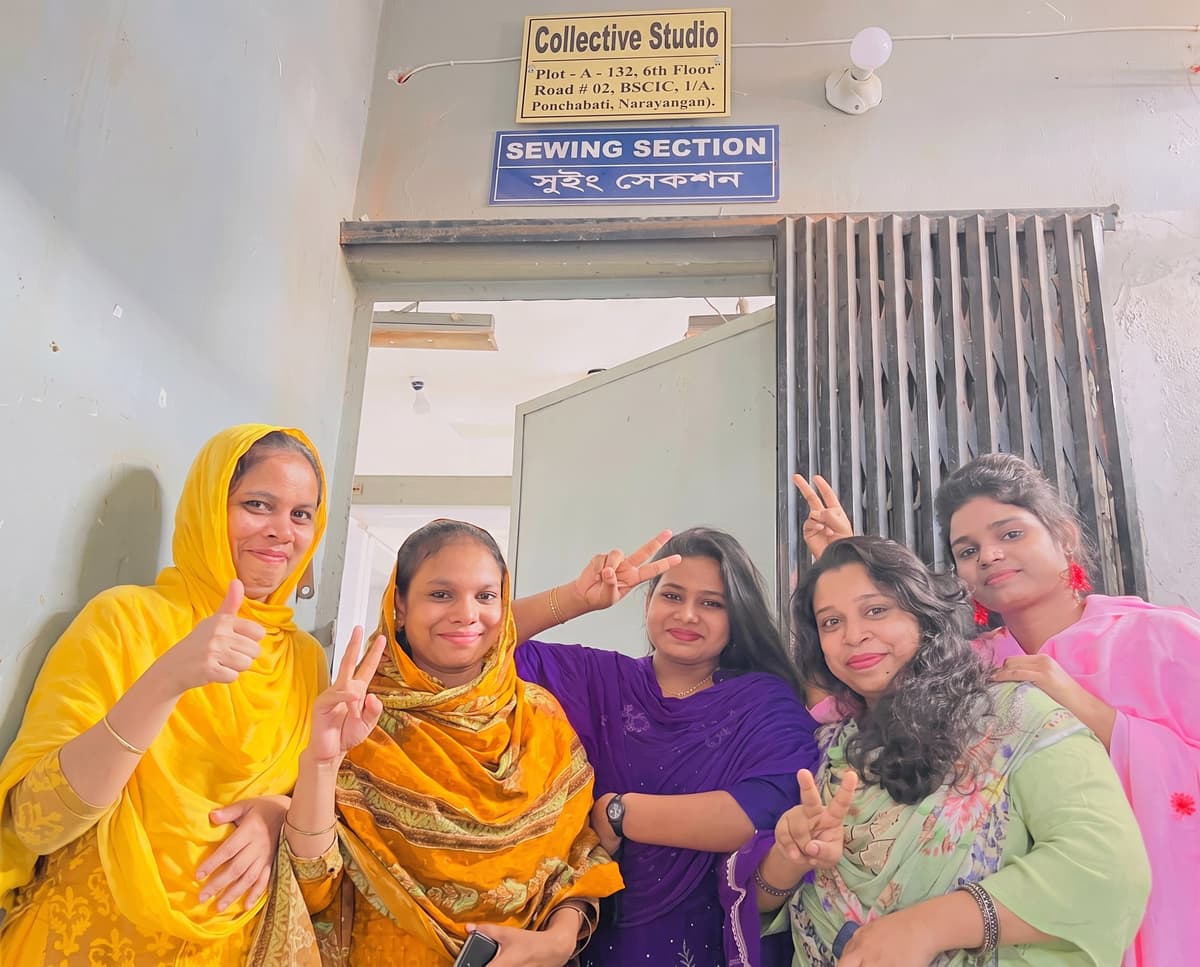
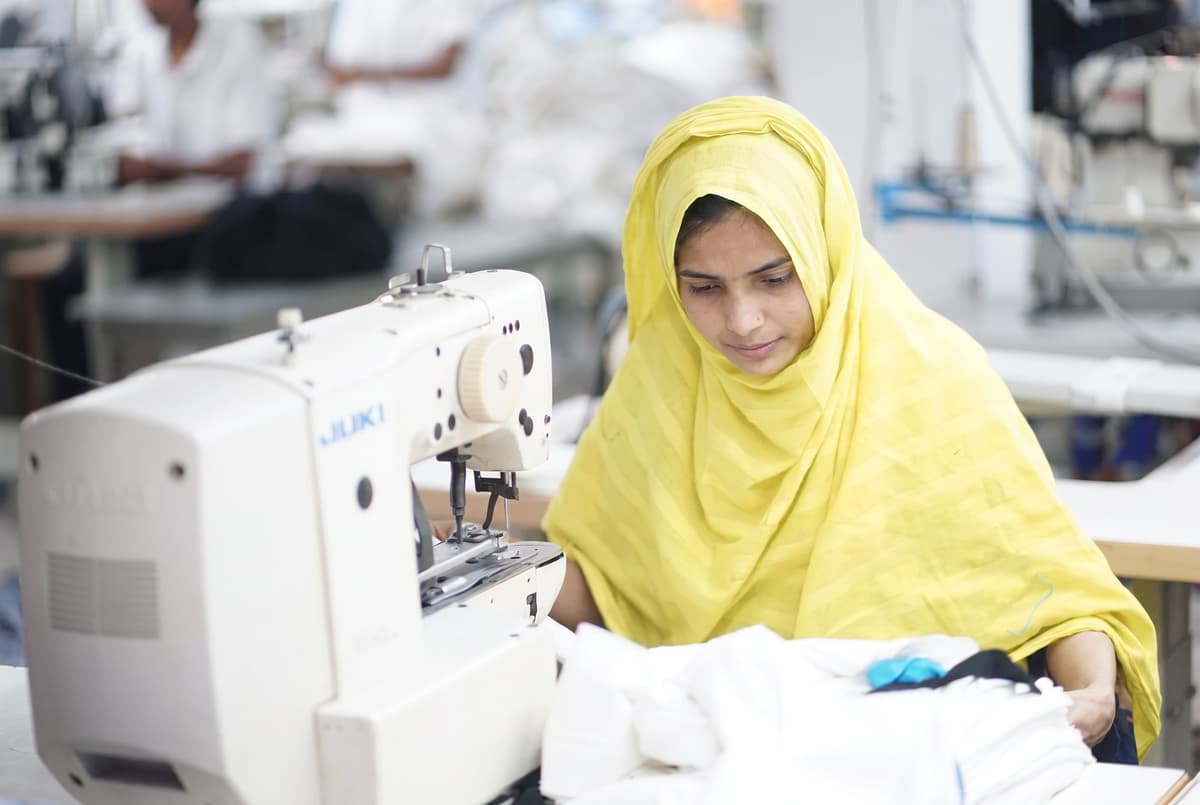
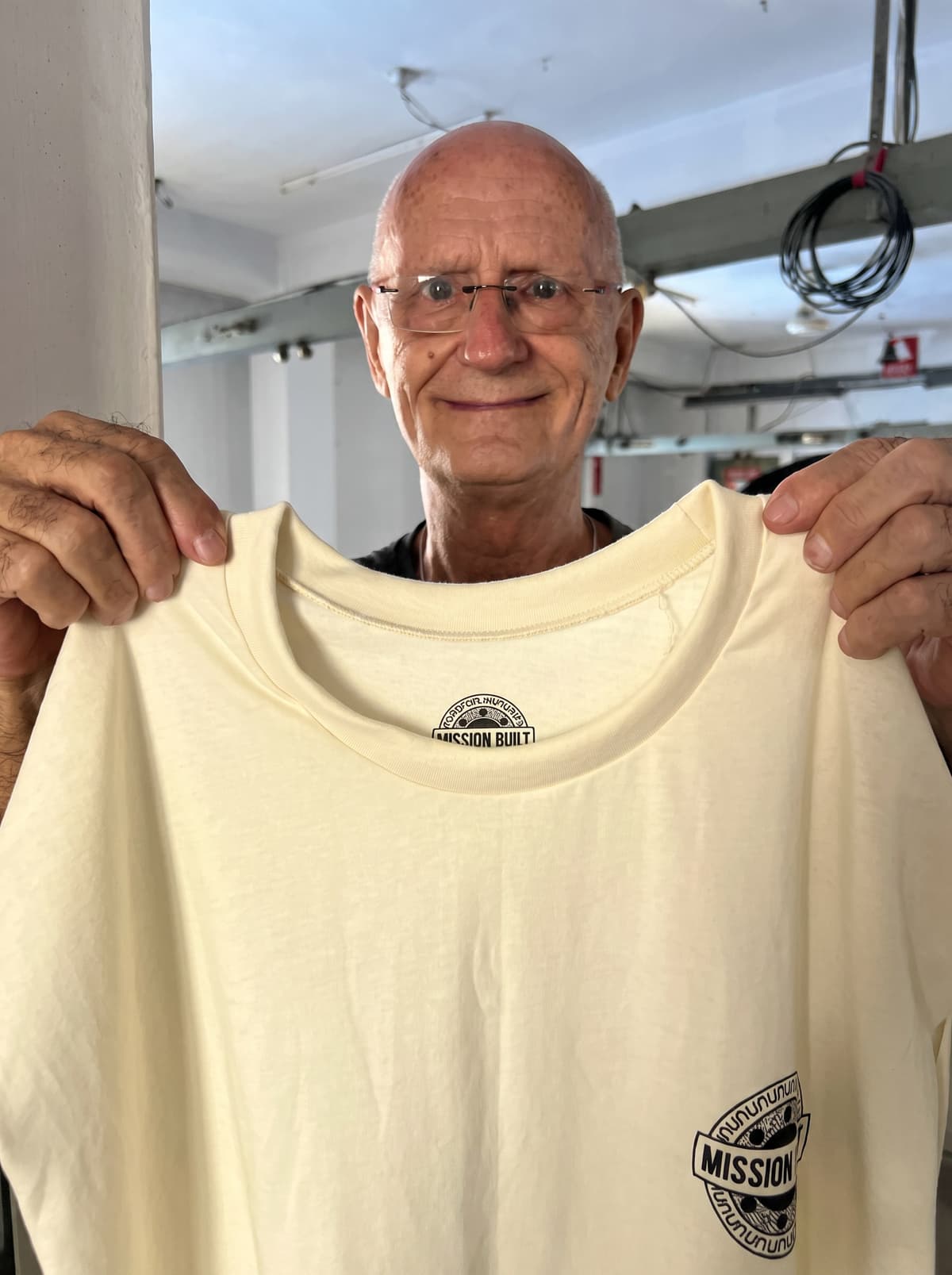
Made by our own team in Narayanganj. See the floor ↓Client reviews on Google ↗GOTS certificate RSC 9687 →
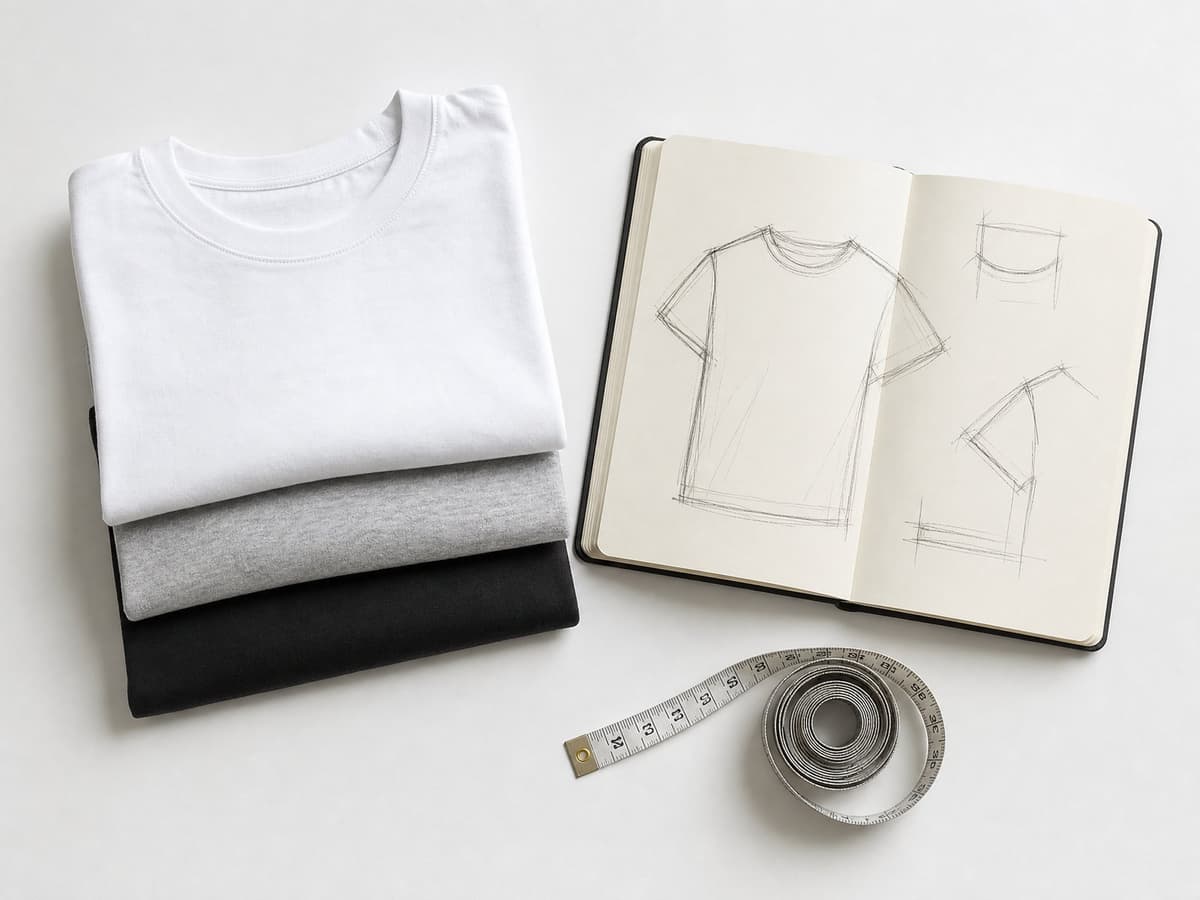
Most factories are built for big, established brands. We're a clothing manufacturer for startups — set up specifically for the founders bigger factories turn away. Low minimums, real guidance, and a partner who treats your first 150 pieces like they matter, because they do. You don't need a tech pack, a huge budget, or industry contacts to begin; if you're wondering what a tech pack is, it's the document we'll build with you.
If you are comparing clothing manufacturers for startups, three questions separate the shortlist quickly, and none of them is price (our guide on how to find a clothing manufacturer covers building the shortlist). What is the real minimum per style and per colour, before it changes after you enquire? Will they make a physical sample and let you hold it before you commit to bulk? And can you verify them independently — a numbered certificate they will send you, a published address, a registration you can check with a bank? Ours are 150 pieces, yes, and GOTS RSC 9687 at Plot-A-132, Road No. 02, BSCIC Industrial Area, Panchabati, Narayanganj 1420.
Here's exactly what happens, because most manufacturer sites tell you they'll "guide you" without ever showing the steps. 1. You send what you have — a sketch, a reference photo of a garment you like, or a paragraph describing it. That is enough to start. 2. We spec it together (roughly 3–7 days): we turn that into a proper tech pack, recommend fabric weight and composition, and give you an indicative price so you know the numbers before spending anything on sampling. 3. Sampling (about 10 days): we make one physical piece and ship it to you. You wear it, wash it, decide what to change.
4. You revise and approve — most first samples need at least one round of changes, and that's normal, not a failure. When it's right, that piece becomes the sealed sample, the physical reference every production piece is checked against. 5. Production (40–50 days from your approval: fabric, cutting and sewing, finishing, QC and packing) with photos at each stage, so you're never wondering what's happening. 6. DDP shipping to your door on top of that, duty paid, one landed cost: air about 5–8 days depending on market, sea longer. The single biggest cause of delay is waiting on decisions from your side, not production — so the more decisively you can answer questions, the faster this goes.
No five-figure first order. Start small, prove demand, and reorder your winners.
Six defined stages from sketch to delivery, with realistic timings at each — not a vague promise to look after you.
A sketch, a reference photo, or a clear description is enough to start. We build the proper spec with you.
You approve one physical piece, and every production unit is checked against it — so the hundredth matches the one you signed off.
Our minimum is 150 pieces per style and per colour, so the shape of a first range is mostly a choice about how to split it. Three common starting points:
One hero piece, two colours: a T-shirt or hoodie in two colours is 300 pieces. It tests which colour sells with the least money tied up in fits.
A top and a bottom, one colour each: a hoodie and joggers in one colour is 300 pieces, and the matching set is cut from one dye lot so it matches.
A small capsule: a tee, a hoodie and joggers in one colour each is 450 pieces. More to photograph and sell, and more cash at risk.
Whichever you choose, reorder what sells rather than adding styles. Our guide to the cost of starting a clothing brand shows where the rest of the budget goes.
Most founders are choosing between three ways to make a first range. None of them is wrong; each fits a different stage, and it is worth knowing where we are the wrong choice.
| Our floor, from 150 | Print-on-demand | Local small-batch workshop | |
|---|---|---|---|
| What you get | Your own pattern, fabric, fit and labels | A stock blank, printed per order | Your design, made near you |
| Upfront commitment | 150 per style and colour, plus a sample fee | None: nothing is made until it sells | Small, often below 150 pieces |
| Cost per piece | Lower, once fixed costs are spread over 150 | Highest, paid on every sale | Usually higher labour cost than overseas |
| Control over fabric and fit | High, against a sealed sample you approved | Little: the blank decides | High, and you can visit easily |
| Time to first stock | About 10 days to sample, 40–50 days production, plus freight | Days, per order | Often the fastest for a made garment |
| Wrong choice when | You need under 150 pieces, or stock within a month | You want a garment nobody else sells | Your unit cost has to support wholesale margins |
We would rather you start with print-on-demand and come to us when a design has proved itself than commit 150 pieces to a guess.
Founders are often surprised that a clothing factory is not one building where everything happens. Understanding the shape of it early stops the surprises arriving in the middle of your first order.
You will not have to contact a mill, negotiate a fabric minimum or chase a dye house. That is the work we take on. What we need from you is a clear reference for how the fabric should feel, because that is the brief we pass upstream on your behalf.
Wonderful people to work with — very professional and knowledgeable, also accommodating to the needs of their customers.
I have had a very good experience with this company. They are very friendly, professional, and provide fast service. They speak fluent English, which makes communication very easy. The quality of their manufacturing is excellent. I have no doubt in recommending this company to anyone looking for a reliable manufacturing partner in Bangladesh.
Collective Studios under the direction of Mr Jamish and his daughter Homaira represent the future of RTW production in Bangladesh. A thorough approach to detail governed by a genuine standard of quality. Masters of and partners in the process!
A founder's first quote is shaped less by the garment than by the decisions around it. These are the ones that move your first order's cost the most, in roughly the order they matter.
Every style and every colour carries its own 150-piece minimum, pattern or dye lot, and sample. Two styles in one colour is 300 pieces with two sets of setup costs; the same two styles in three colours is 900 pieces with six. Launching narrow is the single biggest saving available to a new brand.
Each round is a new physical garment made, couriered and reviewed. A clear reference garment and quick, specific feedback usually mean one revision; vague briefs and changing your mind after approval mean three. Sampling is charged at a fixed price per round, confirmed in the quote.
Fabric is the largest single cost in a knit garment. Weight, composition and finish all move it: a heavy brushed fleece costs more per piece than a mid-weight jersey, and organic cotton costs more than conventional. Choosing a fabric the mill already runs is cheaper than asking for something unusual at 150 pieces.
Woven neck labels, care labels, hang tags and printed polybags each come from their own suppliers with their own minimums. On a first run they add up to a noticeable share of the unit cost, so a printed neck label and a simple swing tag are often the sensible start.
Air freight reaches you in days and suits a launch date; sea freight costs far less per kilo but adds weeks. Many founders fly the first order to hit their launch and move reorders to sea once the timing is predictable.
150 pieces per style and per colour, and it applies from your very first order. It is set low on purpose, because the common industry floor of five hundred or a thousand stops most new brands before they start. Plan around colour rather than size: two colourways of one tee means 300 pieces, while sizes can be divided however you like within each colour's hundred and fifty. For a first range, two or three styles adding up to between 300 and 600 pieces is usually the right shape: enough to photograph, sell through a launch and learn about demand without tying up capital in stock you cannot move. Five styles at a hundred and fifty pieces each cost considerably more per unit than the same 750 pieces spread across two styles, and they leave you with five weak signals instead of two strong ones at reorder time. Try your range in our MOQ calculator.
You send a sketch, a reference garment or a tech pack, plus your fabric and quantity thoughts. We quote, and if it works you pay a sampling fee. We make a first sample in roughly ten days and courier it to you. You fit it, comment, and we revise — most brands need one or two rounds. When you approve a pre-production sample, that physical garment becomes the reference for everything after. You pay a deposit, we buy fabric and trims, and bulk production begins, with photos sent to you at each stage. Before shipping we inspect against the agreed AQL standard and send you the report. You pay the balance, we ship DDP and handle customs and duty, and the goods arrive at your address. Reorders skip the sampling and are faster.
No: a sketch, a reference photo of a garment you like or a paragraph describing it is enough to start, and we build the tech pack with you. The most useful thing you can add is a physical garment whose fit you like, because measurements taken from it beat any description. Tell us too how the fabric should feel: that is the brief we pass upstream on your behalf, so you never have to contact a mill, negotiate a fabric minimum or chase a dye house. From that starting point we recommend a fabric weight and composition and give you an indicative price before you spend anything on sampling. The finished tech pack is yours to keep, updated to match the approved sample at no charge, so you can take it to any supplier later. Our free tech pack template shows what a complete one contains.
Fabric, then approvals, in that order. Knit fabric is produced and dyed in lots, so if your colour needs a fresh dye run nothing can be cut until it lands and passes shade approval — that is the single most common cause and it sits upstream of everything else. Second is sample sign-off: every day a brand spends deciding on a fit sample is a day production cannot begin, and that time rarely appears in anyone's plan. After those, trims arriving late, since elastic, zips and custom labels are bought in their own minimums from separate suppliers. Peak-season shipping congestion adds the rest. We build realistic dates into the quote rather than optimistic ones, and tell you early if something slips rather than at the point it becomes your problem.
A first range with us need not be a five-figure order, but the exact figure depends on the garment, so we quote each order individually and keep no fixed price list. Fabric is the largest single cost, at 40 to 60 per cent of the factory price, and a 180 GSM tee and a 400 GSM hoodie are different products. You pay in two stages, after a free indicative price that arrives before you spend anything: first a sampling fee, budgeted separately, then production, with a deposit before we buy fabric and trims and the balance before shipment. Because we ship DDP, the quote is one landed cost with freight, customs and duty inside it, not a factory price with bills arriving later. Reorders cost less, because pattern, sample and screens are already paid for. For labels, photography and the rest of your budget, read our guide to what it costs to start a clothing brand.
You can, and the more useful question is whether you should. The minimum is a hundred and fifty pieces per style per colour, so four styles in one colour is a six-hundred-piece order, which is achievable. But each style needs its own pattern, its own sample round and its own fabric allocation, so four styles cost meaningfully more per piece than one style at six hundred. For a first order we would usually push you toward two strong styles rather than five hesitant ones — you learn more from selling three hundred of something than from selling sixty of five things, and the reorder is cheaper because the setup is already paid. If you have a range you are committed to, we will make it. We would just rather tell you the trade-off first.
Yes. Many founders hesitate to send a first sketch to a factory abroad, so we sign a non-disclosure agreement before you share detailed files if you would like one, and it costs you nothing. It helps to know what an NDA does and does not do. It sets out in writing that your drawings, patterns and samples are yours and must not be used for anyone else, which matters most at the start, when your idea exists mostly on paper. It cannot protect your brand name; that comes from registering a trademark in the countries where you plan to sell, which is worth doing before you launch. Your own records help too: keep dated tech packs and sample approvals. Your garments are cut and sewn on our own floor in Narayanganj, not passed to another factory, so you always know who holds your patterns. Our guide Will my manufacturer steal my design? explains the real risks.
Yes. For a new brand this is often the part that makes a first run feel finished rather than generic, and we handle it alongside the garments. We sew in your woven or printed neck labels and care labels, attach your hang tags, and fold and bag each piece the way you want it to arrive. Each of those items comes from its own supplier with its own minimum, so for a first order we usually suggest a printed neck label and a simple swing tag, adding woven labels or custom polybags once a design has sold. Send us your logo and any artwork; we will tell you which formats suit 150 pieces. What the care label must say depends on where you sell, so you confirm that wording and we show every label on the pre-production sample before bulk starts. Our guide to labels, hang tags and packaging covers costs and options.
Whether it’s a large bulk or wholesale run or your first batch of 150, send a sketch, a reference, or a sentence. We’ll reply within one business day with fabric options and an indicative price.
Or message the factory directly: WhatsApp +880 1980 055026 · hello@collectivestudioltd.com · Homaira replies within one business day.