How to Read a Garment Quote: EXW, FOB and DDP Line by Line
Two quotes for the same t-shirt can differ by a third and land at the same price, because a quote is only a number until you know where the seller's responsibility ends. That is what the three-letter Incoterm on it says. This guide explains EXW, FOB and DDP in plain terms, shows how to turn an FOB quote into a landed cost, and lists the questions that make two quotes comparable.
What an Incoterm actually says
The Incoterms 2020 rules, published by the International Chamber of Commerce, define who pays for each leg of a shipment and where the risk passes from seller to buyer. They do not set the price of anything; they set what the price includes. Three of the eleven cover almost every clothing quote a small brand receives.
| EXW (Ex Works) | FOB (Free On Board) | DDP (Delivered Duty Paid) | |
|---|---|---|---|
| Seller's job ends | At the factory door | When the goods are loaded on the ship at the port of origin | At your address, cleared and duty paid |
| Export clearance | Buyer | Seller | Seller |
| Main freight and insurance | Buyer | Buyer | Seller |
| Import clearance and duty | Buyer | Buyer | Seller |
| Import VAT or GST | Buyer | Buyer | Seller pays; check whether it is inside the price |
| Delivery to your door | Buyer | Buyer | Seller |
| Risk passes | At the factory | On board the vessel | At your address |
Why an FOB quote looks cheaper
Because it is a smaller job. An FOB price covers the garment and getting it onto the ship, and stops. Ocean or air freight, insurance, destination port charges, customs brokerage, duty, import VAT and inland delivery all arrive later, as separate invoices, usually from companies you have never dealt with. A DDP price includes every one of them. Comparing the two is comparing a half-built house with a finished one. The ICC's own guidance notes that DDP places the most cost and risk on the seller, which is exactly why it is the clearer price for a buyer: the number on the quote is the number that lands.
Converting an FOB quote to a landed cost
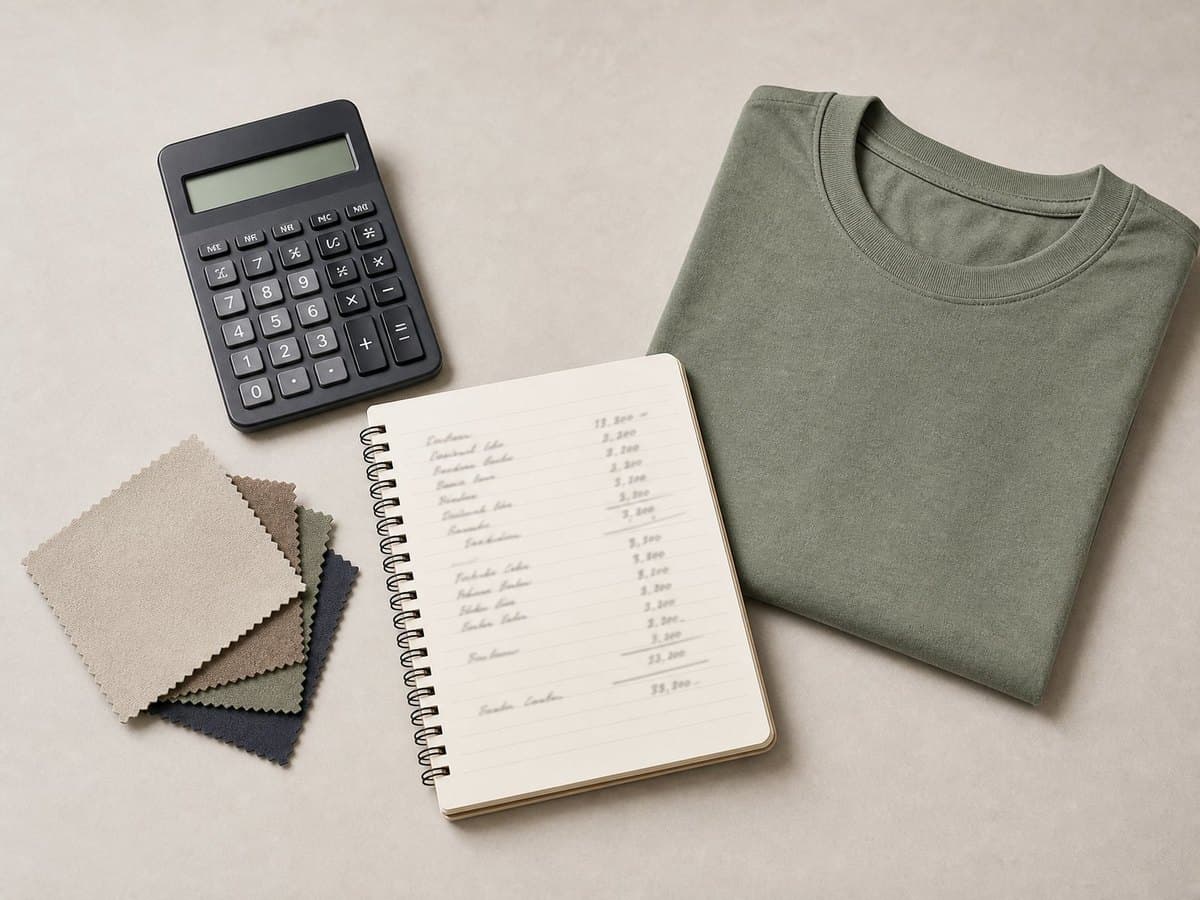
Take an FOB quote of US$5.40 for 500 cotton tees, US$2,700 in total, into the UK. Add sea freight and insurance, say US$600 for the shipment (ask a forwarder; it varies by lane and season). Add destination port and handling charges and the broker's fee, typically a few hundred dollars per entry. Add duty: zero for Bangladesh origin under the UK's DCTS. Add import VAT: 20% of the customs value plus duty, about US$540. Add inland delivery. The landed cost is now well above US$8,000 against a quote that said US$2,700, and none of it was hidden; it was simply not in the FOB price. The landed-cost calculator does the duty and tax lines for the UK, EU, Canada, Australia and the US; a forwarder does the freight.
Questions that make two quotes comparable
- Which Incoterm, and to where? DDP to which address; FOB from which port.
- Is import VAT or GST inside the price? Some DDP quotes are duty paid, tax excluded. Ours include it.
- In whose name is the import entry filed? Yours, so you can recover the VAT, or the forwarder's, so you cannot. Our import VAT guide explains why it matters.
- What fabric, exactly? Composition, weight in GSM, and whether the rib carries elastane. A cheaper quote is often a lighter fabric.
- What is the sampling cost and lead time, separately from bulk? A single number is usually production only.
- What is the per-colour minimum? Two colours is two minimums almost everywhere.
- Who made it? The factory's address and a live video call from the floor; an agent's quote carries a margin and one more party between you and the maker.
Red flags on a quote
A price described as landed with no duty or tax line on it. A DDP quote that excludes VAT without saying so. A fabric described only as premium cotton with no weight. A lead time with no sampling stage. A quote from a company that will not name the factory. None of these is necessarily dishonest, but each is a question you will be asking later at a worse moment, and our guide to avoiding manufacturer scams covers the ones that are.
How we quote
DDP to your address, with freight, clearance, duty and import tax inside the number, the fabric named with its weight, sampling and production quoted as separate lines with separate dates, and the entry filed in your name where you want to recover the tax. It is not the smallest number you will receive. It is the one you can plan a launch around, and the economics of a 100-piece run only work if the landed cost is known before you commit.
Frequently asked questions
What does FOB mean on a clothing quote?
Free On Board: the price covers the garments and everything up to loading them on the ship at the port of origin, including export clearance. Sea freight, insurance, destination charges, customs brokerage, duty, import VAT and delivery are all yours, invoiced separately later. FOB is a sea-freight term; the air equivalent is FCA. It is not a worse price than DDP, it is a smaller one, and it has to be converted before it can be compared.
What does DDP mean?
Delivered Duty Paid: the seller delivers to your address with export and import clearance done and duty paid, carrying the risk until the goods arrive. It is the Incoterm that places the most cost and responsibility on the seller, which is why the DDP price is the closest thing to a landed cost on a quote. Check one thing: whether import VAT or GST is inside it. Ours is.
Is DDP more expensive than FOB?
The number is larger because it includes more. Whether the landed cost is higher depends on what the seller pays for freight, clearance and duty versus what you would pay arranging them yourself, and for a small brand shipping a few hundred kilos the seller's consolidated rates are usually better than what you can buy alone. When brands compare properly, the DDP number is often at or below the FOB number plus everything it excludes, and it is always more predictable.
Why is EXW best avoided?
Under EXW the seller's job ends at the factory door: you collect the goods and handle export clearance in a country where you have no presence. The ICC itself describes EXW as a term to avoid in most international sales for that reason. If a supplier will only quote EXW, ask for FCA or FOB at minimum so export clearance is on their side.
How do I compare an FOB quote with a DDP quote?
Convert the FOB one. Ask a forwarder for freight and insurance on your lane, add destination port charges and a brokerage fee, add duty for your market and origin, add import VAT or GST on the value plus duty, and add inland delivery. Then compare that total with the DDP number, and confirm the DDP number includes VAT. The landed-cost calculator handles the duty and tax lines; the forwarder gives you the freight.
Where this applies
The manufacturing pages this guide relates to, if you are costing a real run.
Free tools & guides for this
Sources & further reading
Have an idea? Let’s make it.
We manufacture from 100 pieces per style, with GOTS-certified organic options and photos at every stage. Send a sketch or a sentence — we’ll reply within a day.