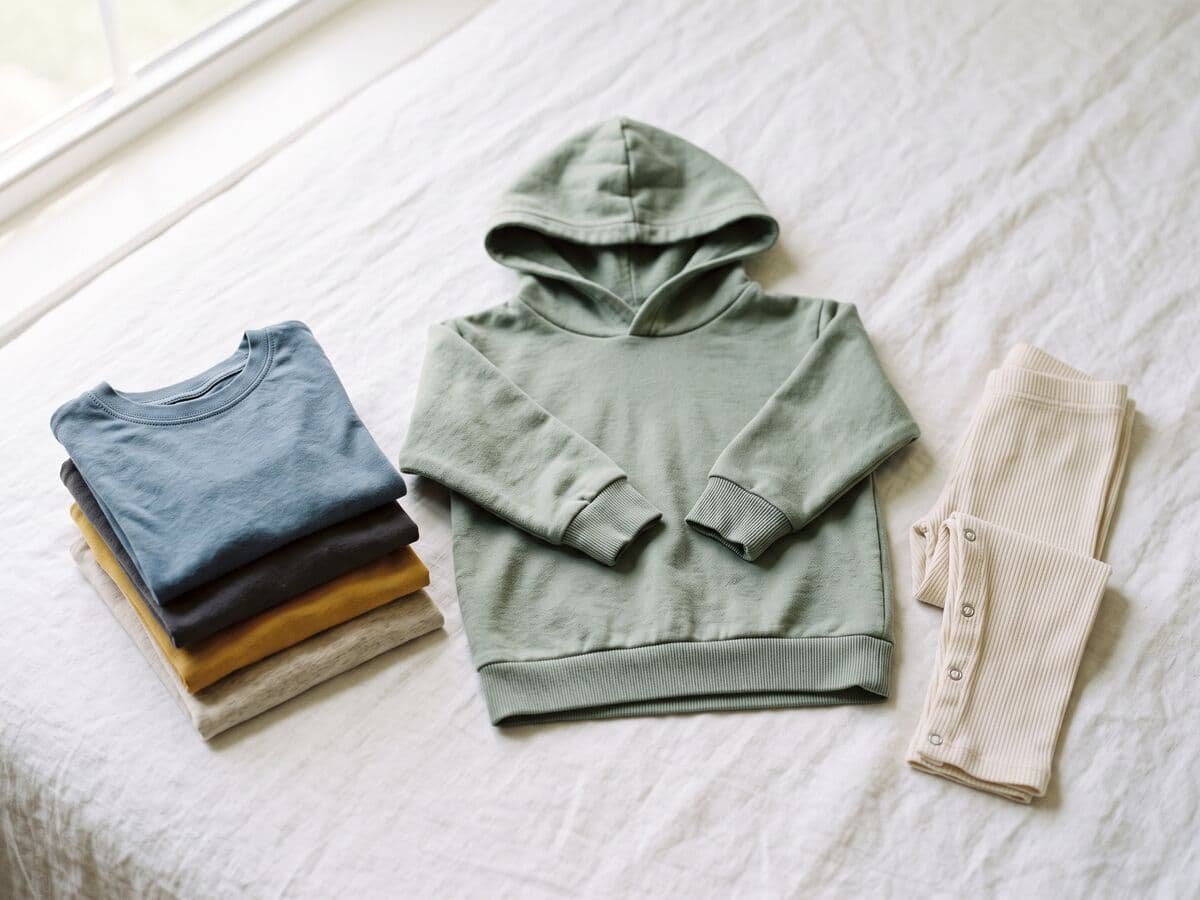
Best Low MOQ Clothing Manufacturers
Disclosure, before anything else: Collective Studio wrote this page, and Collective Studio is one of the eleven manufacturers listed on it. We are a family-run knitwear factory in Narayanganj, Bangladesh, and we have an obvious commercial interest in you choosing us. So this guide is built to be checkable rather than persuasive: every figure below is what each company states on its own website, we say plainly where a claim could not be verified, and there is a section at the end showing you how to check it yourself — and how to get the documents behind our own claims.
We have also included manufacturers who are a better answer than we are for particular jobs, and a section on the work we are the wrong choice for. A round-up in which the author wins every category is not a round-up.
The comparison table
Sort by any column. Stated MOQ is the company’s own published figure, not a negotiated one, and the units differ in ways that matter — a minimum “per style” is a much lower commitment than the same number “per style and colour”. Where a field says not stated, the company does not publish it; that is a fact about their website, not a criticism of the factory.
| The Evans Group (TEG) | USA | 10 per style | Cut-and-sew, high-end and capsule | Not stated | Not stated | Not stated |
|---|---|---|---|---|---|---|
| ARGYLE Haus | USA | 25 per style | Menswear, womenswear, athletic, lingerie, outerwear, uniforms, swim | Not stated | Not stated | Not stated |
| Billoomi Fashion | India | 25 per style (100 for print, embroidery or denim) | Womenswear, menswear, childrenswear, denim, streetwear | ISO 9001:2015; GOTS and OEKO-TEX claimed at mill level — no numbers published | Stated inconsistently: 90 days in one place, 6–8 weeks in another | Not stated |
| Might Atelier | Turkey | 50 per style and colour | Heavyweight hoodies, oversized streetwear | Not stated | 2–3 weeks sampling, 4–6 weeks bulk | Not stated |
| ZEKA Apparel | China | 50 per design, sizes and colours mixable | Tees, hoodies, sweatpants, cargos, denim, jackets, swim, kidswear | Not stated | 7-day samples, 30-day bulk | FOB |
| Eco Fabrics | India | 50 units | Menswear, womenswear, kidswear; also fabric, dyeing and printing | GOTS, OEKO-TEX, GRS, BCI, Fairtrade, Sedex, OCS, FSC named — no numbers published | Not stated | Not stated |
| HuiLin Fashion | China | 50–100 per style and colour | Oversized tees, hoodies, sweats, denim, dresses, loungewear, kidswear, swim | ISO 9001, GRS — no numbers published | 21 working days once fabric is in | Not stated |
| Garment Istanbul | Turkey | 65 per style and colour | Premium and oversized tees, hoodies, sweats, polos, jersey and French terry | Not stated | Not stated | Not stated |
| White Cotton | Portugal | 75 per colourway (100 if single colourway; tees and shirts 100–150) | Hoodies, tees, sweatshirts, shirts, outerwear, pants | OEKO-TEX Standard 100 on all fabric; GOTS organic available — no numbers published | 1–2 weeks sampling, 4–6 weeks production | Not stated |
| Collective Studio | Bangladesh | 150 per style and colour | Tees, polos, hoodies, sweats, joggers, activewear, loungewear, underwear | GOTS certificate RSC 9687 — number published, scope certificate on request | 40–50 days production after sample approval, plus freight | DDP |
| Create Fashion Brand (CFB) | Portugal | 150 per model and colour from scratch; 50 for blanks customisation | Tees, hoodies, sweats, denim, shirts, jackets, kidswear, sportswear | GOTS 6.0, OEKO-TEX 100, OCS 3.0, ISO 45001 named — no numbers published | 3–6 weeks sampling, 8–10 weeks production | Not stated |
What the MOQ column does not tell you
Three things distort every low-MOQ comparison, including this one, and they are worth holding in mind before you read the entries below.
- Per style is not per colourway. A 50-piece minimum quoted per style becomes 150 across three colours. A 100-piece minimum quoted per style and colour is 300 for the same range. Read the unit, not the number — the table above gives the unit each company actually publishes.
- Cutting and sewing is not the same trade as decorating blanks. The lowest minimums in this market usually belong to companies that buy finished blank garments and apply your artwork. That is a legitimate and often correct choice, but you do not select the fabric, weight, fit or construction, because someone decided those before your logo existed.
- A low minimum is paid for in unit price. Pattern making, grading, marker making, a fabric lot and a line changeover cost roughly the same at 30 units as at 300. Nobody absorbs that; it is spread across fewer pieces. Expect a real premium at the bottom of the range.
United States
The Evans Group (TEG) — Los Angeles. TEG publishes “low MOQs starting at 10 pieces,” which is the lowest genuine cut-and-sew minimum in this round-up. They work with high-end designers and capsule collections and have operated since 2005. Lead time, certifications and shipping terms are not published on the pages we read. Right for: a designer with a finished pattern who needs a very small first run made domestically and can pay domestic rates for it.
ARGYLE Haus — San Fernando, California, with a showroom in the New Mart building in downtown LA. They state minimums “as low as 25 pieces” across menswear, womenswear, athletic wear, lingerie, outerwear, uniforms and swimwear, and they are unusually direct about ownership: “we are a fully integrated clothing design and manufacturing company, with all of our operations done under one roof. We do not outsource any part of our work.” That is a checkable claim and a rare one. No certifications or lead times are published. Right for: a US brand that wants a broad product range from one domestic factory and values being able to visit the floor this week rather than next quarter.
Portugal
White Cotton — Barcelos, in Portugal’s northern textile cluster. Their minimum is structured to reward colour range rather than punish it: 75 units per colourway when you order two or more, 100 if you produce a single colourway, with tees and shirts starting at 150 in one colourway or 100 per colourway across two. They state 1–2 weeks for sampling and a 4–6 week production lead time, and that every fabric they use is OEKO-TEX Standard 100 certified with GOTS organic available. No certificate numbers are published. Right for: a European brand launching a multi-colour range that needs stock in weeks rather than months and will pay European rates for the calendar.
Create Fashion Brand (CFB) — showroom at Barqueiros, production at Beiriz, Póvoa de Varzim. CFB runs three distinct routes, which is why their MOQ looks contradictory elsewhere on the web: development from scratch starts at 150 pieces per model and colour, blanks customisation at 50 units, and their ready-made blanks shop has no minimum at all. They publish an 8–10 week production lead time with 3–6 weeks for samples, name GOTS 6.0, OEKO-TEX 100, OCS 3.0 and ISO 45001, and claim full vertical integration: “we own every step. From raw yarn to your final garment.” No certificate numbers are published. Right for: a brand that wants one European supplier to grow through — buying blanks first, then customising, then developing its own patterns — without changing factory at each stage.
Turkey
Might Atelier — Esenler, Istanbul. Fifty pieces per colour per style, focused narrowly on 400–500 GSM oversized hoodies and heavyweight streetwear. They publish 2–3 weeks for sampling and 4–6 weeks for bulk. No certifications are stated, and the page does not say whether they own the production facility or coordinate it — a question worth asking directly. Right for: a streetwear brand that wants genuinely heavy hoodies in small runs, close enough to Europe to reorder quickly.
Garment Istanbul — Istanbul. Sixty-five pieces per style and colour across premium, heavyweight and oversized tees, hoodies, sweatshirts, sweatpants, shorts, polos, and jersey and French terry garments. Note that several directory sites list them at 50; their own site says 65, which is the figure we have used. They describe themselves as “a single accountable production partner for product development, sourcing, sampling, manufacturing and final quality control” and say they coordinate supplier options — language that points to a coordinator rather than an owned factory. No certifications or lead times published. Right for: a brand that wants one accountable contact managing a Turkish supply chain rather than assembling one itself.
China
ZEKA Apparel — Humen Town, Dongguan, Guangdong. Fifty pieces per design with sizes and colours mixable, which is the most permissive minimum structure in this table and materially different from a per-colour floor. They publish 7-day samples (3 expedited) and 30-day bulk delivery after sample approval, and quote FOB. Product range is broad: tees, sweatshirts, hoodies, sweatpants, cargos, jeans, jackets, tracksuits, bamboo garments, kidswear, pyjamas and swimwear. No certifications are stated, and factory ownership is not explicitly confirmed. Right for: a brand testing several designs at once that needs the flexibility to split a small minimum across colours and sizes.
HuiLin Fashion — Panyu District, Guangzhou. Fifty to a hundred pieces per style and colour across up to seven sizes, with the note that “MOQ can be adjusted according to customer needs.” They state 21 working days for a general order once fabric and trims are ready — a useful conditional, because it is honest about where the delay actually sits — and claim ISO 9001 and GRS certification without publishing numbers. They state they operate three garment workshops totalling more than 2,000 square metres. Right for: a brand needing a wide product mix, including swim and kidswear, from a single Chinese supplier at speed.
India
Billoomi Fashion — New Delhi. The lowest minimum in this round-up outside the USA: “we prefer 25 pcs per style (mixed sizes)” for solid colours, rising to 100 pieces per style for printed, embroidered or denim work. They name ISO 9001:2015 and state that they work with GOTS and OEKO-TEX certified mills — note that this is a claim about their suppliers’ certification, not their own, which is a meaningful distinction and one worth asking about. One thing we could not resolve: their site states a 90-day production lead time in one place and 6–8 weeks in another. We have reported both rather than picking the flattering one. Right for: a brand needing embellishment-heavy work — smocking, embroidery, hand-finishing — at genuinely small quantities.
Eco Fabrics — Faridabad, Haryana. Garment MOQs from 50 units, with separate fabric printing minimums running from 100 metres for digital to 2,000 metres for machine screen printing. They name an unusually long certification list — GOTS, OEKO-TEX, GRS, BCI, Fairtrade, Sedex, OCS and FSC — and publish no numbers for any of them. No lead time is stated. Right for: a sustainability-led brand that wants fabric development and garment making from the same supplier, provided the certification claims check out under the process below.
Bangladesh
Collective Studio — Narayanganj. That is us, so treat this paragraph as the interested party talking. Our minimum is 150 pieces per style and per colour, which is higher than most of the table (our low-MOQ clothing manufacturing page sets out the costs behind it), and the reason is upstream rather than at the sewing machine: knit fabric is dyed in lots measured in hundreds of kilos, so 150 pieces is roughly where material stops being sampling and becomes production. We publish GOTS certificate RSC 9687, and it is the only certificate number in this table that its holder publishes. Production takes 40–50 days after sample approval, plus freight on top (air about 5–8 days depending on destination, sea longer), and we quote DDP so freight, duty and clearance sit inside one landed number. Bangladesh currently has duty-free access to the UK, EU, Australia, Canada and Japan as a least developed country, which is a percentage saving that does not shrink with order size.
Right for: a brand that expects to reorder and grow, because the same pattern, sealed sample and floor carry a style from 150 pieces to 10,000 without changing supplier. Wrong for: a one-off small run needed quickly in Europe or North America — the section below covers that properly.
We originally left this section with a single Bangladeshi entry, because we could not verify a second factory against a working website with a published minimum. That is no longer accurate. On 21 September 2026 we read eight Bangladeshi suppliers' own sites and recorded what each publishes, including several with named addresses and stated minimums of 300 or 500 pieces. The results, and the two distinctions that make those numbers comparable, are in our comparison of low-MOQ clothing manufacturers in Bangladesh. We have left the table above as a global picture and put the country detail there.
When we are not the right choice
This is the section we would want to read if the roles were reversed. There are five jobs where sending us an enquiry wastes your time, and we would rather say so here than in a reply three days later.
- Flat-knit knitwear. Jumpers, cardigans and anything knitted to shape on a flat-bed machine are a different trade from ours. We are a cut-and-sew factory: we cut knitted cloth and sew it. A sweater knitted panel by panel and linked together needs a flat-knit sweater factory, and Bangladesh has excellent ones. It is not made on our floor: we take flat-knit orders only on a limited basis, through vetted partner units and on a separate quote, so for a sweater-led range a specialist flat-knit factory is the more direct route.
- Runs under 150 pieces. Below our floor the arithmetic stops working, and several manufacturers in the table above are built for exactly that. If you need 30 hoodies next month, TEG, ARGYLE Haus or Billoomi are better answers than we are, and a blank-printing service may be better still.
- Denim. Denim is woven, not knitted, and proper denim production means washing and finishing plant we do not have. Billoomi and several of the Chinese factories above handle denim; we do not.
- Tailoring. Structured jackets, suiting and anything canvassed require a tailoring floor with entirely different machinery and skills. Not a matter of scale — a matter of trade.
- Testing a design before you commit. If the real question is whether anyone will buy this at all, print-on-demand answers it faster and cheaper than any factory can, ours included. Test the design, then come to a manufacturer when you know it sells. Our guide on print-on-demand versus manufacturing works through the point at which switching pays for itself.
How to verify any of these claims yourself
Everything above is a company’s own published statement, which is the weakest class of evidence there is. Here is how to convert it into something firmer. All four checks are free, and you can run them on any supplier you shortlist; if you have not built that shortlist yet, our guide on how to find a clothing manufacturer covers where to look.
1. Check a certification number in the issuing body’s own database. This is the single highest-value check, and it is why the certifications column above says “no numbers published” so often. A logo on a website means nothing; a certificate number that resolves in the certifier’s public register means a great deal. For organic cotton, GOTS runs a free public database of certified entities at global-standards.org, searchable by company, country and product. For ours, RSC 9687, ask us for the scope certificate and we send the document itself. Note that GOTS moved domain recently and the old global-standard.org address now redirects, so a supplier linking to a dead certificate page is not necessarily hiding anything — but a supplier who cannot give you a number at all is telling you something.
2. Ask specifically whose certificate it is. A recurring pattern in this table is a company stating that it works with GOTS-certified mills. That is a claim about a supplier’s certification, not the factory’s. Both can be legitimate, but only one lets you make an organic claim on your own label. Ask which entity in the chain holds the certificate and for the transaction certificate covering your specific order — that document, not the logo, is what a retailer’s compliance team will eventually ask you for.
3. Check trade-association membership. For Bangladesh, BGMEA runs a member search covering woven and knit export factories, and BKMEA keeps its own member list for knitwear exporters, with 2,797 entries when we read it on 2 October 2026. Membership is not a quality guarantee, but a supplier claiming to be an export factory who appears in neither register is worth a second question: ask for the membership certificate and the company name it is issued under. Internationally, Open Supply Hub is a free, non-profit database mapping more than 2.5 million production locations worldwide and is the fastest way to check whether a named facility exists independently of the website describing it.
4. Ask for a live video walkthrough, scheduled by you. Not a video they send — a call you book, at a time you pick, on which someone walks the floor with the camera running. Ask to see the cutting table, the sewing lines and the finishing area, and ask them to point the camera at something specific and unplanned. Anyone can send footage of a factory they do not own. Nobody can fake a live walk on ten minutes’ notice. This one check separates factories from agents faster than any paperwork, and it costs you nothing but a scheduled call.
A note on what none of this proves. These checks confirm that a company exists, holds what it claims to hold, and has a floor. They do not tell you whether the sewing is good. Only a sample does that, which is why every serious order starts with one.
How we chose the eleven
We searched for low-minimum manufacturers in each of the six countries, then read each company’s own website rather than the directory listings and round-up posts that dominate these search results. Where a directory figure and a company’s own figure disagreed, we used the company’s — Garment Istanbul is listed at 50 pieces in several places and states 65 itself. Companies whose published claims we could not locate on their own site were left out entirely, which is why there are eleven entries here and not the round number we set out to write.
We have no commercial relationship with any other company listed, we were not paid to include or exclude anyone, and there are no affiliate links on this page. If you find an error in the table, or you are one of these manufacturers and we have misread your figures, tell us and we will correct it and note the correction.
Frequently asked questions
What is a good MOQ for a clothing startup?
Between 50 and 150 pieces per style is the realistic band for genuine cut-and-sew production, and the unit matters more than the number. A minimum of 50 quoted per style is a much smaller commitment than 100 quoted per style and colour, because the second one becomes 300 as soon as you want three colourways. Below roughly 50 pieces you are usually no longer buying manufacturing at all — you are buying decoration applied to blank garments someone else made, which is a legitimate service but means you do not choose the fabric, weight, fit or construction. Above about 300 you have left the low-MOQ market and should be getting standard pricing. One piece of advice that costs nothing: run one colour deep rather than three shallow on a first order. It is cheaper, it arrives sooner, and the reorder data tells you far more.
Which country has the lowest MOQ clothing manufacturers?
The United States, on published figures, and it is not close. The Evans Group in Los Angeles publishes minimums starting at 10 pieces, lower than anything we found in Asia or Europe, and ARGYLE Haus states 25. That is a consequence of the market rather than generosity: domestic US production is priced high enough per unit that very small runs remain viable for the factory. India comes next, with Billoomi Fashion also stating 25 pieces per style for solid colours. Portugal and Turkey cluster around 50 to 150. Bangladesh sits highest once you look past our own 150 pieces per style and colour: several Bangladeshi suppliers publish 300 or 500, because the industry is built around volume and its fabric dye lots are large. The lowest minimum is rarely the right answer on its own, though. The question that matters is total landed cost for the quantity you actually need, on the date you actually need it.
Are low MOQ clothing manufacturers more expensive per unit?
Yes, materially, and any supplier who tells you otherwise is hiding the cost somewhere else. Pattern making, size grading, marker making, a minimum fabric or dye lot, and a production line changeover all cost about the same whether the run is 30 pieces or 300. Those fixed costs do not disappear at low volume, they are simply divided across fewer garments. A common industry estimate puts the premium at roughly 20 to 40 percent per unit against standard minimum pricing, though it varies widely by product and country. Treat that premium as the price of learning what sells before you commit real money to inventory, which is usually a good trade for a new brand. What you should not accept is a low minimum with an unexplained price, because that combination often means blanks with your logo on them rather than garments made to your specification.
How do I verify a clothing manufacturer's certifications?
Ask for the certificate number, then check it yourself in the issuing body's own public database rather than accepting a logo. For organic cotton, GOTS operates a free public register of certified entities at global-standards.org, searchable by company name, country and product type. Note that GOTS changed domain recently, so older links to global-standard.org now redirect. Ask one further question that catches a common ambiguity: whose certificate is it? Several manufacturers state that they work with GOTS-certified mills, which is a claim about a supplier's certification rather than the factory's own. Both can be genuine, but only a factory holding its own certificate can have its certification body issue the transaction certificate covering your specific order, and that document is what a retailer's compliance team will eventually ask you to produce. Our own GOTS certificate is RSC 9687; ask us for the scope certificate and we send the document itself.
Is a low MOQ manufacturer the same as print-on-demand?
No, and confusing the two is the most common expensive mistake in this part of the market. Print-on-demand and blank-printing services buy finished garments wholesale and apply your artwork to them. The garment already exists: its fabric, weight, fit, shoulder line, neck rib and construction were all decided by whoever made the blank. A cut-and-sew manufacturer starts from cloth and makes the garment to your pattern, which is why its minimum is higher and its unit price at volume is lower. Neither is superior. Print-on-demand is the right tool for testing whether a design sells at all, because it carries no inventory risk. Cut-and-sew is the right tool once you know it sells and the product itself has to be yours. The switching point usually arrives sooner than people expect, because the per-unit gap is wide.
Can I trust a comparison written by one of the manufacturers listed?
Not on its own, no, and you should not. That is why this page states our interest in the first sentence, publishes the source for every figure, marks clearly where a claim could not be verified, includes manufacturers who beat us on minimum and on lead time, and carries a section listing five jobs we are the wrong choice for. It also explains how to check the claims on the page using free public databases, and how to get the documents behind ours. Those are the things a comparison written in good faith can offer; they are not a substitute for you doing the checks. Read this alongside a round-up written by someone with no stake in the outcome, verify the two or three suppliers you shortlist directly, and order a sample from each before committing to anything. Any manufacturer who discourages that comparison, ourselves included, has told you something useful.
Which low MOQ clothing manufacturers offer organic cotton?
Five of the eleven mention organic cotton or GOTS, and only one of them publishes a certificate number. In Portugal, White Cotton says GOTS organic is available, with OEKO-TEX Standard 100 on all its fabric, and Create Fashion Brand names GOTS 6.0 and OCS 3.0. In India, Eco Fabrics lists it among eight standards, and Billoomi Fashion says it works with GOTS and OEKO-TEX certified mills, a statement about its suppliers rather than about itself. None of those four publishes a number. We offer organic cotton, made in our GOTS-certified facility (RSC 9687), and send the scope document on request. Whichever you shortlist, ask which company the paperwork is issued to, because a mill's certification does not extend to the business that cuts and sews your garments, and ask whether the minimum for organic fabric matches the one for conventional yarn before you plan a range around it.
Do any of these manufacturers have no minimum order?
Not for garments made to your own pattern. Of the eleven companies compared, none cuts and sews from scratch without a floor, because fabric lots, grading and a line changeover cost much the same at 10 units as at 100. The lowest published figures are The Evans Group in Los Angeles at 10 a style, then ARGYLE Haus and Billoomi Fashion at 25. Create Fashion Brand in Portugal is the one company here with a no-minimum option, and that is its ready-made blanks shop; customising those blanks starts at 50 units, and developing a garment from scratch at 150 for each model and colour. For streetwear, Might Atelier in Istanbul makes 400–500 GSM hoodies from 50 in each colour of a style. If a design only needs testing, print-on-demand avoids holding stock, and our guide to print on demand versus manufacturing covers when switching pays. Ours is 150 per style and colour.
Where this applies
The manufacturing pages this guide relates to, if you are costing a real run.
Free tools & guides for this
Sources & further reading
- GOTS — public database of certified entities (verify a certificate number)
- BGMEA — member search, Bangladesh woven and knit export factories
- BKMEA — Bangladesh Knitwear Manufacturers and Exporters Association
- Open Supply Hub — free non-profit database of global production facilities
- The Evans Group (TEG) — small-batch manufacturing, Los Angeles
- ARGYLE Haus — small-batch clothing manufacturing, San Fernando CA
- White Cotton — clothing manufacturer, Barcelos, Portugal
- Create Fashion Brand (CFB) — Póvoa de Varzim, Portugal
- Might Atelier — streetwear manufacturer, Istanbul
- Garment Istanbul — low-MOQ garment production, Istanbul
- ZEKA Apparel — Dongguan, China
- HuiLin Fashion — Guangzhou, China
- Billoomi Fashion — small-batch manufacturing, New Delhi
- Eco Fabrics — organic and sustainable garment manufacturing, Faridabad
Cite this guide
For journalists, writers, researchers and students.
Quoting this guide? Please credit Collective Studio and link to this page.
Reference
AB Rahman, Collective Studio. "Best Low MOQ Clothing Manufacturers." 17 October 2026. https://collectivestudioltd.com/journal/best-low-moq-clothing-manufacturers
Writing about us? Our press kit has our facts, logos and photos, free to use with credit.
Have an idea? Let’s make it.
We manufacture from 150 pieces per style and colour, with organic cotton options from our GOTS-certified facility and photos at every stage. Send a sketch or a sentence — we’ll reply within one business day.
Related guides
How Much Duty Do You Pay on Clothing from Bangladesh? US, UK, EU, Canada and Australia in 2026
Read the guide →
GPSR for Clothing Brands: The Responsible Person, the Technical File and What Your Factory Must Supply
Read the guide →