A number you can check
GOTS certificate RSC 9687, searchable on the public database. Independently audited across fibre, chemistry, water and labour — not self-declared.
Sustainability you can verify — certified organic fabrics, audited conditions, and a low minimum that means brands make what they can sell.
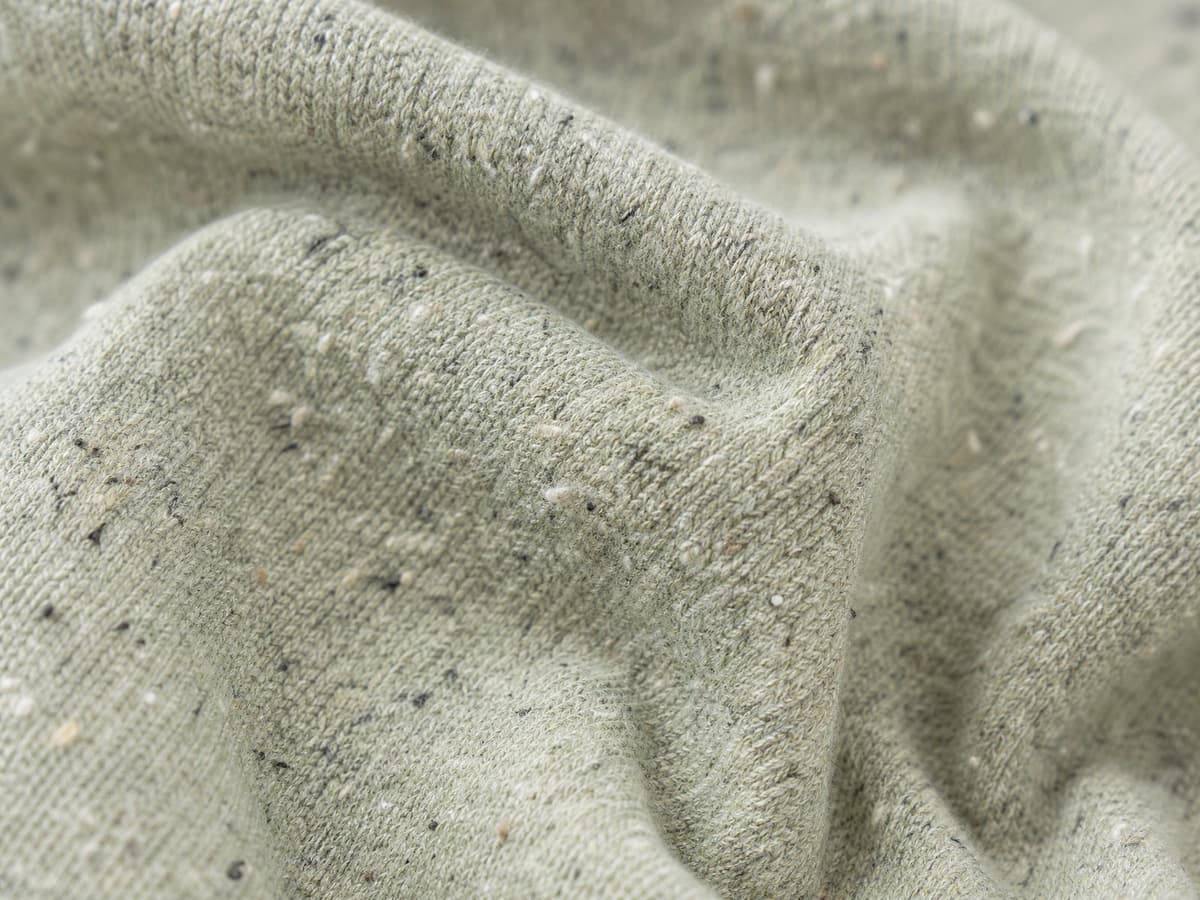
“Sustainable” carries no legal definition in apparel, which is why almost every factory claims it. Here is ours, stated as things you can check rather than adjectives. Our organic cotton is certified to the Global Organic Textile Standard under certificate RSC 9687, searchable on the GOTS public database at global-standard.org. We are members of BKMEA and the Narayanganj Chamber of Commerce. Our factory address is published, on the map, and open to pre-arranged visits.
That distinction between certified and self-declared is about to matter more than it has. From September 2026 the EU tightens how environmental claims can be made and evidenced, and vague terms like “eco-friendly”, “green” or “conscious” used without substantiation move from being weak marketing to a compliance exposure. Brands selling into Europe will need to point at something. A certificate number is something. An adjective is not.
Beyond certified organic cotton we work with recycled blends, bamboo viscose, modal and hemp. Two points of accuracy that save brands from accidental overclaims: bamboo-derived fabric must legally be described as “viscose from bamboo” rather than simply “bamboo” in the US, because the fibre is chemically regenerated; and for recycled content, the recognised chain-of-custody standard is the Global Recycled Standard, so ask for GRS documentation rather than accepting the word “recycled” alone.
The environmentally heaviest step in making a garment is usually not the fibre — it is dyeing and wet processing, which is water-intensive and chemical-intensive by nature. GOTS addresses this directly: it requires wastewater treatment at every certified facility and screens dyes and auxiliaries for toxicity and biodegradability, banning hazardous inputs including PFAS under version 7.0. That is a large part of why the certificate is worth more than a fibre claim on its own.
There is also a structural point that rarely appears on a factory website, because most factories have no incentive to raise it: the largest single source of waste in fashion is unsold stock. Producing thousands of units of an unproven design and discounting or destroying the remainder is more wasteful than any fabric choice will compensate for. Our 100-piece minimum exists for commercial reasons, but the effect is the same — brands can match production to demand they have actually observed, then reorder what sells. Less waste as a consequence of how the business works, rather than as a slogan.
GOTS certificate RSC 9687, searchable on the public database. Independently audited across fibre, chemistry, water and labour — not self-declared.
From September 2026 unsubstantiated environmental claims become a compliance risk in the EU. A certificate is evidence; "eco-friendly" is not.
Bamboo viscose must be labelled "viscose from bamboo" in the US, and recycled content needs GRS documentation. We flag this before your labels print.
Dyeing is the water- and chemical-heavy step. GOTS requires wastewater treatment at every certified facility and screens every dye and auxiliary.
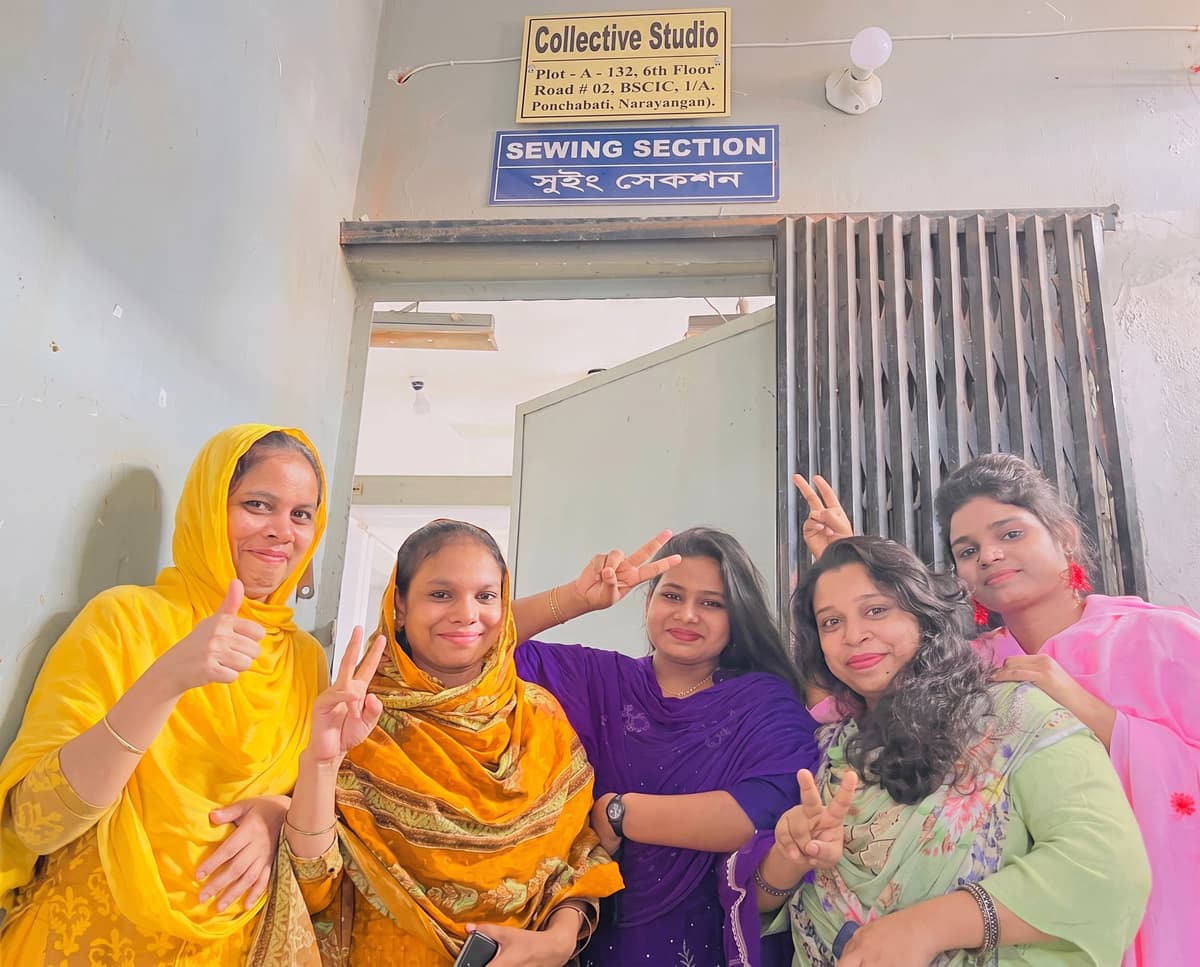
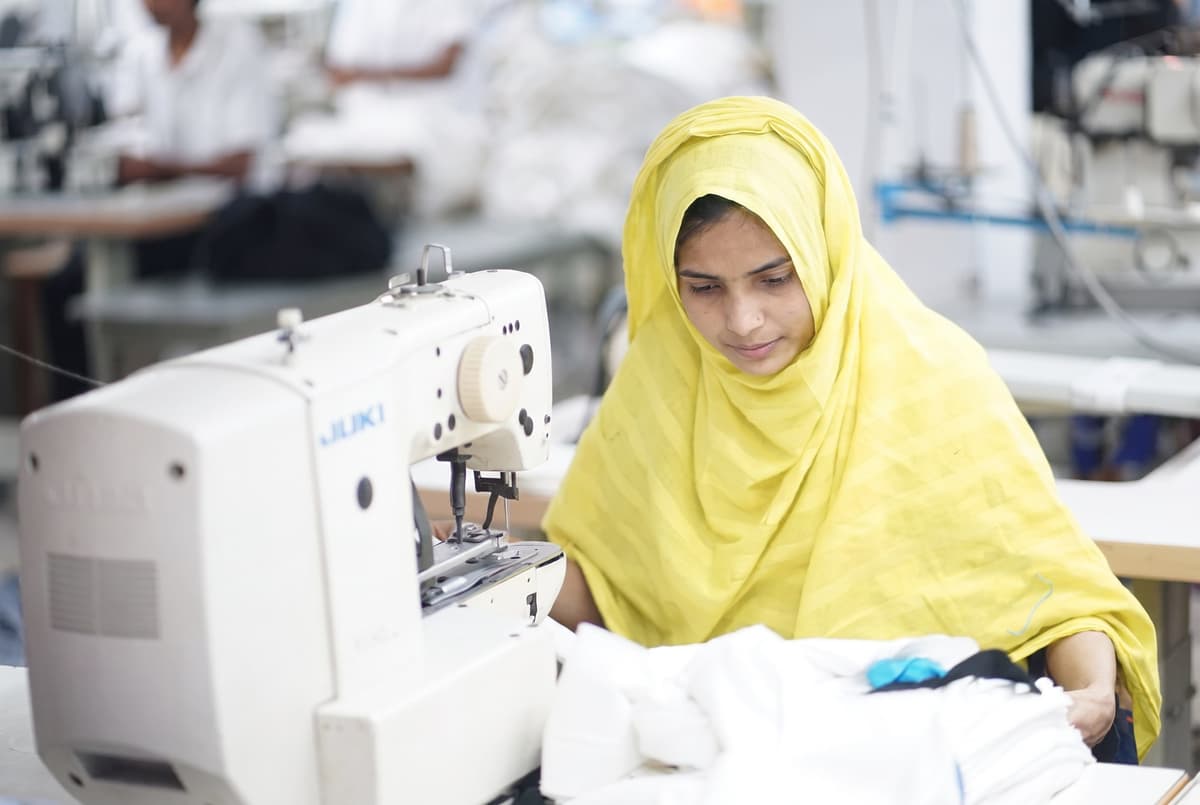
Most of a garment's environmental cost is settled before it reaches a sewing machine, in the fibre, the dyeing and the energy used to make fabric. We are not going to take credit for stages we do not run.
The honest summary is that we control a minority of the footprint directly and influence the rest through what we specify and who we book. Certification is what turns that influence into something you can verify rather than something we simply assert.
I have had a very good experience with this company. They are very friendly, professional, and provide fast service. They speak fluent English, which makes communication very easy. The quality of their manufacturing is excellent. I have no doubt in recommending this company to anyone looking for a reliable manufacturing partner in Bangladesh.
Talk to the factory directly: +880 1980 055021 · hello@collectivestudioltd.com
Things that can be independently verified, rather than adjectives. Four categories are worth asking about specifically. Certified materials, meaning a standard with a checkable certificate number rather than a supplier's assurance. Wet processing, since dyeing and finishing are the water- and chemical-heavy stages — ask whether wastewater is treated and whether dyes are screened for toxicity. Labour, ideally audited against a recognised framework rather than self-reported. And production model, because a factory that pushes minimum orders of thousands is structurally encouraging overproduction whatever its fabric choices. Ask any manufacturer for the documents behind each of the four. A supplier who can produce them will; one who cannot will offer adjectives instead.
Ask for a certificate number and then look it up yourself. Ours is GOTS RSC 9687, searchable on the public database at global-standard.org, where you can confirm it is current, which body issued it, and which product categories it covers — that last point matters, because a certificate may cover some processes and not others. For a specific order, a Scope Certificate proves the company is certified while a Transaction Certificate proves your particular shipment was produced under certified conditions; retailers increasingly ask for the second. For recycled content, ask for Global Recycled Standard documentation. If a supplier hesitates at any of this, the hesitation is the answer.
The direction is that vague green claims stop being acceptable as marketing and start being treated as claims requiring evidence. From September 2026 the EU tightens how environmental claims may be made and substantiated, which affects terms like eco-friendly, green, conscious and climate-neutral when used without support. Practically, brands selling into the EU should expect to justify each claim, apply claims only to products that qualify rather than brand-wide, and keep documentation available. This is why a certificate you can point at is worth considerably more than confident copywriting, and why we confirm the exact permitted wording for your fabric in writing before anything is printed.
Structurally, yes, and this gets less attention than fabric because it is less marketable. The largest single source of waste in the industry is stock that never sells — produced, shipped, discounted, and eventually destroyed or landfilled. No fabric substitution compensates for manufacturing several thousand units of something nobody wanted. A 100-piece minimum lets a brand produce against demand it has actually observed rather than forecast, then reorder what performs. We are honest that our minimum exists for commercial reasons rather than environmental ones, but the effect is real and it compounds: fewer wrong guesses, less dead stock, less discounting. The counterweight worth naming: shorter runs mean more setups per garment, so the per-piece energy and water cost is higher than on a large run. Low MOQ is better for waste and worse for efficiency, and which matters more depends on whether you would otherwise have over-ordered.
GOTS-certified organic cotton is the strongest option where a natural fibre and full-chain certification both matter. Recycled polyester and nylon blends suit performance pieces and perform comparably to virgin fibre in most applications, though ask for the mill's test data rather than assuming parity. Viscose from bamboo and modal are regenerated cellulose fibres — soft, excellent drape, but chemically processed, so the environmental case depends heavily on the processing facility rather than the plant. Hemp needs less water and fewer inputs to grow but has a coarser hand and a narrower range of suitable garments. There is no fabric that wins on every axis, and we would sooner match one plainly to your garment than push whichever markets best.
Yes, and the maths is less punishing than most founders expect. Certified organic fabric costs more per metre than conventional, and certification carries administrative cost, so expect a premium at the fabric line. What keeps the total accessible is the order size: at 100 pieces per style the absolute difference on a first run is modest, and many brands we work with launch fully certified from their first order rather than switching later. The harder cost is usually not the fabric but the discipline — resisting the temptation to over-order because the unit price improves, which is exactly the decision that creates dead stock.
In the US, generally not, and this catches out a lot of well-meaning brands. The FTC requires bamboo-derived fabric to be described as viscose from bamboo or rayon from bamboo, because the fibre is chemically regenerated from the plant rather than mechanically processed, and it has taken enforcement action over the bare term bamboo. The fabric itself is actually lovely and there is nothing wrong with using it — it simply has to be described accurately. We raise this before labels go to print rather than after, along with the equivalent point on recycled content, where the recognised documentation is a Global Recycled Standard certificate.
Through GOTS social criteria, which are built on the core conventions of the International Labour Organization and audited across the supply chain rather than self-reported at the factory gate. Those conventions cover child and forced labour, freedom of association and collective bargaining, non-discrimination, safe and hygienic conditions, working-hour limits, and pay. GOTS version 7.0 goes further by requiring certified companies to conduct human-rights due diligence across their own operations and suppliers. Alongside that, the practical test available to any buyer is whether a factory will let you see the floor and meet the people on it. Ours will, in person or on live video.
Trade and regulatory details on this page last verified 30 July 2026. Tariff and compliance terms change — ask us to confirm the current position for your order.
Whether it’s a large bulk or wholesale run or your first batch of 100, send a sketch, a reference, or a sentence. We’ll reply within one business day with fabric options and an indicative price.