Side-seamed, not tubular
Tubular knit is cheaper but torques — the side line spirals after washing. Side-seamed panels hang straight and let us shape the fit properly.
Premium custom sweatshirts and crewnecks, made to your design — from 100 pieces a style. Heavyweight fleece, organic options, full branding.
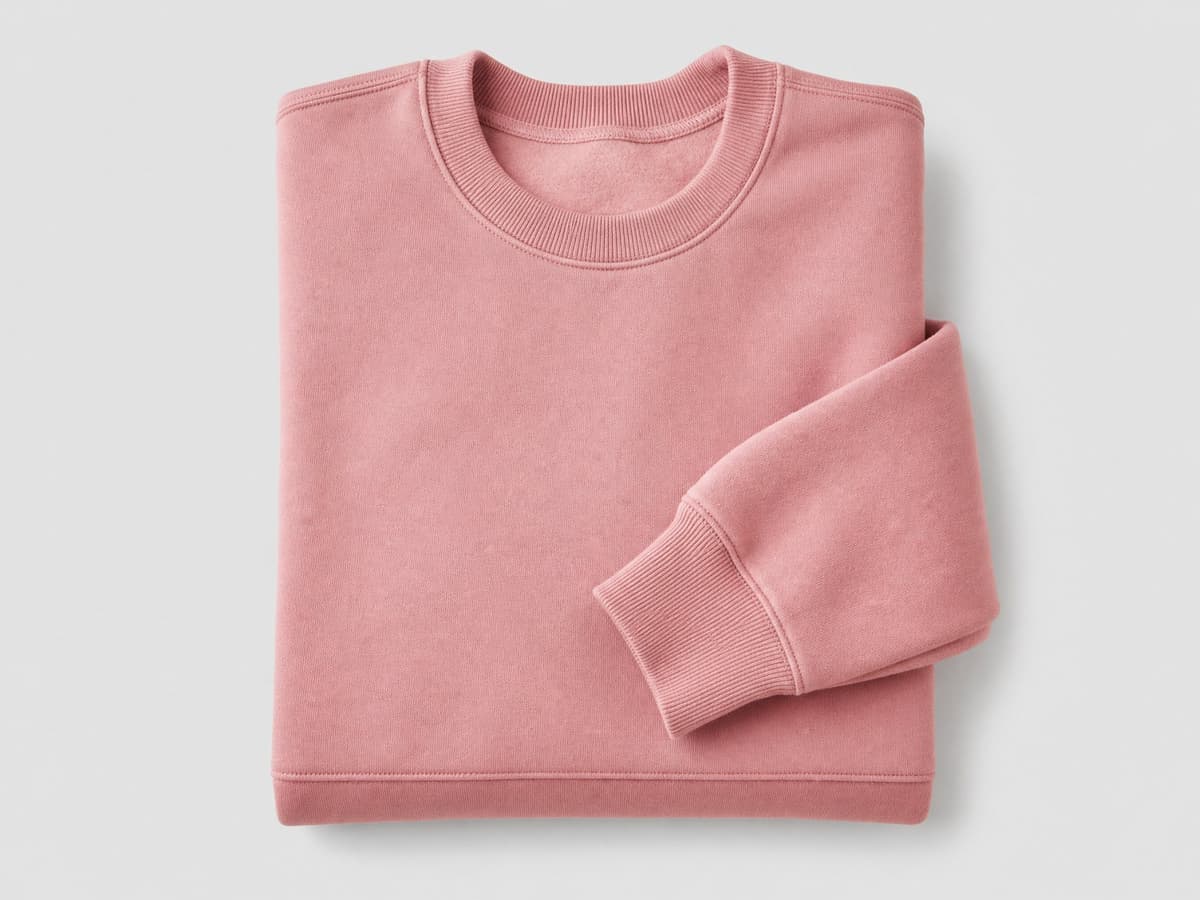
A crewneck is a simple garment with a small number of decisions that entirely determine whether it feels premium. The biggest is construction: tubular (knitted as a continuous tube, no side seams) is cheaper and faster, but tubular fabric has a tendency to torque — the side "seam" line spirals around the body after washing, which is the twisted-hem effect you see on cheap sweatshirts. Side-seamed construction cuts the front and back as separate panels, which costs more in fabric and labour but keeps the garment hanging straight and lets you actually shape the fit. For anything sold at a premium price point, side-seamed is the answer.
The second is sleeve attachment. A set-in sleeve gives a defined, structured shoulder; raglan runs the seam diagonally from underarm to neck for a softer, more athletic line and better range of movement; a drop shoulder deliberately extends past the shoulder point for the oversized streetwear silhouette. These aren't interchangeable — they change the whole read of the garment, and the pattern has to be drafted for the one you want from the start.
Then the same two things that make or break joggers apply here: cotton fleece must be compacted before cutting or it shrinks meaningfully in the first hot wash, and the neck, cuff and hem rib needs elastane for recovery — a 100% cotton rib stretches out permanently, and a gaping neckline ages a sweatshirt faster than anything else. We run 280–500 GSM in loopback French terry and brushed fleece, from 100 pieces per style, with GOTS-certified organic cotton available (certificate RSC 9687).
Tubular knit is cheaper but torques — the side line spirals after washing. Side-seamed panels hang straight and let us shape the fit properly.
Launch or test a sweatshirt with 100 pieces per style and colour.
Structured, athletic, or oversized — three different silhouettes, each drafted from the start rather than adjusted later.
Elastane in neck, cuff and hem rib so the neckline doesn't gape, and compacted fleece so the body doesn't shrink a size.
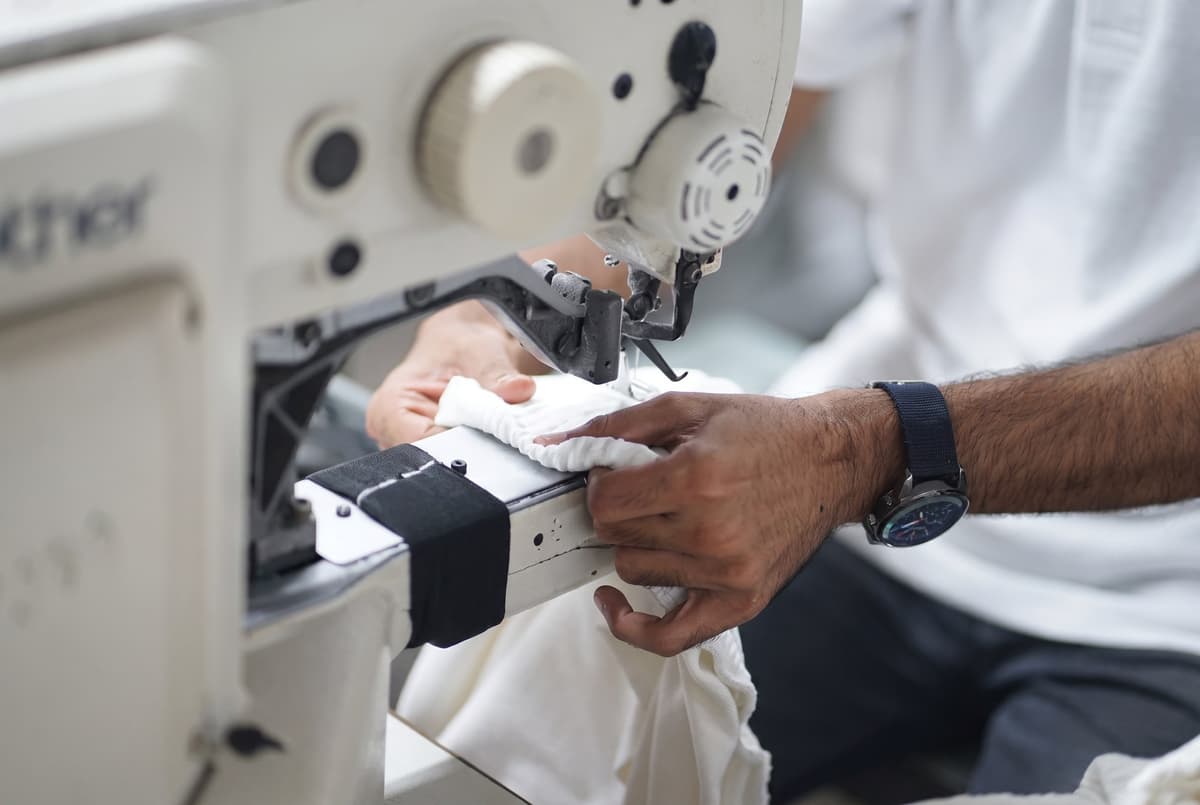
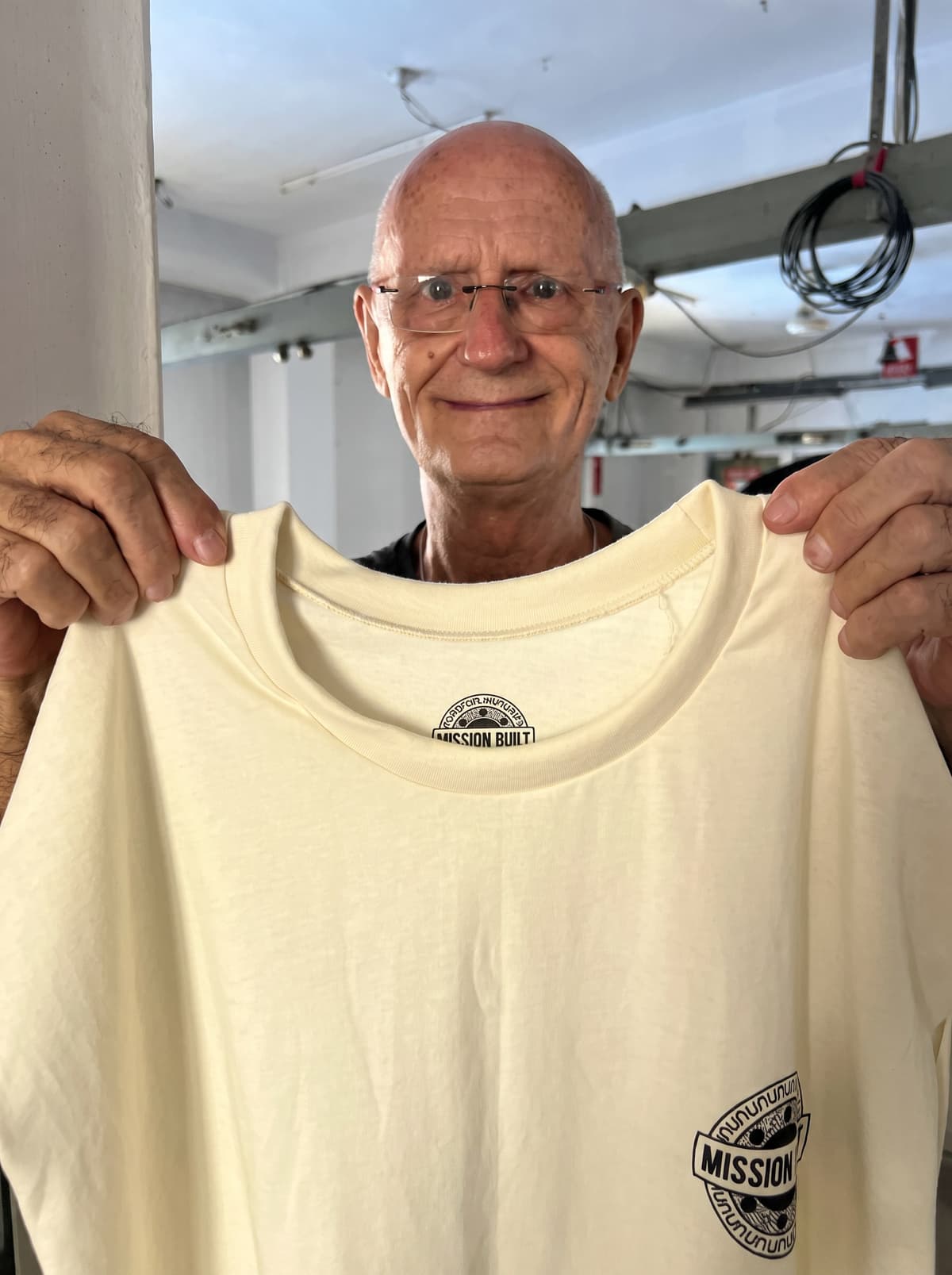
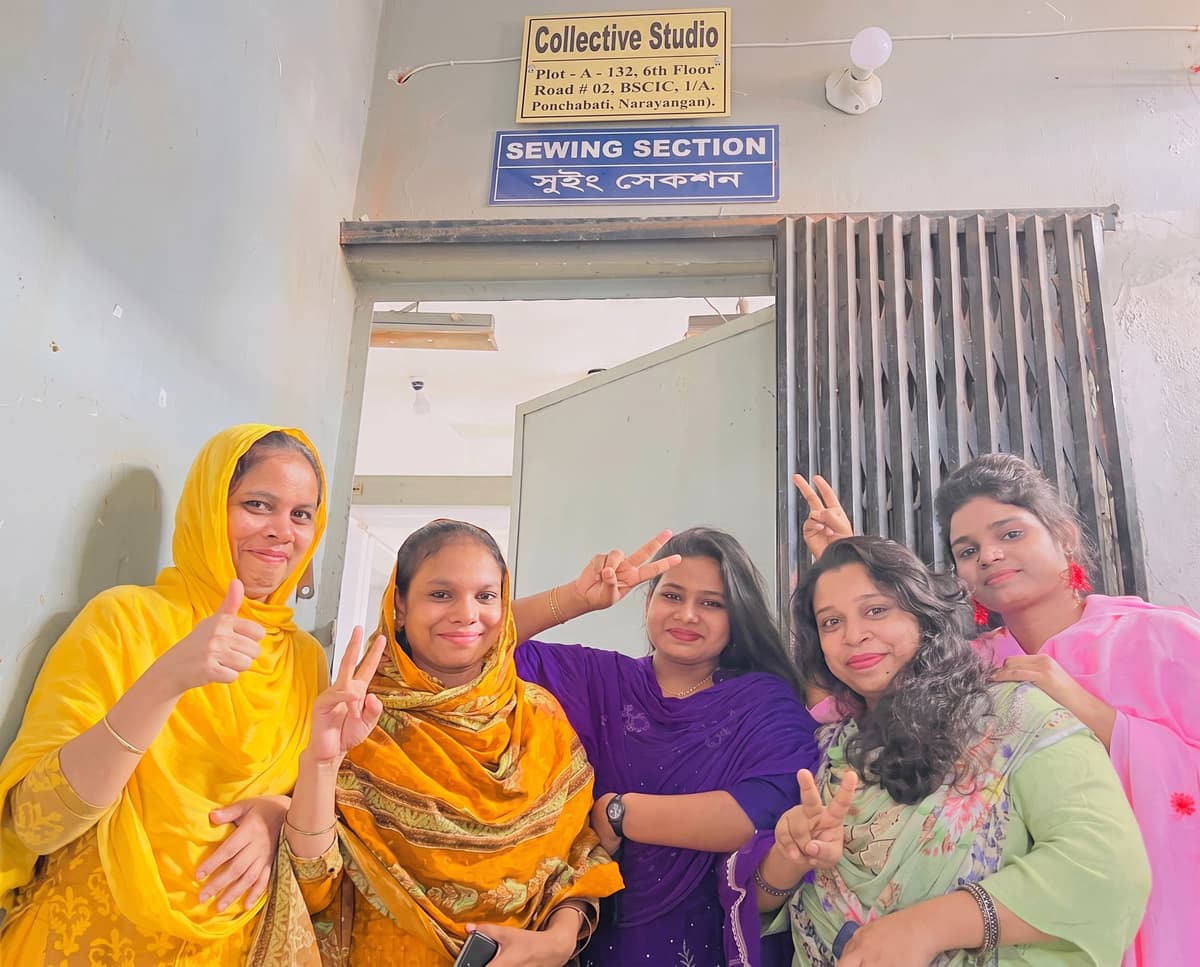
Collective Studios under the direction of Mr Jamish and his daughter Homaira represent the future of RTW production in Bangladesh. A thorough approach to detail governed by a genuine standard of quality. Masters of and partners in the process!
Talk to the factory directly: +880 1980 055021 · hello@collectivestudioltd.com
One hundred pieces per style, per colour. Sweatshirts are fleece or French terry, which is a heavier, more expensive fabric than jersey and is knitted and dyed in lots — that lot size is what sets the floor, not the sewing. Because the fabric cost is a larger share of the unit price than on a tee, the weight you choose matters commercially as well as aesthetically: a 280gsm crewneck and a 400gsm one are different products at different price points, and picking the wrong one for your market is more costly here than on lighter garments. We will send you fabric swatches at the sampling stage so you feel the difference rather than choosing a number on a page.
Tubular bodies are knitted as a continuous circle, so there is no side seam at all — the fabric tube is simply cut to length. It is cheaper because it skips a sewing operation and wastes less fabric, and it is how most basic promotional tees are made. The problem is fit: a tube has no shaping, so the garment hangs straight and boxy, and it tends to twist after washing because the knit has a natural spiral that a seam would otherwise hold in check. Side-seamed garments are cut from flat panels and joined, which allows the pattern to be shaped through the body for a fitted silhouette and stops the twisting. Every premium tee is side-seamed. If your brand is competing on fit rather than price, this is not a place to save.
Three different silhouettes with different fits, not three ways of doing the same thing. A set-in sleeve joins at the natural shoulder point, giving the most structured, tailored look — it is the standard for polos, shirts and fitted tees, and it holds shape best. Raglan runs the sleeve seam diagonally from underarm to neckline, removing the shoulder seam entirely; it allows more arm movement, which is why it dominates sportswear and baseball tees, and it reads as more casual. Drop shoulder places the seam below the natural shoulder for a deliberately oversized, relaxed line — the streetwear default, but it only looks right if the whole garment is cut for it rather than being a normal tee with the seam moved. Tell us the look and we will cut the block accordingly.
For knits we work roughly from 120gsm up to about 500gsm, which covers everything from a lightweight summer tee to a heavyweight fleece hoodie. The useful reference points: 140-180gsm is a standard t-shirt, 180-220 reads as premium tee weight, 240-280 is a midweight sweatshirt, 320-400 is a proper heavyweight hoodie, and above 400 you are into very structured pieces that hold their shape rather than drape. Weight drives cost more than almost any other specification, because fabric is roughly half the factory price and you are buying it by the kilo. It also changes how the garment behaves — a heavy fleece shrinks and relaxes differently from a light jersey, so the pattern is cut to suit. Tell us the feel you want and we will send swatches rather than asking you to pick a number.
Because the rib is under-specified and the neckline is not stabilised. Three things cause it. The rib itself: cheap sweatshirts use a light 1x1 rib with little or no elastane, which stretches over the head and never fully recovers. Ours is a heavier 2x2 rib with elastane content chosen for the fabric weight. Second, the shoulder seam: without taping, the seam stretches along its length every time the garment is pulled on, and the neckline widens permanently. We tape shoulder seams as standard. Third, the ratio — the rib has to be cut shorter than the neckline opening so it is sewn under tension and pulls back; get that ratio wrong and it gapes from day one. None of this is expensive. It is just specified rather than assumed.
Yes. We run GOTS-certified organic cotton fleece and French terry under certificate RSC 9687, verifiable in the Global Standard public database. Organic behaves slightly differently from conventional in ways worth knowing before you specify it: the fibre is typically a touch softer, it takes reactive dyes well but tends toward slightly less intense brights, and it costs more per kilo, which shows up more on a 400gsm crewneck than on a lightweight tee simply because there is more fabric in the garment. GOTS also permits a small proportion of synthetic content, so a fleece with a little elastane in the cuffs and waistband can still be certified. We will tell you where organic genuinely changes the product and where it only changes the price.
Trade and regulatory details on this page last verified 30 July 2026. Tariff and compliance terms change — ask us to confirm the current position for your order.
Whether it’s a large bulk or wholesale run or your first batch of 100, send a sketch, a reference, or a sentence. We’ll reply within one business day with fabric options and an indicative price.