Factory videos
Short, unedited clips filmed on our sewing floor and at the partner mills that knit and dye our fabric. No voice-over and no stock footage: each page says what the clip shows and why it matters when you are making clothes.
 Watch the factory tour on YouTube (opens in a new tab)
Inside the factory with co-founder Homaira Jashim
The one clip with a voice: Homaira walks the floor on camera. Hosted on our YouTube channel.
Watch on YouTubeOn our floor in Narayanganj
Sewing, labelling and packing, filmed on our own floor.
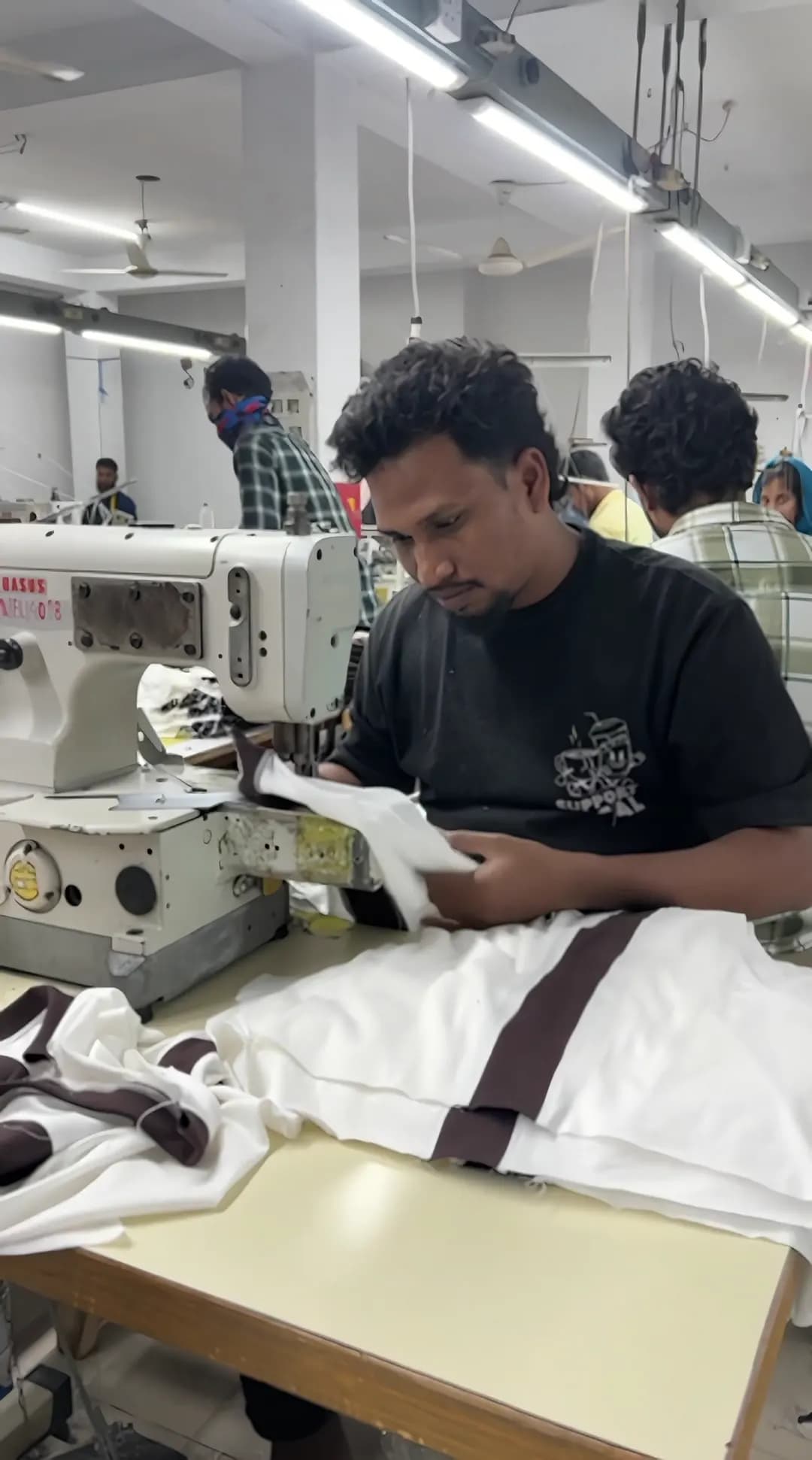 0:19Our sewing floor in Narayanganj
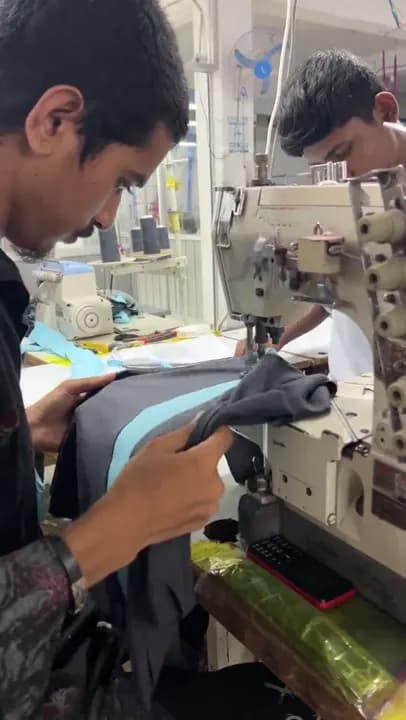 0:18Coverstitch sewing on a charcoal garment
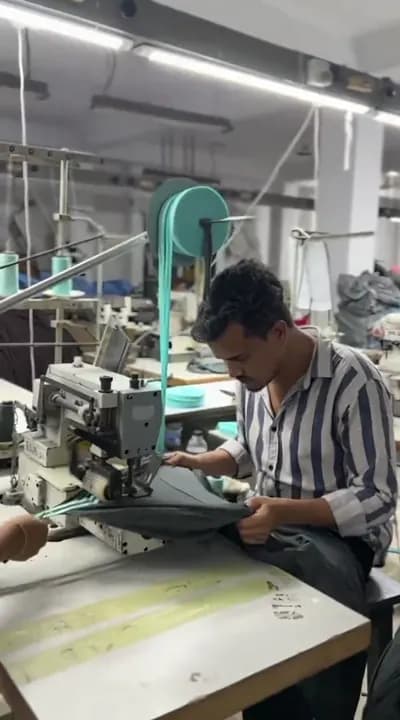 0:23Binding a garment with contrast tape
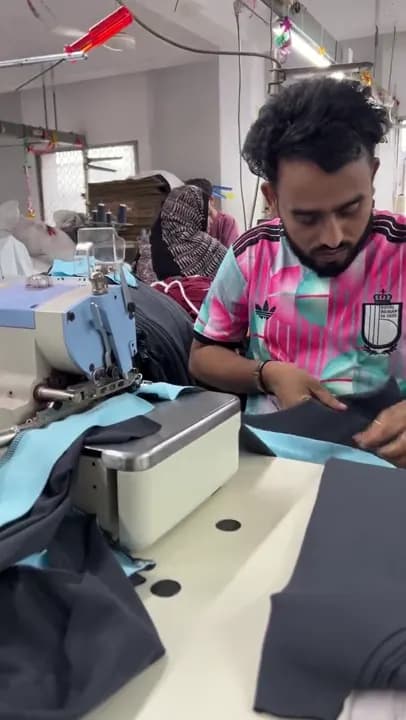 0:15Attaching aqua binding to a charcoal garment
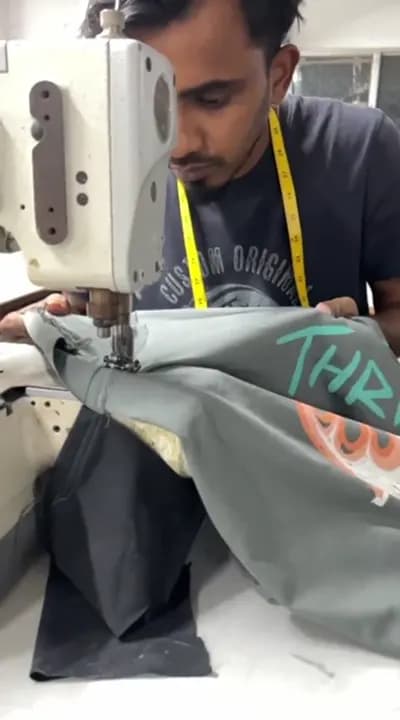 0:21Sewing a printed garment on the line
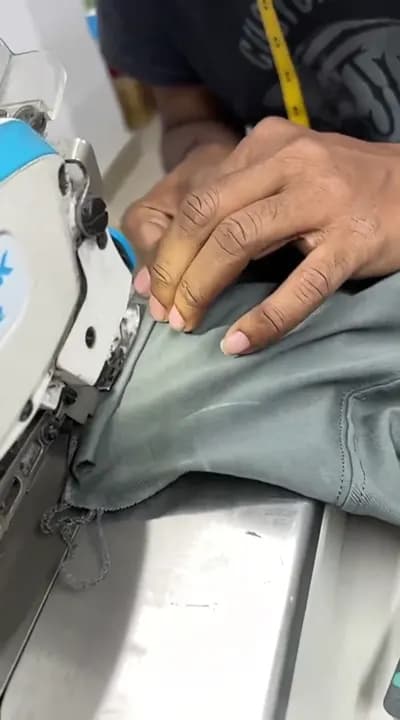 0:16A seam being sewn, close up
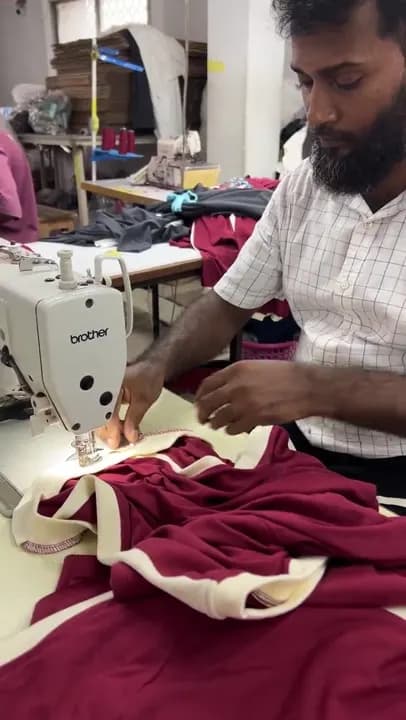 0:42Attaching contrast rib to a sweatshirt
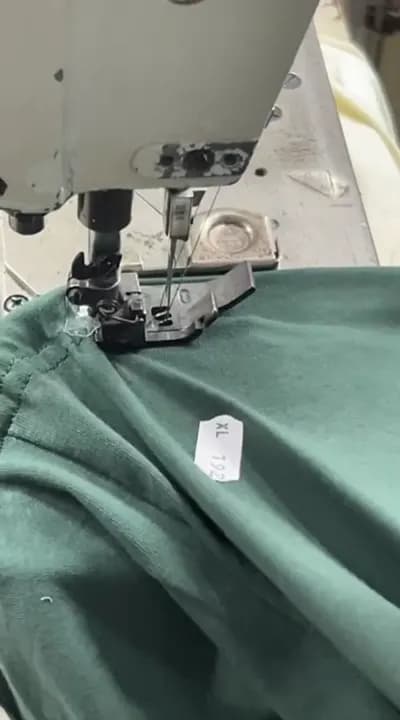 0:06Sewing a green jersey tee
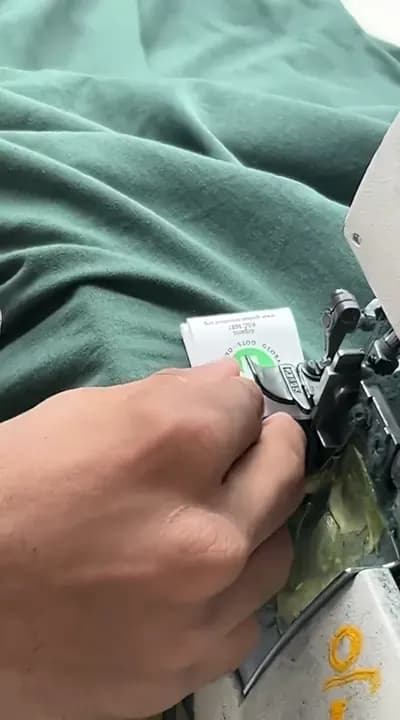 0:06Sewing a GOTS label into a garment
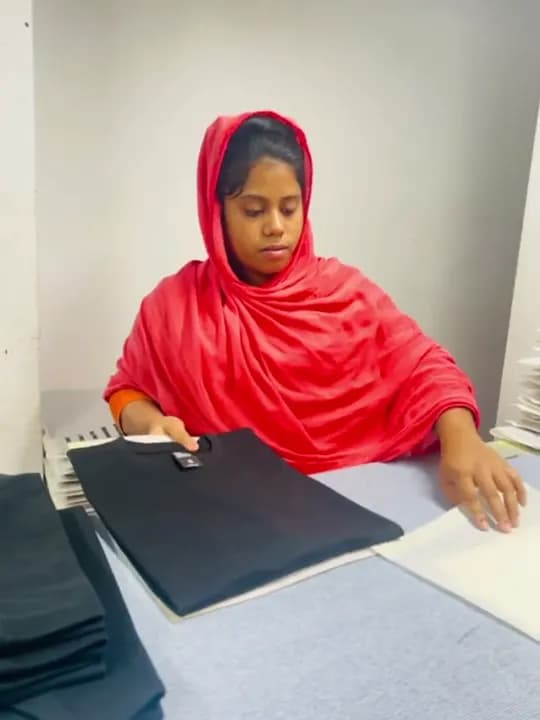 0:23Folding and bagging finished garments
At partner mills in Bangladesh
We do not knit or dye fabric ourselves. These clips were filmed at the partner mills that do, so you can see the stages before the fabric reaches our floor.
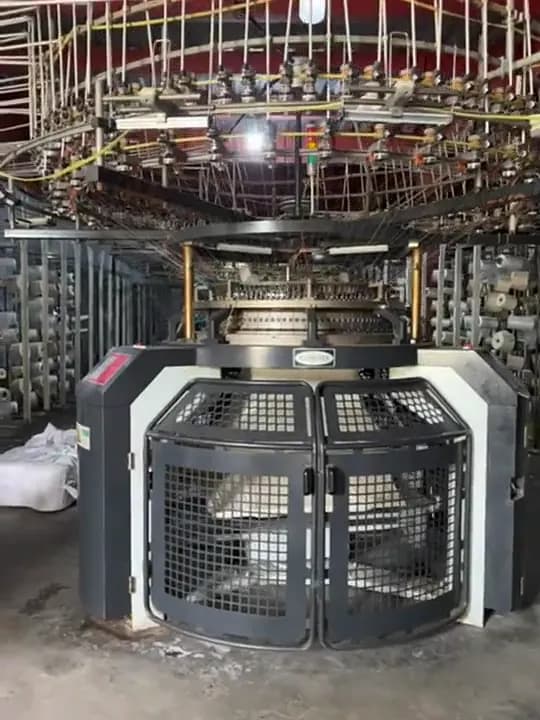 0:25Circular knitting machines at a partner mill
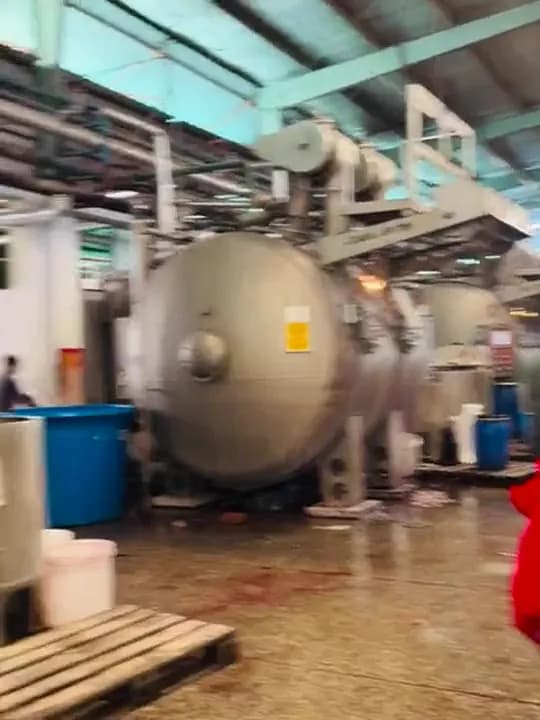 0:25Jet dyeing knitted fabric at a partner plant
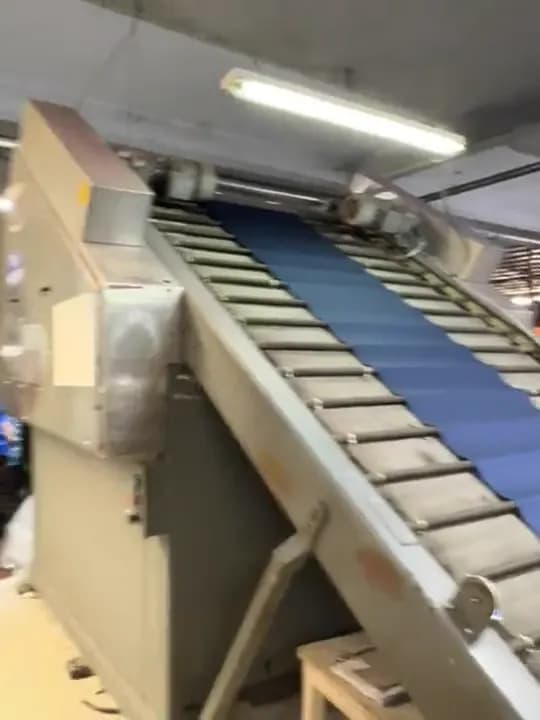 0:11Inside a partner fabric dye house
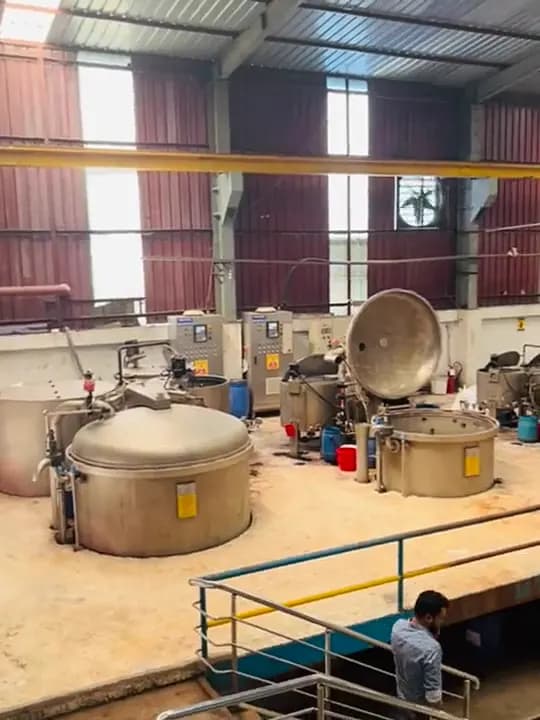 0:09A yarn dye house at a partner mill
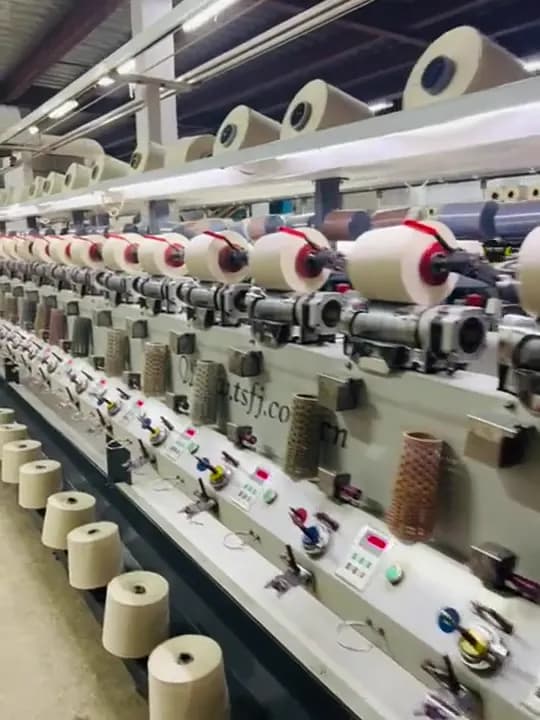 0:25A yarn-winding hall at a partner mill
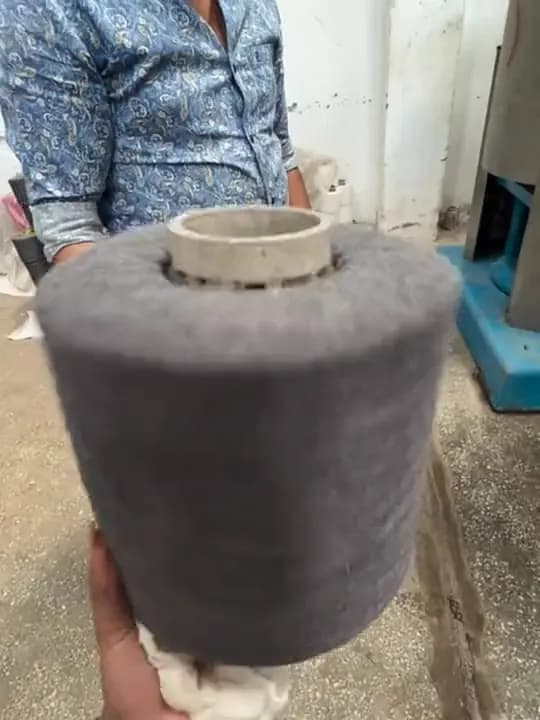 0:25Checking yarn at a partner mill
Walkthroughs
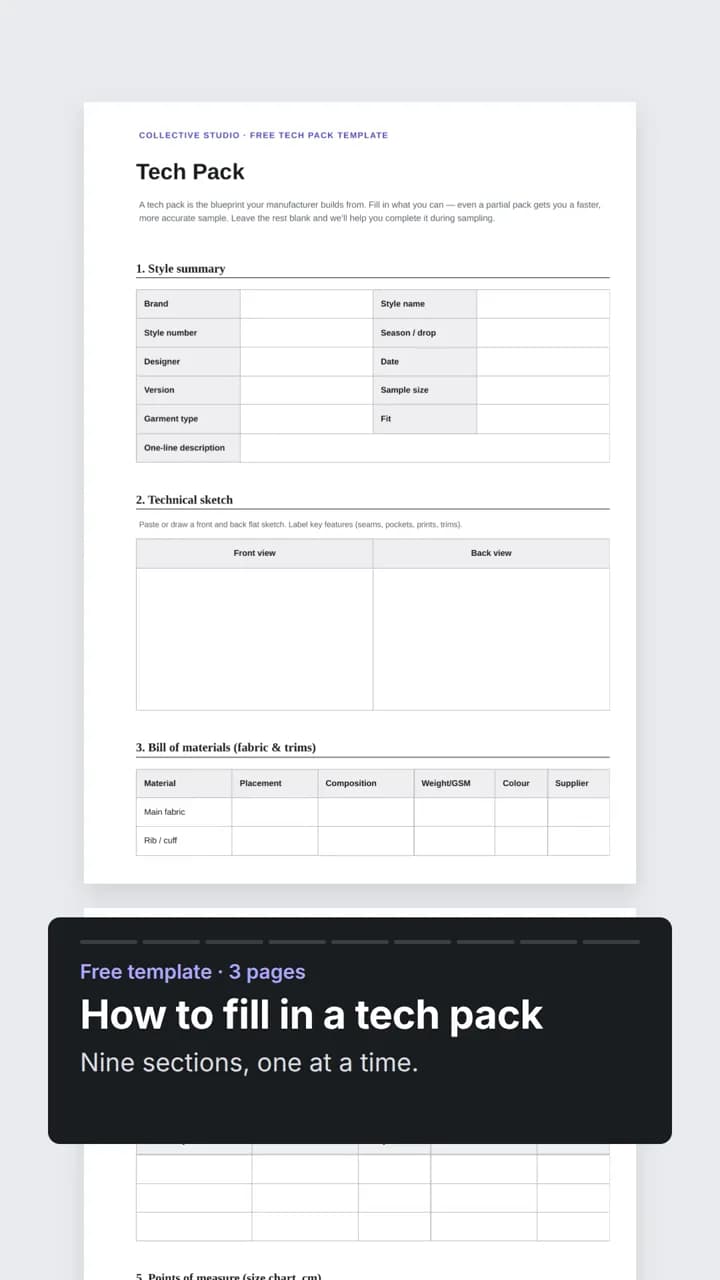
Made from our own free resources, section by section.
Factory videos: questions brands ask
Where were Collective Studio's factory videos filmed?
The floor clips were filmed on Collective Studio's own cut-and-sew floor in Narayanganj, Bangladesh, and the partner clips at the mills in Bangladesh that knit and dye its fabric. Every clip page says which of the two it shows, so you never have to guess whose building you are looking at. The floor clips cover sewing, coverstitching, binding, attaching rib, sewing in a GOTS label and packing finished garments. The partner clips cover yarn checking, yarn winding, yarn dyeing, circular knitting, jet dyeing and fabric finishing. The factory sits at Plot-A-132, Road No. 02, BSCIC Industrial Area, Panchabati, Narayanganj 1420, which is the address on the factory profile and on our contact page. The tech pack walkthrough is the one exception: it is made from our free template rather than filmed, and it is listed separately under walkthroughs.
Which stages of production happen on Collective Studio's own floor?
Cutting, sewing, labelling, finishing, inspection and packing happen on Collective Studio's own floor in Narayanganj; knitting and dyeing happen at partner mills. That split is normal in Bangladesh, where many knitwear factories cut and sew fabric that specialist mills have knitted and dyed. We book those mills for each order, submit your lab dip, and inspect the fabric before it is cut. On our floor the fabric is spread and cut to your pattern, bundled by roll, sewn down the line, checked during and after sewing, then folded, bagged and packed into cartons. The videos are grouped the same way, so the floor clips and the partner clips sit under separate headings. If a factory tells you it does every stage under one roof, ask which building each stage happens in and ask to see it on a call.
Are these factory videos edited, staged or stock footage?
No. They are short, unedited clips filmed on the floor and at partner mills during normal work, with no voice-over and no stock footage. What you see is what was happening when the camera was there: operators at their machines, cut work on the tables, fabric coming out of the dye machines. Each clip page describes what is actually on screen, written from the footage itself rather than from the file name, and partner footage is always labelled as a partner's. The one clip with a voice is the factory tour on our YouTube channel, where co-founder Homaira Jashim walks the floor on camera. Short clips can only show a moment, so if you want to see more than they cover, the honest next step is a live video walkthrough, where you choose where the camera points and can ask questions as you go.
Can I watch a live video walkthrough of the factory before I order?
Yes. Collective Studio offers live video walkthroughs of its floor in Narayanganj, which you can book through the contact page before you place an order. On the call a phone is carried along the floor, so you can see cutting, the sewing lines, finishing and packing, and ask to look at a seam, a machine or a carton up close. It is the quickest way to check that the place in these videos is real and that it works the way the clip pages describe. If you would rather come in person, you can visit the factory as well. Before the call, it helps to have a style in mind, so we can show you garments of the same type on the line, and to send any questions about fabric, decoration or quantities so the right people are there to answer them.
What does the inside of a Bangladesh knitwear factory look like?
A knitwear cut-and-sew floor in Bangladesh is usually a long hall of industrial sewing machines in rows, with cutting tables at one end and finishing and packing at the other. Each operator does one operation or a few, such as setting a sleeve, attaching a rib or coverstitching a hem, and bundles of cut pieces move from station to station. The machines you see most are overlockers for seams, coverstitch machines for hems and lockstitch machines for labels and topstitching. Knitting and dyeing usually happen in separate mills with circular knitting machines, yarn creels and large sealed dyeing vessels, which is what the partner clips on this page show. Bangladesh has about 4.2 million garment workers, and factories range from small floors to large vertical groups. The clips here show one family-run floor in Narayanganj and the partner mills it works with.
How is a knitted T-shirt or sweatshirt made, from yarn to packed carton?
A knitted garment goes from yarn to fabric at partner mills, then from fabric to finished garment on the sewing floor. Yarn is checked, wound onto cones and knitted into a tube on a circular knitting machine. The fabric is then dyed, usually in a jet dyeing machine, and finished to its final width, weight and shrinkage. At Collective Studio it is checked against your approved lab dip, cut to your pattern and sewn: seams on an overlocker, hems on a coverstitch machine, with rib or binding on the openings. Labels go in during sewing, and the garments are inspected, folded, bagged and packed into cartons. Sampling takes about 10 days, production about 40 to 50 days after sample approval, and the order reaches your door in about 70 days by air. Each step has its own clip on this page.
What is the minimum order for clothing made on the floor in these videos?
Collective Studio's minimum order is 150 pieces per style and per colour. That means a T-shirt in two colours needs 150 of each, and a hoodie and a jogger in one colour each need 150 of each style. The minimum is set per colour because every colour is dyed as its own lot, with its own lab dip and its own run through the dye machine, as the jet dyeing clip shows. Sizes can be split however you like within each colour. Everything made on this floor is cut-and-sew knitwear: T-shirts, sweatshirts, hoodies, joggers, polos, tank tops and similar garments in jersey, French terry, fleece, piqué, rib and interlock, with printing, embroidery and dyeing arranged as part of the order. The MOQ calculator on the resources page shows how a quantity splits across colours before you ask for a quote.
Is the factory in these videos GOTS certified?
Yes. The floor in these videos is Collective Studio's GOTS-certified facility in Narayanganj, certificate RSC 9687. The certification applies to the facility, and it is what allows us to make organic cotton garments that carry the GOTS label; one of the floor clips shows that label being sewn into a seam. A certified garment needs more than a certified sewing floor: the yarn, knitting and dyeing for that order also have to come from certified units, and the order is covered by transaction certificates that link it to the certified chain. You can ask us for the scope certificate itself, which names the facility and the products it covers, and we send the document itself rather than a summary. Our membership of BKMEA and the Narayanganj Chamber is a separate thing from GOTS and covers trade standing, not organic processing.
How can I use factory videos to vet a clothing manufacturer?
Use factory videos to check that the factory exists, that it does the work it claims, and that its answers match what you see. Start with what is on screen: real machines, real operators, garments in progress and a floor that looks like daily work rather than a staged set. Then compare the footage with the sales claims. A cut-and-sew factory should show cutting and sewing; if it claims knitting or dyeing, ask to see that too, and whether it is in-house or at a partner. Look for details you can ask about later, such as size tickets on bundles, lot tickets on yarn or a certification label being sewn in. Finally, treat recorded clips as a starting point. Ask for a live video call, check the address and certificate numbers against public records, and ask for a sample before you place bulk.
Which factory video should I watch for the garment I want to make?
Start with the clip closest to your garment's construction. For T-shirts, watch the green jersey tee, the seam close-up, the coverstitch hem and the packing clip, which together cover side seams, hems, shade matching and folding. For sweatshirts and hoodies, watch the clip of contrast rib being attached to a sweatshirt, since rib cuffs, hems and necklines are where those garments most often go wrong. For printed designs, watch the printed garment on the line, which shows how a printed panel is sewn without catching the artwork. For striped or marl fabric, watch the yarn dye house and yarn-winding clips from partner mills, because a knitted stripe starts with dyed yarn. If you plan an organic cotton range, watch the GOTS label clip. Each page also lists what to specify in your tech pack and what to check on your sample for that process.