A seam being sewn, close up
Close-up of a seam being sewn on sage-green fabric with a mustard stripe at Collective Studio in Narayanganj, Bangladesh.
- Length
- 0:16, no sound
- Filmed at
- Collective Studio, Narayanganj, Bangladesh
What you are seeing
Close in, you can see how the operator controls the fabric: feeding it at an even speed and keeping the edge against the guide, so the stitch line stays straight and the seam allowance stays the same width.
An even seam allowance is what keeps a garment's finished measurements inside tolerance from the first piece of a run to the last.
The seam is overlocked: the finished edge is wrapped in looped thread, and a tail of chained thread trails off where the previous seam ended. The fabric has a mustard band and small printed motifs, and the operator lines the band up on both layers before it goes under the foot.
Two things to look for on a sample or a bulk piece: thread tails left untrimmed, which a final inspection counts as a defect, and a band or stripe that steps up or down where it crosses a seam.
Overlock seams on knitwear
The seam in this clip is overlocked. An overlocker does three jobs in one pass: a knife trims the edge to the seam allowance, the needles sew the seam, and loopers wrap the cut edge in thread so it cannot fray or run. On knits, a four-thread overlock is the usual seam for side seams, shoulders and sleeve seams, because its looped threads stretch with the fabric rather than cracking when the garment is pulled on.
The chain of thread trailing off where the last seam finished is how an overlocker works between pieces: it keeps stitching in the air until the next piece arrives. That chain is cut off and the ends secured during trimming. If it is not, the untrimmed tail is one of the defects a final inspection counts.
Seam allowance and your finished measurements
A pattern includes a seam allowance on every edge, and the finished garment is only the right size if the seam is sewn at that allowance. Keeping the edge against the guide, as the operator does here, is what holds it there. If each side seam is sewn a few millimetres wider than planned, a chest measured flat comes out smaller by twice that, because the measurement crosses both seams.
This is what a tolerance column is for. Our guide to building a size chart explains how to set tolerances that are realistic for knitwear, and our tech pack template puts a tolerance beside every point of measure so bulk pieces can be checked against something written.
Matching stripes and bands across seams
The operator lines up the mustard band on both layers before sewing. Matching a stripe or band at a seam starts at the cutting table, where each panel has to be cut with the band in the same place, and it uses more fabric than cutting plain cloth because pieces can no longer be nested freely. The fabric consumption calculator gives the plain-fabric figure to start from.
Say in your tech pack which seams must match: usually the side seams, and sometimes the sleeve to the body. Matching every seam on every size is not always possible, and saying where it matters lets the cutter plan for it. A knitted stripe made from dyed yarn is covered in our yarn dye house video.
Where this clip appears
A seam being sewn, close up: questions brands ask
Which seam faults count as defects in a final inspection?
Anything that would make a customer return the garment, or notice it, counts, and the inspection classifies each fault as critical, major or minor. Open seams, skipped stitches that leave a gap, broken stitches and a seam that has not caught both layers are normally major defects, because the garment can fail in wear. Puckering, uneven stitch lines, a stripe that steps at a seam and untrimmed thread tails are usually minor, because the garment works but looks less finished. The exact classification comes from the defect list agreed for your order, so it is worth agreeing one in advance rather than relying on the inspector's judgement. The number of pieces checked and how many defects are allowed then come from the AQL you choose; a common choice in apparel is AQL 2.5 for major defects and 4.0 for minor ones. Our AQL calculator works out the sample size for your order quantity.
Why do knit garments need different seams and needles from woven ones?
Because knitted fabric stretches and is made of loops, and both change how it has to be sewn. A seam on a knit has to stretch as far as the fabric does. A straight lockstitch seam, the standard stitch on woven shirts, has little give, so on jersey it cracks when the garment is pulled over a head. Overlock and coverstitch seams use looped threads that extend with the fabric and recover, which is why a knit line runs mostly on those machines. Needles matter too. A sharp needle can cut the yarn of a knit as it passes through, leaving small holes along the seam that open into ladders in wear. Knit sewing uses ballpoint needles, whose rounded tip slips between the loops instead of piercing them. If you see a line of tiny holes beside a seam on a sample, ask about needle type and condition before bulk.
What is an overlock seam?
An overlock seam is a seam sewn on an overlocker, a machine that trims the fabric edge, sews the seam and wraps the cut edge in looped thread in one pass. A knife cuts the edge to the seam allowance just ahead of the needles, and loopers carry thread around the raw edge so it cannot fray or run. On knitwear, a four-thread overlock is the usual seam for side seams, shoulders and sleeve seams, because its looped threads stretch with the fabric rather than cracking when the garment is pulled on. The seam in this clip from Collective Studio's floor in Narayanganj is overlocked, and you can see the chained thread trailing off where the last seam ended. An overlocker keeps stitching between pieces, which forms that chain. On a finished garment the chain should be trimmed and secured, and the wrapped edge inside should look even all the way along.
What is seam allowance, and how does it affect garment measurements?
Seam allowance is the strip of fabric between the cut edge and the stitch line, and if it is sewn wider or narrower than the pattern intends, the finished garment comes out the wrong size. Every pattern piece includes an allowance on each edge, and the finished measurements are only correct when the seam is sewn at exactly that width. The error also doubles across a garment. If each side seam is sewn a few millimetres wider than planned, a chest measured flat comes out smaller by twice that amount, because the measurement crosses both seams. That is why the operator in this clip keeps the fabric edge against the guide at an even speed: an even allowance keeps measurements inside tolerance from the first piece of a run to the last. Put a tolerance beside every point of measure in your tech pack, so bulk pieces can be checked against something written.
Are loose thread tails on new clothes a defect?
Yes. Untrimmed thread tails are counted as a defect in a final inspection, usually a minor one, because the garment works but looks unfinished. They come from the way an overlocker works: it keeps stitching between pieces, forming a chain of thread, like the tail trailing from the seam in this clip from Collective Studio's floor. That chain is cut off and the ends secured during trimming, after the garment leaves the line. If a tail is left, it can catch, unravel slightly or simply make a new garment look careless. Whether tails count as minor or major, and how many are acceptable in the inspected sample, depends on the defect list and AQL agreed for your order, so it is worth agreeing that list in advance. A common choice in apparel is AQL 4.0 for minor defects. When you check bulk, look at hems, cuffs and the inside of side seams first.
How do factories match stripes across seams?
Stripe matching starts at the cutting table, where every panel is cut so the stripe sits at the same height on each piece, and it finishes at the machine, where the operator lines the stripes up before sewing. In this clip from Collective Studio's floor, the operator aligns the mustard band on both layers before the fabric goes under the foot. If the panels were not cut to match, no amount of care at the machine can fix it. Matching uses more fabric than cutting plain cloth, because pieces can no longer be nested freely on the lay. It is also not always possible on every seam of every size. So say in your tech pack which seams must match, usually the side seams and sometimes the sleeve to the body, and let the cutter plan around those. On your sample, check that no band steps up or down where it crosses a seam.
How do I specify seams and stitch types in a tech pack?
List them area by area in the construction table: for each part of the garment, give the seam or stitch type, the stitches per inch if you know it, and any topstitching or tape. Collective Studio's tech pack template has a construction table that runs through the neckline, shoulder seam, side seam, sleeve or cuff and hem in turn. A typical knit tee might read four-thread overlock at the shoulders and side seams, coverstitch at the hem and sleeve openings, and a tape across the back neck. If you do not know the right stitch for a seam, leave that field blank and say so, and the factory proposes its standard construction for that garment. Every value added then appears in the next version of the pack, so you approve the method by approving the sample. Also say which seams must match a stripe or band, and where thread colour matters.
What is the difference between an overlock and a coverstitch?
An overlock joins and neatens seams, while a coverstitch hems and topstitches. An overlocker trims the edge, sews the seam and wraps the raw edge in looped thread in one pass, so it is used for side seams, shoulders and sleeve seams, where two pieces are joined. It is mostly hidden inside the garment. A coverstitch machine sews two or three needle threads from the top and catches them underneath with a looper thread that zigzags across the back, covering the raw edge on the inside. That is the stitch you see as parallel lines on the outside of a T-shirt hem or sleeve opening. Both stretch with knit fabric, which a straight lockstitch does not. A knit line on Collective Studio's floor runs mostly on these two machines, and this clip shows an overlocked seam. Our coverstitch video shows the other machine at work.
More from the floor and the mills
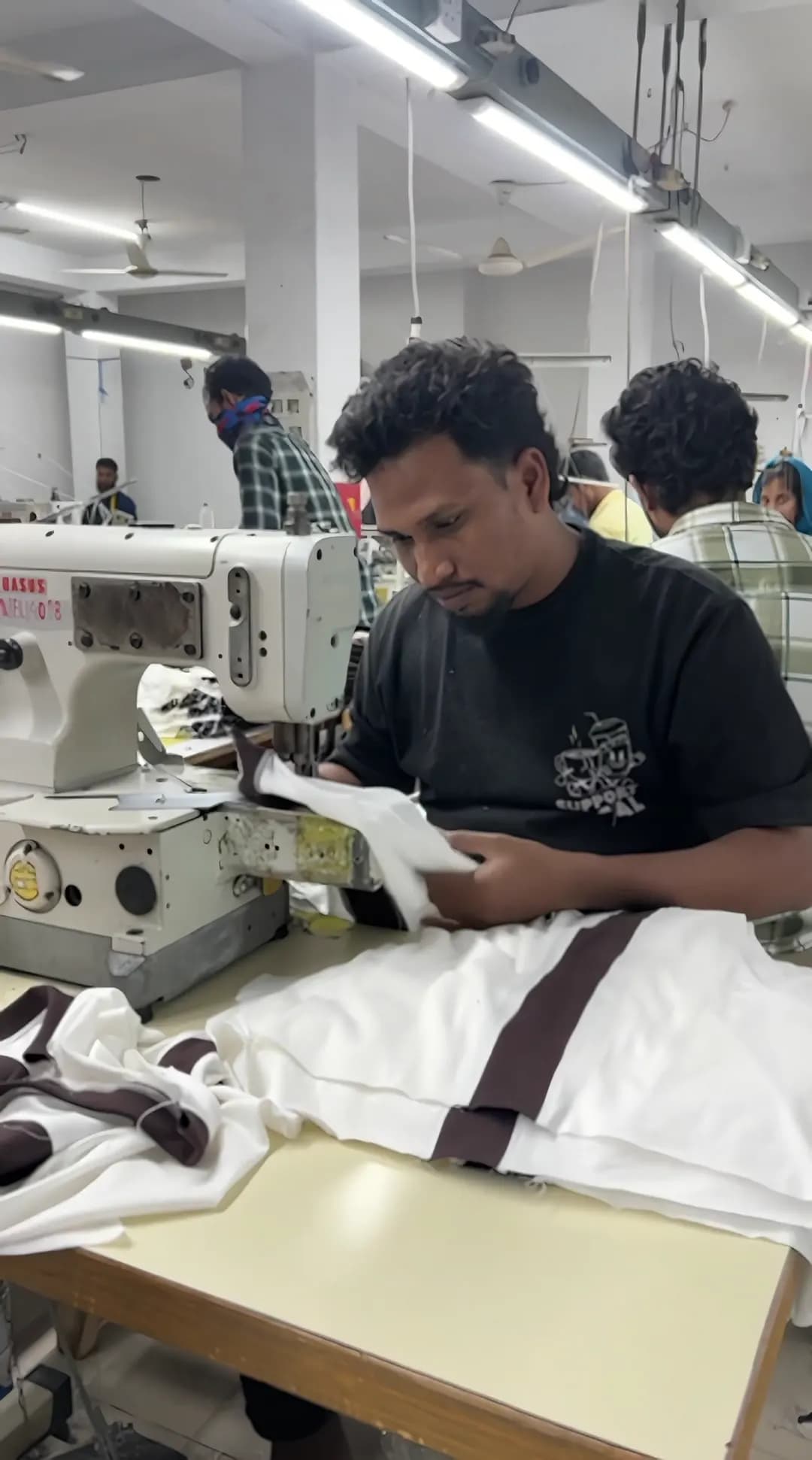 0:19Our floorOur sewing floor in Narayanganj
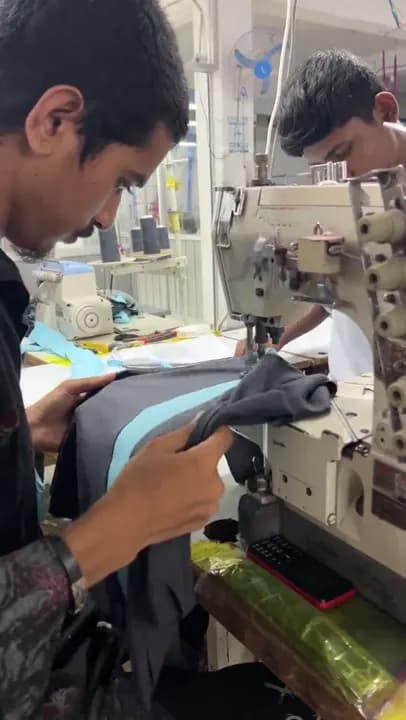 0:18Our floorCoverstitch sewing on a charcoal garment
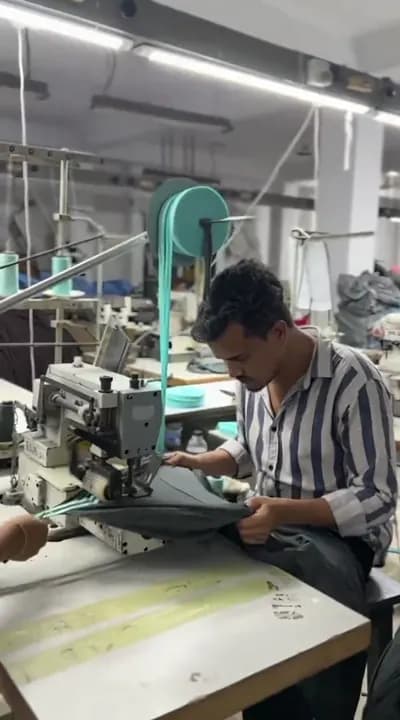 0:23Our floorBinding a garment with contrast tape
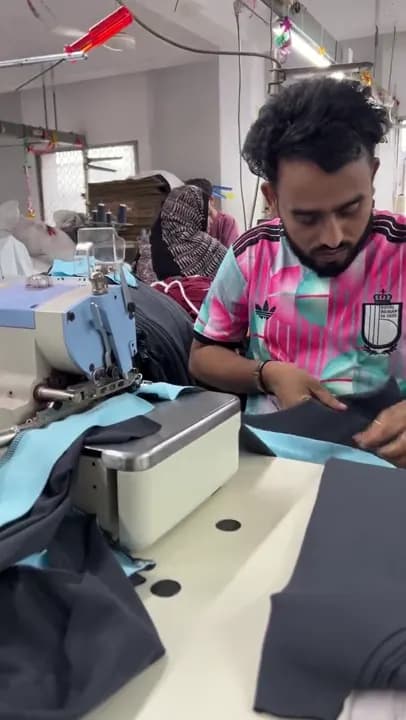 0:15Our floorAttaching aqua binding to a charcoal garment
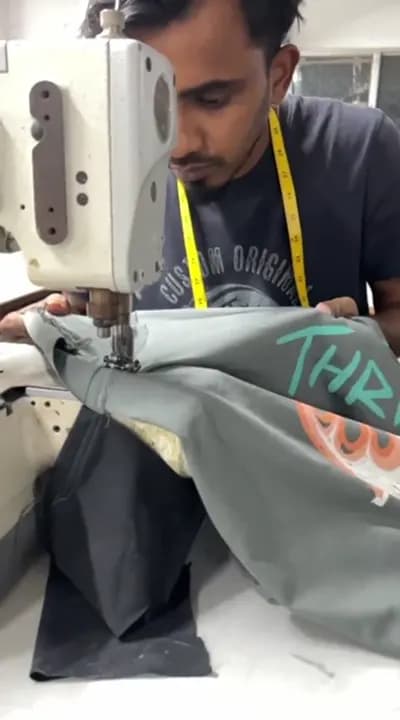 0:21Our floorSewing a printed garment on the line
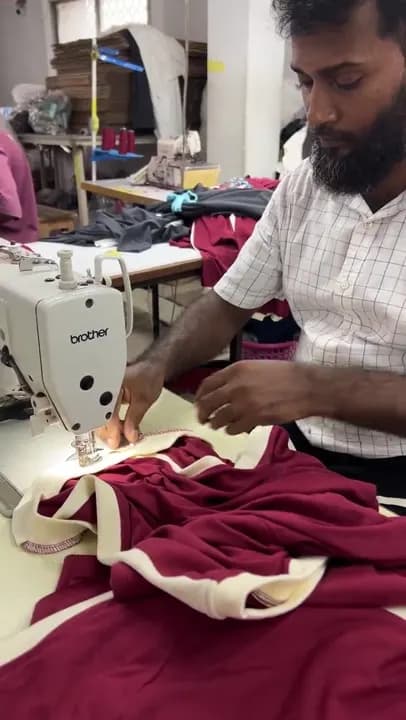 0:42Our floorAttaching contrast rib to a sweatshirt