How to Make a Tech Pack (Step by Step)
A tech pack is the document your manufacturer builds from — the single source of truth for how your garment is made. A clear one gets you an accurate first sample and a fair quote; a vague one gets you guesswork. The good news: you don't need to be a technical designer to make a solid first version. Here's how, step by step.
If you're not sure what a tech pack is yet, start with our plain-English explainer. Otherwise, grab our free tech pack template and fill it in as you read.
Step 1 — Describe the garment
Open with the basics: style name, garment type, fit (slim, regular, oversized), the intended wearer, and a one-line description. Add a reference garment or photos you're working from — "like this hoodie, but heavier and cropped" tells a factory a lot.
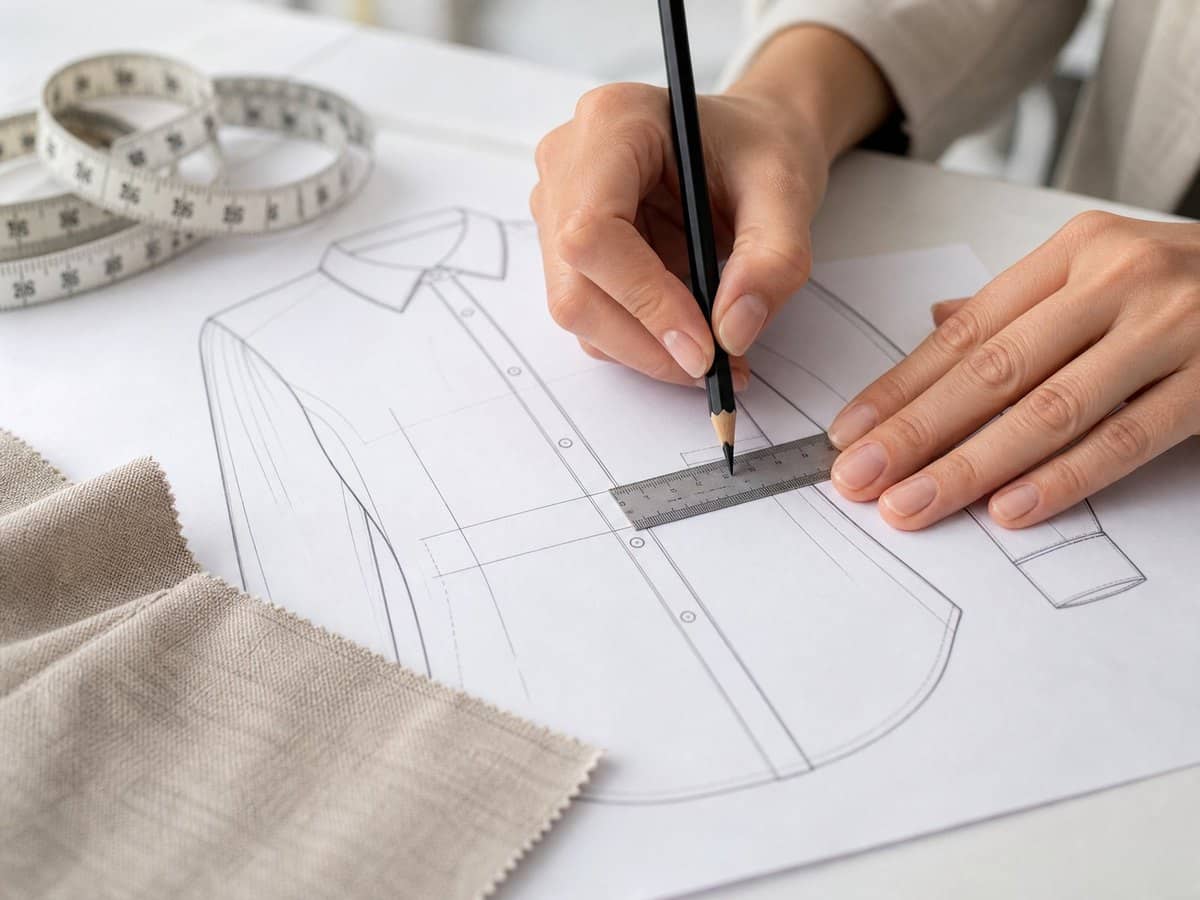
Step 2 — Add a technical sketch
A flat sketch (front and back) shows the construction without a body in the way. You don't need CAD software — a clean hand drawing, an annotated photo, or a free flat-sketch template works for a first pack. Label the features that matter: seams, pockets, prints, drawcords.
Step 3 — List materials and trims (the BOM)
The bill of materials is every component: main fabric, ribbing, thread, drawcords, zips, buttons. For each, note composition, weight in GSM, colour and any certification you need (for example, GOTS-certified organic). This section drives much of your cost, so be specific.
Step 4 — Specify colourways
List each colour version of the garment, with reference codes — Pantone or TCX where you can — and say which part is which colour (body, ribbing, trims, print). Reference codes remove the guesswork that plain colour names leave behind.
Step 5 — Build a size chart (points of measure)
- Choose your sample size first (often M for tops) and measure your reference garment laid flat.
- List the key points of measure — chest width, body length, shoulder, sleeve length, neck width, hem.
- Add a tolerance (the +/- a factory is allowed to vary by, often around 1cm on a tee).
- Grade the other sizes — how each measurement steps up or down across the range.
Step 6 — Note construction and stitching
For each area — neckline, shoulder, side seam, cuff, hem — note the seam and stitch type and any stitch-per-inch requirement. If you don't know the technical terms, describe what you want ("twin-needle hem", "flatlock seams") or leave it for the factory to advise.
Step 7 — Labels, branding and packaging
Specify your neck label, care and content label, size label and any hang tags, with placement and artwork references. Then cover packaging: how each piece is folded, polybags, barcodes and carton packing. These details are part of the product, not an afterthought.
A tech pack doesn't have to be perfect. It has to be clear. Fill in what you know, flag what you don't, and let your factory close the gaps.
Tools you can use
- Our free, fillable tech pack template (PDF) — the fastest start.
- A spreadsheet for the size chart and bill of materials, if you prefer editable tables.
- Free flat-sketch templates, or a clearly annotated photo of a reference garment.
Common mistakes to avoid
- Colour names with no reference code — "navy" means ten different blues.
- No tolerances on measurements, so every size comes back slightly off.
- Measuring a stretched or worn reference garment instead of a flat, relaxed one.
- Leaving out packaging and labels, then being surprised by the quote.
You don't need everything filled in to get started. Download the free template, complete what you can, and send it to us — we'll help finish it during sampling and make a physical sample before any bulk is cut.
Frequently asked questions
How do I make a tech pack?
Build it section by section rather than trying to write it in one pass. Start with a plain description of the garment and who it is for, which frames every decision after. Add flat sketches, front and back, drawn to proportion rather than styled — an annotated photograph of a reference garment works if you cannot draw. List materials with composition, weight in GSM and finish, then trims individually: thread, elastic, drawcords, zips, labels. Specify colourways using reference codes rather than names, since "navy" is not a specification. Build the size chart with points of measure, grading increments and tolerances. Then construction and stitch notes, then labels and packaging placement. Working from a template is considerably faster than starting blank.
Can I make a tech pack myself?
Yes, and a first version does not need to be technically perfect to be useful. Three things carry most of the meaning: a clear sketch, accurate measurements taken from a real garment, and specific material information. Get those right and a competent factory can produce an accurate first sample, then refine the technical detail with you during sampling — which is where a manufacturer's input is most valuable anyway, because they know what is straightforward to sew and what quietly adds cost. The most effective shortcut available to someone without technical training is to send an existing garment whose fit you want matched. Measurements taken from a physical object beat any description, and remove most of the ambiguity a first tech pack usually contains.
What tools do I need to make a tech pack?
Less than people expect. A template to work into, so you are filling gaps rather than inventing structure. Something to produce a flat sketch — dedicated software if you have it, but an annotated photograph or a clear hand drawing is enough for a first version. A tape measure, because measurements from a reference garment are the most valuable data you can supply. And a spreadsheet for the size chart and bill of materials, since both are essentially tables and both change repeatedly during sampling. Specialist software helps at scale but is unnecessary for a first product. What matters is that every field is either filled in or explicitly marked as a decision for the factory to advise on.
Free tools & guides for this
Sources & further reading
Have an idea? Let’s make it.
We manufacture from 100 pieces per style, with GOTS-certified organic options and photos at every stage. Send a sketch or a sentence — we’ll reply within a day.