Fit set on four measurements
Shoulder point, chest ease, waist suppression, body length — specified deliberately on your sample, not inherited from a stock block.
Menswear made properly — tees, polos, shirts, hoodies and joggers for your label, from your first 100 pieces to full bulk.
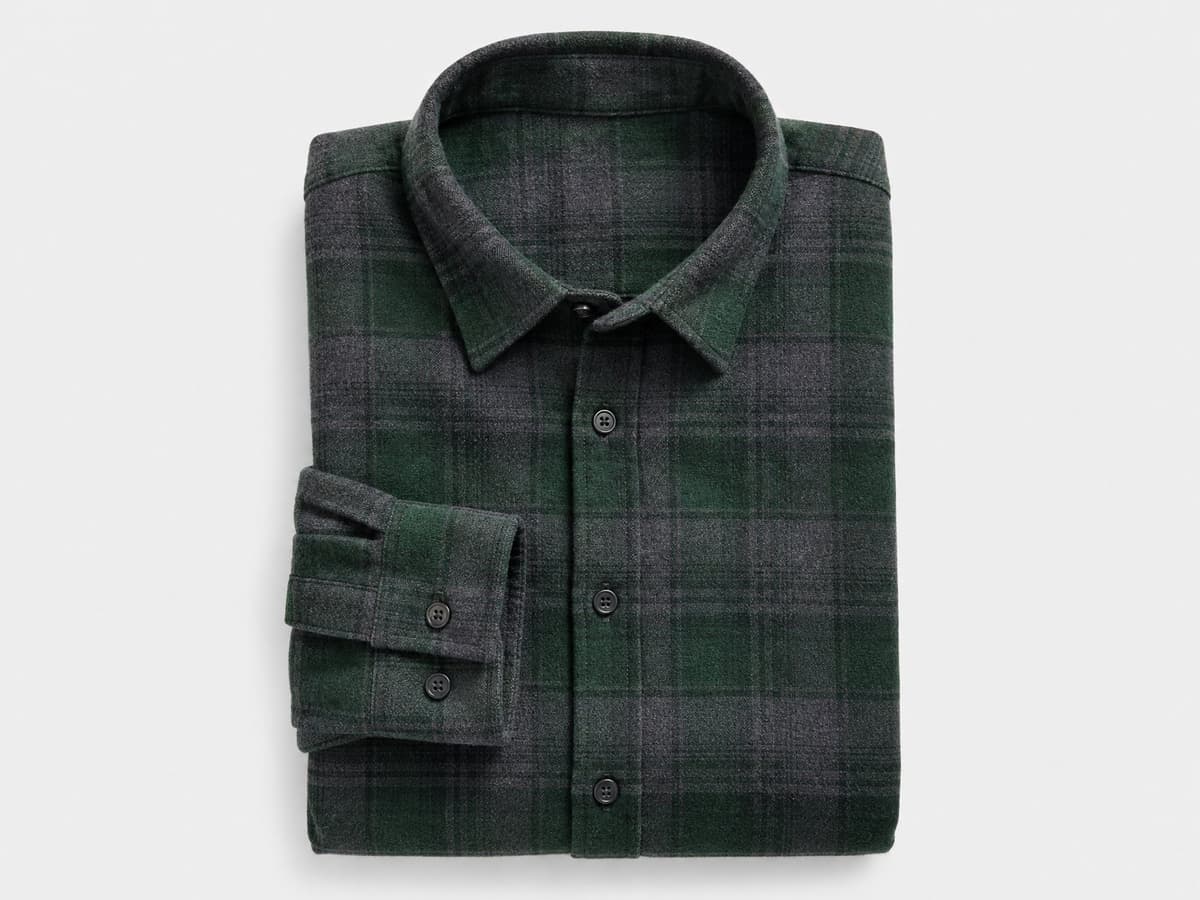
Collective Studio is a family-run men’s clothing manufacturer in Narayanganj, Bangladesh. Menswear is central to what our floor produces: t-shirts, polos, oxford and flannel shirts, hoodies, sweatshirts, joggers, shorts and loungewear, cut and sewn to your pattern in fabrics and weights matched to each garment.
Menswear lives or dies on four measurements, and getting them wrong is why so much of it hangs badly. The shoulder point decides everything downstream — a seam sitting even a centimetre off the natural shoulder makes a well-cut body look sloppy. Chest ease is the difference between a garment reading fitted, regular or relaxed, and it is a deliberate number rather than a by-product of the size. Waist suppression, the taper from chest to waist, is what separates a shirt with shape from a rectangle. And body length determines whether a tee sits correctly untucked or rides up. We set all four with you on the sample rather than inheriting them from a stock block.
On woven shirts, three construction details do the heavy lifting. The collar needs interlining appropriate to the look you want — fused for crispness, unfused for a softer, more relaxed roll — and the wrong choice is why collars either wilt or feel like cardboard. A split back yoke allows the fabric to move with the shoulders and is a recognised marker of a better shirt. A gauntlet button on the sleeve placket stops it gaping at the forearm, costs almost nothing, and is routinely omitted on cheap shirts.
Shirting fabrics behave differently and are not interchangeable. Poplin is a tight plain weave: smooth, crisp, slightly formal, and it shows creases. Oxford uses a basketweave that is more textured, more durable and more forgiving of wrinkles, which is why it suits casual shirting. Flannel is brushed for softness and warmth, with the same caveat as brushed knits — cheap flannel pills. Woven cotton also shrinks more than knit unless pre-shrunk, and on a shirt with a fitted collar that shrinkage is immediately noticeable, so we pre-shrink as standard.
Minimum is 100 pieces per style and colour, GOTS-certified organic cotton is available under certificate RSC 9687, and every approved sample is retained as a sealed reference so a fifth reorder fits identically to the first. Sizing can be graded to alpha (S–XXL) or numeric conventions depending on your market.
Shoulder point, chest ease, waist suppression, body length — specified deliberately on your sample, not inherited from a stock block.
Collar interlining chosen for the look, split back yoke for shoulder movement, gauntlet button so the sleeve placket doesn't gape.
Woven cotton shrinks more than knit, and on a fitted collar it shows immediately. Fabric is pre-shrunk before cutting as standard.
Your approved sample is kept as a sealed physical reference, so the fifth run fits exactly like the first rather than drifting.
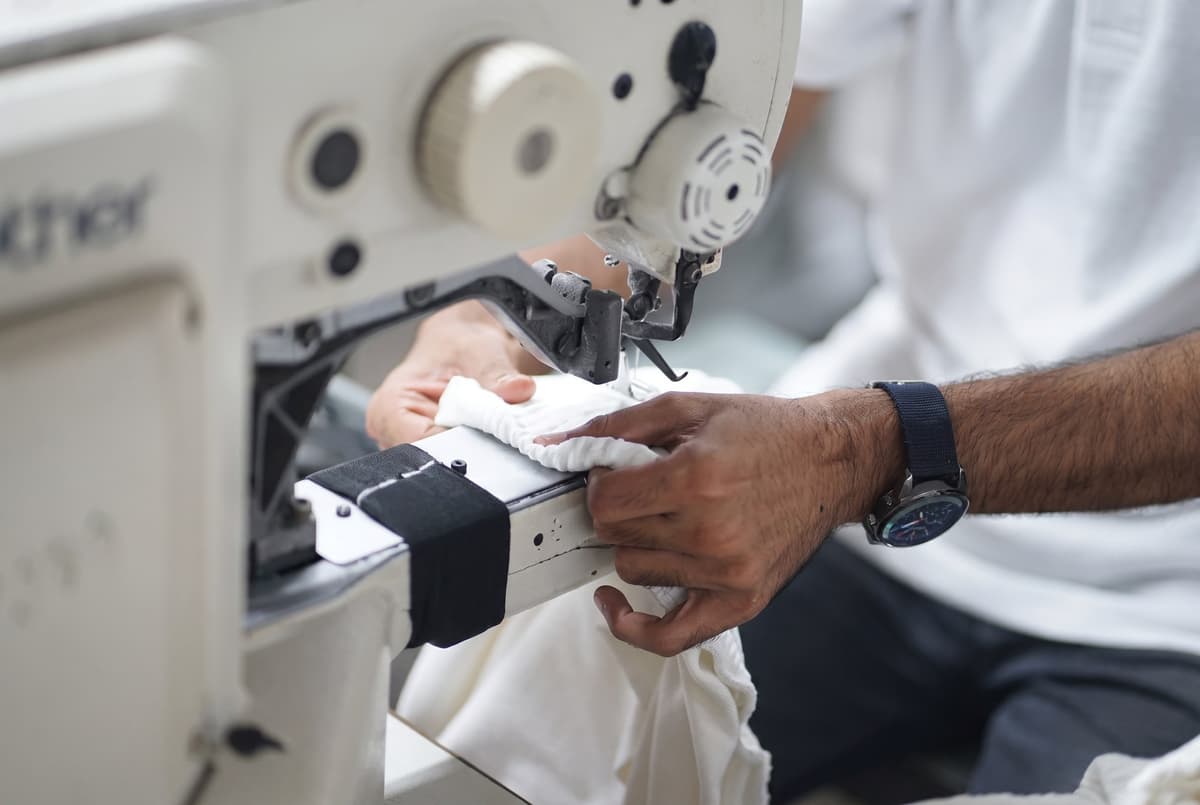
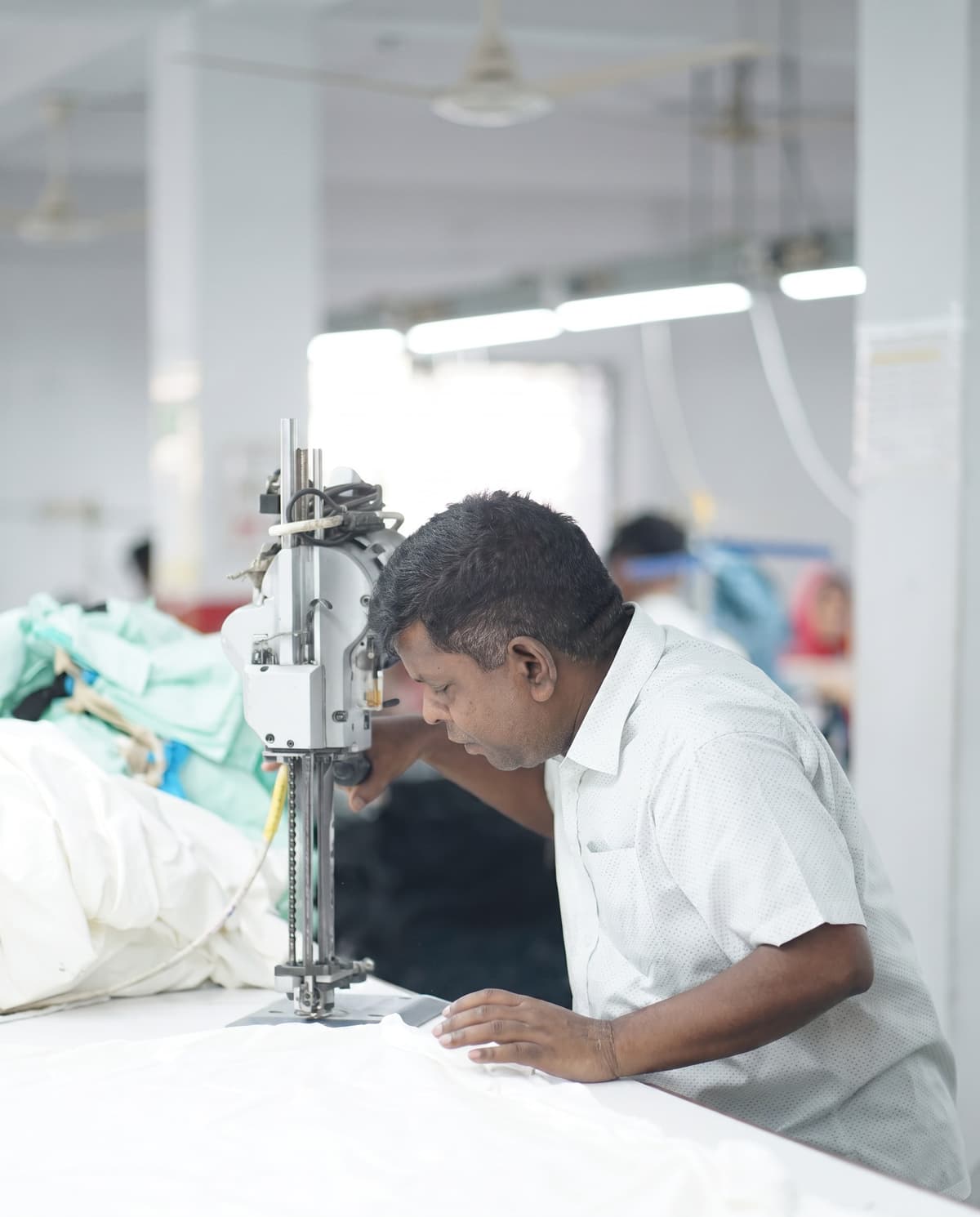
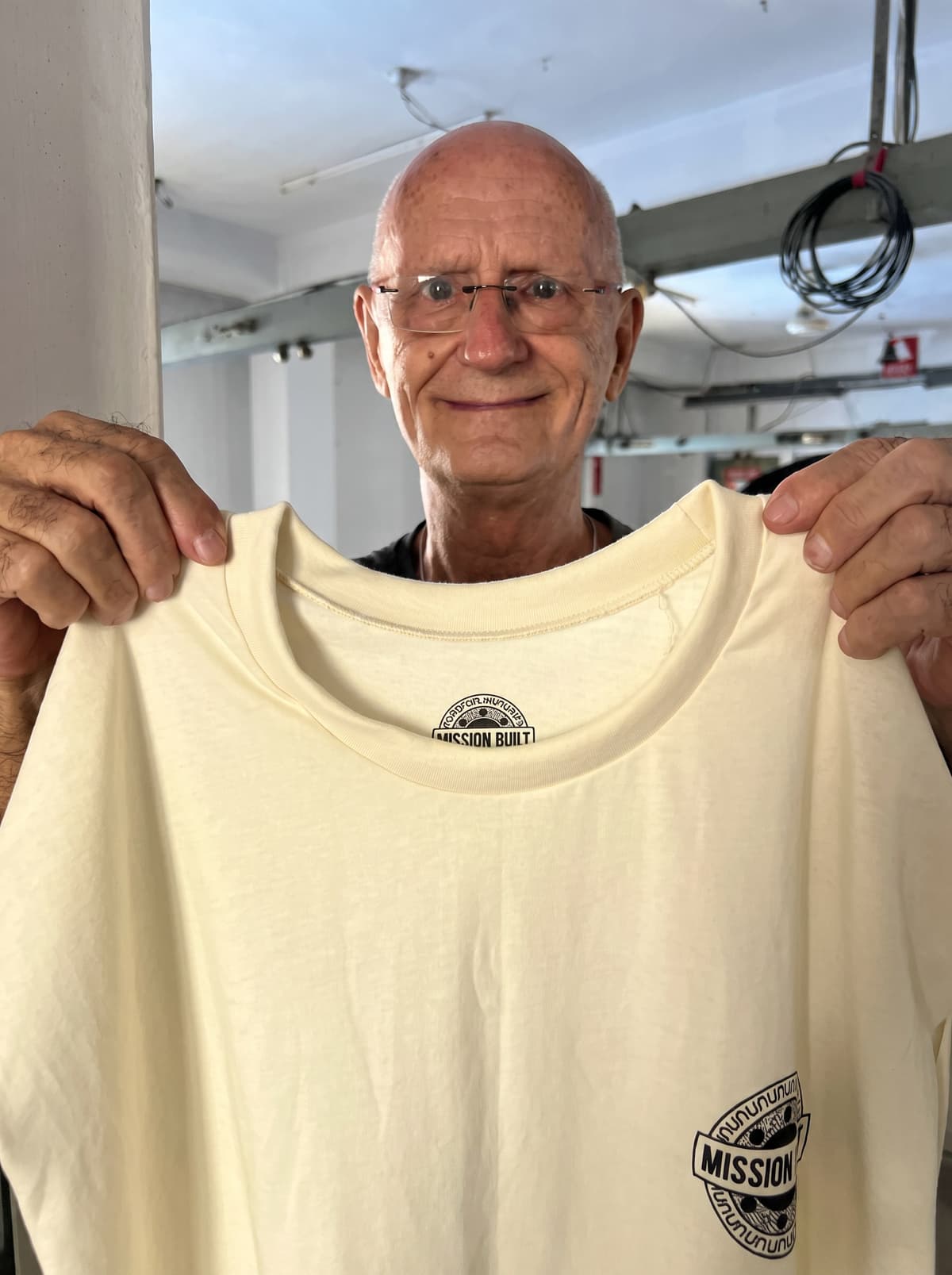
Collective Studios under the direction of Mr Jamish and his daughter Homaira represent the future of RTW production in Bangladesh. A thorough approach to detail governed by a genuine standard of quality. Masters of and partners in the process!
Talk to the factory directly: +880 1980 055021 · hello@collectivestudioltd.com
The core menswear range: t-shirts, polos, button-up shirts in oxford, poplin and flannel, hoodies, sweatshirts, joggers, shorts and loungewear. Cut-and-sew knits are our strongest capability, since that is what our floor is built around, and we make wovens alongside them. Two categories sit outside what we do well, and we'll say so rather than quote you regardless: tailored suiting and structured outerwear need different machinery and a different skill base, and denim is its own specialism. If your range centres on those, a dedicated factory will serve you better. Tell us the full range in your first message and we will be specific about which pieces we should and should not make.
By specifying it rather than inheriting it. Four measurements do most of the work. Shoulder point determines whether the garment hangs correctly at all, since a seam even slightly off the natural shoulder undermines everything below it. Chest ease sets whether the piece reads fitted, regular or relaxed, and it should be a deliberate figure rather than whatever the base size gives you. Waist suppression, the taper between chest and waist, is what stops a shirt looking like a rectangle. Body length decides whether a tee sits properly untucked. We set all four on your first sample, then keep that approved garment as a sealed reference so later runs are measured against a physical object rather than a spec sheet.
One hundred pieces per style, per colour. For menswear specifically the size curve is usually kinder than womenswear or kidswear — a five-size run from S to XXL covers most of the market, so a hundred pieces spreads to roughly twenty per size, which is workable for a first run. The weighting matters more than the range: menswear typically skews to the middle sizes, so an even split across five sizes will leave you long on XS and short on L. Send us your ratio if you have sales history; if you do not, we will suggest a standard curve. As with everything, one colour deep costs meaningfully less than the same quantity split across three, because each colour is its own fabric lot.
Weave and behaviour, and they suit different shirts. Poplin is a tight plain weave: smooth surface, crisp hand, slightly more formal, and it shows creases readily so it wants pressing. Oxford uses a basketweave that gives visible texture, noticeably better durability and much more tolerance of wrinkling, which is why it dominates casual and everyday shirting. Flannel is brushed after weaving for softness and warmth, excellent for autumn and winter ranges, with the same caveat that applies to brushed knits — inexpensive flannel pills where good flannel does not, because the difference is in the base yarn rather than the brushing. Tell us the season and formality you are targeting and we will recommend.
It comes down to interlining, the layer inside the collar that gives it structure. A collar with no interlining or a poor one will relax and wilt after a few washes; an over-fused collar feels like cardboard and never softens. The choice is deliberate: fused interlining gives a crisp, formal, self-supporting collar, while unfused or lightly fused gives a softer roll that suits casual shirting and improves with wear. We specify it against the look you describe rather than defaulting to one. The same principle applies to knit polos, where the collar needs either fused self-fabric or a rib containing elastane so it recovers rather than stretching out permanently.
Not appreciably if the fabric is pre-shrunk before cutting, which is standard here. Woven cotton contracts more than knit on its first wash, and on menswear that shows up faster than anywhere else because collars and cuffs are fitted — a shirt that loses length in the sleeve or tightness in the collar reads as a defect even when the sewing is perfect. Pre-shrinking, sometimes called sanforising on wovens, relaxes the fabric before it is cut so the finished garment holds its measurements. We also allow for it in the pattern rather than relying on the finish alone, and we ask you to wash the sample before approving it precisely so you can confirm this yourself.
Yes, through a sealed sample. When you approve your first production sample, that physical garment is retained and every subsequent run is measured against it rather than against a written specification — which removes the interpretation drift that causes a fifth order to fit differently from the first. For colour we hold your approved lab dip on file and match new batches to it rather than re-matching to a Pantone reference, since dye lots vary naturally between runs. This matters more in menswear than in most categories, because men tend to repurchase the same style once they find one that fits, and a fit change loses a repeat customer permanently.
Yes — GOTS-certified organic cotton is available across most men's knit styles from 100 pieces per colourway, under certificate RSC 9687, which you can verify yourself on the public database at global-standard.org. Availability is broader on knits than on wovens, since our knit supply chain is where the certification is concentrated, so if organic shirting specifically is important to your range, raise it early and we will confirm what is available rather than assume. GOTS defines more than one permitted label wording depending on fibre composition, and we confirm in writing which applies to your fabric before anything is printed. Worth knowing on menswear specifically: heavier garments carry more fabric, so the organic premium is more visible on a 400gsm hoodie than on a 180gsm tee. If budget is tight, running organic on your hero pieces and conventional on volume basics is a legitimate split, and the certificate still covers what it covers.
Trade and regulatory details on this page last verified 30 July 2026. Tariff and compliance terms change — ask us to confirm the current position for your order.
Whether it’s a large bulk or wholesale run or your first batch of 100, send a sketch, a reference, or a sentence. We’ll reply within one business day with fabric options and an indicative price.