A yarn dye house at a partner mill
Package-dyeing vessels and yarn carriers in a partner mill's yarn dye house in Bangladesh, where yarn is dyed before it is knitted.
- Length
- 0:09, no sound
- Filmed at
- A partner mill in Bangladesh (not our own floor)
What you are seeing
In package dyeing, cones of yarn are loaded onto spindle carriers like the ones standing on the floor and lowered into the pressurised vessels, so the yarn is dyed before it is ever knitted.
Yarn-dyed fabric is how knitted stripes and marls are made: the colour is in the yarn, not printed or dyed on afterwards.
Seen from above, the dyeing vessels stand on a raised platform with railings and steps, some with their domed lids open. A trolley on the floor holds packages already dyed a reddish brown, and a yellow overhead crane spans the hall.
In a yarn-dyed stripe, each colour is dyed as its own batch of yarn. Approve every colour in the stripe, not just the main one, and give the stripe repeat as a measurement in your tech pack so the knitted fabric can be checked against it.
We cut and sew garments on our own floor in Narayanganj. Knitting and dyeing are done by partner mills in Bangladesh, and this footage was filmed at one of them.
How package dyeing works
This is a partner mill's yarn dye house. We cut and sew on our own floor in Narayanganj; knitting and dyeing are done at partner mills we book and inspect. In package dyeing, yarn is wound loosely onto perforated tubes, the wound packages are stacked on spindle carriers like the ones in this clip, and the carriers are lowered into a sealed vessel. Dye liquor is then pumped through the packages, from the inside out and back again, so it passes evenly through every layer of yarn.
After dyeing, the packages are dried and the yarn is rewound onto cones for knitting. Because dyeing happens before knitting, the colour runs right through the yarn, which is what makes knitted stripes, marls and multi-colour knits possible. A plain-coloured fabric, by contrast, is usually dyed after knitting, as in our jet dyeing video.
Writing a yarn-dyed stripe into your tech pack
Give the stripe as a sequence, with each colour, its width in millimetres and the order, so the full repeat can be measured on the knitted fabric. Give every colour a Pantone reference and approve each one on a knitted swatch. Say where the stripe should start, for example at the hem, and which seams must match, since matching stripes uses more fabric at the cutting table. The fabric consumption calculator gives the plain-fabric starting point.
A circular machine knits stripes by changing the yarn colour at its feeders, so the repeat it can produce is limited by the number of feeders and how they are set up. A very long or irregular repeat may need a different machine, so check a complex stripe with us before it is final. Striped jersey tees and piqué polos are the most common uses; the polo shirt page covers piqué.
Lead time and minimums for yarn-dyed fabric
Yarn dyeing adds a stage before knitting, so a yarn-dyed style has a longer path to the cutting table than a solid colour. Each colour in the stripe is its own batch of yarn with its own minimum, and that minimum sits underneath our own of 150 pieces per style and per colour. A four-colour stripe is four yarn lots. Plan the number of stripe colourways early, and see our guide to what MOQ means for how the minimums stack.
Where this clip appears
A yarn dye house at a partner mill: questions brands ask
What is the difference between a yarn-dyed stripe and a printed stripe?
A yarn-dyed stripe is knitted from coloured yarn, so the colour runs through the fabric; a printed stripe is applied to the surface of plain fabric. With yarn dyeing, each stripe is a band of yarn of that colour, so the stripe looks the same on the inside as on the outside, has crisp edges, stretches with the fabric and cannot crack or wear off. It also takes more planning: each colour is dyed as its own batch of yarn and the fabric is knitted to the stripe sequence. A printed stripe starts from plain fabric and is screen printed or sublimated on top, so it shows on one side only, sits on the surface and can wear with washing, but it allows stripes a knitting machine cannot make, such as very wide bands or curved lines. If the stripe is the point of the garment, as on a classic striped tee, yarn-dyed is the usual choice.
Why can a yarn-dyed stripe bleed in the wash?
Because a dark stripe and a white stripe sit side by side in the same fabric, so any dye the dark yarn releases has nowhere to go but into its neighbour. Navy and white, red and white and black and white are the classic combinations where this shows. Whether it happens depends on the wash fastness of the dyed yarn: well-fixed reactive dyes on cotton release very little, but a deep shade that has not been washed off properly can bleed in its first few washes. Ask for a wash fastness test on the knitted fabric, for example to ISO 105-C06, which grades staining on adjacent fabric, and wash your sample yourself, then look at the white stripes against an unwashed piece. On the care label, tell customers to wash with like colours at a low temperature. If the white stripes turn pink or grey on the sample, fix it before bulk.
What is package dyeing?
Package dyeing is a way of dyeing yarn before it is knitted, in which wound packages of yarn are stacked on carriers and dye is pumped through them inside a sealed vessel. The yarn is first wound loosely onto perforated tubes. The packages go onto spindle carriers, like the ones standing on the floor in this clip from a partner mill in Bangladesh, and the carriers are lowered into pressurised vessels. Dye liquor is then pumped through the packages from the inside out and back again, so it passes evenly through every layer. After dyeing, the packages are dried and the yarn is rewound onto cones for knitting. Because the colour is in the yarn before knitting, package dyeing is what makes knitted stripes, marls and multi-colour knits possible. Collective Studio does not dye yarn itself; this footage was filmed at a partner mill that does.
What is yarn-dyed fabric?
Yarn-dyed fabric is knitted or woven from yarn that was dyed before the fabric was made, so the colour runs right through each yarn rather than being applied to the finished cloth. It is how knitted stripes, marls and multi-colour knits are made, because a knitting machine can only place colours that already exist as separate yarns. The yarn dye house in this clip, at a partner mill in Bangladesh, is where that colour goes in. Most plain-coloured knit fabric is made the other way round: knitted from undyed yarn and then dyed as fabric, as in our jet dyeing video. Yarn-dyed fabric looks the same inside and out, with crisp colour edges that cannot crack or wear off. It takes more planning, because each colour is its own batch of yarn and the fabric is knitted to a set stripe sequence. Approve each colour on a knitted swatch.
Where is the yarn for my striped knit fabric dyed?
It is dyed at a partner mill before it is knitted, not on Collective Studio's own floor. We cut and sew in Narayanganj; knitting and dyeing are done at partner mills in Bangladesh that we book and inspect, and this clip was filmed in one of their yarn dye houses. For a yarn-dyed stripe, each colour is dyed as its own batch of yarn, the dyed yarn is knitted into fabric to your stripe sequence, and the fabric then comes to our floor, where it is checked against the approved standard before cutting. That chain matters when you ask questions about your order. Colour consistency and wash fastness are decided at the yarn dye house, the stripe repeat at the knitting machine, and stripe matching at our cutting table. If you plan an organic striped range, each of those stages needs to be part of the certified chain.
How do I specify a yarn-dyed stripe in a tech pack?
Write the stripe as a sequence: each colour, its width in millimetres and the order, so the full repeat can be measured on the knitted fabric. Give every colour a Pantone reference and approve each one on a knitted swatch rather than from yarn on a cone, which looks darker. Say where the stripe should start, for example at the hem, and which seams must match, usually the side seams and sometimes the sleeve to the body. Matching stripes uses more fabric at the cutting table, so include it in your fabric planning. If one colour sits beside white, ask for a wash fastness result on the knitted fabric, for example to ISO 105-C06, which grades staining on adjacent fabric. Check a complex or very long repeat with Collective Studio before it is final, because the knitting machine's setup limits which repeats it can produce.
Does a yarn-dyed stripe take longer to make than a solid colour?
Yes. A yarn-dyed style has an extra stage before knitting, so it takes longer to reach the cutting table than a solid colour dyed as fabric. For a solid colour, undyed yarn is knitted and the fabric is then dyed. For a stripe, each colour of yarn is dyed first, dried, rewound and approved, and only then knitted to the stripe sequence. Each colour in the stripe is also its own batch of yarn with its own minimum, and those minimums sit underneath Collective Studio's own of 150 pieces per style and per colour. A four-colour stripe means four yarn lots, so the number of stripe colourways matters early. Approving every colour on a knitted swatch before bulk is booked saves the most time. The rest of the order follows the usual path: production of 40 to 50 days after sample approval, then freight. Our MOQ guide explains how minimums stack.
Is there a limit to the stripe repeat a knitting machine can make?
Yes. A circular knitting machine knits stripes by changing the yarn colour at its feeders, so the length and complexity of the repeat it can produce is limited by the number of feeders and how they are set up. A simple repeat of two or three colours in regular bands suits most machines. A very long repeat, an irregular sequence or a stripe with many colours may need a machine with a different setup, which can affect which partner mill knits it and how long it takes. That is why a complex stripe should be checked with the factory before the design is final, rather than after the fabric is booked. Collective Studio's partner mills knit the fabric we cut and sew, and the yarn for each stripe colour is dyed at a yarn dye house like the one in this clip. Very wide or curved bands may suit printing instead.
More from the floor and the mills
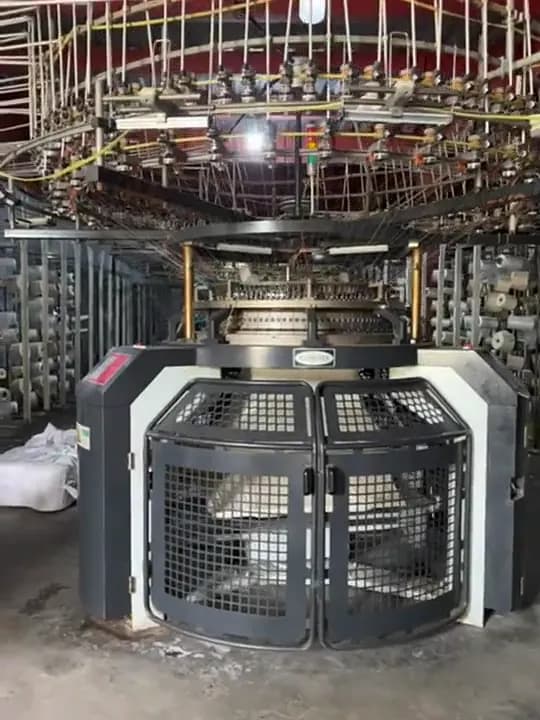 0:25Partner millCircular knitting machines at a partner mill
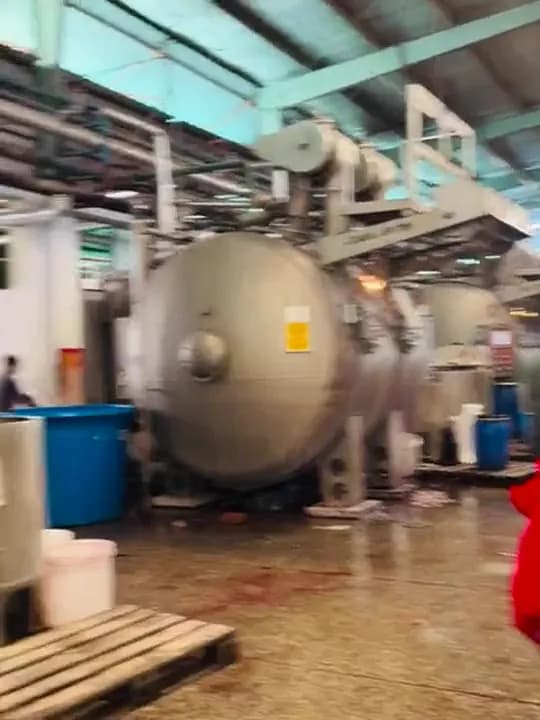 0:25Partner millJet dyeing knitted fabric at a partner plant
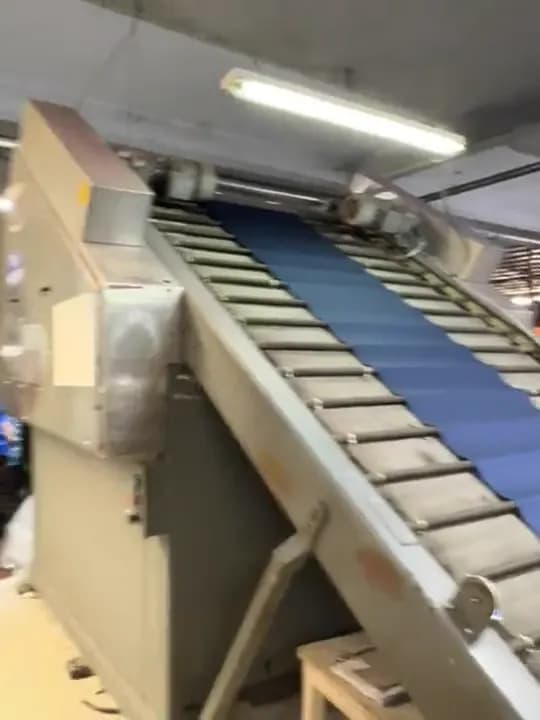 0:11Partner millInside a partner fabric dye house
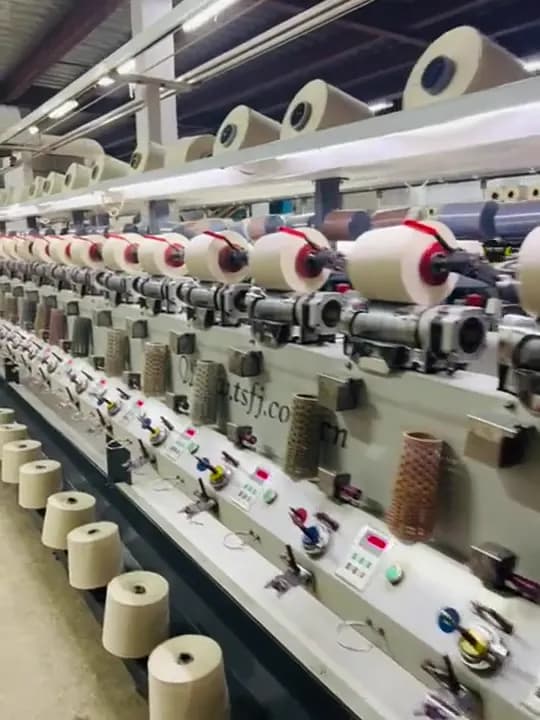 0:25Partner millA yarn-winding hall at a partner mill
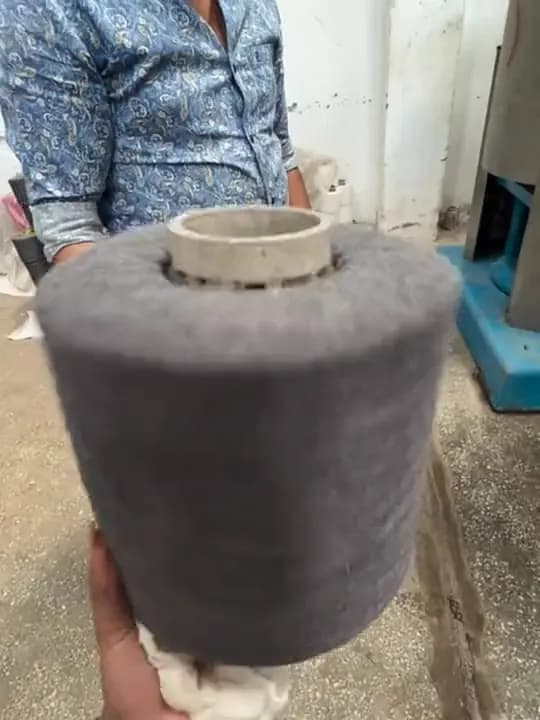 0:25Partner millChecking yarn at a partner mill
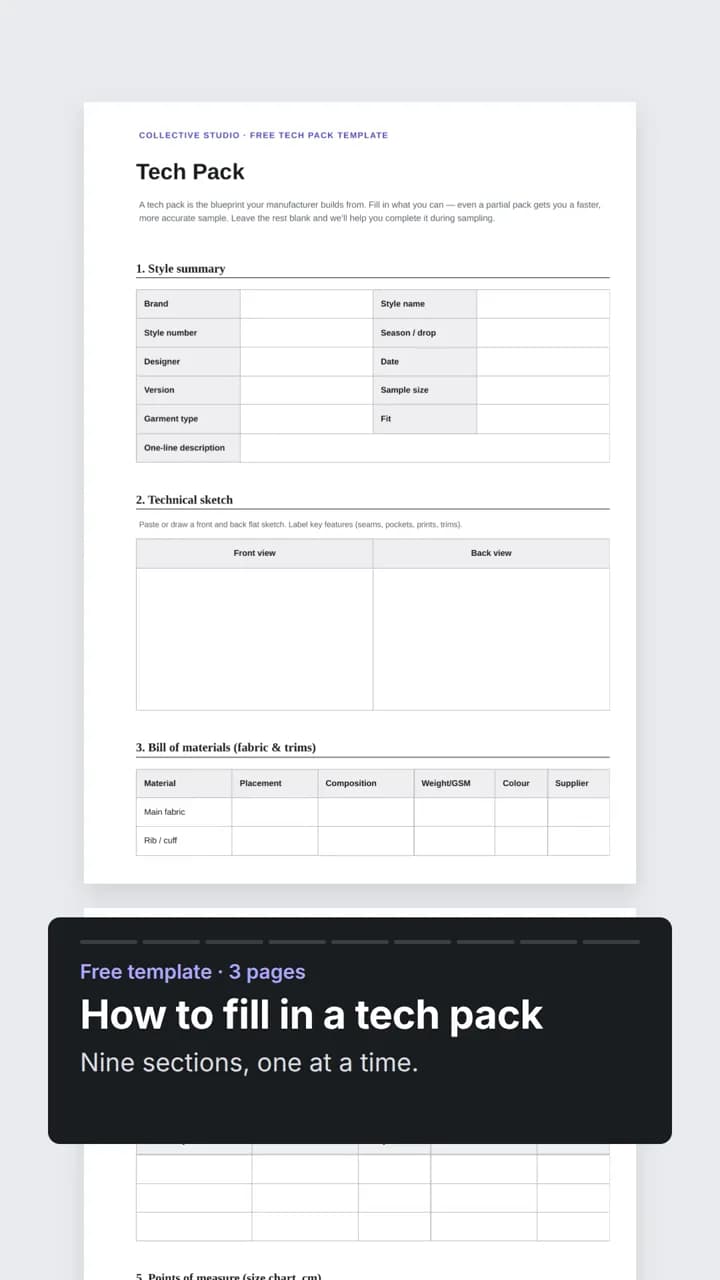 1:08WalkthroughHow to fill in a tech pack, section by section