Sewing a GOTS label into a garment
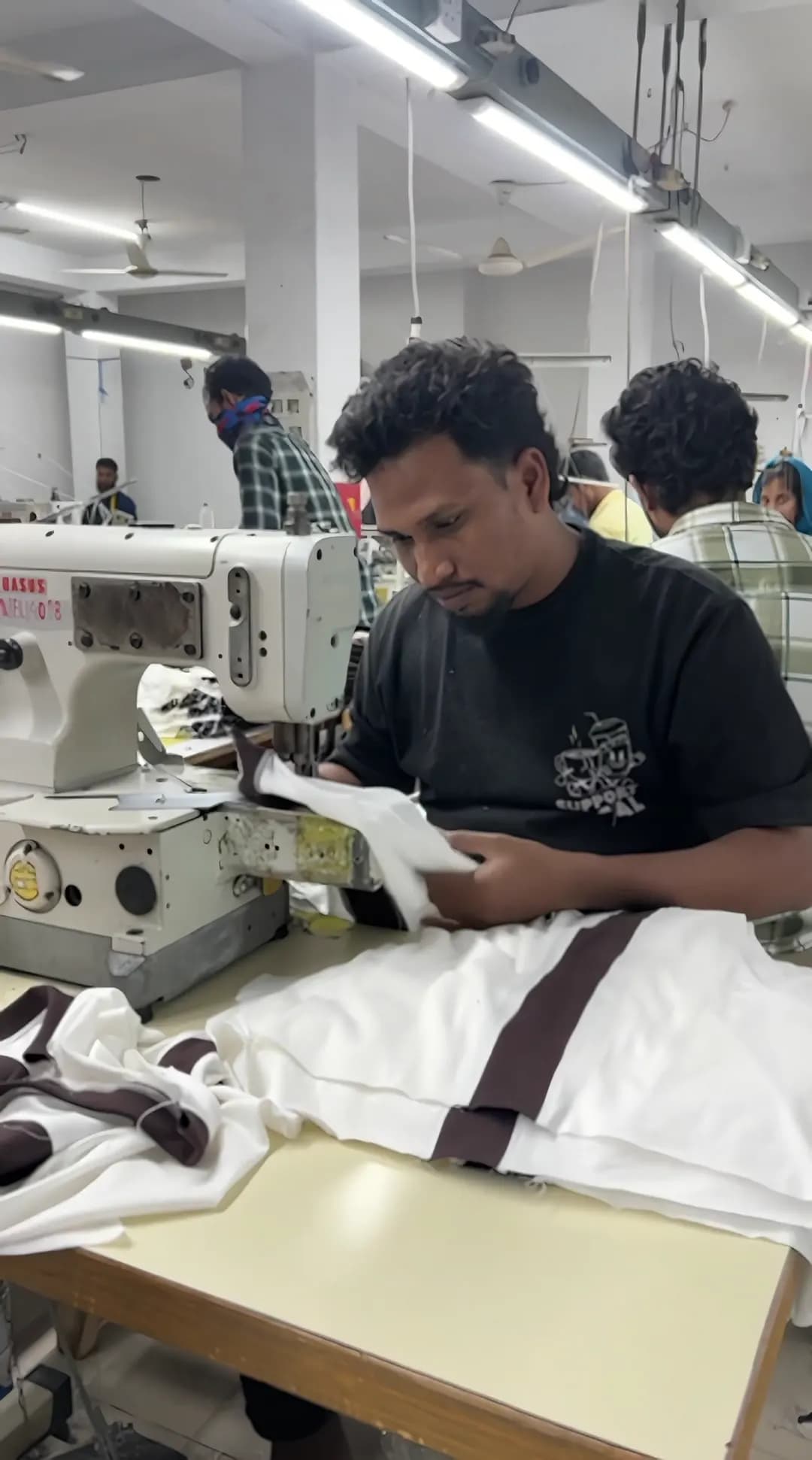
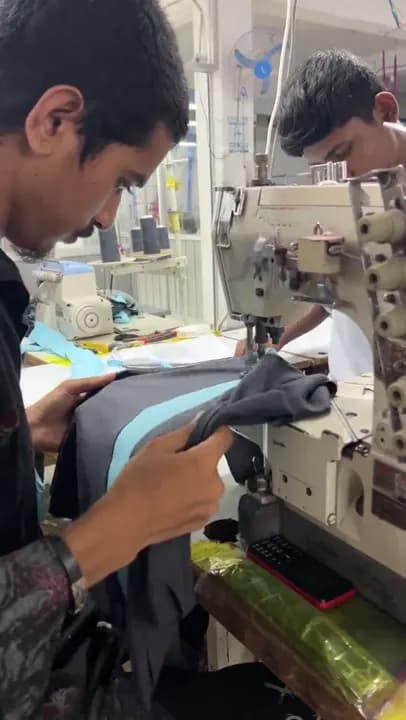
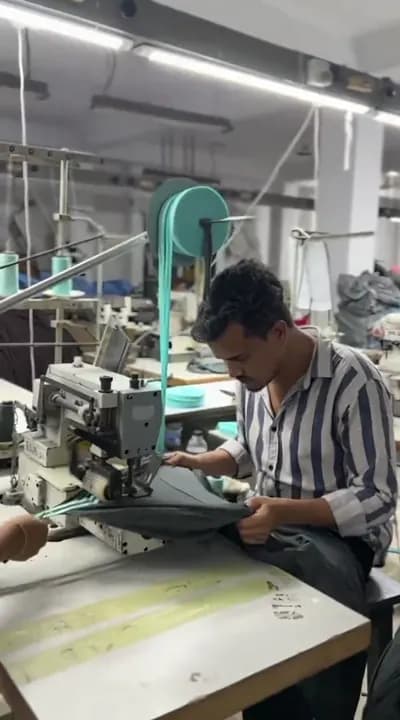
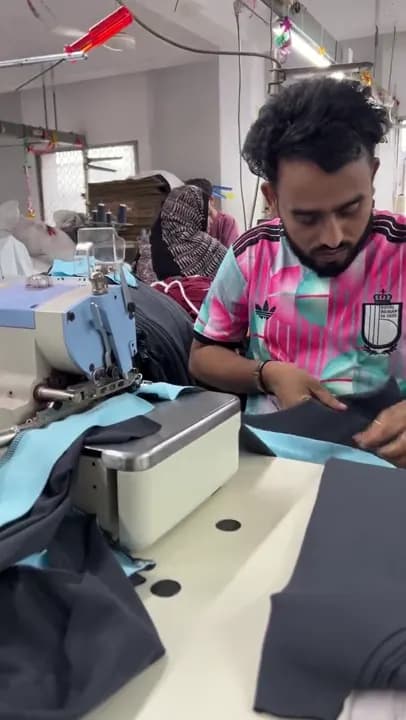
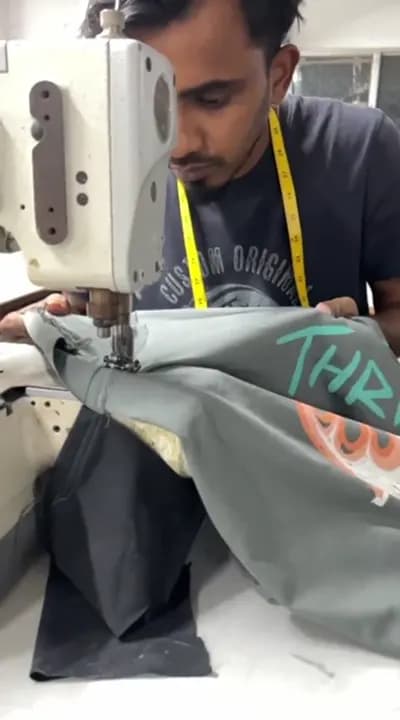
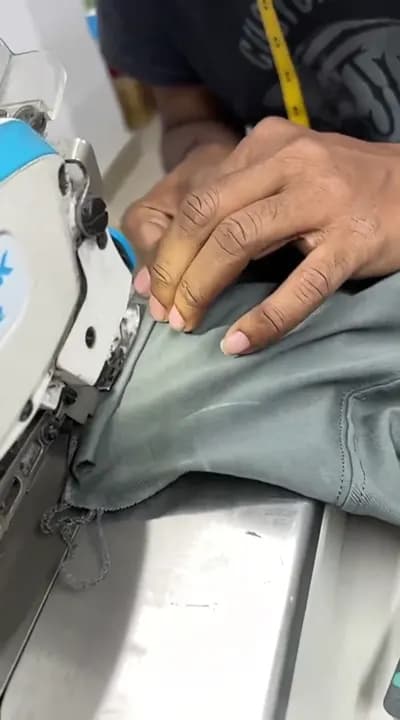
A GOTS label is fed under the presser foot and sewn into a green garment at Collective Studio, a GOTS-certified factory (RSC 9687) in Narayanganj.
- Length
- 0:06, no sound
- Filmed at
- Collective Studio, Narayanganj, Bangladesh
What you are seeing
The label goes in while the garment is being sewn, caught in the seam, rather than being added afterwards.
Only a GOTS-certified chain may apply this label, and only to goods its certifier has approved. Our certificate is RSC 9687; ask us for the scope certificate itself, which names the facility and the products it covers.
The label is folded in half and held at the garment edge with one finger as it goes under the foot, then a metal guide on the machine is moved over the edge. Under the GOTS logo the label carries the word organic, a reference number and the standard's web address.
Send your label artwork early, so the wording can be checked before labels are ordered. On the sample, check that the wording matches what was approved and that the label sits straight in the seam.
What a GOTS label has to carry
GOTS sets out what goes on its label. Alongside the logo it needs a label grade, a reference to the certification body and a licence number that can be checked in the public GOTS database. The label in this clip carries the word "organic", a reference number and the standard's web address. There are two grades: "organic", for products with at least 95% certified organic fibre, and "made with organic materials", for at least 70%.
The certification sits with the facility, not with a product on a shelf. Our wording is organic cotton, made in our GOTS-certified facility (RSC 9687), and what that covers is set out on our GOTS page. The guide to what GOTS certification means explains the difference between the fibre, the processing and the claim.
The paperwork behind the label
A label is only as good as the documents behind it. Each certified facility in the chain holds a scope certificate, which names the facility and the products and processes it covers. Each shipment of certified goods is then covered by a transaction certificate, issued by the certification body, which ties that shipment back to the certified chain. A retailer's compliance team will ask for the transaction certificate, not a photograph of the label.
So ask for both, and keep them on file with the order. Our certificate and memberships are listed on the certifications page. If a buyer also asks about OEKO-TEX, that is a separate standard that tests the finished article for harmful substances, and it answers a different question from GOTS about the same garment.
Where labels fit in the build
Labels are sewn in during construction, caught in a seam as here, so they must be on the floor before the line reaches that seam. Late labels are one of the commonest reasons a finished run waits. Send artwork for every label early: the main or neck label, the care and content label, the size label and any GOTS label, each with its placement.
The GOTS label does not replace the labels the law requires. Fibre content, care instructions and, in some markets, the company name and country of origin are set by each market's rules, which our guide to clothing labelling requirements by country sets out. Care symbols are covered in our guide to care labels.
Where this clip appears
- GOTS Certified Clothing Manufacturer
- Sustainable Clothing Manufacturer
- How to Import Clothing into the UK: Duty, VAT, EORI
- Clothing Label Requirements: US, UK, EU, Canada, Australia
- GPSR for Fashion Brands: Label, EU Rep and File Checklist
- How to Import Clothing into Canada: 18% or 0% Duty, GST
- What GOTS Certified Organic Cotton Means, and How to Check
- Sustainable Fabrics: 12 Compared, and the Proof to Ask For
- Social Compliance & Certifications for Bulk Buyers
- Care Labels & Wash Symbols: US FTC Rules vs EU ISO Symbols
- GOTS vs OEKO-TEX: Which Is Better, and What Each Proves
- How to Import Clothing into New Zealand: Duty, GST
Sewing a GOTS label into a garment: questions brands ask
What is the difference between "organic" and "made with organic materials" on a GOTS label?
The difference is the share of certified organic fibre in the product. GOTS has two label grades. The "organic" grade is for products with at least 95% certified organic fibre. The "made with organic materials" grade is for products with at least 70%, and the exact organic percentage may be stated on the label as well. Both grades require the whole processing chain to meet GOTS, not just the cotton, so the dyeing, the chemicals used and the working conditions are covered either way. Which grade a garment can carry depends on everything in it: a body in organic cotton with a trim or rib in another fibre may fall into the lower grade, depending on the proportions. Work this out with us when you choose fabrics, before label artwork is drawn. The grade is part of what the certifier checks, and changing it after labels are printed means printing them again.
Does a GOTS label replace the care and fibre content label?
No. The GOTS label is a voluntary certification mark, and the care and content label is a legal requirement in most markets. A GOTS label tells a buyer that the product was processed through a certified chain and gives the licence number to check it. It does not state the fibre content in the form the law asks for, or give care instructions. Those still need their own label, worded to the rules of each market you sell in: in the US, for example, the FTC's rules under the Textile Act ask for fibre content, country of origin and the name or RN of the business responsible. The two labels can sit together in the same seam, and many brands place them side by side. Send the wording for both with your tech pack, and we confirm the GOTS wording in writing against certificate RSC 9687 before anything is printed.
Can any clothing factory sew a GOTS label into my garments?
No. Only a certified chain may apply a GOTS label, and only to goods its certification body has approved. Every stage that processes the goods has to be certified, and the label can go on only when the product and its paperwork qualify. A factory without certification cannot add the logo just because the fabric is organic cotton. In this clip from Collective Studio's floor in Narayanganj, the GOTS label is folded and caught in the seam as the garment is sewn. Our wording is organic cotton, made in our GOTS-certified facility (RSC 9687). Before you plan a labelled range with any supplier, ask for its scope certificate, which names the facility and the products and processes it covers, and read it before you order. Then ask how a transaction certificate will be issued for your shipment, because that document is what a buyer's compliance team asks for.
Why does a retailer ask for a GOTS transaction certificate instead of a photo of the label?
Because a label only shows that a logo was sewn in, while a transaction certificate shows that the specific shipment of goods came through a certified chain. A retailer selling organic claims carries the risk if the claim is wrong, so its compliance team wants a document issued by the certification body, not by the supplier. The transaction certificate ties the goods in one shipment back to the certified facilities that processed them, and it can be checked with the body that issued it. The label in this clip, sewn in on Collective Studio's floor, is the visible end of that paperwork, not a substitute for it. For organic cotton, made in our GOTS-certified facility (RSC 9687), ask for the transaction certificate for your shipment at quote stage, so it is planned with the order, and file it with the invoice and the approved label artwork.
How do I check a GOTS licence number?
Search the licence number or the company name in the public GOTS database on the standard's website, and check that the result matches the supplier, its address and the products it says it can make. A GOTS label has to carry a licence number that can be checked there, along with the logo, the label grade and a reference to the certification body. The label in this clip carries the word organic, a reference number and the standard's web address. When you check a supplier, look at three things in the database entry. The company name and address should match the one on its invoices. The certificate should be valid on the date of your order. And the scope should list the products and processes your order involves. For Collective Studio, ask us for the RSC 9687 scope certificate and we send the document itself. If anything does not match, ask the supplier before you order.
When should I send label artwork to a clothing factory?
Send all label artwork with your tech pack, or at the latest during sampling, so labels are printed and on the floor before the line reaches the seam they are sewn into. Labels go in during construction, caught in a seam, as the GOTS label is in this clip from Collective Studio's floor. If they arrive late, finished garments wait. Late labels are one of the commonest reasons a run sits on the packing table. Send artwork for every label you need: the main or neck label, the care and content label, the size label and any GOTS label, each with its placement. A GOTS label also needs its wording checked against the certificate and the label grade before printing, and changing the grade after labels are printed means printing them again. We confirm GOTS wording in writing against certificate RSC 9687 before anything goes to print.
Is GOTS the same as OEKO-TEX?
No. GOTS certifies the processing chain behind an organic textile, while OEKO-TEX tests finished articles for harmful substances, so they answer different questions about the same garment. GOTS sets rules for organic fibre content, the chemicals allowed in processing, environmental management and working conditions, and it certifies each facility that handles the goods. A GOTS label tells a buyer the product came through that certified chain. OEKO-TEX STANDARD 100 is a product-testing label: samples are tested for a list of regulated and harmful substances, whatever the fibre's origin. A garment can carry both, and some retailers ask for both, so check which one your buyer's compliance team actually requires. Collective Studio holds GOTS for its facility, RSC 9687, and does not hold OEKO-TEX certification itself. The GOTS vs OEKO-TEX guide covers the detail.
What information does a GOTS label have to show?
A GOTS label has to show the GOTS logo, the label grade, a reference to the certification body and the licence number of the certified company. The label grade is either organic, for products with at least 95% certified organic fibre, or made with organic materials, for at least 70%. The label in this clip, sewn in on Collective Studio's floor, carries the word organic under the logo, a reference number and the standard's web address. The wording has to match what the certification body has approved for that product, so label artwork should be checked before labels are ordered. On your sample, check that the wording matches the approved artwork and that the label sits straight in the seam. The GOTS label does not replace the legally required fibre content and care label, which needs its own wording for each market you sell in.