Sustainable Fabrics Explained: Organic, Recycled, Bamboo & More
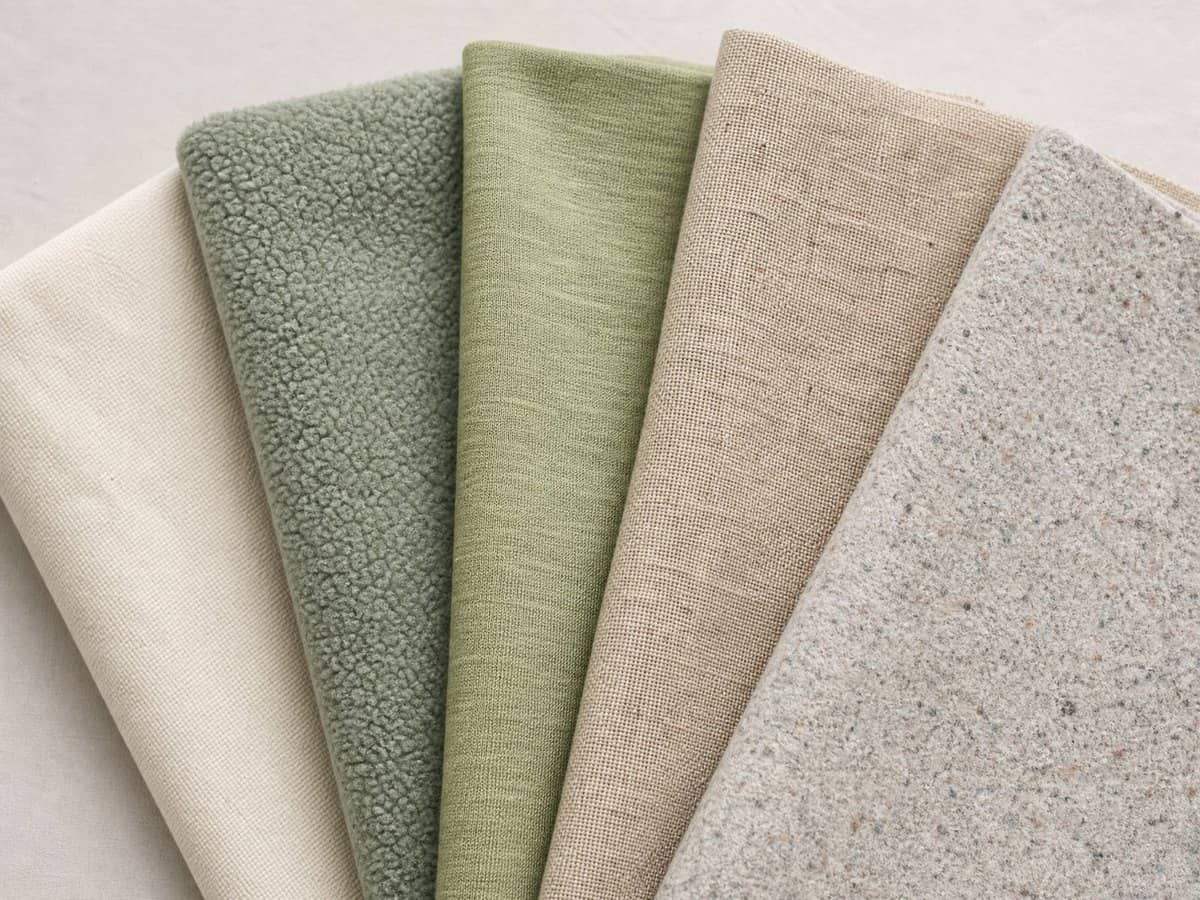
"Sustainable" fabric is a crowded, often misleading label. Here's a plain-English guide to the main options, what each actually is, and how to choose one you can stand behind.
Organic cotton (GOTS-certified)
Cotton grown without synthetic pesticides or GM seed. The credible version is GOTS-certified, which tracks the whole supply chain and bans toxic chemicals. The same familiar feel as cotton, with a story you can prove. More in our GOTS guide.
Recycled fabrics
Made from recycled materials — often recycled polyester (from bottles) or recycled cotton. A strong choice for performance and activewear, reducing reliance on virgin materials.
Bamboo viscose & modal
Soft, breathable, drapey fabrics made from plant cellulose. Lovely for loungewear and intimates. Look for responsibly produced versions (the processing matters as much as the plant).
Hemp
A hardy, fast-growing crop that needs little water and few inputs. Durable and breathable, increasingly blended with cotton for a softer hand.
- Everyday basics with a certified story → GOTS organic cotton
- Activewear / performance → recycled blends
- Soft loungewear & intimates → modal / bamboo viscose
- Durable, low-input natural → hemp
The most sustainable fabric is the right one for the garment — chosen honestly, with proof — not the buzzword that markets best.
Fibre is only half the footprint
Fabric choice gets almost all the attention, and it is genuinely important — but a garment’s impact is decided by more than what it is made from. Three things routinely matter as much, and none of them appear on a swatch.
- Dyeing and finishing. This is the water- and chemical-intensive stage. A conventional cotton tee dyed in a certified facility with treated wastewater can have a smaller real footprint than an organic one finished badly. Ask what happens to the water.
- How long the garment lasts. A heavier, better-constructed piece worn a hundred times outperforms a lightweight one replaced twice a year, whatever either is made from. Durability is a sustainability decision disguised as a quality decision.
- How much you make. Overproduction is the industry’s largest single waste stream. Ordering a hundred pieces you sell beats ordering five hundred and discounting three hundred — which is one reason a low minimum is an environmental argument as much as a cash-flow one.
Put plainly: the most sustainable garment is a well-made one, in a fabric you can document, produced in a quantity you can actually sell. Fibre choice sits inside that, not above it.
Side by side
| Fabric | Genuinely better at | The honest caveat |
|---|---|---|
| Organic cotton (GOTS) | Farming without synthetic pesticides or GM seed; certified chain including social criteria | Costs more; certification covers the chain only if every stage is certified |
| Recycled polyester | Diverting existing plastic from landfill; lower virgin-resource use | Still sheds microfibres in the wash; recycling is not infinite |
| Bamboo viscose | Fast-growing crop; soft handle at a low price | Chemically intensive to process. In the US it must be labelled “viscose from bamboo”, not “bamboo” |
| Hemp | Low water and pesticide need; extremely durable | Limited mill capacity, coarser handle, longer lead times |
| Conventional cotton | Price, availability, familiar handle | Highest pesticide load of the group; no chain-of-custody claim available |
What you may legally claim
This is where good intentions become a compliance problem. A fibre being grown organically does not entitle you to print “organic” on a label. In the US the FTC treats bamboo viscose as viscose or rayon, so “bamboo” alone is a labelling violation — the correct wording is “viscose from bamboo”. GOTS defines more than one label grade by fibre content, and which one you qualify for is decided by the fabric you actually bought, not by intent.
The safe rule: only claim what a certificate covering your specific shipment can support. That means asking for a Transaction Certificate at order stage rather than after shipping, and confirming the exact label wording in writing before artwork goes to print. A vague claim you cannot document is a bigger commercial risk than no claim at all.
How to choose honestly
Pick the fabric that actually suits the product, ask for certification where it exists, and be precise in your claims. We offer all of the above and share documentation — see our sustainability approach, or explore organic cotton manufacturing, GOTS-certified production and sustainable manufacturing more broadly.
Frequently asked questions
What are the most sustainable fabrics?
There is no clean winner, and any list that gives you one is simplifying. Hemp and linen need far less water and fewer inputs than cotton, and both are durable, but they feel different and are harder to work with. Lyocell is made in a closed-loop process that recovers its solvent, so the chemistry is genuinely good, though it depends where the wood pulp came from. Organic cotton removes synthetic pesticides but still drinks water. Recycled polyester diverts waste but sheds microfibres. Conventional cotton is the weakest on inputs but the easiest to source and work with. The useful question is not which fabric is most sustainable in the abstract but which trade-off you are willing to make and can verify — a GOTS or GRS certificate number beats any adjective, because someone independent checked it.
Are sustainable fabrics more expensive?
Usually, and the gap is smaller than most people assume once you account for what you are actually comparing. GOTS-certified organic cotton typically runs somewhere between ten and thirty per cent above conventional at the fabric stage, and because fabric is roughly half the factory cost, that lands as maybe five to fifteen per cent on the finished garment — more noticeable on a heavyweight hoodie than a lightweight tee, simply because there is more of it. Recycled polyester is often close to parity now. Where the cost genuinely bites is on small runs, because certified fabric comes in its own lot minimums and you cannot buy a hundred metres of it. The question worth asking is not whether it costs more but whether your customer is choosing you partly because of it — for a lot of brands the answer is yes, and the premium is recoverable.
What makes a fabric sustainable?
Less than the marketing suggests, and it depends on which impact you care about. Organic cotton removes synthetic pesticides and fertiliser from the farming stage but still uses substantial water. Recycled polyester diverts plastic from waste streams but still sheds microfibres in the wash. Linen and hemp need far less water and fewer inputs than cotton but are harder to work with and feel different. Lyocell, made in a closed-loop process that recovers its solvent, is genuinely good on chemistry but depends on where the wood pulp came from. There is no fabric that is simply "sustainable" with no trade-off. What separates a real claim from a marketing one is verification — a GOTS or GRS certificate number you can look up beats any adjective on a hangtag, because someone independent has checked the chain rather than the intention.
Where this applies
The manufacturing pages this guide relates to, if you are costing a real run.
Free tools & guides for this
Sources & further reading
Have an idea? Let’s make it.
We manufacture from 100 pieces per style, with GOTS-certified organic options and photos at every stage. Send a sketch or a sentence — we’ll reply within a day.