How to Import Clothing into the UK
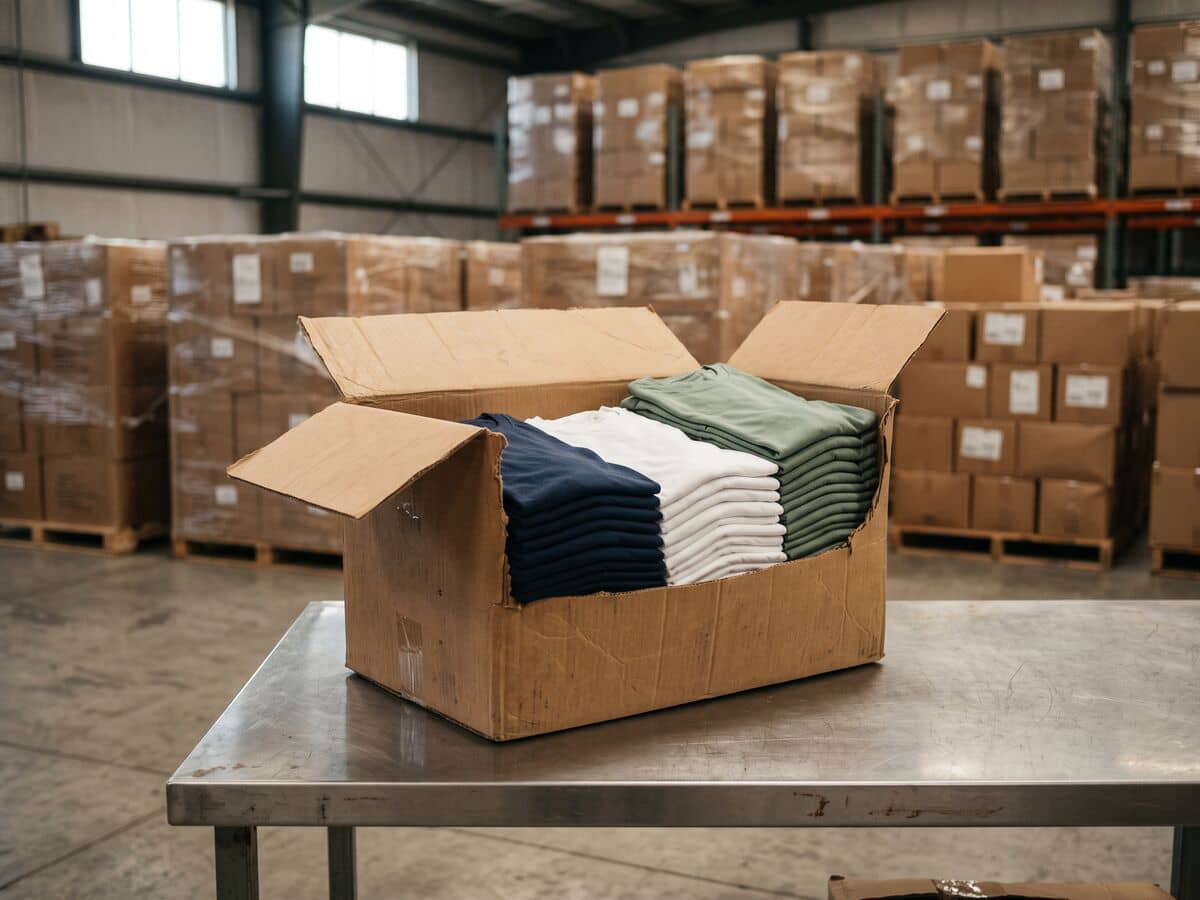
If you are a UK brand importing clothing for the first time, the figure to plan around is the landed cost: what has left your account by the time the cartons reach your unit in London, Manchester or Glasgow. For clothing made in Bangladesh the duty line is zero, which leaves one tax, one registration number and one labelling rule to get right. This guide takes them in the order you will meet them. Every figure was checked against the UK government sources listed at the end.
The short version
- Duty: 0%. Bangladesh is in the Comprehensive Preferences tier of the UK's Developing Countries Trading Scheme (DCTS).
- The condition: the garment must be manufactured from fabric in Bangladesh. Cutting and sewing there is enough, even where the fabric was imported.
- Import VAT: 20%, recoverable if you are VAT-registered. Postponed VAT accounting means most businesses never pay it at the port.
- EORI number: you cannot clear goods without one. It is free.
- Label: fibre content in English is the legal requirement. Care and origin labels are not required by those regulations.
How much duty do you pay on clothing from Bangladesh?
None. Under the Developing Countries Trading Scheme, least developed countries sit in the Comprehensive Preferences tier, which removes tariffs on everything except arms and ammunition. Clothing from Bangladesh therefore enters the UK at 0%. Our duty guide compares this with the EU, Canada, Australia and the United States.
The origin rule, and why it is easy to meet
To claim the zero rate the garment has to originate in Bangladesh. For clothing the test is manufacture from fabric, often called single transformation: if the garment is cut and sewn in Bangladesh, it qualifies, even where the fabric came from another country. That is the work done on a cut-and-sew floor like ours. Since 1 January 2026 the reformed rules of origin apply the same garment rule to the Enhanced Preferences tier as well, which matters for what happens after graduation. The proof your broker needs is an origin declaration on the commercial invoice, and it comes from the factory.
What happens after Bangladesh graduates from LDC status?
Bangladesh is scheduled to graduate from the UN's least developed country list on 24 November 2026. The UK keeps a graduating country in the Comprehensive tier for three more years. After that Bangladesh moves to Enhanced Preferences, where garments were at 0% on the UK Trade Tariff on 22 September 2026, provided it is judged economically vulnerable; otherwise it would move to Standard Preferences. So UK duty on Bangladesh-made clothing is zero now and is set to stay zero for at least three years. Our LDC graduation guide sets out the scenarios.
Import VAT, and why registering can pay
Import VAT is charged at 20% (GOV.UK VAT rates). It is calculated on the customs value, which includes freight and insurance to the UK border, plus any duty and the costs to the first UK destination. If you are VAT-registered you reclaim it on your return like any other input. If you are not, you cannot, and 20% of your landed cost is gone.
You must register for VAT once taxable turnover passes £90,000 in any rolling twelve months, a threshold that has applied since 1 April 2024. Below it registration is voluntary. Whether to register early depends on who you sell to, and it is a question for an accountant before the first order. Ask also about postponed VAT accounting, which lets you declare and reclaim import VAT on the same return, so nothing is paid at the border.
Get an EORI number first
An EORI number identifies your business on every UK customs declaration, and goods from outside the UK cannot clear without one. It is free and you apply through GOV.UK. A GB EORI is the one you need for importing into Great Britain. Do it the week you decide to import, not the week the goods are on a ship.
A worked example
Take 500 T-shirts with a customs value of US$6.00 each: US$3,000 in total, with US$500 of freight and insurance on top.
| Line | United Kingdom | For comparison: United States |
|---|---|---|
| Customs value | US$3,000 | US$3,000 |
| Duty | US$0 (DCTS) | US$795 (26.5%) |
| Tax at the border | Import VAT 20% of US$3,500 = US$700 | None |
| Recoverable if VAT-registered | US$700 | US$0 |
| Net border cost for a registered business | US$0 | US$795 |
The landed-cost calculator runs the same sum for any quantity and price, and our guide to import VAT and GST on clothing explains how the tax base differs between countries.
What has to be on the label
Fibre content, in English, on the item or its packaging, under the Textile Products (Labelling and Fibre Composition) Regulations 2012. That means every fibre by name with its percentage by weight, in descending order. Where a garment has components with different fibre contents, each is labelled separately, and decorative matter of 7% or less is left out of the count. Trading Standards guidance (Business Companion) puts the responsibility on the manufacturer or the importer into the UK. Care labelling and country-of-origin marking are not required by those regulations, so in the UK a care label is a retailer's expectation and not the law, and any origin claim you print must still be accurate. Our guide to clothing labelling requirements by country puts the UK beside the other four markets.
Nightwear and children's clothing
Nightwear sold in Great Britain falls under the Nightwear (Safety) Regulations 1985, which cover adults' nightwear as well as children's. Children's nightdresses, dressing gowns and bathrobes must be made of fabric that meets the BS 5722 flammability requirements. Pyjamas, babies' garments and cotton terry towelling bathrobes are exempt from that test but must be labelled, and so must all adults' nightwear: KEEP AWAY FROM FIRE in red letters where the fabric does not meet BS 5722, or LOW FLAMMABILITY TO BS 5722 where it does. For cords and drawstrings on children's clothing, BS EN 14682 is the designated standard. Our children's clothing safety guide gives the detail.
Great Britain and Northern Ireland are not the same
Great Britain kept the General Product Safety Regulations 2005 after leaving the EU, while Northern Ireland follows the EU's General Product Safety Regulation under the Windsor Framework. If you sell into both, or into the EU as well, one technical file can serve them all. Our GPSR guide explains the EU side, and our guide to importing clothing into the EU covers the rest.
How the UK compares with the other markets
| Market | Duty on Bangladesh-made cotton knit tops | Tax at the border |
|---|---|---|
| United Kingdom | 0% | Import VAT 20% |
| European Union | 0% | Import VAT at the member state's rate (Germany 19%) |
| Canada | 0% | GST 5% |
| Australia | 0% (LDC rate: Free) | GST 10% on value plus transport, insurance and duty |
| United States | 26.5% | None (state sales tax applies at retail) |
DDP or FOB
Under DDP (delivered duty paid) the factory's forwarder moves the goods to your door, files the origin declaration and clears customs, and you receive one landed figure. Under FOB you take over at the port in Bangladesh and your own broker will ask you for the documents. Either way they come from the factory: the commercial invoice, the packing list and the origin declaration. Whichever you choose, make sure the quote says who is the importer of record, because that is who accounts for the import VAT and who reclaims it.
Before your first order
- Apply for a GB EORI number.
- Decide with your accountant whether to register for VAT, and ask about postponed VAT accounting.
- Ask the factory to confirm the garment is cut and sewn in Bangladesh and that the invoice will carry the origin declaration.
- Approve the fibre content label in English before production.
- Ask whether the quote is DDP or FOB and who is the importer of record.
New to all of this? Our guide to starting a clothing brand in the UK covers company set-up and costing as well. We make knitwear for UK brands from 150 pieces per style and colour, with GOTS-certified organic options (certificate RSC 9687, scope certificate on request), and we quote DDP to your door. See clothing manufacturing for UK brands, or send us your brief and we will reply within one business day.
Frequently asked questions
How much duty do I pay to import clothing into the UK from Bangladesh?
None, as long as the garment qualifies as originating in Bangladesh. The United Kingdom runs the Developing Countries Trading Scheme, and Bangladesh sits in its Comprehensive Preferences tier, which removes tariffs on every product except arms and ammunition. For clothing the origin test is manufacture from fabric, so a garment that is cut and sewn in Bangladesh qualifies even where the fabric was knitted or woven in another country. Your customs broker claims the zero rate using an origin declaration that the factory prints on the commercial invoice. Duty is separate from import VAT, which is charged at 20 percent whatever the duty rate is, and which a VAT-registered business reclaims. Rates and scheme rules can change, so ask your broker to confirm the position for your commodity code before each shipment, and keep the factory's invoice and packing list with your records.
Do I pay VAT on imported clothing, and can I claim it back?
Yes. Import VAT is charged at 20 percent when clothing arrives in the United Kingdom. It is calculated on the customs value of the goods, which already includes freight and insurance to the UK border, plus any duty and the costs of getting the goods to their first UK destination. On an order worth US$3,000 with US$500 of freight and insurance, that is 20 percent of US$3,500, or US$700. A VAT-registered business reclaims it on its return like any other input tax, and under postponed VAT accounting most businesses declare and reclaim it on the same return, so nothing is paid at the port. A business that is not registered cannot reclaim it, and the 20 percent becomes a real cost. Registration is compulsory once taxable turnover passes £90,000 in a rolling twelve months and voluntary below that.
Do I need an EORI number to import clothing into the UK?
Yes. An EORI number, which stands for Economic Operators Registration and Identification, identifies your business on every UK customs declaration, and goods arriving from outside the United Kingdom cannot be cleared without one attached to the entry. It is free and you apply for it through GOV.UK. The one you need for bringing goods into Great Britain is a GB EORI. The application is a short administrative task, but it becomes a real problem if you leave it until your goods are already at sea, because the shipment will wait at the port until the number exists. Apply in the week you decide to import, well before you place the order. If you ship under delivered duty paid terms, ask the factory or its forwarder who will be the importer of record, because that party's EORI is the one used on the declaration.
What labels does clothing need to be sold in the UK?
The legal minimum is a fibre content label in English, on the garment or its packaging, under the Textile Products (Labelling and Fibre Composition) Regulations 2012. It must list every fibre by name with its percentage by weight in descending order. Components with different fibre contents are labelled separately, and decorative matter of 7 percent or less is left out of the count. Trading Standards guidance places the responsibility on the manufacturer or on the importer into the United Kingdom. Care instructions and country of origin are not required by those regulations, although retailers expect a care label, and any origin statement you print has to be true. Nightwear is different: the Nightwear (Safety) Regulations 1985 require fire warning wording on pyjamas, babies' garments, cotton terry bathrobes and all adults' nightwear, and set a flammability test for children's nightdresses, dressing gowns and bathrobes.
Will clothing from Bangladesh still be duty-free in the UK after 2026?
Yes, on the rules as they stand. Bangladesh is scheduled to graduate from the United Nations list of least developed countries on 24 November 2026. The United Kingdom keeps a graduating country in the Comprehensive Preferences tier for three more years, so the zero rate continues through that period. After it, Bangladesh moves to the Enhanced Preferences tier if it is judged economically vulnerable, and garments in that tier were at 0 percent on the UK Trade Tariff when we checked on 22 September 2026. If it were not judged vulnerable it would move to Standard Preferences instead. Since 1 January 2026 the Enhanced tier has used the same garment origin rule as the Comprehensive tier, so cutting and sewing in Bangladesh continues to confer origin. Treat this as the current position and ask your customs broker to confirm the rate before each shipment.
Where this applies
The manufacturing pages this guide relates to, if you are costing a real run.
Free tools & guides for this
Sources & further reading
- GOV.UK — Developing Countries Trading Scheme
- GOV.UK — DCTS rules of origin reform, in force 1 January 2026
- GOV.UK — VAT rates
- GOV.UK — VAT registration and thresholds
- GOV.UK — get an EORI number
- The Textile Products (Labelling and Fibre Composition) Regulations 2012
- Business Companion — labelling of textiles (Trading Standards guidance)
- legislation.gov.uk — The Nightwear (Safety) Regulations 1985 (SI 1985/2043)
Have an idea? Let’s make it.
We manufacture from 150 pieces per style and colour, with GOTS-certified organic options and photos at every stage. Send a sketch or a sentence — we’ll reply within one business day.