Sublimation Printing, Explained (and When to Use It)
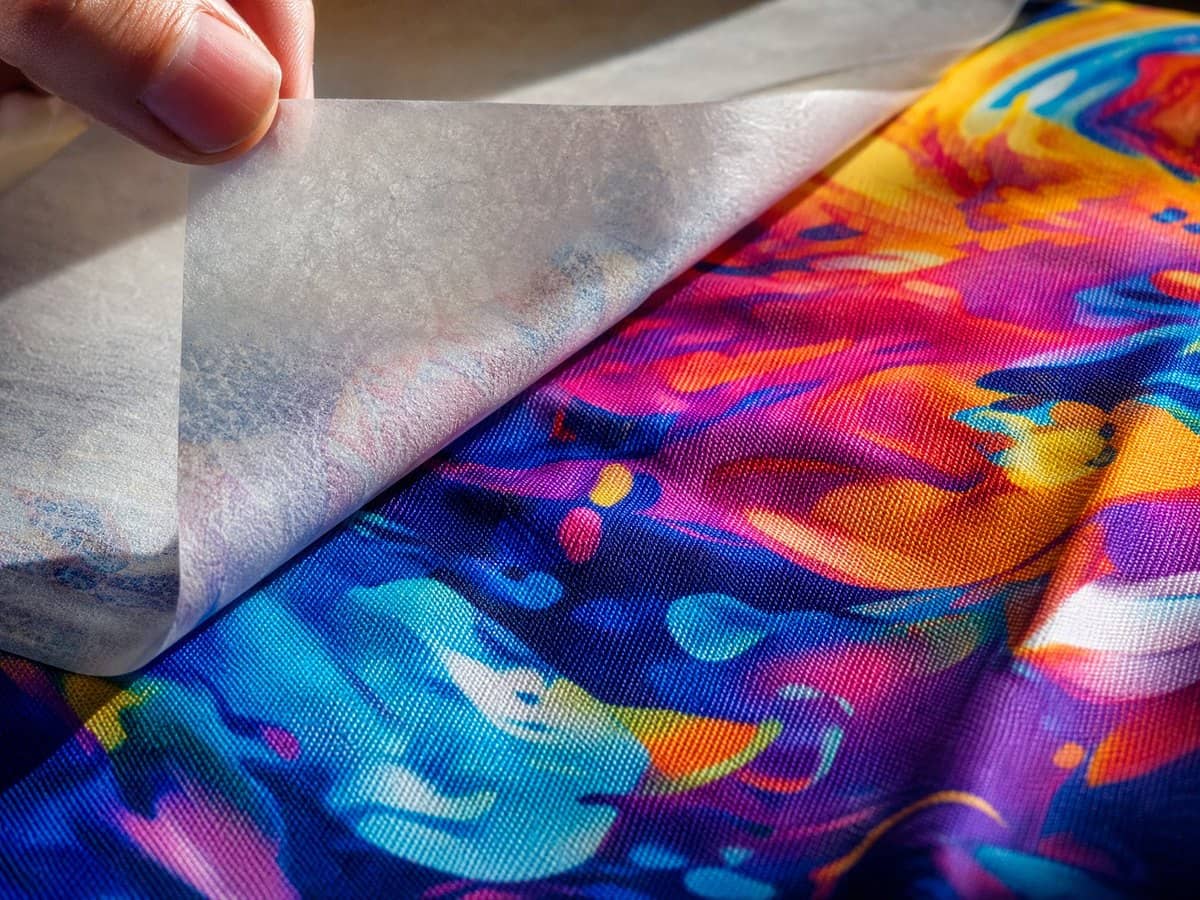
Sublimation printing is how you get bright, edge-to-edge, all-over prints that never crack or peel. It's the technology behind most custom sportswear — and it's worth understanding before you choose how to decorate your garments.
What sublimation printing is
Sublimation uses heat to turn solid dye into a gas, which bonds directly with the fibres of the fabric. Because the dye becomes part of the fabric rather than sitting on top, there's no layer to feel, crack or fade. The trade-off: it works properly only on polyester (or high-polyester blends) and on light or white fabric.
How the process works
- Your artwork is printed onto special transfer paper with sublimation inks.
- The paper is placed against the fabric and run through a heat press.
- Heat turns the ink to gas, which dyes the fibres permanently.
- The result is a print that's part of the cloth — soft to the touch and very durable.
What sublimation is best for
- All-over prints — designs that run edge to edge, across seams.
- Polyester activewear, jerseys, leggings and performance tops.
- Bright, photographic or multi-colour artwork, with no extra cost per colour.
- Designs where a soft hand-feel and no cracking matter.
Where it falls short
Sublimation can't print on 100% cotton, and it won't show on dark fabric (the dye is translucent). For cotton tees, bold spot designs or dark garments, screen printing or DTG is usually the better route.
Why it only works on polyester
Sublimation is worth understanding mechanically, because the limitation follows directly from how it works. The ink is a dye that turns to gas under heat and bonds into polyester fibres, then solidifies inside them. The result is dye in the fabric rather than pigment sitting on top, which is why a sublimated print has no hand-feel, will not crack, and does not fade the way a surface print does.
That same mechanism is the constraint. Cotton has no polymer for the gas to bond into, so it simply will not take. On a poly-cotton blend the print holds only to the polyester share — a 65/35 blend gives a faded, vintage-looking result that some brands want deliberately and others receive as a nasty surprise. And because it is a dye, it cannot print white or lighten a dark garment: sublimation on black does nothing visible. Light fabric, ideally white, is the working assumption.
Cut-and-sew sublimation, and why it matters
The version most brands do not know exists is printing the fabric panels before the garment is assembled. Printing on a finished garment leaves unprinted areas in seams, under arms and around collars, because a heat press cannot reach into them.
Printing flat panels and then sewing removes that limit entirely: the design can run seam to seam, across the whole garment, edge to edge. It is how patterned activewear, team kit and all-over-print pieces are actually produced. It costs more and takes longer, because the garment is built around the print rather than decorated afterwards — but if your design does not stop at a chest panel, it is the only method that will do what you are imagining.
Sublimation vs screen printing vs DTG
In short: sublimation for all-over polyester prints, screen printing for bold designs at volume on cotton, and DTG for detailed full-colour artwork on cotton in small runs. We cover the trade-offs in detail in screen printing vs embroidery vs DTG.
Choose the print method to match the fabric and the design — not the other way round.
We offer sublimation alongside screen printing, embroidery and custom dyeing. If you're planning an all-over print or polyester activewear, see our sublimation manufacturing page, or send us your design and we'll advise the best method for it.
Frequently asked questions
What is sublimation printing?
A dyeing process that behaves like printing. The design is printed onto transfer paper with special inks, then heat and pressure turn those inks straight from solid to gas — sublimation, hence the name — and the gas bonds inside the polyester fibre. Nothing is deposited on the surface, so the finished fabric feels exactly like undecorated fabric and the graphic cannot crack, peel or wash off. That is the whole appeal. The limits are absolute rather than negotiable: it only works on polyester, because there is no polymer in cotton for the dye to bond with, and the dye is transparent, so it can darken a pale garment but does nothing on a dark one. There is no white sublimation ink. Anyone offering you sublimation on black cotton is selling something else.
What fabric works for sublimation printing?
Polyester, and effectively only polyester. Sublimation works by turning solid dye into gas under heat and pressure so it bonds inside the polymer fibre. Cotton has no polymer to bond with, so the dye sits on the surface and washes out within a few cycles. Blends work in proportion to their polyester content — a 65/35 poly-cotton will take a print, but it comes out visibly faded compared to the same design on 100% polyester, and that softness is a permanent characteristic, not a fault. The other hard limit is colour: sublimation dye is transparent, so it can only darken what is underneath. On a white or very pale polyester it sings. On navy or black it does nothing at all, and there is no such thing as white sublimation ink.
Is sublimation better than screen printing?
Neither is better; they solve different problems and are not really substitutes. Sublimation wins when you need all-over coverage, photographic imagery, gradients or many colours, and when the garment is polyester. The dye goes inside the fibre so there is no hand feel, nothing to crack, and no additional cost for extra colours. Screen printing wins on cotton — which sublimation cannot do at all — and on simple designs at volume, where a one or two colour print is cheaper per piece than anything else. It also works on dark garments, which sublimation cannot, because sublimation dye is transparent and can only darken what is underneath. Rough rule: cotton or a small logo, screen print. Polyester or an all-over graphic, sublimation. If someone recommends one for every job, they are describing their equipment rather than your product.
Free tools & guides for this
Sources & further reading
Have an idea? Let’s make it.
We manufacture from 100 pieces per style, with GOTS-certified organic options and photos at every stage. Send a sketch or a sentence — we’ll reply within a day.