What Questions to Ask a Clothing Manufacturer Before You Order
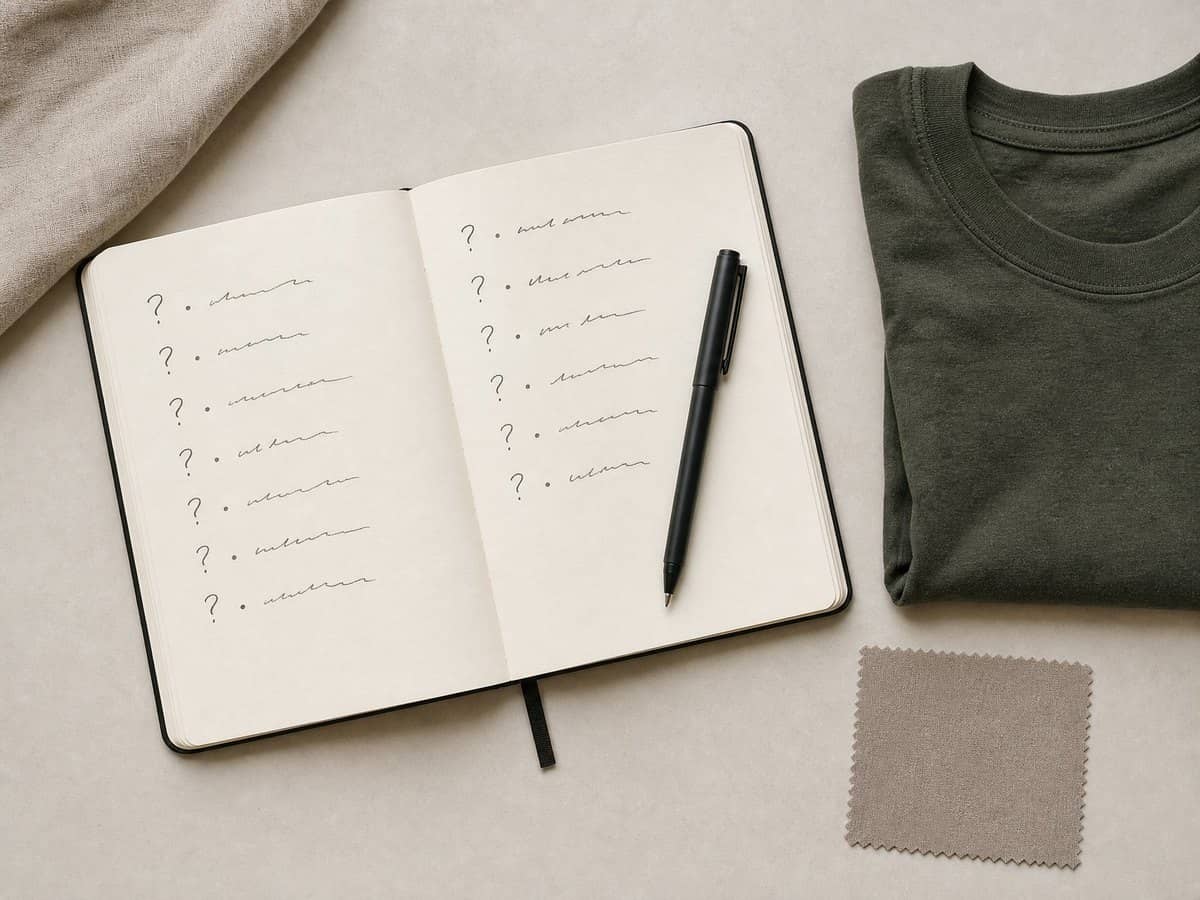
The right questions, asked early, save you from a bad first order. Here's exactly what to ask any clothing manufacturer before you commit — and what their answers tell you.
The questions that matter
- What's your real MOQ — per style, per colour? The number that actually affects your cost.
- What does your sampling process look like? You should always approve a physical sample before bulk.
- Who runs quality control, and will I get photos during production? Transparency vs. a black box.
- Which certifications do you hold, and can I see them? (GOTS, OEKO-TEX, audits.)
- Do you ship DDP? So you get one clear landed cost with no surprise customs bills.
- What's the realistic lead time? From sign-off to delivery.
- Can I visit the factory? A confident factory welcomes it.
How a factory answers your first questions tells you almost everything about how they'll treat your order.
What a good answer actually sounds like
A list of questions is only half useful. The other half is knowing what a solid answer looks like, because most suppliers will answer everything — the difference is whether the answer contains anything you can check.
| Question | A weak answer | A strong answer |
|---|---|---|
| What is your minimum? | “Very flexible, depends on the order.” | “100 per style and per colour. Sizes are flexible within that.” |
| Are you certified? | Sends a logo, or says “yes, fully compliant”. | Gives a certificate number and tells you which database to search. |
| Can I see the factory? | Sends an edited promotional video. | Offers a live call from the floor during a working shift, or a visit. |
| What is the price? | One number, no incoterm stated. | A number with the incoterm named — FOB or DDP — and what it excludes. |
| What if a batch fails QC? | “That will not happen.” | Names the AQL level used and what happens when a batch is rejected. |
Questions to ask about your own order, not just the factory
Most buyer guides only cover what to ask the supplier. Half the useful questions are about your own project, and getting them wrong is what actually causes delay. Before you send a single enquiry, be able to answer these:
- What am I actually making? A reference garment whose fit you like is more useful to a factory than a mood board.
- How many, per style and per colour? Three colourways of one style is three minimums, not one.
- What do I intend to sell it for? Retail price sets the ceiling on fabric and construction, so a factory can steer you before you fall in love with a spec you cannot afford.
- When do I need it? Count backwards from your launch date and include sampling, not just production.
- What am I not willing to compromise on? Fabric weight, fit, certification, price — knowing which one is fixed makes every later conversation faster.
How to ask so you get a straight answer
Ask for numbers, not adjectives. “Do you have a low minimum?” invites a yes; “What is your minimum per style and per colour?” invites a number. Ask the same question twice at different points in the conversation and see whether the answer moves. And ask at least one question you already know the answer to — if a supplier tells you something you know to be wrong, you have learned more than the answer itself was worth.
Finally, notice how quickly and how clearly they reply. The quality of a factory’s first three emails is the best available preview of what communication will be like when something has gone wrong on the floor and you need it fixed this week.
Red flags in the answers
- Vague or shifting MOQs, or pressure to over-order.
- No sampling step, or reluctance to send production photos.
- Evasiveness about certifications or who does QC.
- Slow, unclear replies — it rarely improves after you've paid.
Ask us any of these and you'll get straight answers. Start a conversation, or read our fuller guide on how to find a clothing manufacturer.
Frequently asked questions
What questions should I ask a clothing manufacturer?
Ask the same set of every candidate so the answers are comparable. Minimum order stated per style AND per colour, because a figure quoted per order behaves entirely differently once you pick a range. Which incoterm they quote, since an FOB price and a DDP price are not the same number and comparing them directly will mislead you. What they actually specialise in, and what they would decline. Compliance audits with dates and scope. Product certifications with a number you can verify independently. Sampling process, timeline and cost, since sampling is normally billed separately. Payment terms. And whether you can see the production floor. The answers matter, but so does how quickly and specifically they arrive.
How do I know if a clothing manufacturer is reliable?
Responsiveness before you have paid anything is the most predictive signal available, because it rarely improves after a deposit clears. Beyond that, look for specificity: a reliable factory answers a question about minimums or lead times with a number, and answers a question outside its capability by saying so rather than agreeing to everything. Willingness to show the floor on video costs them nothing if the floor exists, which is exactly why reluctance is informative. Certification offered as a logo rather than a checkable number is another. The inverse warning sign is a quote substantially below every other you hold — manufacturing costs do not vary that much between competent factories, so an outlier usually means something has been excluded that will reappear later.
Should I work directly with a factory or an agent?
Direct is usually better on price and materially better on accountability. An agent adds a margin, which is expected, but the larger cost is the communication layer: when something needs correcting on the production floor, you are relaying it through someone whose incentive is to keep both sides comfortable rather than to surface the problem quickly. Direct contact means the people who can fix an issue hear about it from you. That said, agents earn their place in specific situations — sourcing across several countries, managing categories outside your expertise, or when you have no capacity to run supplier relationships yourself. What is worth avoiding is paying agent margin while believing you are dealing directly, which happens more than it should. Ask plainly whether the party quoting owns the factory.
Where this applies
The manufacturing pages this guide relates to, if you are costing a real run.
Free tools & guides for this
Sources & further reading
Have an idea? Let’s make it.
We manufacture from 100 pieces per style, with GOTS-certified organic options and photos at every stage. Send a sketch or a sentence — we’ll reply within a day.