A small number in a volume country
Roughly 4,000 export factories built for long runs. Ours starts at 150 pieces per style and colour — and it is still 150 after you enquire.
Bangladesh is built for orders of ten thousand. This page is about what it takes to make a hundred and fifty here properly — and when that arithmetic works in your favour.
Collective Studio is a family-run cut-and-sew knitwear factory in Narayanganj, Bangladesh, taking orders from 150 pieces per style and colour in a country built around runs of thousands. Shipped DDP after 40–50 days' production, with organic cotton styles available, made in our GOTS-certified facility (RSC 9687). The advantage is duty: Bangladesh's LDC status gives duty-free entry to the UK, EU, Australia and Canada.
Knitwear made up US$20.62bn of Bangladesh's US$38.70bn ready-made garment exports in FY2025-26, ahead of woven garments. BGMEA, Export Performance ↗ verified 2 October 2026
Or message the factory directly: WhatsApp +880 1980 055026 · hello@collectivestudioltd.com · Homaira replies within one business day.
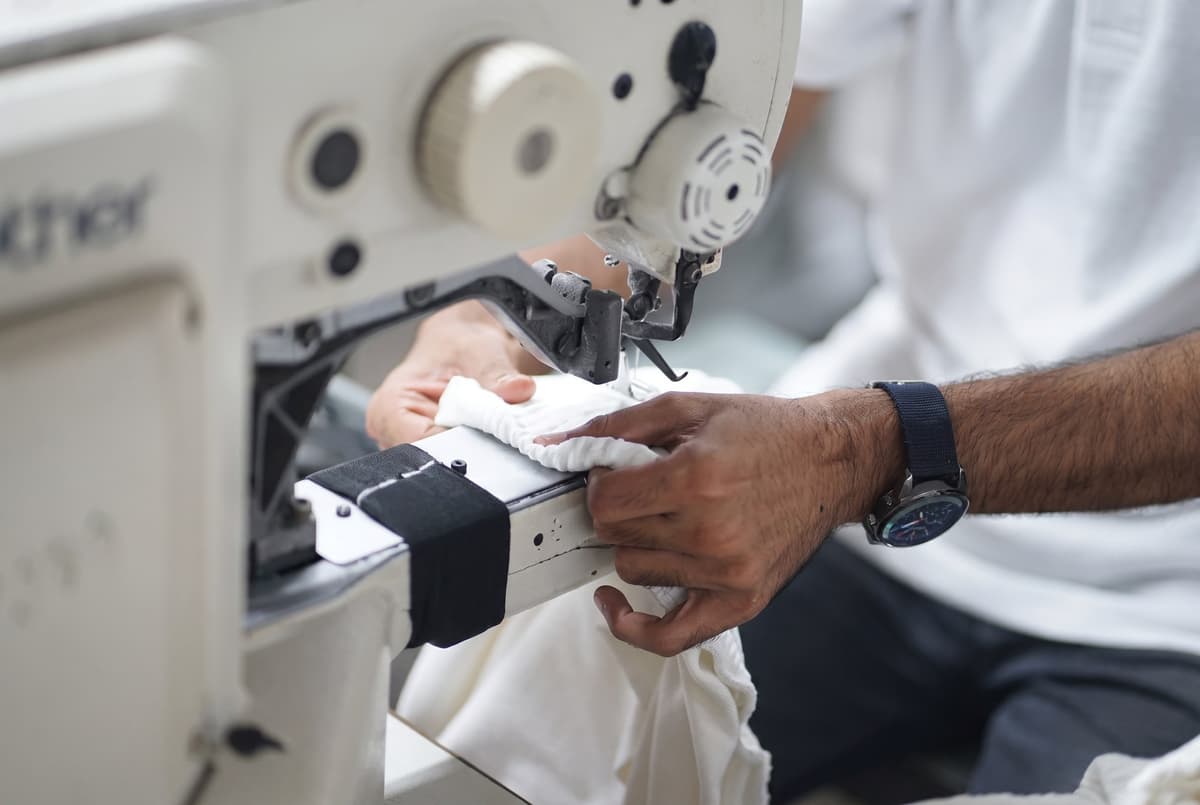
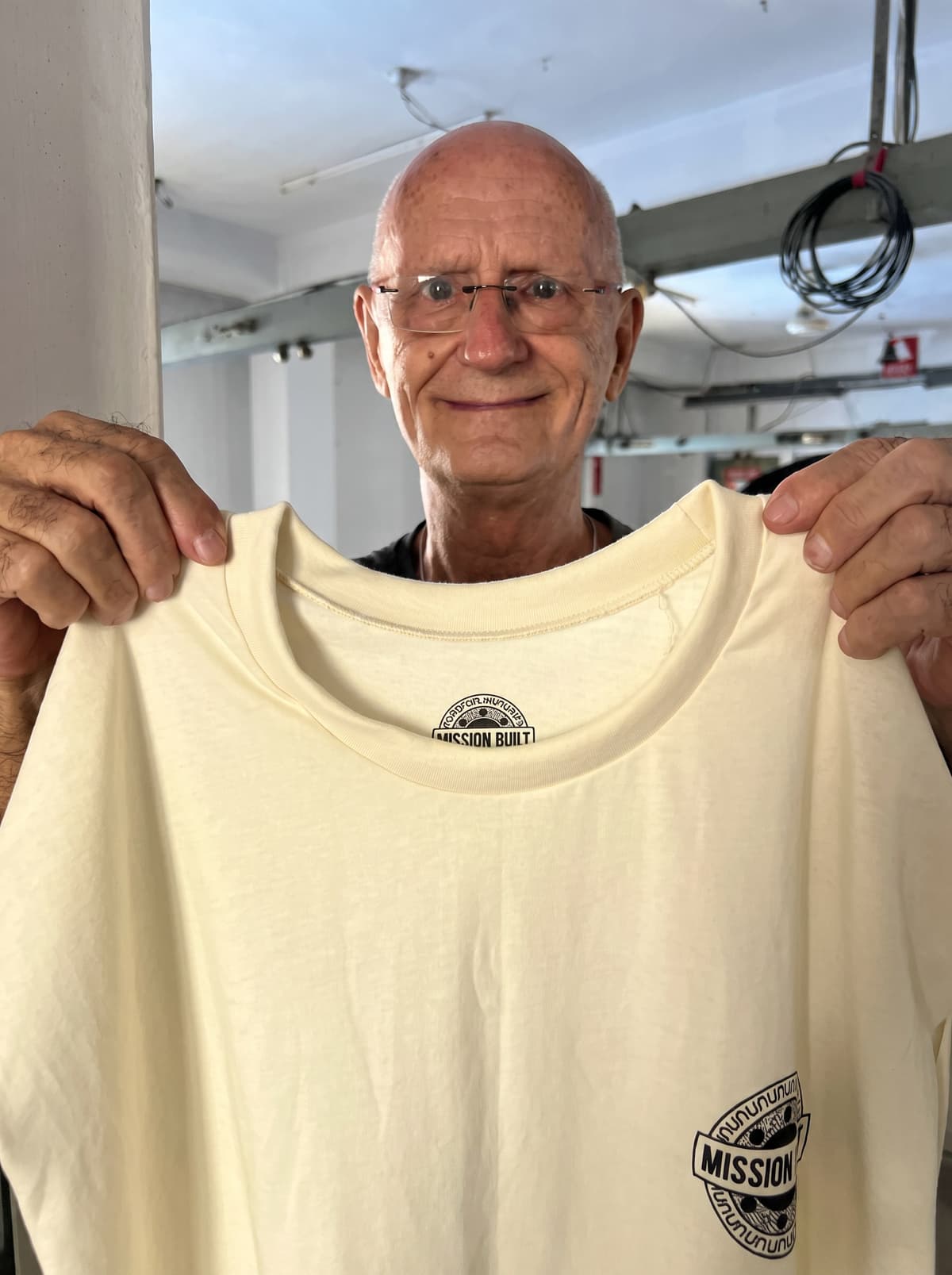
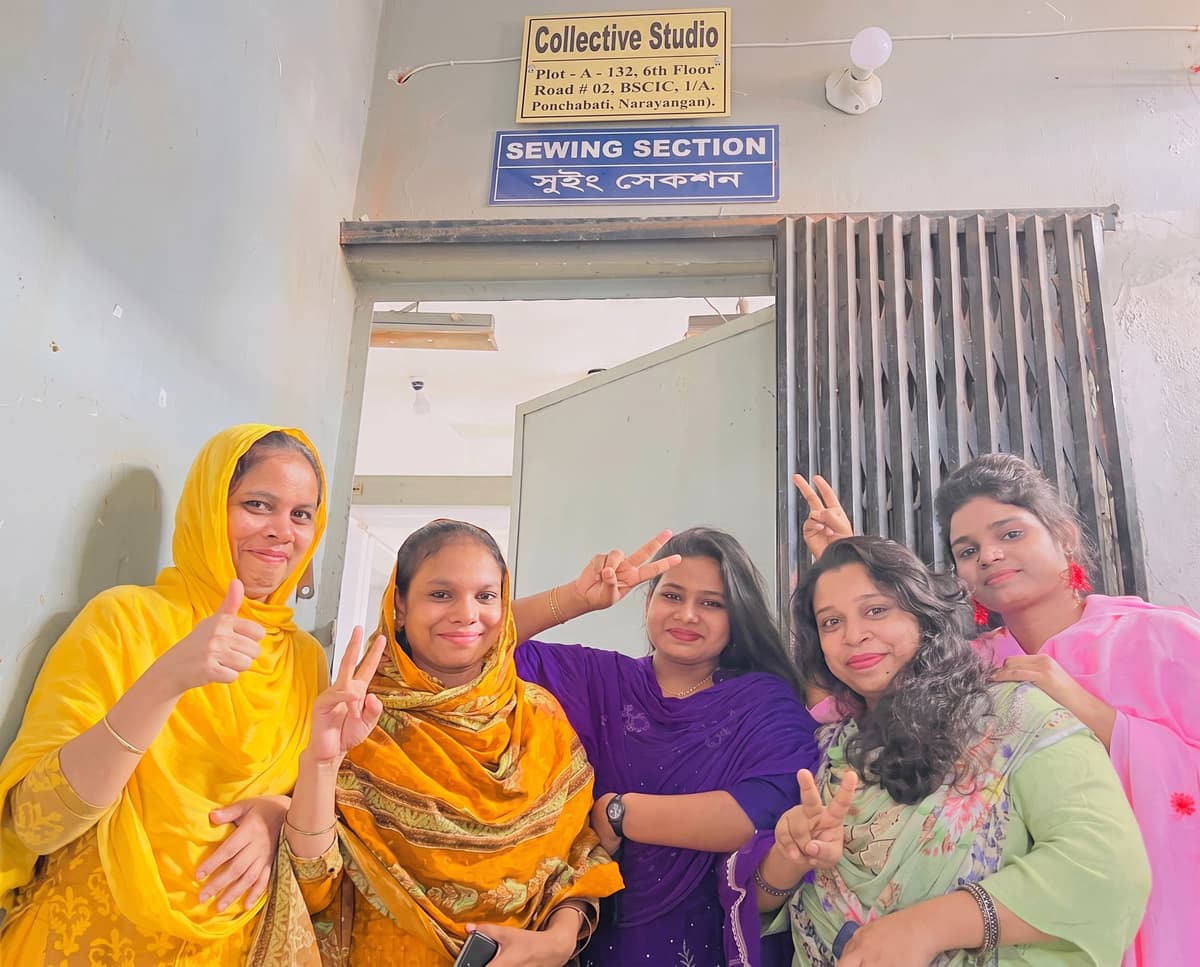
Made by our own team in Narayanganj. See the floor ↓Client reviews on Google ↗GOTS certificate RSC 9687 →
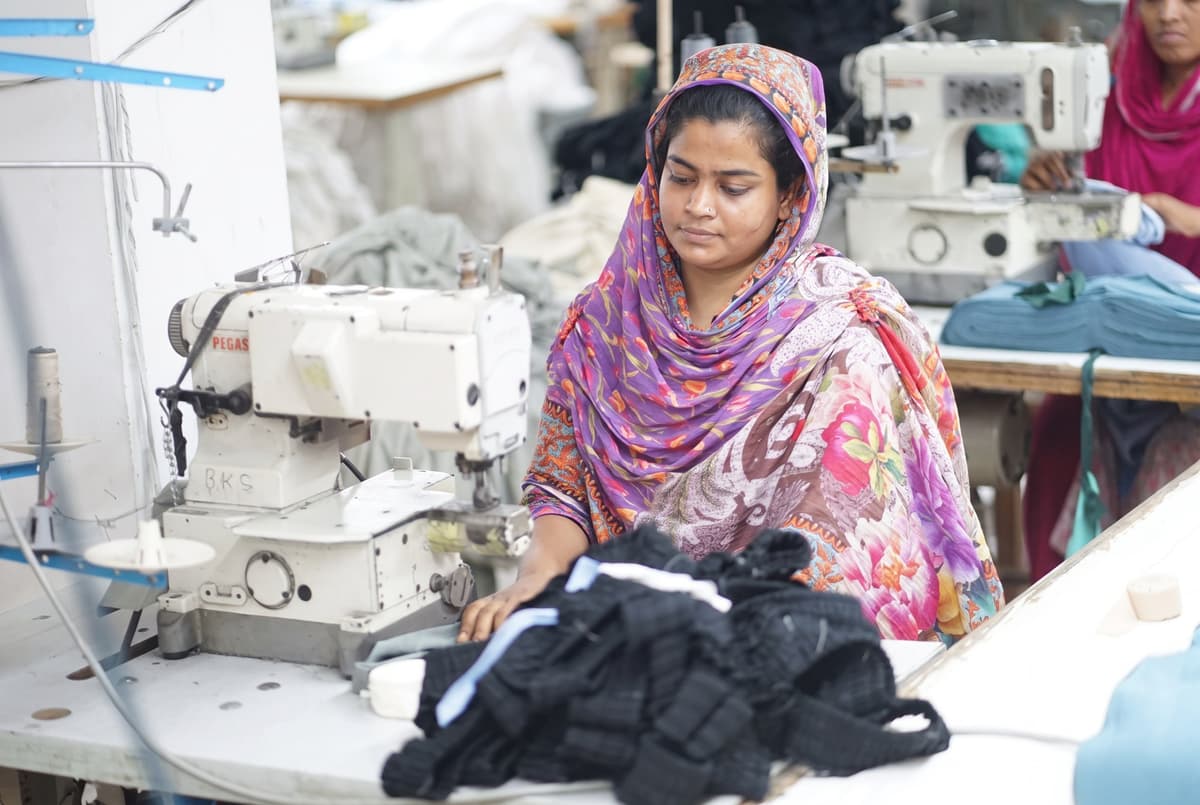
Bangladesh is the world’s second-largest clothing exporter after China, and roughly 4,000 registered export factories are the reason. Nearly all of them are engineered around volume: long runs, few changeovers, buyers who order in tens of thousands. That is the country’s real competitive advantage, and it is worth understanding before you go looking for a low minimum here — because a low MOQ in Bangladesh runs against the grain of how the industry is built. Collective Studio is a family-run cut-and-sew knitwear factory in Narayanganj with a minimum of 150 pieces per style, per colour: a deliberately small number in a place that mostly does not deal in small numbers.
If you have been searching for a small quantity clothing manufacturer in Bangladesh and found only factories quoting 500, 1,000 or 3,000 pieces, the reason is not stubbornness and it is not really about sewing. It is fabric. Knit cloth is produced on circular machines in minimum runs and dyed in lots measured in hundreds of kilos, so the binding constraint sits upstream at the mill rather than on the sewing floor. A hundred and fifty garments will never fill a dye lot on their own. We work at 150 by drawing from stock lots where the shade allows, and by placing your colour into a lot already booked — which is also why the minimum is per colour rather than per order. Four hundred and fifty pieces in one shade is one lot and one cutting run; a hundred and fifty each in three shades is three of everything, and it prices accordingly. Our free MOQ calculator shows the difference in pieces and cost.
Now the part that low-MOQ pages almost never mention, and the one that actually decides whether a small Bangladeshi order makes sense: freight is close to a fixed cost spread over a variable number of units. Sea freight at this size is sold as LCL — less than container load — and LCL is billed against a minimum, commonly around one cubic metre, whether or not you fill it. Air freight is billed on chargeable weight, the greater of actual and volumetric weight, and knitwear is bulky for its mass, so air almost always bills on volume rather than on the scale. The consequence is simple arithmetic: a freight line that is trivial per unit across 2,000 hoodies is a visible number across 150. It does not make a small order uneconomical — it means you should ask every supplier for a DDP landed price and compare those, never factory rates, and it is a strong argument for putting three styles into one shipment instead of three shipments.
Set against that is the structural advantage, and it applies at a hundred and fifty pieces exactly as it does at a hundred thousand: duty. As a least developed country, Bangladesh currently enters the UK, the EU, Australia, Canada, Japan, Switzerland and Norway duty-free, where a comparable order from Turkey, Portugal or China may not. Duty is charged as a percentage of value, so the saving scales down with your order rather than vanishing — it is one of the few advantages of sourcing here that a small brand receives in full. Two caveats we would rather state than bury. Bangladesh’s LDC graduation is currently scheduled for 24 November 2026, with an extension requested at the UN and a General Assembly decision pending, and most of these markets have transition arrangements rather than a cliff edge. And the United States is the exception: its preference schemes have never covered apparel, so US-bound orders run on a separate tariff calculation set out on that page.
There is a version of this question where our answer is no, and you should have it plainly. If you are a European brand that needs 150 pieces on a shelf in three weeks, Portugal or Turkey will beat us on the calendar and we would rather say so than take the order — road freight from Porto to Berlin is a matter of days, while our honest figure is 40–50 days of production after sample approval, plus transit. If your first run is genuinely 30 pieces, a print-on-blanks service is the right tool and we are not it. Where Bangladesh wins at low volume is the second order and every one after it: the same floor, the same sealed sample and the same graded pattern carry you from 150 to 10,000 without changing factory, at a unit cost European small-batch production does not reach. If you expect to reorder, the arithmetic turns in our favour quickly. If this is genuinely a one-off, it may not.
One warning specific to buying small in this country. Low-MOQ enquiries attract agents and trading houses presenting themselves as factories, because the margin per piece is highest exactly where the buyer is newest, and a hundred-and-fifty-piece order is cheap to place quietly on someone else’s line. The checks are quick, and you should run them on us as readily as on anyone. Is there a street address you could actually turn up to, published rather than produced on request? Will they do a live video walkthrough of the floor on a call you schedule, rather than sending a polished pre-recorded tour? Do they hold a BIN and Export Registration Certificate in the same name that appears on the quote? And for any certification claimed, is there a certificate number, and will they send you the certificate itself? Ours is GOTS RSC 9687, and we send the scope certificate to anyone who asks. A broker can be a perfectly good partner; you should simply know which one you are speaking to before a deposit leaves your account.
Practically: tees, polo shirts, hoodies, sweatshirts, joggers, activewear, loungewear, underwear and accessories, cut and sewn from your own pattern rather than printed onto ready-made blanks, from 150 pieces per style and colour, with organic cotton available under our GOTS certificate RSC 9687, shipped DDP after 40–50 days of production from an approved sample. If what you actually want is the argument for the number itself rather than the country, our low MOQ clothing manufacturer (any market) page works through why the floor is 150 and not 25. If you want the wider picture of sourcing here at any volume, start with clothing manufacturer in Bangladesh.
Roughly 4,000 export factories built for long runs. Ours starts at 150 pieces per style and colour — and it is still 150 after you enquire.
LCL bills against a minimum of about one cubic metre. On a small order that matters, so we quote DDP landed rather than a factory rate.
LDC access to the UK, EU, Australia, Canada and Japan is a percentage of value, so a hundred-and-fifty-piece order keeps the whole advantage.
A published street address, GOTS certificate RSC 9687, and a live video walkthrough of the floor on a call you schedule.
Every order ships DDP: duty, clearance and freight inside one landed price. Duty rules differ by market, so each of these pages works through the one that applies to you.
Since 24 July 2026 Bangladesh apparel pays normal US duty plus a 10% Section 301 duty; the earlier IEEPA tariff ended in February 2026. A US-cotton quota is promised but not yet open. We quote DDP so the duty is inside the number.
Manufacturing for US brands →Duty-free into the UK under the Developing Countries Trading Scheme. We cut and sew in our own building, so the origin paperwork is straightforward.
Clothing manufacturer for UK brands →Duty-free into every EU market under Everything But Arms, GPSR documentation support, and an office in Amsterdam in your time zone.
Manufacturing for EU brands →Duty-free under the EU's EBA scheme, with Germany's 19% import VAT worked through with a real number, so the landed cost is the cost.
Manufacturing for German brands →Duty-free access from Bangladesh, fabrics specified for Australian heat, and a DDP price with freight, the customs entry and any duty inside it. How GST is handled is confirmed in your quote.
Manufacturing for Australian brands →Duty-free into Canada under the LDCT, which Finance Canada intends to keep for three years after LDC graduation, under rules of origin that changed on 1 January 2025. We explain what that means for your order.
Manufacturing for Canadian brands →The real constraint on a small order in Bangladesh sits upstream of the sewing floor, at the mills, and this is what that looks like. We filmed these stages on our own visits to the mills we work with. We do not own these plants: we book, specify and inspect them, and for a 150-piece order the cloth comes from stock lots, combined orders or part-lot knitting, with dyeing scheduled into a lot already booked where your colour allows. The last stage is our own floor.
I have had a very good experience with this company. They are very friendly, professional, and provide fast service. They speak fluent English, which makes communication very easy. The quality of their manufacturing is excellent. I have no doubt in recommending this company to anyone looking for a reliable manufacturing partner in Bangladesh.
Collective Studios under the direction of Mr Jamish and his daughter Homaira represent the future of RTW production in Bangladesh. A thorough approach to detail governed by a genuine standard of quality. Masters of and partners in the process!
Best supplier! On time, reliable and perfect craft.
At 150 pieces the unit price is shaped less by sewing than by three things that do not shrink with the order: the dye lot, the freight minimum and the one-off setup.
Knit fabric is dyed in lots of hundreds of kilos, and 150 garments never fill one. Where the shade allows we draw from stock lots or place your colour into a lot already booked; an exact shade needs its own lot and prices accordingly. This is why the minimum is per colour and why one shade beats three.
Sea freight at this size is LCL, billed against a minimum of roughly one cubic metre whether you fill it or not, and air is billed on chargeable weight, which for bulky knitwear is usually volume. Spread over 150 pieces that line is visible; over 2,000 it vanishes. Shipping three styles together divides it three ways.
Because the quote is DDP, duty and clearance are inside it. Bangladesh's LDC status currently means duty-free entry to the UK, EU, Australia, Canada, Japan, Switzerland and Norway, and since duty is a share of value the saving applies fully at small volume. US-bound orders are the exception and run on a separate tariff calculation.
Pattern making, a sealed sample and a line changeover cost the same whether they serve 150 pieces or 1,000, which is the real reason the floor sits at 150 rather than 25. On a first order they are a distinct share of the unit price; on a reorder using the same sealed sample they are already paid.
The same floor, pattern and sample carry a style from 150 to 10,000 without changing factory, and the unit price steps down as runs pass roughly 500 and 1,000 pieces because setup and freight are shared more widely. The economics of buying small here turn on whether you expect to reorder.
Because the constraint is fabric, not sewing, and because the country's industry is optimised for the opposite of what you are asking for. Small quantity orders run against how the whole sector is built here. Knit cloth is knitted on circular machines in minimum runs and dyed in lots measured in hundreds of kilos, so a hundred and fifty garments cannot fill a dye lot on their own. On top of that sits a commercial reality: a factory geared to 20,000-piece programmes loses more in line changeover and planning time than it earns on a 150-piece run, so it quotes a minimum that makes the enquiry go away. Neither of those is dishonest. It does mean that a genuinely low minimum here has to be a deliberate choice about how the factory is organised, which is why you find it in smaller family-run units rather than the large compliance-audited campuses. We reach 150 by drawing fabric from stock lots where the shade permits, and by scheduling your colour into a dye lot already booked.
No, but it is the line item that most often surprises people, and it deserves a straight answer. Sea freight at this size ships LCL — less than container load — and LCL is priced against a minimum billable volume, commonly around one cubic metre, whether you fill it or not. Air freight bills on chargeable weight, meaning the greater of actual weight and volumetric weight, and because knitwear is bulky relative to its mass, air freight almost always bills on volume rather than the scale reading. So the per-unit freight cost on 150 pieces is genuinely higher than on 2,000. Two things follow. First, compare DDP landed quotes rather than factory rates, because an FOB number hides exactly this. Second, consolidate: three styles at 150 in one shipment share one freight minimum, while three separate shipments pay it three times. That single decision usually moves more money than the unit price you were negotiating.
On the unit price, usually yes and by a wide margin. On the landed cost of a single small order, the gap narrows considerably, and on the calendar Portugal and Turkey win outright. Freight from Portugal to Germany is road haulage measured in days; ours is 40 to 50 days from an approved sample plus sea transit. If you need 150 pieces on a shelf in three weeks, we are the wrong answer and we will tell you so. Where the maths turns is the reorder. Portugal's unit price does not fall much as you scale, whereas ours does, and the same pattern, sealed sample and production floor take you from 150 pieces to 10,000 without changing supplier or rebuilding your quality baseline. So the honest framing is not which is cheaper, but whether this is a one-off or the first of many. For a one-off in Europe, buy in Europe. For a brand that intends to grow, starting where you can also finish is worth more than the first invoice suggests.
Yes, in full. Duty is levied as a percentage of the customs value of the shipment, so preferential access is one of the few advantages of Bangladeshi sourcing that does not shrink with your order size. As a least developed country, Bangladesh currently enters the UK, EU, Australia, Canada, Japan, Switzerland and Norway duty-free, and a hundred-and-fifty-piece order collects the same percentage saving that a container does. Three caveats worth knowing. Bangladesh's LDC graduation is currently scheduled for 24 November 2026, and Bangladesh has requested an extension, pending a UN General Assembly decision; most of these markets have transition arrangements rather than an immediate cliff edge, which we set out on the individual country pages. Preferential rates depend on correct rules-of-origin documentation, which we prepare as part of the shipment rather than leaving to you. And the United States is the exception, because its preference schemes have never extended to apparel — see our US brands page for that calculation. Because we ship DDP, whatever the duty is, it sits inside the number you were quoted.
Run four quick checks before a deposit moves: a published address, a live video walkthrough, registration documents in the name on the quote, and the certificate behind any certification claimed. They matter most at low volume, because small orders are the easiest to place quietly on someone else's line. First, is a full street address published on the website rather than offered on request, and does it resolve to an industrial building on a map? Second, will they do a live video walkthrough on a call you schedule? A pre-recorded tour proves nothing. Third, do they hold a BIN and an Export Registration Certificate in the same legal name as the quotation and the invoice? A mismatch is the clearest tell there is. Fourth, ask for the certificate number and the certificate itself; ours is GOTS RSC 9687, sent on request. An agent can still be a good partner. You should simply know which you are dealing with.
Two or three styles rather than one, and one colour per style rather than three, which is the opposite of what most first orders look like. The reasoning is that breadth teaches you something and depth does not: three styles at 150 each tells you which product your audience actually wants, whereas 450 of one design only tells you whether they liked the one you guessed. Colour works the other way, because the per-colour minimum is set by the dye lot — a hundred and fifty each in three shades is three fabric lots and three cutting runs, and it prices as three orders rather than one. There is also a freight argument for consolidating: styles shipped together share one LCL minimum, so adding a second style to an existing shipment costs far less in freight than a second shipment does. And keep a reserve for the reorder. Selling out of your best style three weeks after launch with no cash to restock is a more common way to stall than failing to sell at all.
District matters more than most buyers expect, because Bangladesh's garment industry is clustered by product type rather than spread evenly. Narayanganj, immediately south-east of Dhaka, is the country's oldest textile district and the centre of its knitwear trade — knitting mills, dye houses and cut-and-sew units concentrated closely enough that a small order can move between them without long transport legs, which is precisely what makes low minimums workable. Gazipur and Ashulia, north of Dhaka, hold much of the large-scale woven and outerwear capacity and are where the very big compliance-audited campuses sit; excellent factories, and generally the wrong door to knock on for 150 pieces. Chattogram serves the port and skews toward high-volume export programmes. If you are making knit garments in small runs, Narayanganj is where the supporting supply chain already exists, which is why we are here. Our factory address is published in full on the contact page and you are welcome to visit.
It varies by factory, and what the number counts matters as much as the number. Ours is 150 pieces per style and per colour. Many export factories here are built around long runs and quote 500, 1,000 or 3,000 pieces, usually because of the dye lot rather than the sewing line. When you compare quotes from Bangladesh, ask three things in writing. Is the minimum counted per style, per colour or per order? A 300-piece minimum per order can be a smaller commitment than 150 per colour across four shades. Is the garment cut and sewn from your pattern, or printed onto a blank someone else made? And is the price a factory rate or a DDP landed figure? Freight weighs far more on 150 pieces than on 2,000, so only landed prices compare fairly. Our free MOQ calculator shows how styles and colours change the total before you ask anyone for a quote.
Yes, if the range is knitwear and you expect to reorder. A startup can place 150 pieces per style and per colour with us, and it does not need a tech pack to begin: a sketch, a reference garment or a short description is enough for a first sample, and the sample you approve becomes the sealed reference every production piece is checked against. The order is quoted DDP, so duty and freight sit inside one landed price rather than arriving later. Bangladesh pays off on the reorder, because the same pattern and sealed sample carry a style into larger runs on the same floor at a lower unit price. It suits a brand less well if stock is needed within weeks, where a nearer maker wins on the calendar, or if the first run is under 150 pieces, where printing onto blanks is the cheaper test. Our startups page walks through a first range step by step.
Trade and regulatory details on this page last verified 19 September 2026. Tariff and compliance terms change — ask us to confirm the current position for your order.
Whether it’s a large bulk or wholesale run or your first batch of 150, send a sketch, a reference, or a sentence. We’ll reply within one business day with fabric options and an indicative price.
Or message the factory directly: WhatsApp +880 1980 055026 · hello@collectivestudioltd.com · Homaira replies within one business day.