What Is Viscose Fabric? Rayon Explained: How It Is Made and How It Wears
Viscose fabric is cloth made from viscose, a man-made fibre of regenerated cellulose. Wood pulp is turned into a thick liquid with caustic soda and carbon disulphide, then spun back into solid fibre in an acid bath. In the United States the same fibre is called rayon. It is soft, cool and drapes well, and it has one weakness that shapes everything about how it is used: it loses about half its strength when wet.
We are Collective Studio, a family-run knitwear factory in Narayanganj, Bangladesh. We work with viscose blends for drape-led styles, so this guide is written from the making side: what the fibre is, what the law calls it, and what to check before you put it in a range.
The short version
- What it is: a regenerated cellulose fibre, man-made from wood pulp. It is not a natural fibre and not an oil-based synthetic.
- Viscose and rayon: the same thing. Viscose is the name in EU and UK law; rayon is the American name, and US rules accept either.
- How common: about 80% of all man-made cellulosic fibre in 2024, around 6.7 million tonnes.
- The weakness: it loses about half its strength when wet and can stretch or shrink, so it needs gentle washing.
- Organic: no. Under the Global Organic Textile Standard it can only be a minor added fibre.
How viscose is made
The fibre makers' association CIRFS sets out the steps. Cellulose from wood pulp is ground and reacted with caustic soda. After a period of ageing, carbon disulphide is added, which forms a yellow crumb called cellulose xanthate. That dissolves in more caustic soda to give a thick yellow solution. The solution is pumped through a spinneret, a plate that may have thousands of holes, into a bath of dilute sulphuric acid, where the cellulose turns back into fine solid filaments. The thick, viscous solution is where the name comes from.
Nothing of the tree survives except the cellulose itself. That is why viscose made from beech, pine, eucalyptus or bamboo is the same fibre on a label, a point our guide to bamboo fabric takes further. Modal is a stronger variation of this process, and lyocell is a different process that skips the carbon disulphide step.
How much viscose there is
The Textile Exchange Materials Market Report 2025 puts world fibre production in 2024 at 132 million tonnes. Man-made cellulosic fibres were about 8.4 million tonnes of that, a share of around 6%, and the European Commission's textiles platform repeats those figures. Within that group viscose was about 80%, around 6.7 million tonnes, with lyocell at about 5% and modal about 3%. Production of these fibres has more than doubled since 1990.
Viscose, modal, lyocell and cotton side by side
| Fibre | How it is made | Strength when wet | Name on an EU or UK label | Moisture allowance in EU law |
|---|---|---|---|---|
| Viscose | Wood pulp treated with caustic soda and carbon disulphide, then spun into an acid bath | Loses about half its strength | Viscose | 13% |
| Modal | A modified viscose process | High wet strength is part of its legal definition; we found no single published figure | Modal | 13% |
| Lyocell | Wood pulp dissolved directly in a solvent, which is recovered and reused | Keeps about 85% of its strength | Lyocell | 13% |
| Cotton | Grown; the fibre comes from the boll of the plant | Not a regenerated fibre | Cotton | 8.5% |
How viscose wears, and why it is washed gently
Dry, viscose is pleasant to wear: smooth, cool against the skin and fluid in the way it hangs. Wet, it changes. A 2018 review in the journal BioResources states that viscose loses about half its tensile strength when wet, and that regular rayon becomes unstable and may stretch or shrink. This is why viscose garments so often carry a gentle care label. The care symbol body GINETEX gives viscose as an example for a mild wash at 30 or 40 degrees, with a reduced load and little or no spinning.
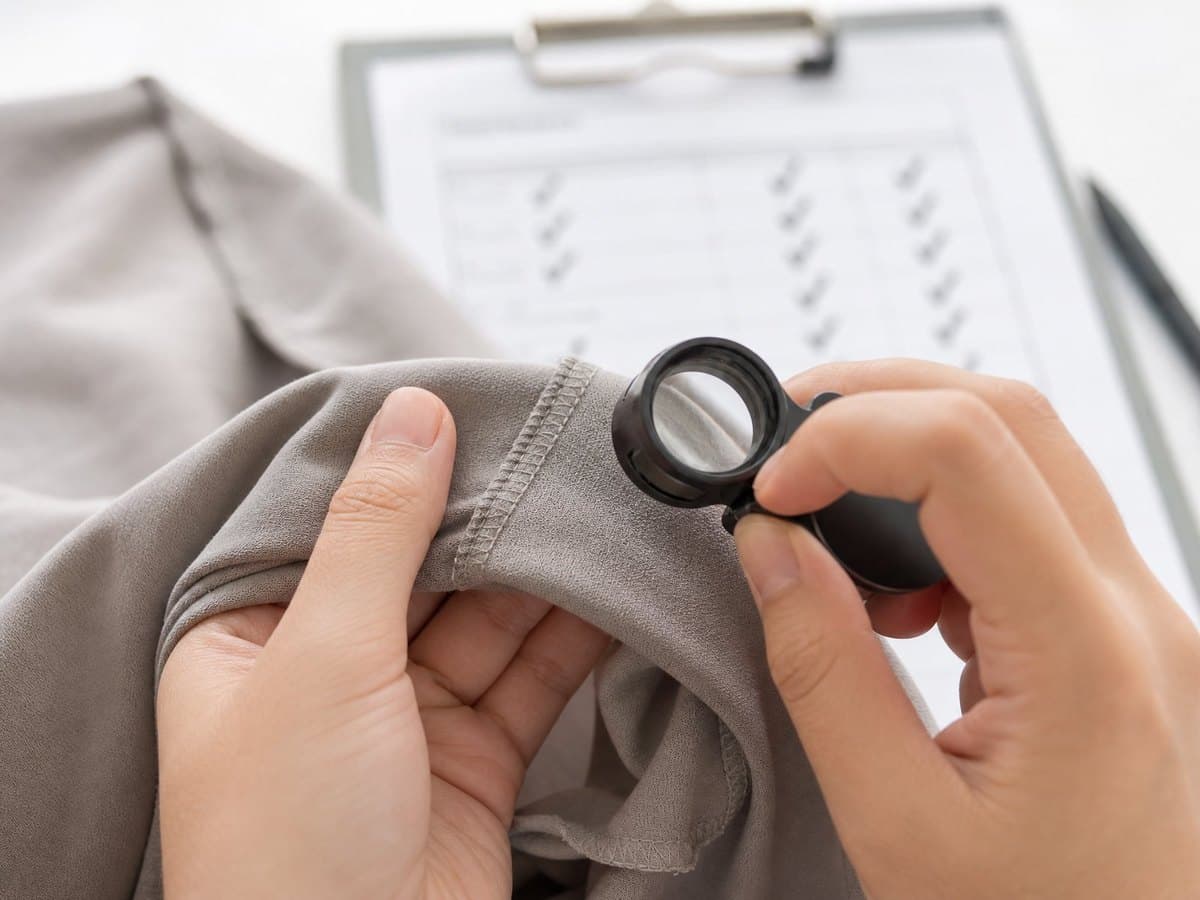
For a brand, that means two jobs. Wash test the fabric before bulk, measuring before and after, because how a viscose fabric behaves depends on its construction and finishing as well as the fibre. Then write the care label from that test. Our guide to care labels and wash symbols explains the symbols.
Viscose, rayon and the label
Under Regulation (EU) No 1007/2011 only the fibre names in Annex I may be used on a label, and viscose is entry 25: a regenerated cellulose fibre obtained by the viscose process. The UK list is the same. In the United States the legal generic name is rayon, and the Federal Trade Commission's labelling guidance explains that viscose is the international standard's name for the main form of rayon and that either name may be used. Canada accepts "viscose" or "viscose rayon". Lenzing's own branded viscose is LENZING ECOVERO; its TENCEL brand covers lyocell and modal only. For the rest of the label, see clothing labelling requirements by country.
The honest picture on chemicals and forests
Viscose has two environmental questions, and a careful brand asks both.
- Carbon disulphide. The United States health agency ATSDR says the chemical is mostly used to make rayon, and that workers who breathed it for long periods have shown effects on the nervous system. It adds that most people are not likely to be exposed to harmful levels. The concern is for workers and for emissions at the plant, not for the person wearing the garment.
- What good plants do. The European Commission's 2007 reference document on best available techniques lists the measures: enclosing the spinning lines, and condensing or adsorbing the exhaust air to recover carbon disulphide and feed it back into the process.
- Forests. Textile Exchange puts 65 to 70% of man-made cellulosic fibre in 2024 under FSC or PEFC programmes. Canopy's Hot Button Progress Report 2026 rates 28 producers on the risk of sourcing from ancient and endangered forests, and gives 22 of them a green rating.
- Certificates. OEKO-TEX STANDARD 100 means the finished fabric was tested for harmful substances. It does not describe the fibre plant or the forest.
Viscose cannot be sold as organic. Under version 7.0 of the Global Organic Textile Standard, viscose and modal may be at most 10% of the fibre content as added fibres, and all added fibres together are capped at 5% in a product labelled organic. Version 8.1, for audits from 1 March 2027, also requires the viscose to come from certified forests, organic feedstock or waste.
Viscose in a knitwear factory
We work with viscose blends, alongside modal and cotton-modal, for drape-led styles at about 140 to 200 GSM: slip dresses, wide-leg sets and loungewear. Draped styles in these fabrics need bound or narrow-rolled edges and careful handling on the cutting table, because the cloth moves. The fabric is knitted and dyed at partner mills, then cut and sewn on our own floor. Our advice is simple: confirm any viscose on a wash test before you approve it. Dresses and sets are covered on our womenswear page.
Our minimum is 150 pieces per style and colour, sampling takes about 10 days, and delivery is about 70 days from order to your door by air. The fabric and GSM guide compares weights across fabrics. Send us your brief with a reference garment and we will tell you which of our fabrics comes closest.
What clients say
Wonderful people to work with — very professional and knowledgeable, also accommodating to the needs of their customers.
Best supplier! On time, reliable and perfect craft.
Frequently asked questions
Is viscose the same as rayon?
Yes. Viscose and rayon are two names for the same fibre, regenerated cellulose made by the viscose process. Viscose is the name used in European Union and United Kingdom law, where it is entry 25 in the list of legal fibre names. Rayon is the name in American law. The United States also accepts the names used in the international standard for man-made fibres, and the Federal Trade Commission's guidance says viscose is that standard's name for the main form of rayon and that either may be used on a label. Canada accepts viscose or viscose rayon. Modal and lyocell are related fibres with their own names. US law defines lyocell within rayon, while in the EU and UK both are separate entries. For a brand selling in several countries, viscose is accepted on a label in all of these markets.
Is viscose a natural or a synthetic fibre?
It is neither, which is why it is sometimes called semi-synthetic. The starting material is natural: cellulose, usually from wood pulp. But the fibre is manufactured. The cellulose is dissolved using caustic soda and carbon disulphide and then spun into an acid bath, where it becomes solid filament again. EU law calls viscose a regenerated cellulose fibre and lists it with the man-made fibres, not with natural fibres such as cotton, linen and wool. It also differs from true synthetics such as polyester and nylon, which are built from oil-based chemicals and contain no cellulose. For marketing, the accurate description is a man-made fibre from wood cellulose. Calling viscose natural is the kind of claim regulators have challenged, especially where the pulp came from bamboo and the product was sold on the plant's reputation.
Does viscose shrink, and why is it delicate when wet?
Viscose can shrink or stretch in washing, and the reason is its wet strength. A published review of regenerated cellulose fibres states that viscose loses about half its tensile strength when wet, and that it becomes unstable and may stretch or shrink. A wet viscose fabric is easier to pull out of shape than a dry one. How much a particular garment moves depends on how the fabric was made and finished, so there is no single honest percentage. In practice it means a mild wash at a low temperature, a small load and little spinning, which is what the care symbol body GINETEX suggests for viscose. For a brand, it means testing before bulk: measure the sample, wash and dry it as a customer would, and measure again. Then write the care label from the result, not from habit.
Is viscose bad for the environment, or harmful to wear?
Wearing viscose is not the concern. The questions are about how it is made. The viscose process uses carbon disulphide, and the United States health agency ATSDR reports effects on the nervous system in workers who breathed it over long periods, while noting that most people are unlikely to be exposed to harmful levels. Well-run plants enclose their spinning lines and recover the chemical from exhaust air, as the European Commission's reference document on best techniques describes. The second question is the wood. Canopy rates producers on the risk of sourcing from ancient and endangered forests, and Textile Exchange reports that 65 to 70% of these fibres came under FSC or PEFC programmes in 2024. So the answer depends on the producer. Ask your supplier who made the fibre and what forest certification it carries.
What is the difference between viscose and cotton?
Cotton is a natural fibre that grows on a plant. Viscose is manufactured from dissolved wood cellulose. They are chemically related, since both are cellulose, and both absorb moisture, but they behave differently in a garment. Viscose is smoother and drapes more, so it suits dresses, blouses and loose trousers that should hang and move. Cotton has more body, so it suits T-shirts and sweatshirts that should hold their shape. Cotton is commonly washed on a normal cycle. Viscose loses about half its strength when wet and needs a gentle one. Cotton can be certified organic; viscose cannot, and may only be a small added fibre under the Global Organic Textile Standard. The two are often blended, and a blend should be wash tested like any other fabric before it is approved for bulk.
Where this applies
The manufacturing pages this guide relates to, if you are costing a real run.
Free tools & guides for this
Sources & further reading
- CIRFS, European Man-made Fibres Association: Viscose
- Textile Exchange: Materials Market Report 2025 (data for 2024)
- European Commission, EU Transition Pathways platform: summary of the Materials Market Report 2025
- Zhang et al. (2018), Regenerated cellulose by the Lyocell process, a brief review of the process and properties, BioResources 13(2)
- GINETEX: Textile care symbols
- Regulation (EU) No 1007/2011 on textile fibre names, consolidated text: Annex I (fibre names), Annex IX (agreed allowances), Articles 5, 9 and 16
- legislation.gov.uk: Regulation (EU) No 1007/2011 as kept in UK law, Annex I
- US Code of Federal Regulations, 16 CFR 303.7: generic names and definitions for manufactured fibres
- US Federal Trade Commission: Threading Your Way Through the Labeling Requirements Under the Textile and Wool Acts
- Competition Bureau Canada: Guidance on labelling textile articles derived from bamboo
- Lenzing: Brands (TENCEL, VEOCEL, LENZING ECOVERO)
- US Agency for Toxic Substances and Disease Registry: ToxFAQs for carbon disulfide
- European Commission (2007): Reference document on best available techniques in the production of polymers, viscose chapter
- Canopy: Hot Button Progress Report 2026
- OEKO-TEX: STANDARD 100
- Global Organic Textile Standard, version 7.0, sections 2.7 and 3.2 (additional fibre materials)
- Global Organic Textile Standard, version 8.1 (June 2026), section 3.2.10
Cite this guide
For journalists, writers, researchers and students.
Quoting this guide? Please credit Collective Studio and link to this page.
Reference
Homaira Jashim, Collective Studio. "What Is Viscose Fabric? Rayon Explained: How It Is Made and How It Wears." 12 November 2026. https://collectivestudioltd.com/journal/what-is-viscose-fabric
Writing about us? Our press kit has our facts, logos and photos, free to use with credit.
Have an idea? Let’s make it.
We manufacture from 150 pieces per style and colour, with organic cotton options from our GOTS-certified facility and photos at every stage. Send a sketch or a sentence — we’ll reply within one business day.