What Is Lyocell Fabric? Tencel Explained, From Wood Pulp to Label
Lyocell fabric is cloth made from lyocell, a man-made fibre of regenerated cellulose. Wood pulp is dissolved directly in a solvent, spun into fibre, and the solvent is recovered and used again. That direct route is what separates lyocell from viscose and modal, which need a chemical reaction with carbon disulphide first. Tencel is not a different fibre: it is the brand name of one maker, Lenzing. The fabric is smooth, strong and good with moisture, and it is used for shirts, dresses, T-shirts and underwear.
We are Collective Studio, a family-run knitwear factory in Narayanganj, Bangladesh. We cut and sew lyocell jersey, and it is often asked for by its brand name, so this guide sets out what the word means, what the law calls it, and what to check before you put it in a range.
The short version
- What it is: a regenerated cellulose fibre made by dissolving wood pulp in a solvent, with no chemical reaction to change the cellulose first.
- Tencel: Lenzing's brand for its lyocell and its modal. Other companies make lyocell too.
- Strength: the strongest of the regenerated cellulose fibres, and it keeps about 85% of its strength when wet.
- On the label: "lyocell" in the EU and the UK. In the United States it is a kind of rayon in law.
- Organic: no. It can only be an added fibre in a product certified to the Global Organic Textile Standard.
How lyocell is made
The fibre makers' association CIRFS describes a solvent spinning process: the cellulose is dissolved directly in a solvent called NMMO with a set amount of water, the solution is filtered and spun through fine holes into water, and the solvent is recovered from that water and reused. CIRFS dates the first commercial plant to December 1992, which makes lyocell the youngest of the three. Lenzing calls it the third generation of regenerated cellulose fibres, after viscose and modal.
The difference from viscose is the missing step. The European Commission's 2007 reference document on best available techniques notes that lyocell dissolves the pulp in an organic solvent instead of carbon disulphide and caustic soda, which removes the sulphurous gas emissions of the viscose process. EU law writes the same idea into the name: lyocell is a regenerated cellulose fibre obtained by dissolution and an organic solvent spinning process, "without formation of derivatives".
"Closed loop" needs a number to mean anything. Lenzing states that more than 99.8% of the solvent is recovered in its own process. That is one company's figure for its own plants. It is not a property of every lyocell on the market, so ask who made the fibre.
Lyocell, viscose, modal and cotton side by side
| Fibre | How it is made | Strength when wet | Name on an EU or UK label | Moisture allowance in EU law |
|---|---|---|---|---|
| Viscose | Wood pulp treated with caustic soda and carbon disulphide, then spun into an acid bath | Loses about half its strength | Viscose | 13% |
| Modal | A modified viscose process | High wet strength is part of its legal definition; we found no single published figure | Modal | 13% |
| Lyocell | Wood pulp dissolved directly in a solvent, which is recovered and reused | Keeps about 85% of its strength | Lyocell | 13% |
| Cotton | Grown; the fibre comes from the boll of the plant | Not a regenerated fibre | Cotton | 8.5% |
CIRFS puts lyocell's dry strength above the other cellulosic fibres and approaching that of polyester. The 13% figure is a trade allowance shared by all three regenerated fibres; it does not show that lyocell absorbs more than modal or viscose. Our guides to viscose and modal cover the other two.
Tencel, lyocell and the label
Lenzing's brands page lists TENCEL for lyocell and modal, and LENZING ECOVERO for its viscose. So "Tencel" on a swing tag may mean lyocell or modal, and it never means viscose. On the fibre content label the generic name is what counts. Under Regulation (EU) No 1007/2011 only the names in Annex I may be used, and lyocell is entry 33. A trade mark may be printed immediately before or after it. The European Commission's own guidance says a brand name alone is not enough to identify the fibre. The UK list is the same.
The United States files it differently. The federal rule on fibre names defines rayon as regenerated cellulose and says that where the cellulose is precipitated from an organic solution with no chemical intermediates, "the term lyocell may be used". In American law, then, lyocell is a sub-type of rayon. In European law it is a separate fibre from viscose. Our guide to labelling by country covers the rest.
How lyocell wears, and the word fibrillation
Lyocell is smooth and strong, with a cool feel and a fluid drape. Its one quirk has a name. Under wet abrasion, fine hairs can lift from the surface of the fibre, which CIRFS and a 2018 review in BioResources call fibrillation. Mills use it on purpose to give a soft, peach-skin surface. Left uncontrolled, it shows as a fuzzy or chalky look after washing. For knitted fabric, Lenzing's fibre sheet recommends its low-fibrillation types, and it also sells a non-fibrillating type. If you are buying lyocell jersey, ask the mill which type the yarn is.
For care, follow the label set after a wash test. Wet rubbing is what causes fibrillation, so a mild cycle is the cautious choice. Our guide to care labels and wash symbols explains the symbols.
Is lyocell sustainable?
- The process: no carbon disulphide, and a solvent that is recovered. That is a real difference from viscose, and how much of the solvent is recovered depends on the plant.
- The wood: Lenzing lists eucalyptus, spruce, beech, maple, southern pine, birch and acacia, from certified or controlled sources. For any maker, ask for FSC or PEFC certification. The forest group Canopy rates producers in its Hot Button report.
- The scale: lyocell is still small. The Textile Exchange Materials Market Report 2025 puts it at about 5% of man-made cellulosic fibre in 2024, around 0.4 million tonnes, against 80% for viscose.
- The certificate: OEKO-TEX STANDARD 100 means the finished fabric was tested for harmful substances. It does not describe the fibre plant.
Lyocell cannot be sold as organic. Under version 7.0 of the Global Organic Textile Standard, lyocell from certified forests, organic feedstock or waste may be up to 30% of the fibre content, but only in a product labelled "made with organic materials". In a product labelled organic, all added fibres together are capped at 5%. Version 8.1, for audits from 1 March 2027, keeps those limits.
Lyocell in a knitwear factory
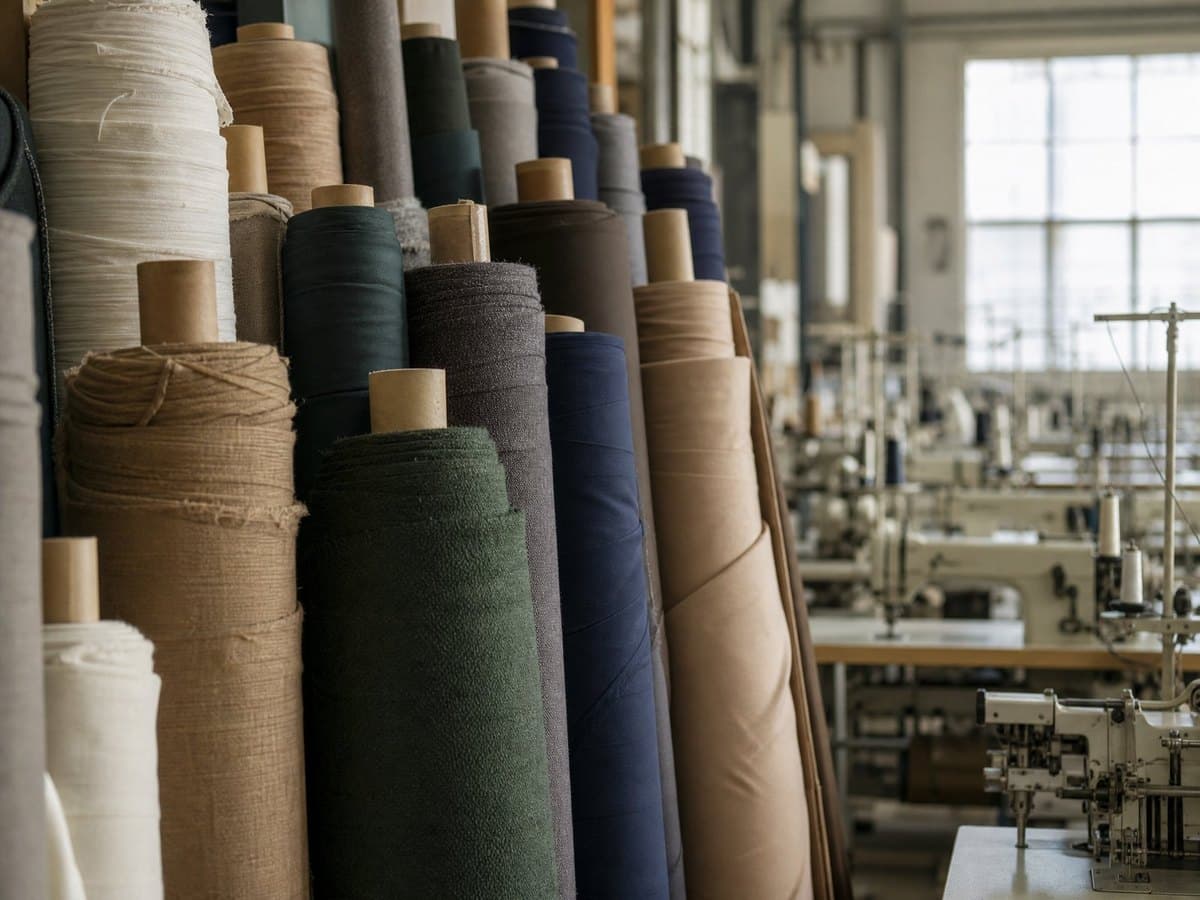
We cut and sew lyocell jersey alongside modal, cotton-modal, viscose blends and bamboo viscose. The fabric is knitted and dyed at partner mills, then cut and sewn on our own floor. When you brief us, say whether you want a named fibre such as TENCEL Lyocell or any lyocell, because the first has to be bought from that maker and shown on paper. We will not swap in modal or viscose without telling you: on the label they are different fibres. On the sample, check the weight, the drape on a body, the measurements after a wash test, and the surface after several washes, which is where fibrillation would show.
Our minimum is 150 pieces per style and colour, sampling takes about 10 days, and delivery is about 70 days from order to your door by air. The fabric and GSM guide compares weights, and sustainable fabrics explained sets lyocell beside the other options. Send us your brief to start.
What clients say
I have had a very good experience with this company. They are very friendly, professional, and provide fast service. They speak fluent English, which makes communication very easy. The quality of their manufacturing is excellent. I have no doubt in recommending this company to anyone looking for a reliable manufacturing partner in Bangladesh.
Nice supplier that is looking to develop new buyers and products.
Frequently asked questions
Is Tencel the same as lyocell?
Not exactly. Lyocell is the generic name of a fibre, defined in law by how it is made. Tencel is a brand name owned by the fibre maker Lenzing. Lenzing sells two fibres under that brand, TENCEL Lyocell and TENCEL Modal, so a garment described as Tencel may be either. Other companies also make lyocell, and theirs cannot be called Tencel. The fibre content label has to use the generic name. In the EU and the UK that is lyocell or modal, and a trade mark may be printed immediately before or after it but cannot stand in its place. If a supplier offers you Tencel, ask two questions. Is the fibre lyocell or modal? And is it Lenzing's fibre, with paperwork to show it, or is the word being used loosely for any lyocell?
What is the difference between lyocell and viscose?
Both are regenerated cellulose fibres made from wood pulp, and the difference is the process. To make viscose, the pulp is treated with caustic soda and then reacted with carbon disulphide before it can be dissolved and spun into an acid bath. To make lyocell, the pulp is dissolved directly in a solvent called NMMO, spun into water, and the solvent is recovered and reused. There is no carbon disulphide step. The fibres also behave differently. Ordinary viscose loses about half its strength when wet and can stretch or shrink in washing. Lyocell keeps about 85% of its strength when wet. On a label in the EU and the UK they are separate fibres, viscose and lyocell. In the United States, lyocell is treated in law as a sub-type of rayon, which is the American word for viscose.
Is lyocell a sustainable fabric?
Lyocell avoids the carbon disulphide step used for viscose, and how sustainable a particular fabric is depends on who made the fibre. The pulp is dissolved in a solvent that is recovered and reused. Lenzing states that more than 99.8% is recovered in its own plants, but that figure belongs to Lenzing and not to every producer. The wood matters as well: ask for FSC or PEFC certification, and check the maker's rating in Canopy's Hot Button report on forest sourcing. Lyocell is not organic and cannot be certified as an organic fibre, because it is manufactured. Under the Global Organic Textile Standard it may only be an added fibre, up to 30% in a product labelled made with organic materials. Dyeing, finishing and transport add their own impact. Say what you can prove, such as the fibre maker and the forest certificate.
Is lyocell a type of rayon?
It depends on the country. In the United States the answer is yes. The federal rule on fibre names defines rayon as a manufactured fibre of regenerated cellulose and adds that where the cellulose is precipitated from an organic solution with no chemical intermediates, the term lyocell may be used. Lyocell is therefore a sub-category of rayon in American law, and Canada's naming rules also allow lyocell rayon. In the European Union and the United Kingdom the answer is no. The list of legal fibre names has separate entries for viscose, modal, cupro and lyocell, each defined by its own process. The chemistry agrees with both views: all four are the same polymer, cellulose, made into fibre in different ways. For a brand selling in several markets, the safe word on the label is lyocell, which every one of these rules accepts.
Does lyocell go fuzzy or pill after washing?
It can, and the cause is a property called fibrillation. When lyocell is rubbed while wet, very fine hairs can split away from the surface of the fibre. Mills sometimes use this deliberately to make a soft, peach-skin finish. When it is not wanted, it shows after washing as a fuzzy or slightly frosted surface. There are two controls. The first is the fibre: makers sell low-fibrillation and non-fibrillating types, and Lenzing recommends its low-fibrillation types for knitted fabric. A mill can also give standard fibre a resin finish to hold the surface down. The second is the care instruction: a mild cycle and a reduced load cut down the wet rubbing that causes it. If you are developing a lyocell jersey style, ask the mill which fibre type is in the yarn and wash the sample several times before you approve it.
Where this applies
The manufacturing pages this guide relates to, if you are costing a real run.
Free tools & guides for this
Sources & further reading
- CIRFS, European Man-made Fibres Association: Lyocell
- Lenzing: Technologies (viscose, modal and lyocell processes)
- Lenzing: TENCEL Lyocell
- Lenzing: TENCEL Lyocell fibre claim sheet, October 2024
- Lenzing: Brands (TENCEL, VEOCEL, LENZING ECOVERO)
- European Commission (2007): Reference document on best available techniques in the production of polymers, viscose chapter
- Regulation (EU) No 1007/2011 on textile fibre names, consolidated text: Annex I (fibre names), Annex IX (agreed allowances), Articles 5, 9 and 16
- European Commission: Frequently asked questions on Regulation (EU) No 1007/2011
- legislation.gov.uk: Regulation (EU) No 1007/2011 as kept in UK law, Annex I
- US Code of Federal Regulations, 16 CFR 303.7: generic names and definitions for manufactured fibres
- Competition Bureau Canada: Guidance on labelling textile articles derived from bamboo
- Zhang et al. (2018), Regenerated cellulose by the Lyocell process, a brief review of the process and properties, BioResources 13(2)
- Textile Exchange: Materials Market Report 2025 (data for 2024)
- Canopy: Hot Button Progress Report 2026
- OEKO-TEX: STANDARD 100
- Global Organic Textile Standard, version 7.0, sections 2.7 and 3.2 (additional fibre materials)
- Global Organic Textile Standard, version 8.1 (June 2026), section 3.2.10
Cite this guide
For journalists, writers, researchers and students.
Quoting this guide? Please credit Collective Studio and link to this page.
Reference
Homaira Jashim, Collective Studio. "What Is Lyocell Fabric? Tencel Explained, From Wood Pulp to Label." 12 November 2026. https://collectivestudioltd.com/journal/what-is-lyocell-fabric
Writing about us? Our press kit has our facts, logos and photos, free to use with credit.
Have an idea? Let’s make it.
We manufacture from 150 pieces per style and colour, with organic cotton options from our GOTS-certified facility and photos at every stage. Send a sketch or a sentence — we’ll reply within one business day.