Lead Times & Capacity Planning for Large Apparel Orders
Missing a launch date by three weeks can cost more than the production itself. At volume, lead time is something you plan and book — not something you hope for. Here's what really drives it and how to stay ahead.
What makes up a bulk lead time
- Sampling & approval — fit and PP samples, plus your sign-off time (the part brands most often underestimate).
- Fabric — knitting and dyeing to your colour; custom fabric and special dyeing add weeks.
- Production — cutting, sewing and finishing across the order quantity.
- Quality control — in-line and final inspection, with time to fix anything flagged.
- Shipping — sea transit and customs clearance to your door.
Realistic timelines
As a rough guide, a bulk knitwear order often runs 60–90 days from sign-off to delivery, depending on volume, fabric and destination. Stock or readily available fabric is faster; custom-developed fabric, intricate construction, or peak-season scheduling push it longer.
What slows things down
The usual culprits: late or unclear approvals, custom fabric and dyeing, ordering in peak season (the run-up to major retail calendars), and skipping the PP sample (which causes expensive re-work later). Most delays are avoidable with planning.
Capacity is like a flight — the best seats go to whoever books early. Forecast your peak season and reserve the slot before everyone else does.
Where the time actually goes
Most brands assume sewing is the long pole. It rarely is. On a typical bulk order the sewing floor accounts for less than half the calendar, and the stages that surprise people sit either side of it.
| Stage | Typical duration | Who controls it |
|---|---|---|
| Speccing and quoting | 3–7 days | Mostly you — how quickly you answer questions |
| Fabric and trim sourcing | 1–4 weeks | The mill. A developed colour is the long end |
| Sampling and revisions | 10–15 days per round | Shared — usually you, waiting on approval |
| Knitting, dyeing, relaxing | 1–2 weeks | The factory and mill |
| Cutting and sewing | 20–25 days | The factory |
| QC, packing, documentation | 3–5 days | The factory |
| Sea freight | 3–6 weeks by route | The freight forwarder |
The number everyone quotes, and what it excludes
“40 to 50 days” is a real figure and it is routinely misread. It runs from approved sample to delivery. It does not include the speccing, the quoting, the sampling rounds, or the week you spent deciding on a colour — and those can easily add another month. If you are planning a launch, count from first contact, not from the number on a supplier’s website.
Building a schedule backwards from a launch date
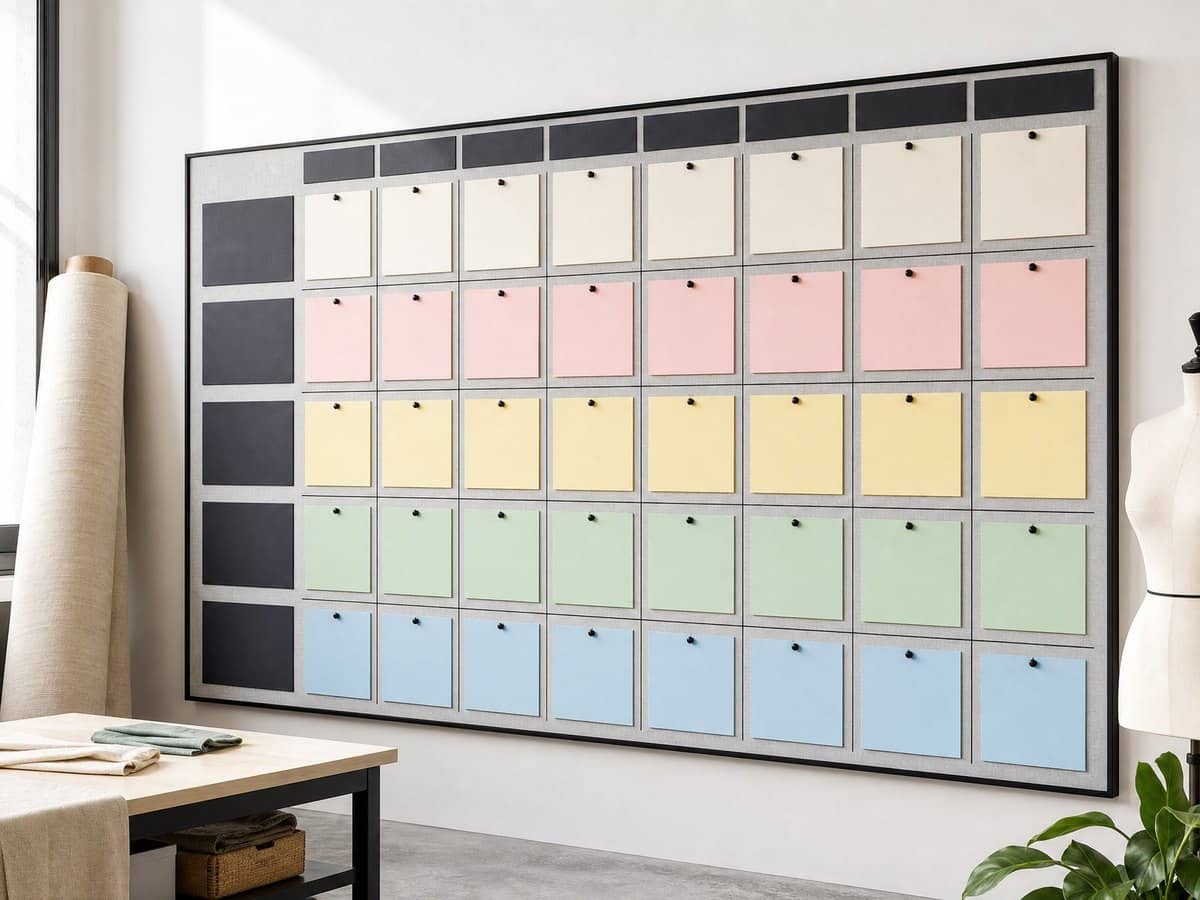
Work backwards, not forwards, and build in the buffer where risk actually lives rather than spreading it evenly.
- Launch date — then subtract two weeks for photography, listings and receiving stock.
- Minus freight — three to six weeks by sea, depending on route and season.
- Minus production — 20 to 25 days, plus QC.
- Minus sampling — two rounds, not one. Budgeting for a single round is the most common planning error.
- Minus fabric sourcing — up to four weeks if any colour is being developed.
- Add a two-week buffer at the end, not the beginning, so it absorbs the delays you cannot predict.
Two seasonal factors are worth knowing because neither is negotiable: Chinese New Year and the weeks before it slow trims and component sourcing across Asia, and Ramadan and Eid affect factory scheduling in Bangladesh. Ask about both if your window is tight.
How to plan capacity
- Share a forecast so the factory can reserve line time for your peaks.
- Build buffer for QC and a possible re-inspection — don't schedule to the last day.
- Place reorders before you sell out, accounting for the full lead time.
Tell us your launch date and volumes and we'll map a realistic production calendar backward from it. Start planning your run.
Frequently asked questions
How long does bulk clothing production take?
Budget roughly forty to fifty days for bulk production once the pre-production sample is approved, plus about ten days for sampling before that, plus freight. Air freight adds five to eight days depending on destination; sea freight adds four to six weeks and costs a fraction as much. So a realistic first order runs about three months from first conversation to goods in your warehouse, and roughly two months on reorders because the pattern, the trim package and the sample approval already exist. The single biggest cause of delay is not sewing — it is fabric. Knit fabric is produced and dyed in lots, and if your colour needs a fresh dye run that lands before cutting begins. The second biggest is slow sample approval, which is within your control. Any factory quoting three weeks for a first bulk order is either counting only the sewing floor or is not being straight with you.
Why do clothing orders get delayed?
From a capacity-planning view, delays cluster into three buckets and only one of them is the factory's. Upstream inputs: fabric dyed in lots, trims bought in their own minimums, a shade that fails approval and needs re-dyeing. Decision latency: your own sample sign-off, which is invisible in most plans but routinely adds a week or two. And calendar collisions: Chinese New Year and Eid each shut large parts of the chain for weeks and both move every year, so a plan built on a fixed month rather than the actual dates will slip. Sewing capacity itself is rarely the binding constraint. When you plan, book fabric earlier than feels necessary, put a named person on sample approval with a deadline, and check the holiday calendar before you promise a launch date.
How far in advance should I place a bulk order?
Three months before you need goods on the shelf, as a working minimum, and four if the date is fixed. That breaks down as roughly ten days for sampling, forty to fifty days for production once the sample is approved, and then freight — five to eight days by air or four to six weeks by sea. Add your own approval time, which is the part almost everyone underestimates. If you are launching to a date, work backwards from it and then add two weeks of slack, because the things that slip are rarely under your control: a dye lot that misses shade, a trim supplier running late, a port backing up. Two dates to know before you plan anything — Chinese New Year and Eid each shut down large parts of the supply chain for weeks, and both move every year.
Free tools & guides for this
Sources & further reading
Have an idea? Let’s make it.
We manufacture from 100 pieces per style, with GOTS-certified organic options and photos at every stage. Send a sketch or a sentence — we’ll reply within a day.