What Is Jersey Fabric?
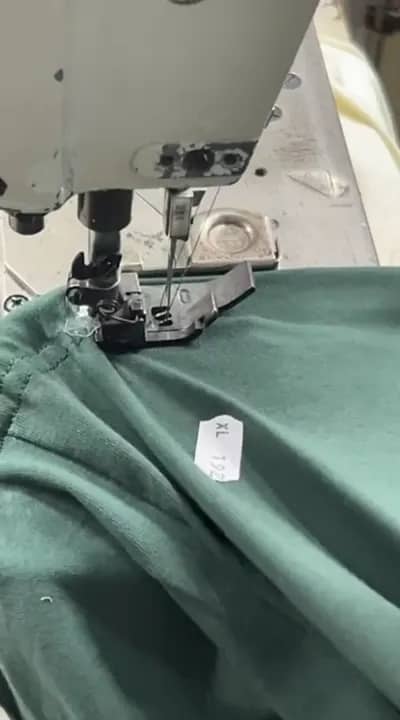
Jersey is a lightweight single-knit fabric, usually cotton, knitted on one set of needles, with a smooth face of V-shaped stitches and a looped back. Typically 110 to 220 GSM, it stretches across its width, drapes softly and curls at a cut edge. It is the cloth almost every t-shirt is made from, and the reason t-shirts drape and stretch the way they do. Unlike a woven fabric, where two sets of yarn cross at right angles, jersey is made from a single yarn looped through itself, and that loop structure is what gives it its give.
What is flat jersey fabric?
Flat jersey is another name for single jersey: the plain, smooth-faced knit described above, as opposed to textured knits such as piqué or rib. On a label or a product listing it tells you the cloth is one layer, knitted on one set of needles, light, stretchy across its width and inclined to curl at a cut edge. It does not tell you the fibre. Flat jersey can be cotton, polyester, viscose or a blend, so read the composition and the weight in GSM as well. For T-shirts it is the default cloth; when a garment needs a firmer face that lies flat, interlock is the usual step up.
You will see it called jersey knit, cotton jersey, jersey material or single jersey. They refer to the same construction. The name is geographic: the fabric takes it from the island of Jersey, where the knitted cloth was made for fishermen's garments long before it became the basis of modern casualwear.
How jersey is knitted
Jersey is weft knitted, meaning the yarn runs across the fabric and loops through the row below. Knit it on one set of needles and you get single jersey: one smooth face showing neat columns of V shapes, and a back showing horizontal loops. Knit it on two sets and you get a double knit such as interlock, smooth on both faces.
That single-versus-double distinction is not academic. It decides how the fabric behaves the moment it is cut, which is the first thing anyone notices on a sample.
Why jersey curls at the edges
Cut a piece of single jersey and the edges roll: the hem curls up, the sides curl in. This is not a fault and it is not fixable by pressing. It happens because the loops on the two faces pull with different tension, so a raw edge has to move to relieve it.
It matters practically because it decides construction. A single jersey garment needs its edges finished — hemmed, bound, or ribbed — and it makes raw-edge designs difficult. If you want a raw hem that lies flat, you are asking for a double knit rather than single jersey, and that is a fabric decision to make before the pattern, not after the first sample comes back.
Single jersey vs interlock
| Single jersey | Interlock (double knit) | |
|---|---|---|
| Faces | Smooth front, looped back | Smooth on both sides |
| Weight | Lighter, typically 110–220 GSM | Heavier for the same yarn |
| Curling at raw edges | Yes, always | No, it lies flat |
| Stretch | More, and recovers less | Less, and holds shape better |
| Opacity | Lower, can show through | Higher, more stable |
| Cost per metre | Lower | Higher, twice the knitting |
| Suits | T-shirts, vests, summer dresses | Polos, structured tops, kidswear |
What weight to specify
Jersey is specified by weight in GSM, which together with the pattern sets how much fabric a garment uses, and for t-shirts the range is narrower than most people expect.
- 110–140 GSM — lightweight summer tees. Drapes well, and thin enough that colour and fit both need thought, because it will show what is underneath.
- 140–180 GSM — the everyday t-shirt range, and where most brands should start.
- 180–220 GSM — premium, structured tees. Holds its shape, feels substantial, costs more per unit and per carton.
Above about 220 GSM you are usually better served by a different construction than by heavier jersey, because the fabric starts to feel dense rather than substantial. If you want weight and structure in a top, interlock or a heavier French terry will get you there more comfortably.
Cotton, combed cotton, and blends
100% cotton jersey is the default and the right starting point for most brands. Where the real quality difference sits is not the fibre but the preparation: combed cotton has had the short fibres mechanically removed before spinning, which leaves a smoother, stronger yarn that pills less and takes print more cleanly. Carded cotton skips that step and costs less. On a plain tee, combed versus carded is more noticeable in month six than in week one.
Adding elastane at 3–5% gives stretch jersey, which suits fitted shapes and holds a neckline better. Polyester and cotton-poly blends resist shrinking and cost less, at some cost to the dry cotton handle. Organic cotton jersey is the same construction from certified yarn — if the label is going to make the claim, the certificate has to follow the fabric through every stage, which is what a GOTS certified factory documents. Ours is RSC 9687.
Cotton jersey vs woven cotton
“Jersey cotton” and “cotton” are not alternatives: jersey is a way of making cloth, and cotton is the fibre. The useful comparison is with woven cotton, such as the poplin of a dress shirt or the twill of chinos, made from the same fibre but built a different way.
| Cotton jersey (knit) | Woven cotton (poplin, twill) | |
|---|---|---|
| Construction | One yarn looped through itself | Two sets of yarn crossing at right angles |
| Stretch | Natural give, mostly across the width | Little or none without elastane |
| Creasing | Resists creases, falls out of folds | Creases more, often needs ironing |
| Cut edge | Curls, rarely frays | Lies flat, frays |
| Typical garments | T-shirts, vests, dresses, loungewear | Shirts, chinos, jackets, workwear |
What a factory needs from you
"Cotton jersey" narrows it to a family and leaves every decision open. What we ask for: the weight in GSM, the composition including elastane, whether the cotton is combed or carded, and a reference garment whose handle you already like. The reference settles more than the numbers do, because handle is exactly what a specification describes worst.
One thing worth deciding early: jersey shrinks unless the finishing prevents it. Compacting relaxes the fabric before cutting and brings residual shrinkage down to a few percent. Confirm it with a wash test on your own sample rather than after bulk, because a tee that fits the size chart off the machine and misses it after one wash is a shrinkage problem wearing a grading problem's clothes.
Jersey is knitted to our specification at partner mills and cut and sewn every week on our own floor in Narayanganj, from a 150-piece minimum per style and per colour. If you are working on t-shirts, polos or tanks and vests, send a reference garment with your enquiry and we will match the cloth rather than guess at it.
Frequently asked questions
What is jersey fabric made of?
Jersey is most often made of cotton, and for t-shirts usually 100% cotton, but the word describes how the fabric is knitted rather than the fibre. It is a single yarn looped through itself, and that loop structure can be built from almost any fibre. The common versions are 100% cotton, the default and the right starting point for most brands; cotton blended with polyester, which costs less and resists shrinking at some cost to the dry cotton handle; cotton with 3 to 5% elastane, sold as stretch jersey; and viscose, modal or bamboo for a softer drape. Organic cotton jersey is the same construction knitted from certified yarn. Within cotton, the bigger quality difference is preparation: combed cotton has had its short fibres removed before spinning, so it pills less and takes print more cleanly than carded. When a quote just says cotton jersey, ask whether it is combed or carded, its GSM, and whether it contains elastane.
What GSM is jersey fabric?
Single jersey is typically 110 to 220 GSM, about 3.2 to 6.5 oz per square yard, and for t-shirts the useful range is narrower than most people expect. Within it sit three bands. 110 to 140 GSM is lightweight summer jersey: it drapes well but is thin enough to show what is underneath, so colour and fit both need thought. 140 to 180 GSM is the everyday t-shirt weight and where most brands should start. 180 to 220 GSM is premium, structured jersey that holds its shape and feels substantial, at a higher cost per unit and per shipping carton. Above about 220 GSM, heavier jersey tends to feel dense rather than substantial, and interlock or a heavier French terry usually gives weight and structure more comfortably. The number tells you weight, not quality, so pair it with the yarn and composition: combed or carded cotton, and whether there is elastane in it.
What is the difference between single jersey and double knit?
Single jersey is knitted on one set of needles and a double knit on two, and for most tops the lighter single jersey is the right choice. Jersey is weft knitted: the yarn runs across the fabric and loops through the row below. On one needle set that gives a smooth face of neat V-shaped columns and a back of horizontal loops, which is where single jersey gets its drape and easy stretch. It is lighter, costs less per metre and is the standard t-shirt cloth, so it is the default for tees, vests and summer dresses. Stay with it when the garment should move with the body and every edge will be hemmed, bound or ribbed. Its limits are that it curls at a cut edge, recovers less after stretching and can show through at light weights. A double knit such as interlock answers those, at twice the knitting, which is why it suits polos, structured tops and kidswear.
Is jersey fabric stretchy?
Yes, jersey stretches naturally because it is knitted rather than woven, so even 100% cotton jersey has real give without any elastane. The loops open out under load, mostly across the width rather than down the length, which is what lets a t-shirt pull over your head and settle back. What plain cotton jersey does less well is recover: after long or repeated stretching it can stay extended, which is why the necklines of cheaper tees go slack over time. Adding 3 to 5% elastane gives stretch jersey, which returns to shape and suits fitted styles and any neckline that has to keep its line. Single jersey also stretches more and recovers less than interlock, so if a fitted top keeps losing its shape, the fix is either elastane or a double knit. Both are fabric decisions, made when the cloth is specified, and sewing cannot put back recovery that the fabric does not have.
Does jersey shrink?
Yes, cotton jersey shrinks unless the fabric has been finished to prevent it. Knitted cloth is held under tension as it is made and relaxes once it is washed, so untreated cotton jersey can lose a noticeable amount in its first hot wash. The fix is compacting, sometimes called pre-shrinking: the fabric is relaxed at the mill under controlled conditions before it is cut, which leaves only a few percent of residual shrinkage, around 3 to 5% on a well-finished cotton tee. Polyester and cotton-poly blends resist shrinking better, at some cost to the dry cotton handle. Before bulk, put your approval tee through an ordinary wash and measure it against your spec again, because that single test shows whether the compacting has done its job. On a t-shirt, a sample that passes measurement before washing but comes up short in the body after one wash points to the fabric finishing, not the size chart.
Why does jersey fabric curl at the edges?
Single jersey curls because it is knitted on one set of needles, so the loops on its two faces pull with different tension and a cut edge has to move to relieve it. The hem rolls up and the side edges roll in. This is how the construction behaves, not a fault in the cloth, and pressing will not cure it. Single jersey curls at a raw edge every time; it is not something a heavier or better-quality cloth grows out of. It matters because it decides construction. Every edge on a single jersey garment has to be finished, whether hemmed, bound or ribbed, and raw-edge designs become difficult. If you want a raw hem that lies flat, you are really asking for a double knit such as interlock, which is smooth on both faces and does not curl. Make that fabric decision before the pattern is cut, not after the first sample comes back.
Is jersey a knit or a woven fabric?
Jersey is a knit, not a woven. A woven fabric is made from two sets of yarn crossing at right angles, while jersey is made from a single yarn looped through itself. It is weft knitted, so the yarn runs across the fabric and loops through the row below. That loop structure is why jersey drapes and stretches the way it does, and why almost every t-shirt is made from it. It also explains the fabric's habits: knitted cloth relaxes and shrinks in the wash unless it has been compacted, and single jersey curls at a cut edge, so its edges must be hemmed, bound or ribbed. You will see the same fabric called jersey knit, cotton jersey, jersey material or single jersey, and all four names describe one construction. The name itself is geographic. It comes from the island of Jersey, where knitted cloth was made for fishermen's garments long before it became the basis of modern casualwear.
What should I specify when ordering jersey fabric?
Give the factory four things: the weight in GSM, the composition including any elastane, whether the cotton is combed or carded, and a reference garment whose handle you already like. Cotton jersey on its own narrows the fabric to a family and leaves every decision open. The reference garment settles more than the numbers do, because handle is exactly what a specification describes worst, and it lets us match the cloth rather than guess at it. Two more decisions belong at this stage. First, whether any edge will be left raw, because that means a double knit rather than single jersey. Second, how shrinkage will be controlled: ask for compacting and check the result by washing your sample before bulk. If the label will say organic cotton, the certificate has to follow the fabric through every stage; ours is GOTS, RSC 9687, scope certificate available on request. A jersey run with us starts at 150 pieces for each style and colour.
Is flat jersey fabric cotton or polyester?
It can be either, because the name describes how the fabric is knitted, not what it is made of. Flat jersey is single jersey: one layer of knitting with a smooth face and a looped back, the standard T-shirt cloth. It is knitted from cotton, polyester, viscose, modal or blends of them, and each fibre behaves differently. Cotton flat jersey is soft and breathable but shrinks unless the fabric is compacted before cutting, and it gradually loses shape over many washes. Polyester flat jersey dries quickly, holds its colour and resists shrinking, but feels less natural and can hold odour. Blends such as 60/40 cotton and polyester sit between the two. To know what you are buying, read the fibre content on the label or ask the supplier for the composition and the weight in GSM, because the words flat jersey alone will not tell you. On our own orders both go on the tech pack before sampling.
What is jersey cotton?
Jersey cotton is the everyday name for cotton jersey: cotton yarn knitted as single jersey, the soft, stretchy cloth T-shirts are cut from. The two words answer different questions. Jersey says how the cloth is built, a smooth face of V-shaped stitches with small loops behind; the fibre word says what it is spun from. So a listing with that name tells you the construction and the material, but not the things that decide how the garment feels and lasts: the weight and the yarn preparation. Ask for the weight in GSM, where 140 to 180 is the everyday tee range, and whether the yarn is combed, which gives a smoother, stronger surface that pills less, or carded, which costs less. Ask too whether the cloth has been compacted, because an uncompacted knit can shrink noticeably in its first hot wash. With those three answers, two quotes that use the same name become comparable.
Is jersey fabric good for summer?
Lightweight cotton jersey is one of the best fabrics for warm weather, which is why the summer T-shirt is made from it. The single layer of loops lets air through, cotton absorbs moisture, and the knit drapes away from the body instead of standing stiffly off it. Weight is the main lever. At 110 to 140 GSM jersey is light and airy, but thin enough to show what is underneath, so pale colours and fitted shapes need thought. At 140 to 180 GSM it is the everyday tee, comfortable through most of the summer. From 180 to 220 GSM it feels more substantial and wears warmer. Fibre matters as much as weight: 100% cotton, viscose and modal feel cooler and drier than polyester-heavy blends, which hold heat and can hold odour. For a summer range, specify a light combed cotton jersey and check the opacity of pale colours on a sample before bulk.
Is jersey a good-quality fabric?
Jersey can be excellent or poor, because the name describes the knit, not the quality, so judge the cloth on four things. The first is the yarn. Combed cotton has had its short fibres removed before spinning, which gives a smoother, stronger fabric that pills less and takes print more cleanly than carded cotton. The second is weight: 140 to 180 GSM suits everyday tees, while 180 to 220 GSM holds its shape and feels more substantial. The third is finishing. Jersey that has been compacted before cutting keeps residual shrinkage to a few percent, where untreated cloth can lose a noticeable amount in its first hot wash. The fourth is recovery. Plain cotton jersey stretches easily but recovers less, which is why the necklines of cheap tees go slack, and 3 to 5% elastane or a well-matched rib neckband fixes that. A swatch and a wash test tell you more than any label.
Where this applies
The manufacturing pages this guide relates to, if you are costing a real run.
Free tools & guides for this
Sources & further reading
Have an idea? Let’s make it.
We manufacture from 150 pieces per style and colour, with organic cotton options from our GOTS-certified facility and photos at every stage. Send a sketch or a sentence — we’ll reply within one business day.