From 150 pieces per style and colour
One legging in one colour is a complete first order for an Australian test. A legging and bra set in two colours is four style-colour combinations, 600 pieces, so test narrow and deep.
Private label leggings, sports bras, shorts and training tops for Australian brands, cut and sewn to your pattern from 150 pieces per style and colour, with the claims on your hangtag backed before it is printed.
Collective Studio makes private label activewear for Australian brands in Narayanganj, Bangladesh: leggings, sports bras, shorts, training tops and tanks from 150 pieces per style and colour. Leggings are specced at 240–280 GSM so they stay opaque. Orders enter Australia at the LDC rate of Free and ship DDP: about 70 days from order to your door by air.
Or message the factory directly: WhatsApp +880 1980 055026 · hello@collectivestudioltd.com · Homaira replies within one business day.
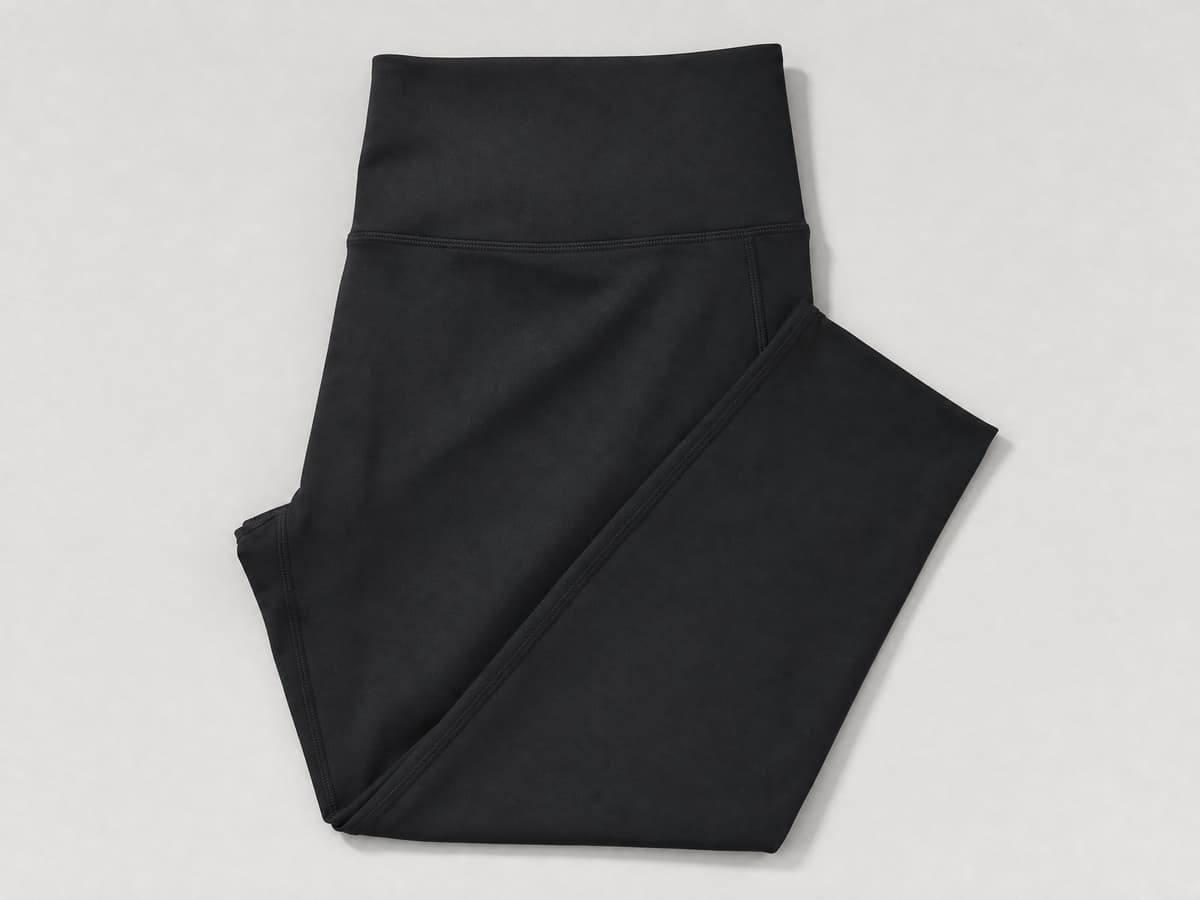
If you are searching for activewear manufacturers in Australia, you are choosing between a local sample room or small factory and an offshore floor that ships to you. We are the offshore option, and we would rather say so up front: a family-run cut-and-sew floor in Narayanganj, Bangladesh, making leggings, sports bras, training shorts, training tops and tanks to your own pattern, from 150 pieces per style and colour. Our guide to clothing manufacturers in Australia versus offshore says plainly when a local maker is the better choice, usually for runs below that minimum or when a Made in Australia claim is central to the brand.
Two things make an activewear range for Australia different from the same range for a northern market, and neither is the sewing. The first is what you print on the hangtag. Moisture-wicking, antibacterial, recycled, UPF 50+: in Australia each one is a claim the ACCC expects you to be able to prove, and the evidence for most of them comes from the fabric, not the factory. So we settle which claims you want at fabric approval, when the right test report can still be ordered with the fabric. The second is the sun. Australia has one of the highest rates of skin cancer in the world, as ARPANSA notes, and outdoor training kit is worn in that sun, which moves the fibre choice towards polyester for pieces worn outside, because nylon fades faster under sustained UV, and it decides which pieces in your range can carry a UPF rating at all. A sports bra or a singlet cannot, however good the fabric.
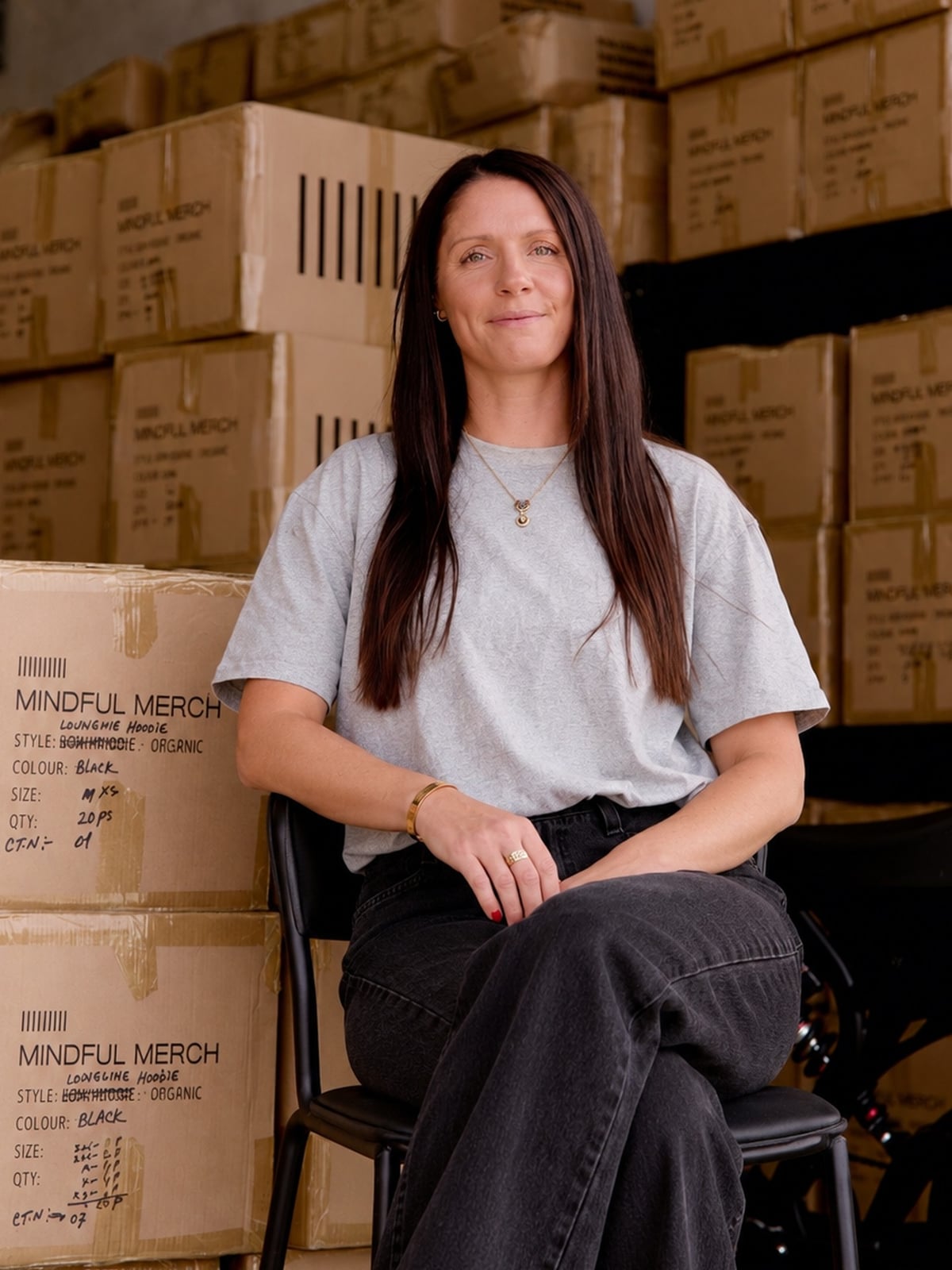
The landed side is simpler than most founders expect. Activewear made on our floor enters Australia at the LDC rate of Free, GST at 10% is charged at the border and can normally be claimed back by a GST-registered business, and we quote DDP to any Australian address, so freight, the customs entry and any duty sit inside one landed price. Plan on about 70 days from order to your door by air: about 10 days of sampling, then 40–50 days of production after you approve the sample, then about 5–8 days by air to Sydney, Melbourne or Brisbane. Sea takes about four to six weeks door to door instead. You also have someone on your side of the world: Janelle Rawlins, founder of Mindful Merch in Noosa, Queensland, coordinates our orders for Australian brands.
Whatever the search, gym wear manufacturer Australia, private label activewear Australia or activewear manufacturer Australia, the production behind it here is the same: cut and sewn from your pattern in technical stretch fabric, with flatlock seams where the garment moves against skin and a diamond gusset in every legging. Private label means your spec and only your branding, from the woven neck label to the polybag. If you run a gym or studio and want branded kit for members or staff rather than a retail range, our gym apparel page covers that, and the full construction detail for every piece is on our activewear manufacturer page.
| Piece | How we usually build it | The Australian question | What you can claim, and on what evidence |
|---|---|---|---|
| Leggings | Nylon- or polyester-elastane at 240–280 GSM, flatlock seams, diamond gusset | Opacity in bright light, and fading: nylon fades faster under sustained UV, so leggings for outdoor training lean polyester | “Squat-proof” on a stretched sample photographed against print; “moisture-wicking” only with a fabric report such as AATCC TM195 |
| Sports bra | The same fabric and approved lab dip as the matching legging, flatlock where it sits on skin | Crop and halter tops are excluded from sun protection claims under AS/NZS 4399:2020, whatever the fabric scores | No UPF claim. Performance words only where the fabric report supports them |
| Training shorts | Lightweight jersey, mesh or a performance blend, 140–220 GSM, a brief liner where the fabric is sheer | Pale summer colourways show through soonest, so they get the closest opacity check | “Quick-dry” or “breathable” only with a test on the fabric you are ordering |
| Long-sleeve training top | Polyester-elastane for a top people sweat in, flatlock where the seam moves against skin | The piece in an activewear range most likely to qualify for a UPF rating, if its design meets the standard's upper-body coverage requirements | UPF 15, 30, 50 or 50+ from a lab test on the fabric, in each colour you label, with the standard's warning wording |
| Tank or singlet | Jersey or a performance knit, 180–220 GSM for coverage in pale colours | Singlets are excluded from sun protection claims under the standard | No UPF claim. Say what the fabric does, with evidence |
| Recycled-blend pieces | Recycled polyester or nylon performance blends from partner mills | The ACCC recommends avoiding broad terms such as “sustainable” on their own | “Made with recycled polyester”, with the mill's Global Recycled Standard certificate and the actual percentage |
One legging in one colour is a complete first order for an Australian test. A legging and bra set in two colours is four style-colour combinations, 600 pieces, so test narrow and deep.
We settle the wicking, recycled or UPF wording at fabric approval, so the mill or lab report your hangtag relies on is ordered with the fabric, not chased after the ACCC asks.
Polyester for pieces trained in outdoors, because nylon fades faster under sustained UV, and a UPF rating only on tops whose design can meet AS/NZS 4399:2020.
The LDC rate is Free, DDP puts freight, the customs entry and any duty in one landed price, and Janelle Rawlins in Noosa coordinates Australian orders.
Last verified: 5 November 2026 (DFAT country brief). Duty and GST rules as set out, with their sources, on our Australia page.
Activewear cut and sewn on our floor enters Australia at the Least Developed Country rate in the Customs Tariff Act 1995, which is Free, when the origin rules are met. For a legging, a sports bra or a training top, the last process of manufacture, cutting, sewing and finishing, happens in our own building in Narayanganj, and we document the factory-cost split your customs broker needs to claim the rate. The fibre does not change the Australian position: nylon, polyester and cotton pieces all take the same LDC rate.
GST is separate from duty. The ATO sets it at 10% of the value of the taxable importation, a figure built from the customs value with international freight, insurance and any duty added (ATO), and a GST-registered business can normally claim it back as a GST credit. Bangladesh is scheduled to graduate from LDC status on 24 November 2029, and Australia's foreign ministry states that products from Bangladesh will continue to enter Australia duty-free and quota-free when it does (DFAT Bangladesh country brief, read 5 November 2026). That is stated policy rather than a clause in the tariff, so we confirm the live rate for every order. The rules of origin, the deferred GST scheme and the graduation detail are worked through on our page for Australian brands.
We quote DDP, delivered duty paid, to any Australian address: freight, the customs entry and any duty inside one landed price, and the shipping and origin paperwork reaches you before the cartons leave our floor. How GST is handled is confirmed in your quote. Our guide to importing clothing into Australia walks through the same steps from the importer's side.
Last verified: 5 November 2026, against ACCC guidance.
Performance words sell activewear, and in Australia each one is a representation about the product. The ACCC's guidance on false or misleading claims says that claims about the qualities or performance of a product must be accurate, truthful and based on reasonable grounds, that a business must be able to prove any claim it advertises, and that the ACCC can require a business to back its claims up. It makes no difference whether a business meant to mislead. The rule covers your hangtags, product pages, packaging and social posts alike.
Environmental claims carry extra scrutiny. The ACCC's environmental and sustainability claims guidance, and its guide for business, Making environmental claims, set out eight principles, among them having evidence to back up claims and avoiding broad, unqualified ones; it names “green”, “eco friendly” and “sustainable” as terms it recommends businesses avoid. Clothing is a sector it has looked at closely: in its internet sweep of 247 businesses in late 2022, 57% made concerning environmental claims, and among clothing and footwear businesses the figure was 66% (ACCC).
Most of the evidence for a performance claim is evidence about the fabric, and it comes from the partner mill that knits and finishes it or from an independent lab, not from our sewing floor. What we check ourselves is the garment: opacity under stretch, seams and construction against your approved sample, and each lot's shade against your lab dip. We do not apply antibacterial or other chemical finishes on our floor. So tell us at the start which claims you want, and the reports are requested with the fabric order rather than chased after bulk.
| The claim on your hangtag | Evidence to hold before you print it | Who supplies it |
|---|---|---|
| Moisture-wicking or sweat-wicking | A liquid moisture management report under AATCC TM195 on the fabric quality you are ordering | The partner mill or an independent lab |
| Quick-dry | A drying test on the same fabric, with your wording matched to the result | The partner mill or an independent lab |
| Antibacterial or odour-resistant | A report on the treated fabric under a method such as ISO 20743:2021, and how long the finish lasts through washing | The mill that applies the finish, or an independent lab. If the fabric has no finish, leave the word off |
| Made with recycled polyester or nylon | The mill's Global Recycled Standard certificate for that fabric, and the actual recycled percentage | The partner mill. We hold GOTS only, so ask us first about a GRS logo on the finished piece |
| Sustainable, eco-friendly, green | The ACCC recommends avoiding these broad terms. Replace them with one specific fact you can prove | Nobody can document a vague claim |
| Squat-proof | A stretched sample photographed against print, and a fit sample in the bulk fabric | Us, checked on the garment |
| UPF 15, 30, 50 or 50+ | A lab test under AS/NZS 4399:2020, on a design that meets its body coverage rules (see below) | A testing lab, such as ARPANSA's NATA-accredited laboratory |
| Organic cotton | Organic cotton, made in our GOTS-certified facility (RSC 9687), on cotton-rich pieces whose blend qualifies | Us: the scope certificate is yours on request |
Last verified: 5 November 2026, against ARPANSA.
A UPF rating on clothing sold in Australia is made under AS/NZS 4399:2020, Sun protective clothing: Evaluation and classification, published by Standards Australia (ARPANSA). It has three classifications: minimum protection at UPF 15, good protection at UPF 30 and excellent protection at UPF 50 and 50+. The 2017 revision added minimum body coverage, and the 2020 edition updated the coverage and labelling rules, so a UPF claim now depends on the design of the garment as well as the fabric.
That is what limits it in an activewear range. The standard excludes clothing with low body coverage from making any sun protection claim, whatever the UPF of its fabric, and the excluded items include singlets, crop and halter tops, bikini tops and briefs. So a sports bra, a crop top or a tank cannot carry a UPF rating. The piece that can is a top designed to meet the standard's upper-body coverage requirements, such as a long-sleeve training or running top for outdoor sessions. Check the design against the standard itself before you finalise the pattern, because the pattern is where coverage is decided.
The rating then needs a test. ARPANSA's laboratory, accredited by NATA, tests materials and issues reports with a UPF rating, but it does not evaluate design or body coverage, so that check stays with you. For its own UPF swing tag, ARPANSA asks for test reports for every type and colour of material you intend to label, no older than 12 months, and a product made of two or more materials is labelled with the rating of the lowest-rated one (ARPANSA labelling rules). On a training top, a mesh vent panel can set the number for the whole garment.
Two practical points for stretch fabric. The label wording the standard requires for clothing says that protection may be reduced if the material is wet, stretched or worn, which describes how activewear is used, so test the fabric the top will actually be cut from, at the weight in your spec. And keep the tested fabric and the bulk fabric the same quality and shade: tell us at fabric approval that a UPF claim is planned, and the length sent for testing is taken from that approved quality rather than a substitute. We do not test or issue UPF ratings ourselves.
Last verified: 4 November 2026, against the Care Labelling Information Standard 2023 as published on the Federal Register of Legislation.
Every piece needs a care label under the Consumer Goods (Care Labelling) Information Standard 2023, an information standard under the Australian Consumer Law that the ACCC administers, in force since 5 September 2023. It applies to sample and promotional pieces as well as stock, so a sample range sent to a stockist is covered. The instructions go on a permanent label, in English, in words, in the international care symbols, or both.
Activewear makes the wording harder than it is on a cotton tee, because the instructions have to cover everything in the garment, including dyes, finishes, prints and trims: care that suits the fabric can still ruin a print or a trim. A legging can carry bonded hems, a heat-transfer logo, an elastic waistband and a mill finish on the fabric, and the wash and drying instructions have to suit the most delicate of them. We draft the care wording from the fabric mill's care guidance and your trims, you approve it at tech pack stage, and labels are sewn to your artwork before bulk.
Placement matters on close-fitting pieces too. A sewn label on the inside of a waistband or under a bra band sits against skin through every session, so say where you want it and check it on the fit sample, in the same way you check a seam. The country of origin label, Made in Bangladesh, is a separate border requirement, and our Australia page sets out both rules in full.
A planning aid built from typical times, not a delivery promise; your quote carries the confirmed dates.
An Australian activewear calendar has two fixed points a northern one does not: a New Year launch, tied to a date that cannot move, and a winter range that lands in the middle of the northern summer. The table counts backwards from three launch dates. Each row allows roughly a fortnight to turn a tech pack into an approved sample (sampling takes about 10 days, then you need a few days to sign off), the top of the 40–50-day production range, the slow end of each freight window (8 days by air, six weeks by sea, against typical door-to-door times of about 5–8 days and about four to six weeks), a fortnight of slack, and four weeks with stock on your shelves before launch so there is time to shoot and load product pages.
Activewear moves these dates more than most categories. A new legging or sports bra often needs a second fit round, which adds about 10 days, so send a new fit earlier. Your own Christmas break sits inside both the New Year and the winter windows. Bangladesh's two Eid holidays are set by the lunar calendar, so their dates change every year, and the floor closes for both; your quote says whether your window crosses either. Our launch date calculator runs the same sum for any date, and the seasonal calendar on our Australia page covers the four seasons for a general range.
| Drop | On sale | Stock in your warehouse by | Air: send tech pack by | Air: approve sample by | Sea: send tech pack by | Sea: approve sample by |
|---|---|---|---|---|---|---|
| New Year drop | 1 January | About 4 December | About 9 September | About 23 September | About 6 August | About 20 August |
| Winter range | 1 May | About 3 April | About 7 January | About 21 January | About 4 December | About 18 December |
| Spring and summer range | 1 September | About 4 August | About 10 May | About 24 May | About 6 April | About 20 April |
Janelle Rawlins founded Mindful Merch (opens in a new tab) in Noosa and has spent more than 14 years in the fashion industry. She now coordinates Collective Studio orders for Australian brands: you deal with someone who knows your market and keeps your hours, and she works directly with our team in Narayanganj.
Email her directly, or tell us you’re in Australia when you get in touch, and Janelle will take it from there. Your order is still cut, sewn and finished on our own floor and quoted DDP to your door.

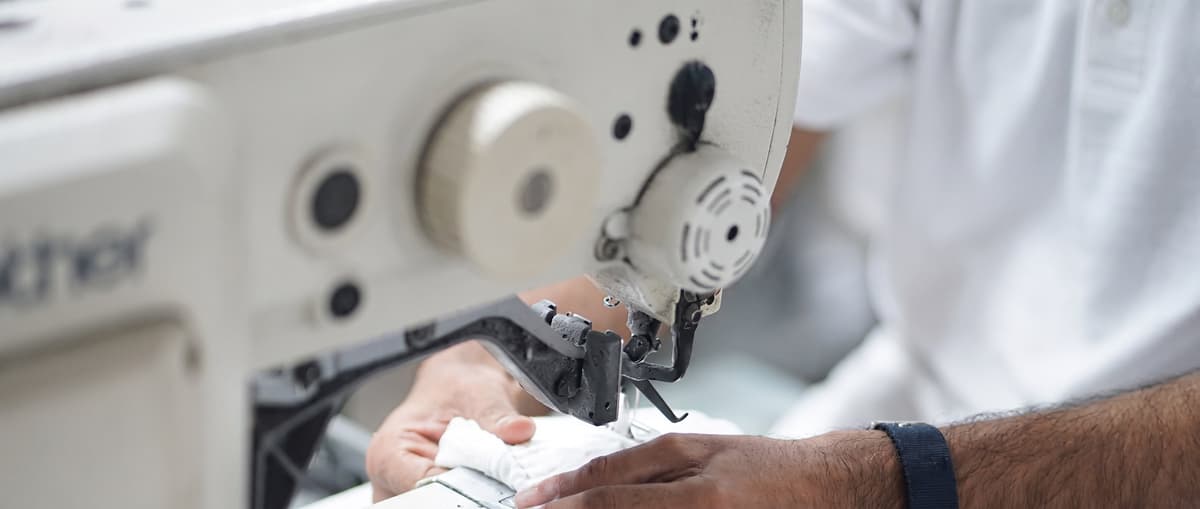
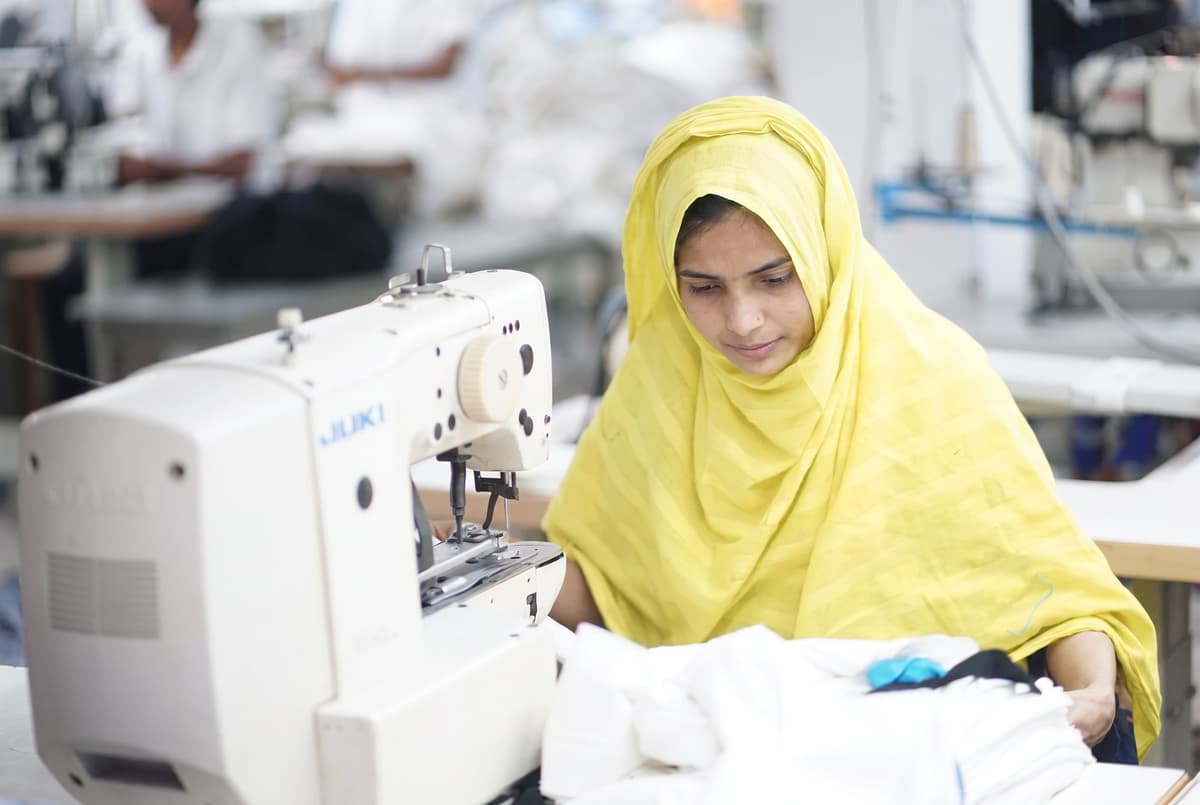
Yes. We cut and sew leggings, sports bras, training shorts, training tops and tanks to your own pattern for Australian brands, from 150 pieces per style and colour, on our own floor in Narayanganj, Bangladesh. Private label here means the garment is made to your spec and carries only your brand: woven or printed neck labels, care labels, hangtags and polybags under your name, never ours. The minimum counts every colour separately, so a legging and sports bra sold as a set in black and in olive is four style-colour combinations and 600 pieces in total. How each 150 divides across sizes is your call, so weight it towards the sizes your own customers buy most. Orders ship DDP to any Australian address. If you are still weighing a local maker against an offshore factory, our local versus offshore guide sets out honestly when each one wins.
Duty is Free at Australia's rate for least developed countries, and GST is 10%. The LDC rate in the Customs Tariff Act 1995 applies to Bangladesh-made goods that meet the origin rules, and for a legging or sports bra the last process of manufacture, cutting, sewing and finishing, happens on our own floor. Fibre does not change the Australian position: nylon, polyester and cotton pieces take the same LDC rate. GST is charged at the border on the customs value plus international transport, insurance and any duty, and a GST-registered business can normally claim it back as a GST credit. Bangladesh is due to graduate from LDC status on 24 November 2029, and Australia's foreign ministry says its goods will keep entering duty-free and quota-free afterwards. We quote DDP, so freight, the customs entry and any duty sit inside one landed price, and your quote confirms how GST is handled.
Yes, if you hold the evidence before you print the word. The ACCC says claims about a product's qualities or performance must be accurate, truthful and based on reasonable grounds, that a business must be able to prove any claim it advertises, and that the ACCC can require it to back a claim up. Meaning well is no defence: it makes no difference whether a business intended to mislead. For moisture-wicking, hold a lab report under AATCC TM195, the liquid moisture management method, run on the same fabric quality as your bulk order. For antibacterial or odour-resistant, it is a report on the treated fabric under a method such as ISO 20743:2021, and because a finish can wash out, ask how long it lasts. Both come from the partner mill or an independent lab; we do not apply antibacterial finishes on our floor. If the fabric has no such finish, leave the word off the hangtag altogether.
Some of it can. A UPF rating in Australia is made under AS/NZS 4399:2020, which rates fabric at 15, 30, 50 or 50+ and also sets minimum body coverage before a garment may claim sun protection at all. Singlets, crop and halter tops, bikini tops and briefs are excluded whatever the fabric scores, so a sports bra, crop top or tank cannot carry a UPF claim, while a training top designed to meet the standard's upper-body coverage requirements can. The rating needs a lab test. ARPANSA's NATA-accredited laboratory rates the material, not the design, so checking coverage is your job. For its own swing tag, ARPANSA wants a report for every colour you label, no older than 12 months, and a garment made of two fabrics takes the lower rating, so a mesh panel can set the number. Tell us at fabric approval, so the tested length comes from the same fabric quality as bulk.
Recycled, yes, with documents; sustainable on its own, we would advise against. The ACCC names green, eco friendly and sustainable as broad terms it recommends businesses avoid, because almost every product has some environmental impact. Clothing is under scrutiny: in the ACCC's late-2022 internet sweep, 57% of the 247 businesses reviewed made concerning environmental claims, and 66% of the clothing and footwear businesses did. A specific claim is safer, such as leggings made with recycled polyester, stating the actual percentage and backed by the partner mill's Global Recycled Standard certificate for that fabric. That certificate comes from the mill. We hold GOTS (RSC 9687) and no recycled-content certification of our own, so ask us first if you want a GRS logo on the finished piece. Be exact about which parts are recycled, too: if the body fabric is recycled but the waistband elastic and trims are not, say so rather than implying the whole garment is.
For a range on sale on 1 January, send the tech pack by about 9 September if it ships by air, or about 6 August if it goes by sea. Those dates assume about two weeks from tech pack to approved sample, 50 days of production after approval, about 8 days of air freight or about six weeks by sea door to door, a two-week buffer, and stock in your warehouse about four weeks before launch for photography and set-up. A New Year launch is built around a date that cannot move, so it has little room to slip. A new legging often needs a second fit round, which adds about 10 days, and your own Christmas break falls inside the window. If you are past those dates, a new style started in November lands around early February by air, so plan it as a later drop. Our launch date calculator runs the sum for any date.
For a winter range on sale on 1 May, send the tech pack by about 7 January for air freight or about 4 December for sea, and approve the sample by about 21 January or 18 December. Winter changes the product as well as the date. Layering pieces such as joggers in French terry or brushed fleece and long-sleeve training tops carry the season, and they are heavier, so the gap between air and sea freight grows with the weight of the order. That makes sea worth planning for, which means a December tech pack that sits across your own Christmas break. A split also works: a first share by air to open the range, the rest by sea. Both Eid holidays in Bangladesh move earlier through the calendar every year and shut factories, so we flag any overlap with your production window when we quote. Treat all of these dates as planning guidance, not a delivery promise.
Yes. Janelle Rawlins, founder of Mindful Merch in Noosa, Queensland, coordinates Collective Studio orders for Australian brands and works directly with our team in Narayanganj. Send your activewear brief through our contact form, say you are in Australia, and she will take it up in Australian business hours. It helps to say what each piece has to do, whether studio, running, gym or outdoor training, because that sets the fabric, the seams and which claims you can make. Add the colours for each style, your target sizes, your launch date, and any hangtag claims you already have in mind, such as moisture-wicking or UPF, so the right fabric reports are requested with the fabric order rather than chased after bulk. The factory does not change: your activewear is still cut and sewn on our own floor, from 150 pieces per style and colour, and shipped DDP to your door.
From your own measurement chart, because Australian sizing has no official standard to follow. Standards Australia's size coding scheme for women's clothing, AS 1344-1997, is listed as withdrawn since 2017 with no replacement, so what exists is a convention: AU 8 is usually XS, 10 is S, 12 is M, 14 is L and 16 is XL, as on Cotton On's published chart. Activewear makes that convention less reliable, because leggings and sports bras fit close and stretch, so the finished garment measures smaller than the body it fits. Give us finished-garment measurements for each size, with tolerances, and say which fabric they were set on, since a 25% elastane compression knit and a 12% one fit differently on the same pattern. Check the fit sample on a body in the actual fabric, at more than one size if you can. Our guide to building a size chart covers the measurements.
A permanent care label in English, using words, the international care symbols or both, under the Consumer Goods (Care Labelling) Information Standard 2023, which has applied since 5 September 2023 and covers sample and promotional pieces as well as stock. The standard asks for instructions that protect the whole garment, its dyes, finishes, prints and trims included, not just the main fabric. Activewear has more of those than a basic tee: bonded hems, heat-transfer logos, elastic waistbands and sometimes a mill finish on the fabric, and the wash and drying instructions have to suit the most delicate of them. We draft the wording from the fabric mill's care guidance and your trims, and you approve it before bulk. The country of origin, Made in Bangladesh, is a separate border requirement. Our care labels guide shows the symbols themselves.
Trade and regulatory details on this page last verified 5 November 2026. Tariff and compliance terms change — ask us to confirm the current position for your order.
Whether it’s a large bulk or wholesale run or your first batch of 150, send a sketch, a reference, or a sentence. We’ll reply within one business day with fabric options and an indicative price.
Or message the factory directly: WhatsApp +880 1980 055026 · hello@collectivestudioltd.com · Homaira replies within one business day.