Clothing Manufacturers in Australia vs Offshore: An Honest Guide for Australian Brands
If you are searching for clothing manufacturers in Australia, you are really choosing between two kinds of supplier: a local maker, such as a sample room, a cut-make-trim (CMT) workroom or a small factory in Melbourne, Sydney or Brisbane, and an offshore factory in Asia that ships to you. The short answer is this. Make locally when your runs are below about 150 pieces per style, when you need samples in days and fittings in person, or when a genuine "Made in Australia" claim is part of the brand. Make offshore when you are producing in bulk, reordering the same styles, making knitwear such as tees, hoodies and fleece, and want the duty-free access Australia gives to least developed countries like Bangladesh.
A disclosure before anything else: Collective Studio is an offshore factory. We are a family-run knitwear floor in Narayanganj, Bangladesh, so we have an obvious interest in which way you go. So this guide does not rank Australian makers we cannot vouch for. It points you to three directories where they can be found and checked, says honestly when local is the better choice, and gives you the import rules for the offshore route. Every rule here was checked on 4 November 2026 against the Australian government and industry sources listed at the end.
The short version
- To find a local maker, start with three directories: Ethical Clothing Australia's accredited manufacturer directory, the Australian Fashion Council's Fashion & Textile Directory and The Fashion Advocate's ethical manufacturing directory.
- Local wins for very small runs, fast sampling, close collaboration and a lawful "Made in Australia" claim, which needs the garment to be substantially transformed here: cutting and sewing counts, printing an imported blank does not.
- Offshore wins for bulk, reorders, specialist knitwear and landed cost. Clothing from Bangladesh enters Australia at the least developed country rate, which is Free, when the origin rule is met.
- Importing means GST at 10% at the border (claimable if you are registered), a full import declaration above A$1,000, an English country-of-origin label and a care label under the Consumer Goods (Care Labelling) Information Standard 2023.
- Timing: from a Bangladeshi factory, plan on about 70 days from order to your door by air, and about a month more by sea.
Local maker vs offshore factory
Where the sewing happens changes how minimums work, how fast you can iterate, what the label can say and what you pay at the border.
| Local maker (Australia) | Offshore factory (for example Bangladesh) | |
|---|---|---|
| MOQ logic | Often very flexible. Many sample rooms and CMT workrooms take small runs, and Ethical Clothing Australia's directory even has a filter for makers with no minimum order quantity. | Set by fabric. Knit fabric is knitted and dyed in lots, so minimums are per style and per colour. Ours is 150 pieces per style and colour. |
| Sampling speed | Fast. You can drop in for a fitting and see a revised sample within days. | Slower. About 10 days for a first sample on our floor, plus courier time, and fittings happen on video or by post. |
| Cost structure | Local labour and overheads dominate the cost of each piece, so it stays high even as quantity grows. | Lower labour and overhead per piece, but freight, customs clearance and GST timing have to be added to compare like with like. |
| "Made in Australia" claim | Possible if the garment is substantially transformed here, for example cut and sewn from fabric. The Australian Made logo needs a separate licence. | Not available. The garment must be labelled with its true country of origin, such as Made in Bangladesh. |
| Duty | None on the garment, because it is not imported. | From Bangladesh: Free under Australia's least developed country preference, when the origin rule is met. Other countries depend on their own agreements and origin rules. |
| Best for | Development, runs under about 150, made-to-order or genuinely local brands. | Bulk and repeat orders of knitwear, organic cotton basics, and brands growing past the first run. |
How to find a clothing manufacturer in Australia
A ranked list of "the 10 best clothing manufacturers in Australia" by someone who has never seen those workrooms tells you little. These three directories are better starting points, because each says who it lists and why. We checked all three on 4 November 2026.
- Ethical Clothing Australia manufacturer directory. Ethical Clothing Australia (ECA) is an accreditation body that has worked within the Australian textile, clothing and footwear industry since 2000. Its accreditation involves on-the-ground third-party checks that a business and its local supply chain comply with Australian workplace laws. The directory listed 83 accredited manufacturers when we checked, and you can filter by state, fabric (including jersey, knits and fleece) and capability, with filters for cut make trim, pattern making, printing, knitting and "no minimum order quantity". This is the best answer to a search for ethical clothing manufacturers in Australia.
- Australian Fashion Council Fashion & Textile Directory. The Australian Fashion Council describes it as Australia's largest database of designers, suppliers and manufacturers. Its manufacturing categories include CMT, knitwear and workwear, and its design and technical categories cover bespoke and sample garment makers, pattern makers and production management. Businesses add themselves through a listing form, so treat a listing as a lead to check, not a recommendation.
- The Fashion Advocate ethical manufacturing directory. A curated list of Australian and international suppliers aimed at ethical and sustainable labels: fabric suppliers, pattern makers, graders, sample makers and manufacturers. It mixes local and offshore businesses, so check where each one actually produces.
Whichever directory you use, ask what the maker sews every week, because a workroom that lives on woven dresses is not the place for a fleece hoodie. Ask for their minimum per style and colour, what sampling includes and who buys the fabric. Then visit: standing at the cutting table is the great advantage of a local maker. Our guide to how to find a clothing manufacturer has the full vetting checklist, and it works for a workroom in Brunswick as well as a factory in Bangladesh.
When a local maker is the better choice
We would rather you chose the right supplier than chose us for the wrong job. Here are the four situations where an Australian maker usually wins.
- Very small runs. Below about 150 pieces per style and colour, an offshore knit factory either cannot help or prices the run as a series of set-ups. A local CMT workroom can often sew 30 or 50 pieces from fabric you supply. If your first drop is that size, start local and move offshore once a style proves itself.
- Fast sampling and fittings. Developing a new block or a fitted womenswear style can take several rounds. Doing those rounds across town in days is a real advantage over sending samples by courier. Some brands sample locally and produce offshore, which works well if the local sample and pattern travel with a complete tech pack.
- A genuine "Made in Australia" claim. If local manufacture is central to the brand, only a local maker can give it to you, and the rules for saying so are set out in the next section.
- Close collaboration. If you change each small run after watching the last one sell, being able to drive to the workroom is worth paying for.
What "Made in Australia" actually requires
Country-of-origin claims on clothing are governed by the Australian Consumer Law, and the ACCC's guide to country of origin claims sets out the test. A "made in" claim is safe when the goods were substantially transformed in that country, meaning that local processes made them fundamentally different in identity, nature or essential character from the imported ingredients or components. The ACCC uses a T-shirt to explain it: importing fabric and cutting and sewing it into a T-shirt is a substantial transformation, while importing a finished T-shirt and adding a print to the front is not.
That matters for anyone comparing private label clothing manufacturers in Australia. Some businesses that appear for that search decorate imported blanks, which is a perfectly good service, but a print or an embroidered logo added here does not make the garment Australian made. If you want the green-and-gold triangle logo as well, that is a separate step: the Australian Made logo is a registered certification trade mark, and it can only be used on products registered with the not-for-profit Australian Made Campaign, which applies its own Code of Practice on top of the Australian Consumer Law.
For imported clothing the rule runs the other way. Under the Commerce (Trade Descriptions) Regulation 2016, imported clothing must carry a true trade description that includes the country where it was made, in English, prominent and legible, at the time of import. A garment sewn on our floor reads Made in Bangladesh, and the Australian Border Force asks for that label at the centre back. Anything your marketing says about Australian design has to be true and must not suggest the garment was made here.
When an offshore factory is the better choice
- Cost structure at volume. In cut-and-sew, labour and overheads are paid on every piece, and they are where local and offshore costs differ most. Freight, clearance and GST timing narrow the gap, so compare landed cost, not the factory figure. Our guide to how minimums change cost explains what moves the number.
- Bulk and reorders. Once a style sells, you want the same pattern, sealed sample and floor for the next 500 or 5,000 pieces. Large knit floors are built for exactly that.
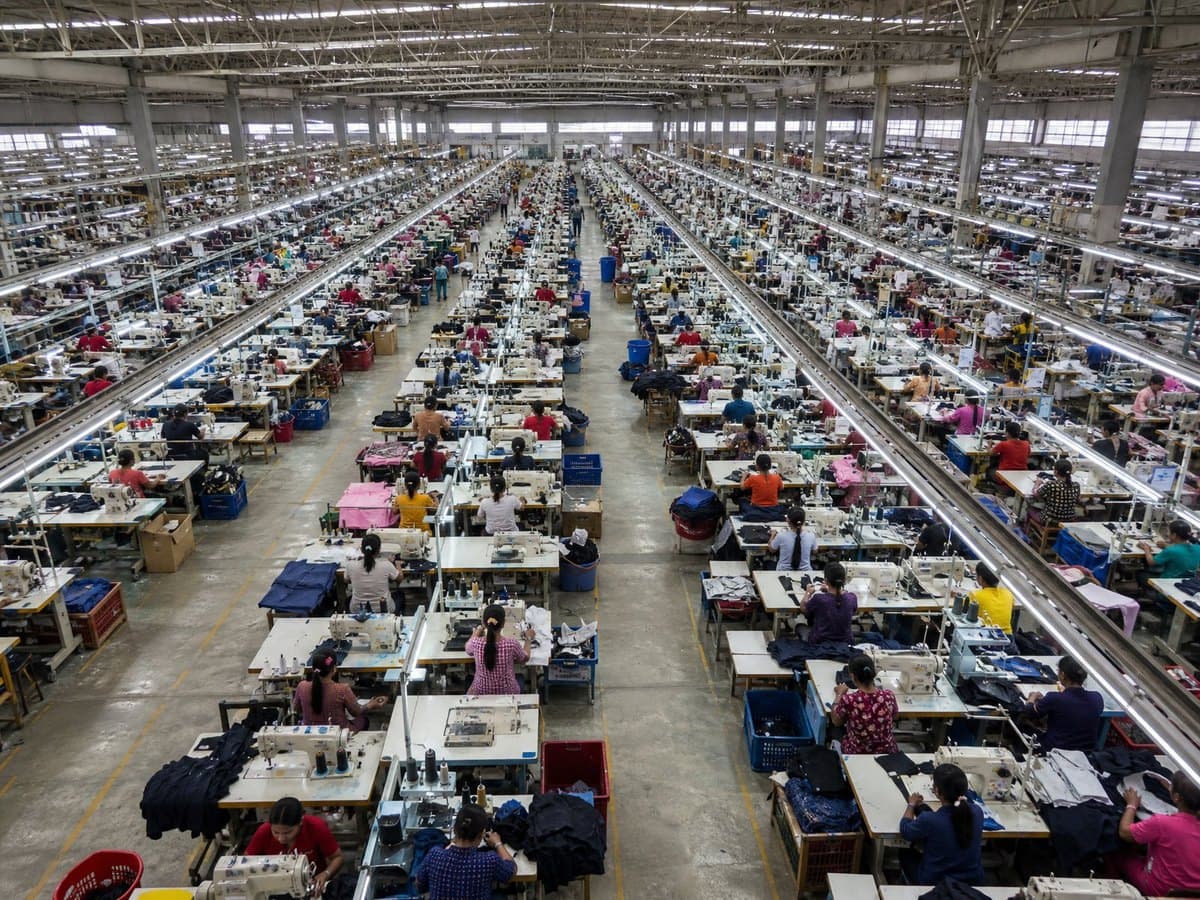
- Knit specialisation. A specialist knit floor sews jersey tees, French terry and fleece sweats, rib, piqué polos and interlock all day, with the machines, operators and fabric mills close by.
- Duty-free access. Australia has given duty-free entry to goods from least developed countries since 1 July 2003, according to the Australian Border Force rules of origin guide, and Bangladesh is on that list. The general rate on most apparel is 5%. Our duty guide compares this with the other main markets.
The duty-free rate comes with an origin rule that is stricter than in the UK, the EU or Canada. The last process of manufacture must happen in Bangladesh, and at least 50% of the total factory cost must be allowable factory cost, with materials from developing countries that are not themselves least developed counted for no more than 25% of the total factory cost. A garment cut and sewn on a Bangladeshi floor meets the first part; the second depends on where the fabric and trims come from, so ask the factory before you order. We document the cost split so your broker can claim the rate. Our page on clothing manufacturing for Australian brands sets this out with the sources.
How to choose an offshore factory
Searches for overseas clothing manufacturers return factories, agents, buying houses and marketplaces that look alike online. Three checks separate them.
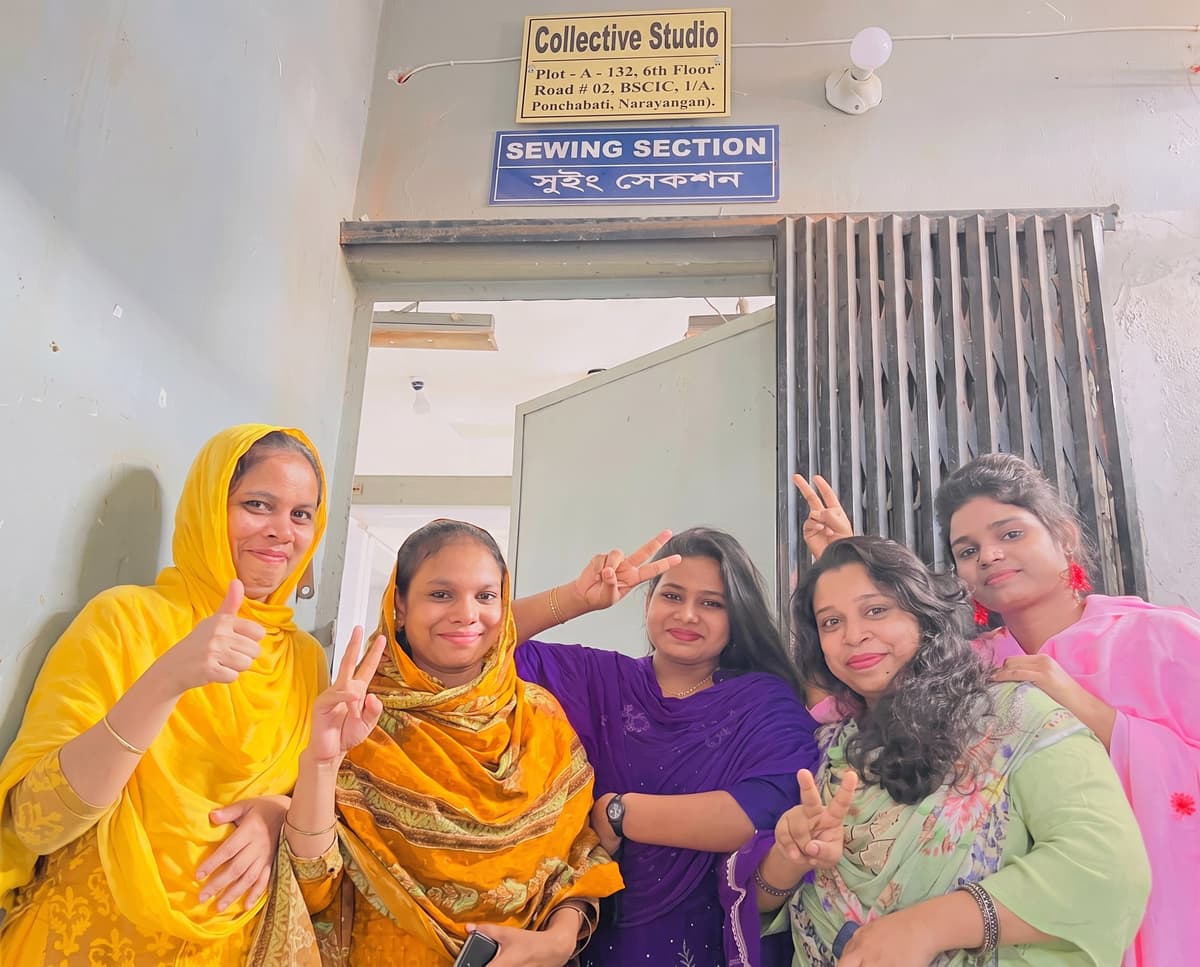
Own floor or agent. An agent can be useful, but you should know whether the business you pay owns the floor that sews your order. Ask for a live video call during a working shift and steer the camera yourself: the cutting table, a sewing line with work like yours on it, the packing area, and the sign and address plate on the building. Then match that address to the quote and to the origin paperwork, because for Australia the origin documents have to name the factory where the last process happened. Our guide to the difference between a buying house and a factory explains what each is good for.
A certificate you can check. A logo proves nothing; a certificate number does. If you want organic cotton, ask for the GOTS certificate number and look it up in the free GOTS certified suppliers database, then ask whose certificate it is: the factory's or a mill's. Our guide to what GOTS certification means explains the scope certificate and the transaction certificate, which is the document that lets you make an organic claim on your own label.
Audits, stated plainly. Ask which social audits a factory holds and ask to see the reports. Our own answer: we offer organic cotton, made in our GOTS-certified facility (RSC 9687), with the scope certificate on request, and we are members of BKMEA and the Narayanganj Chamber of Commerce and Industry. We do not hold amfori BSCI, SMETA, WRAP or Fair Trade, and ECA accreditation is about Australian workplace law in a local supply chain, so it is not something an offshore factory like ours holds. If a retailer you supply requires one of those audits, tell us at the start.
For an offshore shortlist to put through these checks, our comparison of low-MOQ clothing manufacturers sets eleven suppliers' published minimums and certificates side by side, ours included.
The Australian buying checklist
If you go offshore, these are the rules that decide what lands, what it costs at the border and whether it can be sold. Each is checked against the official source listed at the end.
| Item | What the rule says | What to do |
|---|---|---|
| Duty from Bangladesh | Free under the least developed country rate when the last process is in Bangladesh and allowable factory cost is at least 50%. General rate on most apparel: 5%. | Ask the factory for origin documents showing the last process and the factory-cost split. |
| GST | 10% at the border on the customs value plus international transport, insurance and any duty. A registered business claims it back, and eligible businesses can defer it under the ATO's deferred GST scheme. | Register for GST if you have not, and confirm who is importer of record on the quote. |
| The A$1,000 threshold | For most goods worth A$1,000 or less there is no duty or GST at the border, though an overseas seller registered for GST may charge it at the point of sale. Above A$1,000, an import declaration is needed and duty, GST and an import processing charge are paid before release. | Samples often fall under it; bulk orders generally do not. Use a licensed customs broker, or buy DDP. |
| Country of origin label | Imported clothing must state where it was made, in English, prominent and legible, at the time of import. Goods without a required label can be seized. | Approve a Made in Bangladesh label, sewn in at centre back, before production. |
| Care label | Mandatory under the Consumer Goods (Care Labelling) Information Standard 2023: care instructions in English, the five international care symbols, or both, on a label attached to the garment. | Put the care label artwork in the tech pack. See our care symbols guide. |
| Fibre content | Not required by the care standard, but any fibre claim must be accurate under the Australian Consumer Law. | Print only what the fabric test or mill paperwork supports. |
| Sizing | No current Australian sizing standard: AS 1344-1997, the size-coding scheme for women's clothing, is listed as withdrawn. | Give the factory a size chart in centimetres for your size range. |
| Incoterms | Under DDP the factory's forwarder delivers, clears and pays any duty; under FOB you appoint your own forwarder and broker. | Ask for a DDP quote and run it through the landed cost calculator. |
Country of origin is checked at the border, so the label has to be sewn in at the factory, not added after landing. Our guide to clothing labelling requirements by country sets Australia beside the US, the UK, the EU and Canada. Our step-by-step guide to importing clothing into Australia walks through each line, including children's nightwear, which has its own mandatory standard.
What changes after LDC graduation in 2029
Bangladesh is scheduled to graduate from the UN's list of least developed countries on 24 November 2029. Australia's foreign ministry addresses this directly in its Bangladesh country brief: "Products from Bangladesh will continue to be able to enter Australia duty-free and quota-free when Bangladesh graduates from the Least Developed Country status." We read that again on 4 November 2026. It is stated policy rather than a tariff rule: today's Free rate rests on Bangladesh's place on the least developed country list in the Customs Tariff Regulations, and removing it would take a change to those regulations. So: zero duty now, stated to continue, and worth confirming with your broker before each shipment. Under DDP, whatever the rate is sits inside your quote.
Sizing for the Australian market
Australian womenswear is sized in even numbers, and many brands build a first range around sizes 8 to 16, adding smaller or larger sizes once the core sells. There is no current national standard behind those numbers: Standards Australia lists AS 1344-1997, the old size-coding scheme for women's clothing, as withdrawn. So every brand's size 10 is its own, and the factory needs your measurements in centimetres, not size names. Our guide to building a size chart shows how to set them.
Climate matters too: a 400 GSM hoodie that sells through a Melbourne winter can sit unsold in Brisbane, which is why our page for Australian brands steers most ranges towards lighter jersey and French terry.
Timing for southern-hemisphere seasons
Offshore production runs on the factory's calendar, not the season's. On our floor the sequence is about 10 days of sampling, then 40 to 50 days of production after sample approval, then freight. Air freight to Sydney, Melbourne or Brisbane takes about 5 to 8 days door to door. Sea freight from Chattogram, which goes via transhipment, takes about four to six weeks door to door. Put together, plan on about 70 days from order to your door by air, and about a month more by sea. These are approximate figures for planning, not a promise for a particular order: the real dates depend on how quickly samples are approved, holiday closures and the sailing.
| Stock needed in your warehouse by | Typical range | Place the order by air no later than about | Place the order by sea no later than about |
|---|---|---|---|
| Early March | Autumn and winter | Late December | Late November |
| Early June | Mid-winter top-up | Late March | Late February |
| Early September | Spring and summer | Late June | Late May |
| Early November | Summer and Christmas | Late August | Late July |
Factories in Bangladesh close for Eid, whose dates move each year; our guide to how long clothing manufacturing takes covers this. If a launch date is fixed, plan for air freight from the start. The launch date calculator works the dates back from your on-sale day.
Where we fit, and where we don't
We make cut-and-sew knitwear for Australian brands in our own building in Narayanganj: tees, polos, hoodies, sweats and joggers, and also activewear and swimwear, which many Australian labels ask about. Fabric is knitted and dyed at partner mills we specify and inspect, and screen printing, embroidery and other finishing are done to your artwork. Our minimum is 150 pieces per style and colour. We quote DDP to any Australian address, so freight, the customs entry and any duty sit inside one landed price, and the origin and care labels are sewn in to Australian requirements before anything ships.
You also have someone in your own time zone. Janelle Rawlins, founder of Mindful Merch in Noosa, Queensland, coordinates Collective Studio orders for Australian brands, so the first conversation about your range can happen in Australian business hours. Send your brief through our contact page, say you are in Australia, and it will reach her. Our page on manufacturing for Australian brands has the full detail on duty, labels and fabric weights for the local climate.
And where we are the wrong choice: runs under 150 pieces, a range that has to be Australian made, denim or tailoring, or a range you need to fit in person every week. For those, start with the directories above. If you are not sure which side of the line you are on, send us the brief anyway and we will tell you straight.
Frequently asked questions
How do I find a clothing manufacturer in Australia?
Start with the directories that say who they list and why. Ethical Clothing Australia keeps a directory of accredited manufacturers that you can filter by state, fabric and capability, including cut make trim, knitting and makers with no minimum order quantity. The Australian Fashion Council runs a Fashion and Textile Directory with categories for CMT, knitwear, pattern makers and sample garment makers. The Fashion Advocate publishes a curated directory of ethical suppliers, both Australian and international. Shortlist three to five makers who already sew garments like yours, then ask each for their minimum per style and colour, what sampling includes and who buys the fabric. Visit the workroom before you pay a deposit, because being able to stand at the cutting table is the main advantage of making locally. Approve a physical sample before you commit to a production run, whichever maker you choose.
Is it cheaper to manufacture clothing in Australia or overseas?
Overseas is usually cheaper per piece at production quantities, but compare the landed cost, not the factory figure. In cut-and-sew, labour and overheads are paid on every garment, and they are where Australian and Asian costs differ most. An offshore quote then needs freight, customs clearance and GST timing added before it can be compared with a local one. GST is claimable if your business is registered, and clothing from Bangladesh pays no duty when it meets Australia's origin rule, so for a registered importer buying from Bangladesh the border adds little beyond freight. Local can still be the better choice for very small runs, because an offshore knit factory has a minimum and set-up costs that are spread over few pieces. A DDP quote from the factory and a landed cost calculator let you compare the two routes on the same basis.
Can I label my clothing Made in Australia if it is made overseas?
No. A Made in Australia claim is only safe when the garment was substantially transformed in Australia, meaning local processes made it fundamentally different from the imported materials. The ACCC's own example is a T-shirt: cutting and sewing imported fabric into a T-shirt here counts, but adding a print to an imported T-shirt does not. Imported clothing must also carry its true country of origin when it arrives, in English, prominent and legible, under the Commerce (Trade Descriptions) Regulation 2016, so a garment sewn in Bangladesh is labelled Made in Bangladesh. Any statement about where your brand is based or designed must be true and must not suggest the garment was made here. The Australian Made logo is a separate certification trade mark that needs registration with the Australian Made Campaign, which applies its own Code of Practice on top of the Australian Consumer Law.
Do I pay GST or duty on clothing imported into Australia?
GST yes, duty only if no preference applies. GST of 10 percent is charged at the border on the customs value of the goods plus international transport, insurance and any duty. A GST-registered business claims it back as a credit, and eligible businesses can defer it to their activity statement under the deferred GST scheme. Clothing from Bangladesh enters at the least developed country rate, which is Free, when the last process of manufacture is in Bangladesh and at least half of the total factory cost is allowable factory cost; the general rate on most apparel is 5 percent. For most goods worth A$1,000 or less there is no duty or GST at the border, although an overseas seller registered for GST may charge it at the point of sale. Above that threshold you need an import declaration and pay duty, GST and an import processing charge.
What is the A$1,000 rule for imports into Australia?
It is the value threshold that decides how goods are cleared and taxed. The Australian Border Force says that for most goods with a value of A$1,000 or less there are no duties, taxes or charges to pay at the border, with exceptions such as alcohol and tobacco. Low value goods arriving as air or sea cargo are cleared on a self-assessed clearance declaration. The Australian Taxation Office adds that an overseas business registered for GST collects GST from Australian customers on low value imported goods at the point of sale instead. Above A$1,000 you must lodge a full import declaration and pay all duties, taxes and charges, including an import processing charge, before the goods are released. In practice, samples and small courier parcels often fall under the threshold and bulk orders usually do not, so plan on using a licensed customs broker or buying on DDP terms.
Will clothing from Bangladesh stay duty-free in Australia after 2029?
Australia's government says it will. Bangladesh is scheduled to graduate from the UN list of least developed countries on 24 November 2029. The Department of Foreign Affairs and Trade country brief, which we read on 4 November 2026, states that products from Bangladesh will continue to be able to enter Australia duty-free and quota-free when Bangladesh graduates. That is stated policy rather than a tariff rule. The legal basis for today's Free rate is Bangladesh's place on the least developed country list in the Customs Tariff Regulations, and taking it off the list would need a change to those regulations, which has not happened. So plan on zero duty, but confirm the rate with your customs broker before each shipment and keep the origin documents complete. If you buy on DDP terms, whatever the rate turns out to be is inside the price the factory quotes you.
What labels does clothing need to be sold in Australia?
Two labels are compulsory for imported clothing. The first is a care label: the Consumer Goods (Care Labelling) Information Standard 2023 is a mandatory standard that requires clothing and household textiles to carry adequate care instructions in English, the five international care symbols, or both, on a label attached to the item. The second is a country-of-origin label: under the Commerce (Trade Descriptions) Regulation 2016, imported clothing must show the country where it was made, in English, prominent and legible, at the time of import, and the Australian Border Force asks for it at the centre back of the garment. Goods that need the label and arrive without it can be seized, so it must be sewn in at the factory. Fibre content is not required by the care standard, but any fibre claim you make has to be accurate under the Australian Consumer Law.
How long does it take to get clothing made overseas and shipped to Australia?
From our floor, plan on about 70 days from order to your door by air. That is about 10 days of sampling, then 40 to 50 days of production after the sample is approved, then freight. Air freight to Sydney, Melbourne or Brisbane takes about 5 to 8 days door to door. Sea freight from Chattogram goes via transhipment and takes about four to six weeks door to door, so sea adds about a month to the total. Treat these as planning figures rather than a promise for a specific order, because the real dates depend on how quickly you approve samples, factory holidays such as Eid and the sailing schedule. For a seasonal range, work back from the date the stock must be in your warehouse, and add two to four weeks for a first order or a new block that needs more than one round of sampling.
What is the minimum order for an Australian brand working with Collective Studio?
Our minimum is 150 pieces per style and per colour. That is set by the fabric rather than the sewing machine, because knit fabric is knitted and dyed in lots, and around 150 pieces is where a colour stops being a sample and becomes a production run. A first Australian order can be one style in one colour, and three colours of the same style count as three runs of 150. Below that, a local CMT workroom is usually the better choice, and Ethical Clothing Australia's directory lets you filter for makers with no minimum order quantity. Orders for Australian brands are coordinated by Janelle Rawlins, founder of Mindful Merch in Noosa, Queensland, so you can talk it through in Australian business hours. Garments are cut and sewn on our own floor in Narayanganj and shipped DDP to your address, with freight, the customs entry and any duty inside the quoted price.
Where this applies
The manufacturing pages this guide relates to, if you are costing a real run.
Free tools & guides for this
Sources & further reading
- Ethical Clothing Australia — Find an ethical manufacturer (accredited manufacturer directory, 83 listed; read 4 November 2026)
- Ethical Clothing Australia — Accreditation (third-party checks against Australian workplace laws; operating since 2000)
- Australian Fashion Council — AFC Fashion & Textile Directory (read 4 November 2026)
- The Fashion Advocate — Ethical and sustainable fashion manufacturing directory, Australia and New Zealand (read 4 November 2026)
- ACCC — Country of origin claims and the Australian Consumer Law (2022): substantial transformation and the T-shirt example
- Australian Made Campaign — Using the logo (registered certification trade mark, Code of Practice)
- Federal Register of Legislation — Commerce (Trade Descriptions) Regulation 2016
- Federal Register of Legislation — Consumer Goods (Care Labelling) Information Standard 2023 (F2023L01187)
- Australian Border Force — Import declarations (goods worth A$1,000 or less; import declaration above A$1,000; read 4 November 2026)
- Australian Taxation Office — GST on low value imported goods (A$1,000 or less; read 4 November 2026)
- Australian Taxation Office — GST and imported goods
- Australian Border Force — Preferential rules of origin: instructions and guidelines (LDC duty-free entry since 1 July 2003; 50% allowable factory cost; 25% cap)
- DFAT — Bangladesh country brief (duty-free, quota-free access after LDC graduation; read 4 November 2026)
- Standards Australia — AS 1344-1997 Size coding scheme for women's clothing (status: withdrawn)
Cite this guide
For journalists, writers, researchers and students.
Quoting this guide? Please credit Collective Studio and link to this page.
Reference
Homaira Jashim, Collective Studio. "Clothing Manufacturers in Australia vs Offshore: An Honest Guide for Australian Brands." 4 November 2026. https://collectivestudioltd.com/journal/clothing-manufacturers-australia-local-vs-offshore
Writing about us? Our press kit has our facts, logos and photos, free to use with credit.
Have an idea? Let’s make it.
We manufacture from 150 pieces per style and colour, with organic cotton options from our GOTS-certified facility and photos at every stage. Send a sketch or a sentence — we’ll reply within one business day.